‘Rich in Gold’
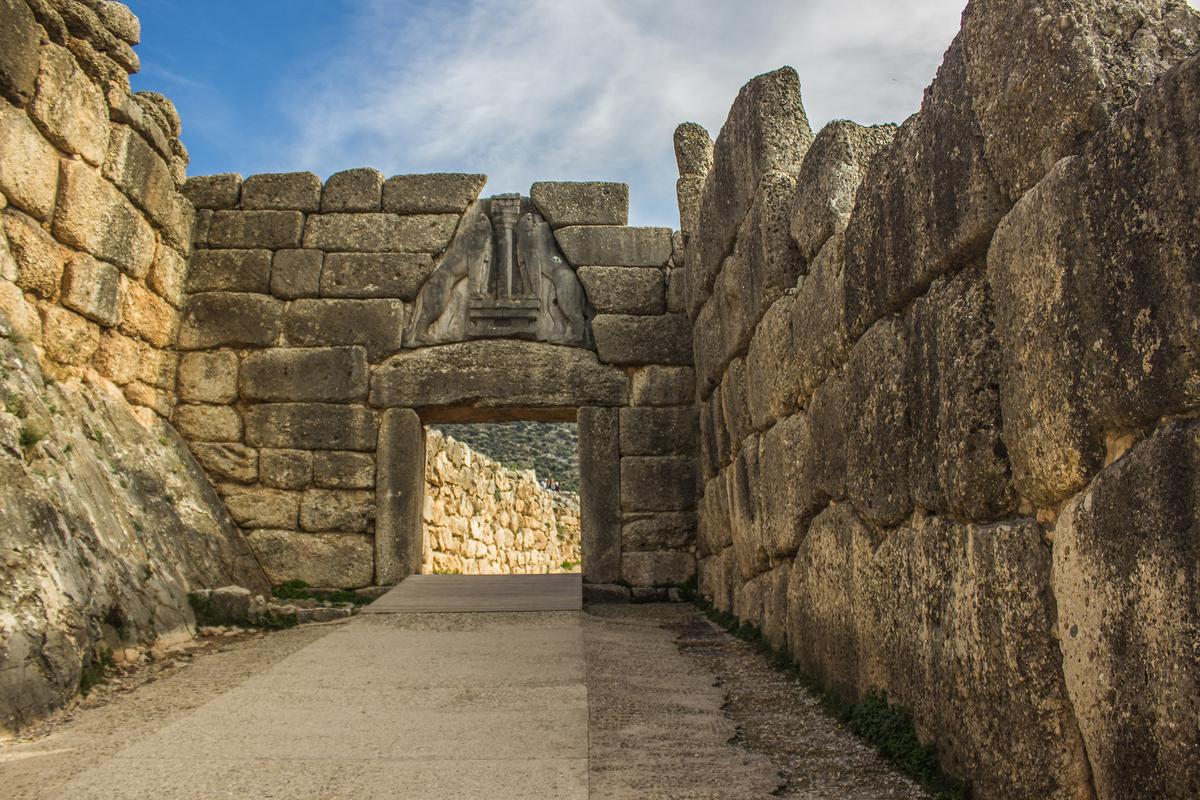
The Late Bronze Age Mycenaeans (circa 1600 B.C.–1100 B.C.) dominated the Greek world for centuries. Centered in the northeastern part of the Peloponnese peninsula, its territories were organized in a feudal system governed by warrior kings. The descriptive term “Mycenaean” derives from the civilization’s largest fortified palace complex at Mycenae.
Highly prosperous during their civilization’s zenith, Mycenaeans traded throughout the Mediterranean world, were renowned as fierce warriors, and engineered advanced stonework structures. Homer set his epic poems “Iliad” and “Odyssey,” whose compositions are usually dated to the late 8th or early 7th century B.C., in the Mycenaean period. The ancient Greek poet, whose work is the foundation of Western literature, described Mycenae as “rich in gold” and ruled by King Agamemnon, who led the Greeks to victory in the Trojan War before he was murdered upon his return home.
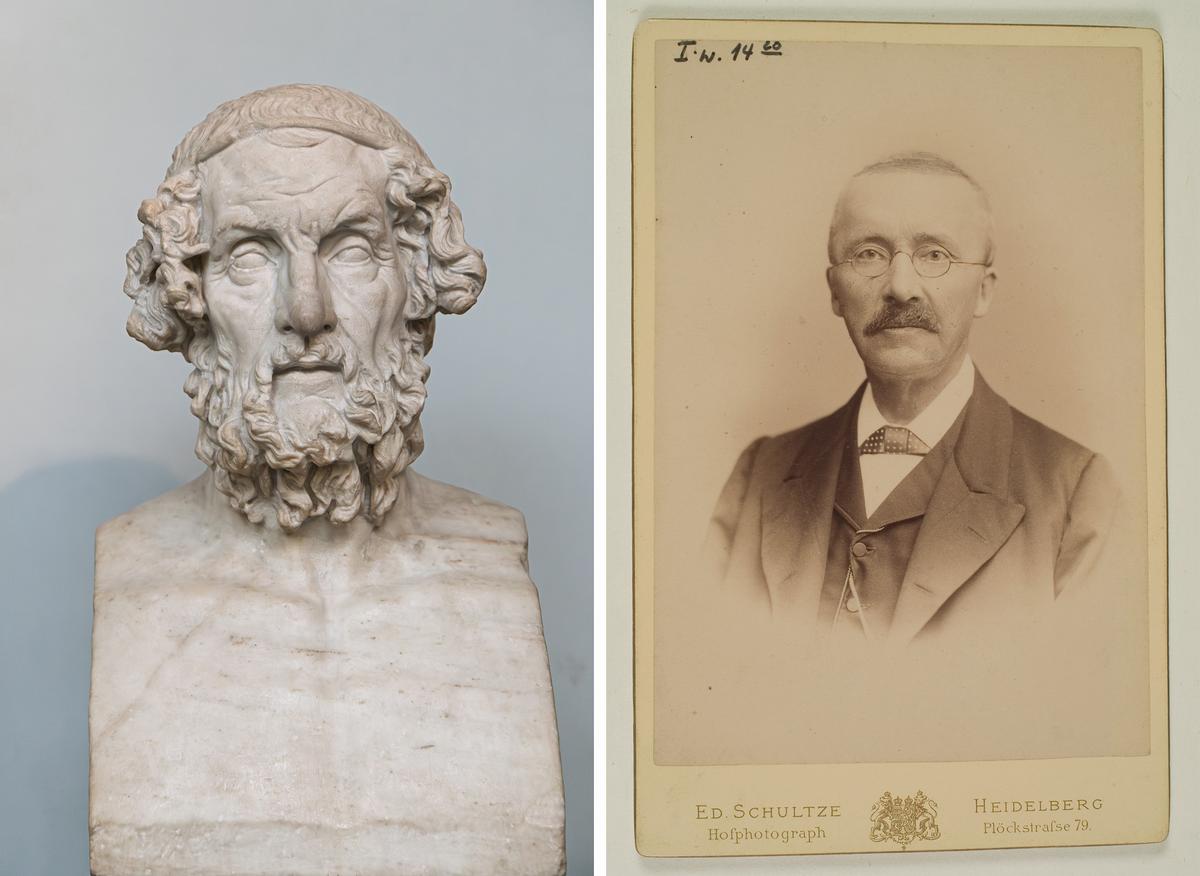
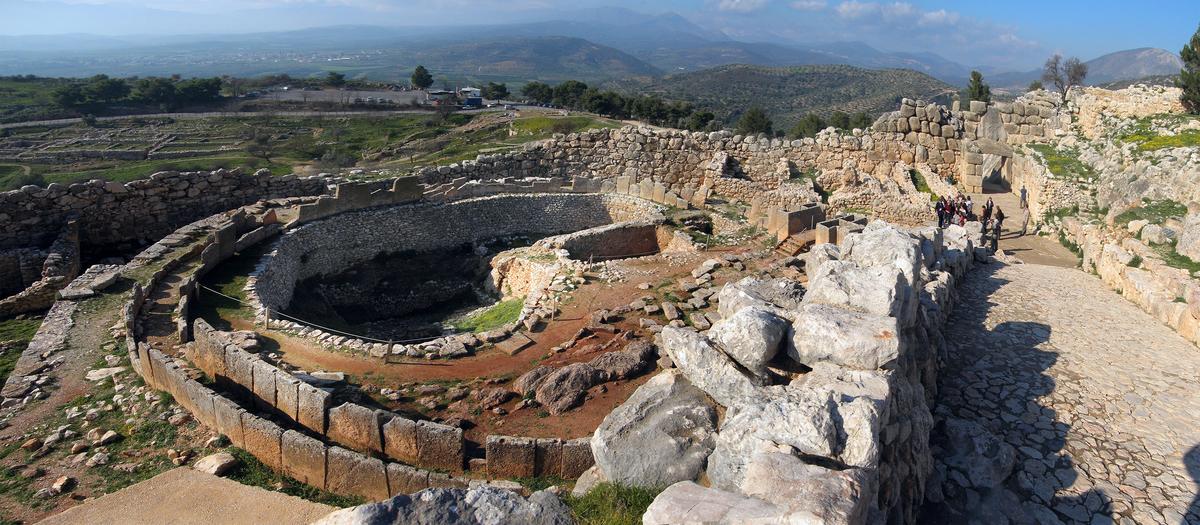
German archeologist Heinrich Schliemann (1822–1890) was obsessed with Homer’s epics and believed they were historically accurate. Schliemann gained fame first for excavations at Hisarlık, Turkey, that identified it as the site of Homer’s Troy, which continues to be widely accepted today. A few years later, in 1876, Schliemann began digging in Mycenae.
The Man in the Mask
The most exquisitely detailed and distinctive mask inspired Schliemann to claim: “I have gazed into the eyes of Agamemnon.” This finely worked object continues to be known as the “Mask of Agamemnon,” but its 16th-century B.C. creation does not correspond with the Trojan War. If it happened, that war is estimated to have occurred in the 13th-century B.C.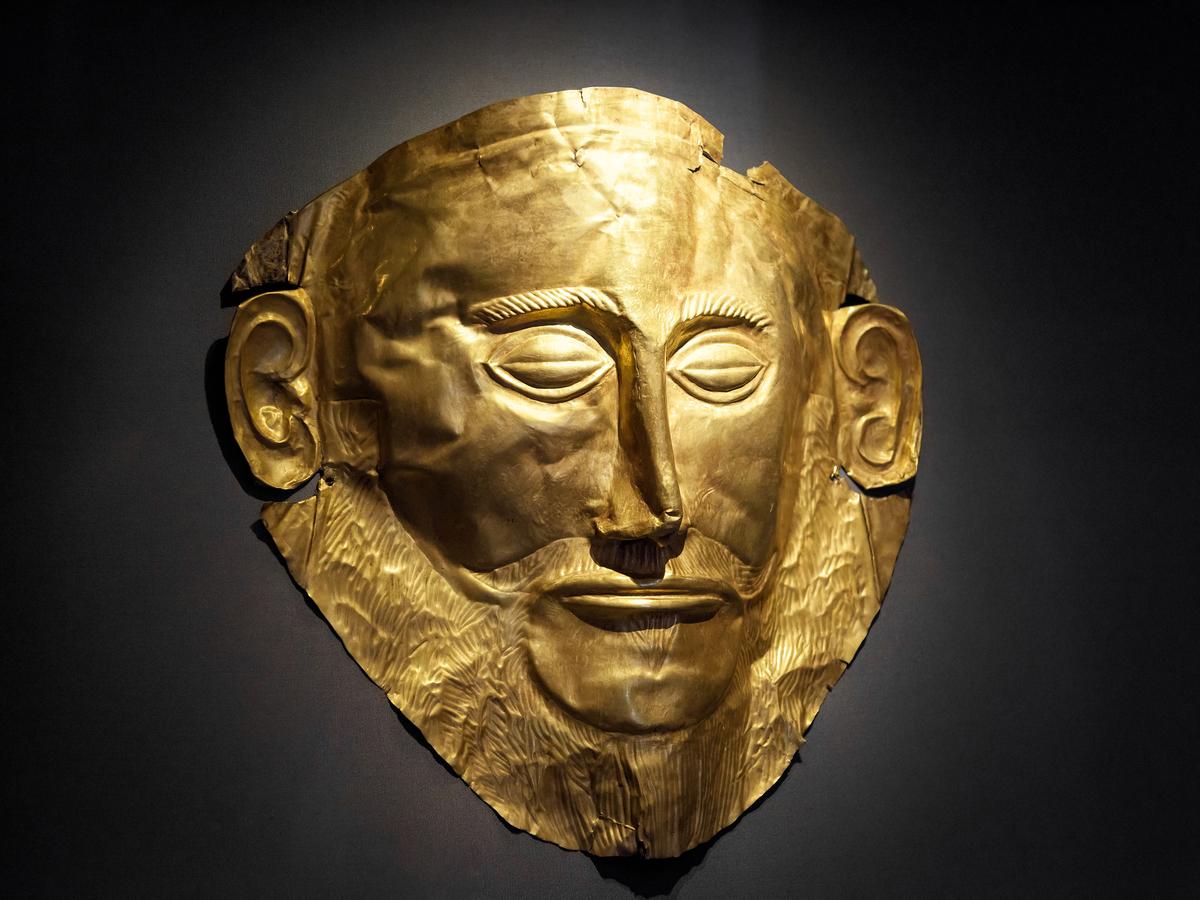
The “Mask of Agamemnon” depicts a man with a regal air. He has a groomed beard, handlebar mustache, long nose, high cheekbones, wide mouth, thin lips, and inscrutable almond-shaped eyes. The two holes near the ears suggest that the mask was tied around the deceased’s head with twine. Its artist made the mask from a gold sheet with repoussé details, a metalworking technique in which a low relief design is created by hammering from the reverse side.
Agamemnon has become immortal due to his pivotal role in Homer’s poems and the 5th-century B.C. “Oresteia” trilogy by ancient Greek playwright Aeschylus. Whether such a king really existed remains unproven, but Schliemann did not find his tomb. Regardless, Mycenae is a popular tourist destination, a siren call for those looking to marvel at the remnants of the “age of heroes.” Its archeological crown jewel, the “Mask of Agamemnon,” maintains an evocative hold over the public’s imagination.