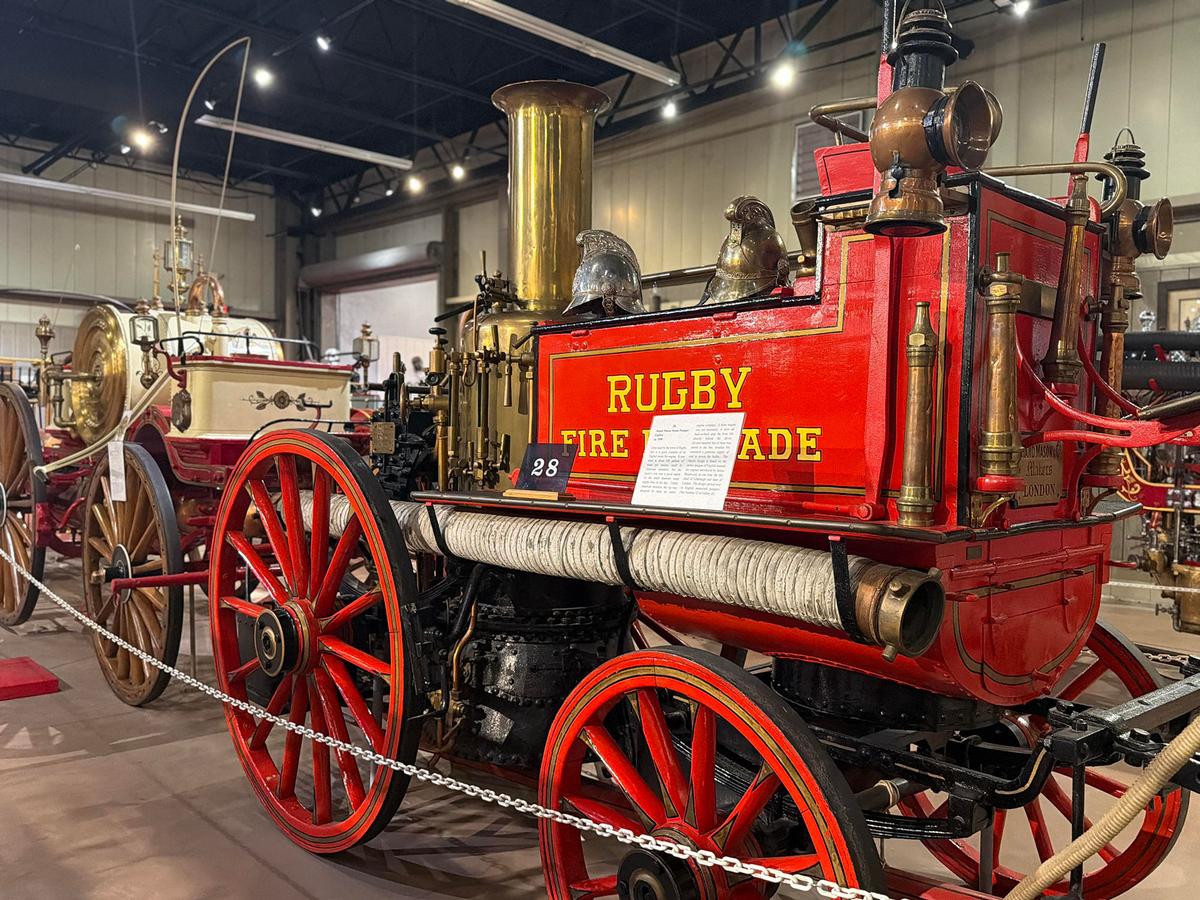
It resembled an ornate carriage or cart with curving metalwork of ivy and leaves, like filigree, and burnished wood worn smooth by the touch of many hands. It was a very early form of the fire engine—essentially a large, horse-drawn pump with a hose for fighting fires. But you could be forgiven for mistaking it for a piece of art. There was a pump attached to the middle of the cart, rising like a small tree from its center. Its branches were the long handles that a team of men on either side would have worked, hoisting up and down, to draw water from a nearby lake or river into the hose that could be pointed at the flames.
In the same museum, I also saw an 18th-century musket. The stock was long and slender, like the trunk of a sapling. It looked light as air, a weapon so supple it could be aimed just by thinking. Both wood and metal, weaving in and out of each other, were delicately engraved with beautiful botanical designs.
The impulse to adorn tools of death with beauty stretches further back than when the musket was made. Just examine a Roman gladius or the gold-inlaid broadsword of a medieval king. Their deadly splendor must have lit courage in the heart of their wielder—and fear in his enemies.
Why did we in the West move away from this philosophy of craftsmanship mixed with artistry, utility blended with beauty? Is it time to move past the utilitarian mindset and return to an older way of making things?

What We’ve Lost
There was something profoundly human about our ancestors’ attitude: Craftsmanship of the past recognized that the human soul prefers more than mere functionality. We yearn for the supposedly “unnecessary” qualities of beauty, grace, and durability that appeal to our spiritual dimension.Here’s a more mundane example: lampposts. Compare a 19th-century lamppost—the ones that lined the grand streets of London—with a contemporary lamppost. The Victorian-era lamppost rises gracefully and majestically like a fantastical tree whose fruits are flames. Completely unnecessary swirling metalwork of organic patterns adorns the old lamppost. The modern lamppost, in contrast, focuses on efficiency and utility—there are no unnecessary adornments, just an LED light on a pole.




Although there are exceptions, this pattern holds true for most modern versions of tools, machines, furniture, architecture, and so on. Contemporary goods conspicuously lack the adornment, organic forms, and sense of symmetry and proportion found in their historical counterparts. Our ancestors seemed particularly preoccupied with blending usefulness with beauty. They wanted their tools to be not only well-made and effective, but also lovely to behold. In this way, beauty wove its way into everyday life. Remarkably, these people invested extra time, materials, and money into beautifying their surroundings and objects even though they had far fewer resources than we do today.

In contrast, the blending of beauty and productivity reflects an attitude of sensitivity to the world. Beauty appeals to our rationality and gives us access to meaning. The craftsman or artist sees beauty and order in the world that transcends bare material facts. He finds meaning in it. He sees, for example, that a tree is more than just bark, leaves, and roots—it has an integrity, harmony, intelligibility, and excess of sensory appeal that can only be called beautiful.
The craftsman sees patterns like these in the world and naturally wishes to imitate them in his own work. He wants his work to be more than just a random grouping of useful parts. He wants it to mean something more, to capture something of the mysterious quality of superfluous loveliness encoded into the world.

Reviving Intentional Craftsmanship
Based on historical artifacts, the aesthetic and natural sense used to dominate the production of objects. It remains with us today, although it no longer dominates the production of goods. For instance, we recognize intuitively that a handmade bamboo fly rod inlaid with a herringbone pattern in the handle is more valuable than a mass-produced, unadorned fiberglass rod. They serve the same function, but one is finely crafted. People will pay more money for the bamboo rod simply because of the adornment even though it adds nothing to functionality. Human nature hasn’t fundamentally changed, although our awareness of the importance of this characteristic might be diminished.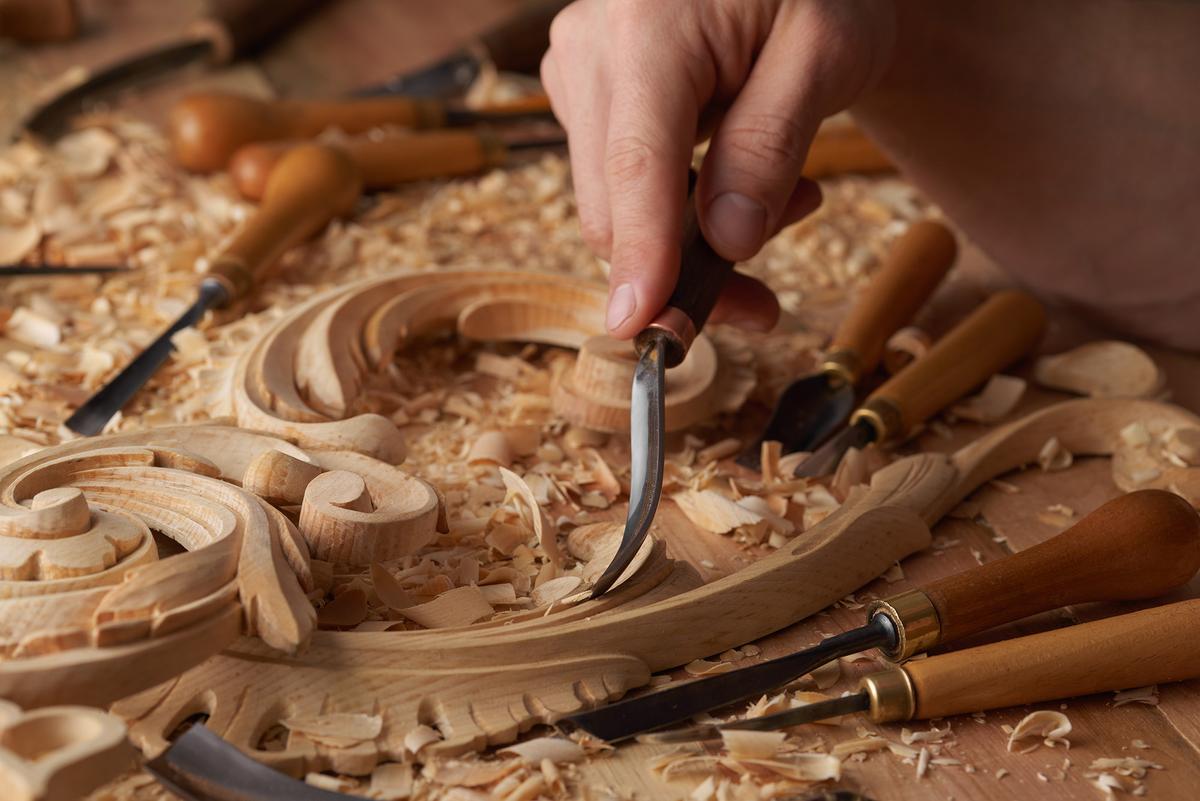
The diminishment of our characteristic attraction to beauty is a long and complicated story, but it relates to the factory mindset that today dominates manufacturing. The factory mindset differs significantly from the craftsmanship mindset. The factory mindset looks on the world as raw material to be shaped, rather than an orderly model to be imitated. This attitude emphasizes scale, efficiency, affordability, and functionality. It has a materialist bent. The craftsmanship mindset, on the other hand, isn’t concerned with quantity so much as quality; affordability gives way to admirability. Craftsmanship has a spiritual awareness of desirable traits that go beyond material usefulness.
To be sure, the factory mindset has plenty of upsides. We have access to more goods at a better price than any prior generation. But, at the same time, it’s worth considering what we lost when factories replaced small workshops. The loss of the harmony of beauty and utility corresponds closely with the rise of industrialism. When goods became the product of machinery rather than human craftsmen, they lost their human touch.
Machines have no use for beauty. But we do.