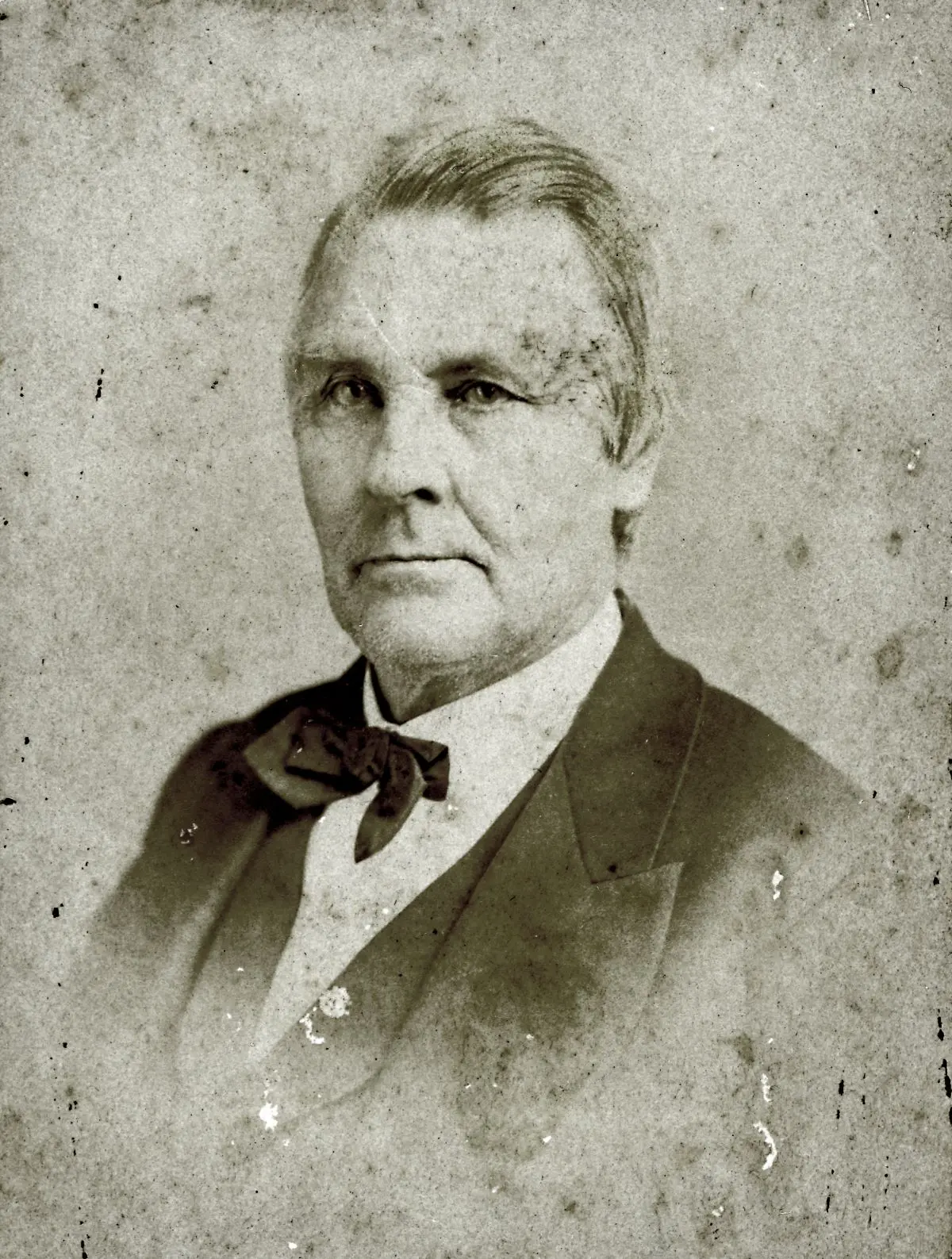
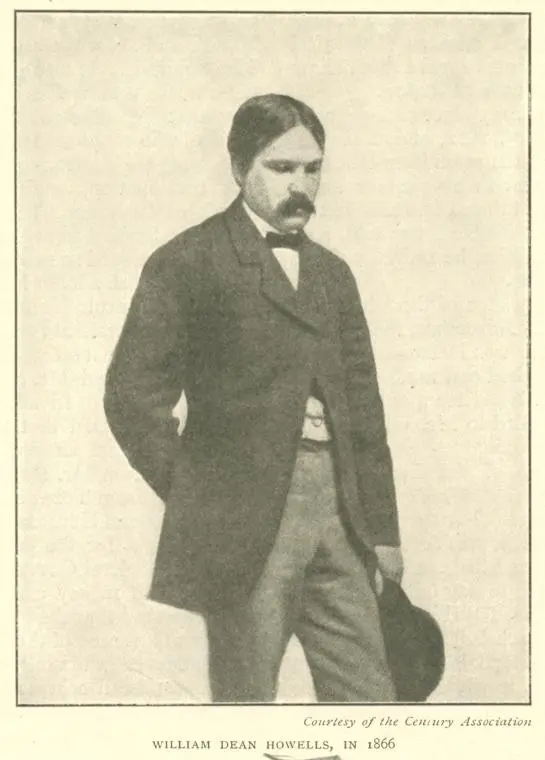
William Dean Howells (1837–1920) was one of eight children born to William and Mary Howells in Ohio’s oldest settlement, Martins Ferry. Young Howells was named after both parents, taking his father’s first and his mother’s middle names. The recipient of an intermittent and rather brief formal education, he relied on his father’s workplaces to supplement his educational shortcomings.
His father’s career as an editor and publisher of various publications introduced young Howells to the printing industry. It also forced the Howells family to move about the country when opportunities presented themselves. In 1840, elder William became editor of the Intelligencer in Hamilton, Ohio, just north of Cincinnati. He also briefly self-published a religious Swedenborgian publication during this time (from 1843 to 1844).
The family arrived in Eureka Mills in 1850 where his father was selected to transform the sawmills and gristmills into papermills, a “never-accomplished transformation.” For all his father’s editorial and political efforts, the family was undoubtedly poor. They moved into a rude log cabin, and despite its rotten floors, broken roof, and tobacco spit-effaced walls, the family turned it into a home. He wrote fondly of that home about four decades later in “My Year in a Log Cabin.”
First Works
As indicated by Howells’s book, the family stayed in the log cabin for a year before moving to Columbus where the elder Howells combined his political and editorial talents when he became the legislative reporter for the Ohio State Journal.
Growing up in a literature-loving home and working in the print industry lent itself to Howells’s early attempts at his own writing. As a young boy, he wrote a mock epic set in ancient Rome called “The Battle of the Cats.” One of his early poems was published in the Ohio State Journal thanks to his father (though his father did it without his son knowing). When the legislative session ended, so did the elder Howells’s position with the paper. He thus purchased a share in the Ashtabula Sentinel in the northern town of Ashtabula, Ohio, located on Lake Erie, and became the paper’s editor.
Good Years
He briefly considered a career in law but abandoned the pursuit to return to the publishing industry. He did so by moving to Columbus, the state’s capital. He began writing a column for the Daily Cincinnati Gazette and accepted a position at the Cincinnati paper as the city editor. In the same vein as his father, his time at the paper was brief, as he returned to Columbus in 1858.The year 1858 proved to be a year of personal growth for Howells. His time teaching himself Spanish, German, and French paid off, when he began writing for the familiar Ohio State Journal. He wrote poetry, stories, and reviews, and also translated articles from the aforementioned languages. He also wrote several stories for the Sentinel about his steamboat excursions to St. Louis.
His linguistic and literary talents were getting noticed and he was invited for dinner at the home of Salmon P. Chase, the soon-to-be secretary of state for Abraham Lincoln.
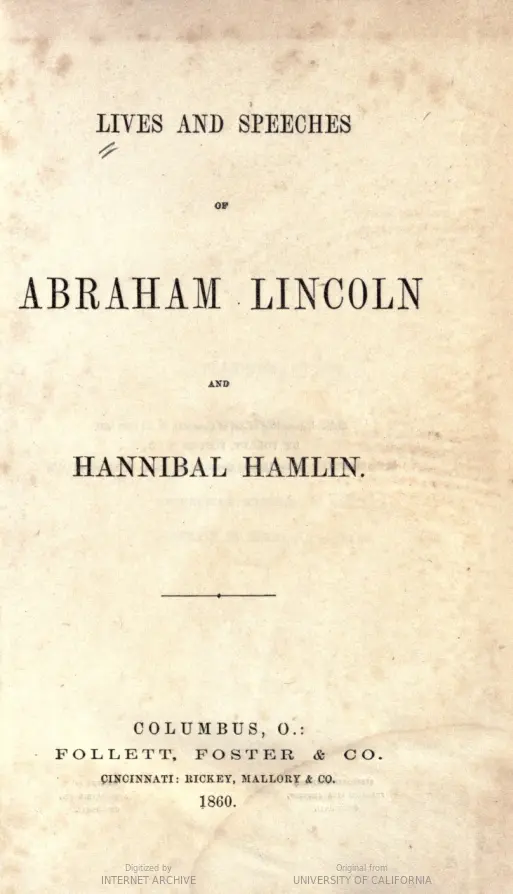
More importantly, that year, he was asked by Wilson Follett, of Follett, Foster and Company, the publishing firm that published his book of poetry, to write a campaign biography about Republican Party candidate Abraham Lincoln. He was not given much time to write it. Howells, a Christian and an abolitionist, was apparently inspired to accomplish the task, completing “Lives and Speeches of Abraham Lincoln and Hannibal Hamlin” in about a week.
Love, Friends, and Venice
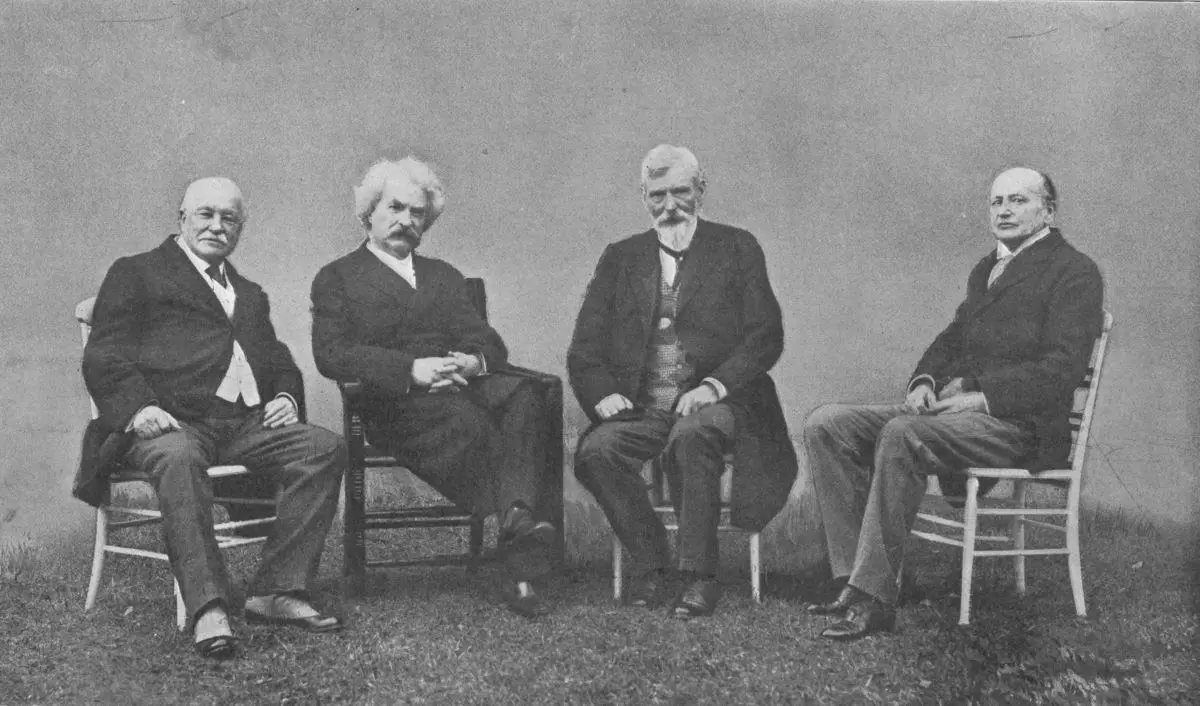
With the money he was paid for the biography, he took a trip to New England where he met Lowell, as well as other literary figures Oliver Wendell Holmes, Nathaniel Hawthorne, Henry David Thoreau, and Ralph Waldo Emerson. This same year back in Columbus, he met Elinor Mead, with whom he would fall in love and marry two years later in 1862 and have three children. It was a perfect match, as Howells noted she possessed “unerring artistic taste.”Howells’s literary talent and his exceptional network of literary lights helped boost his reputation. The year before he married Mead, Lincoln appointed Howells American consul to Venice, a position he held until 1865. Upon his return to the United States, Howells was made assistant editor of The Atlantic Monthly (from 1866 to 1871) and then chief editor (from 1871 to 1881). During this period, he became close friends with Lowell, Holmes, Henry Wadsworth Longfellow, Henry James, and Mark Twain.
Defining Realism
Howells had grown up reading the Romantics, but he believed these works did not reflect reality. For some critics, Howells was accused of being “unsympathetic to books of romance.” But, for Howells, it was not merely a matter of preference, but proper definition. “What I object to is the romantic thing which asks to be accepted with all its fantasticality on the ground of reality; that seems to me hopelessly bad,” he once contended.‘The Dean of American Letters’
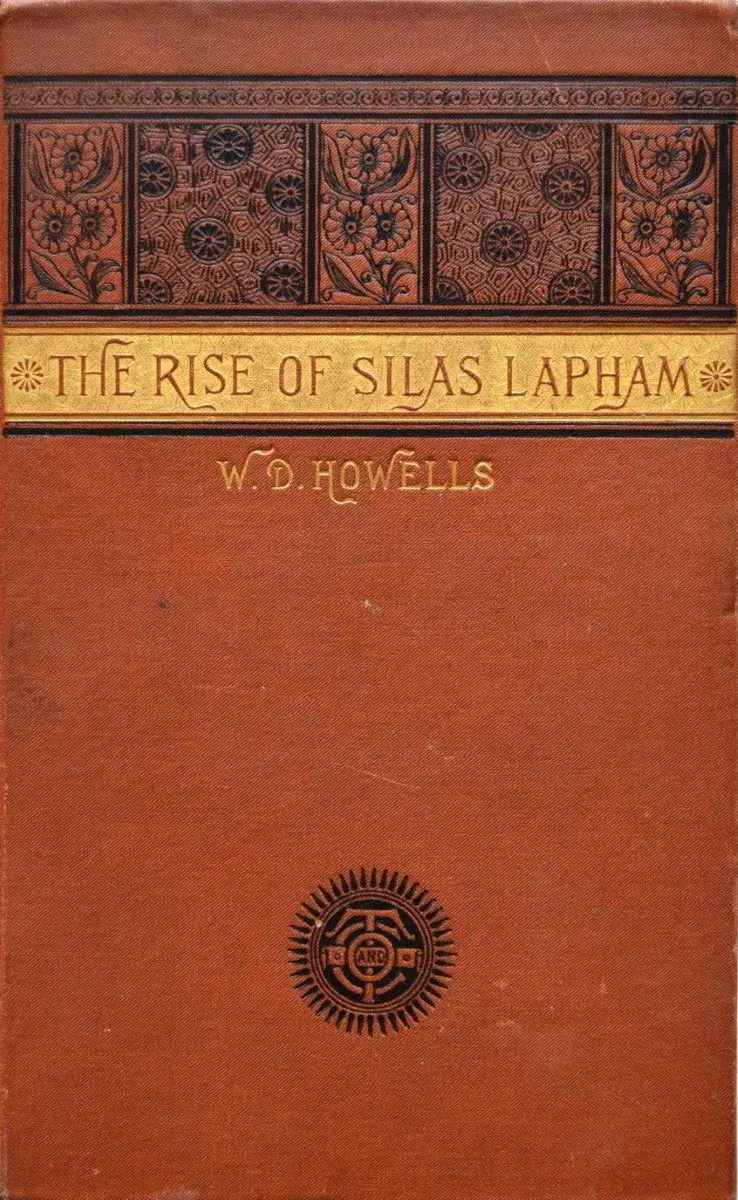
In 1871, Howells published “Their Wedding Journey,” his first novel in which he utilized his experiences in travel, marriage, and life in the middle class, to write it. He followed with “A Foregone Conclusion” in 1875, a novel that received favorable reception from critics. Shortly after, he attended a theatrical performance of Euripides’s “Medea,” which inspired his first masterpiece novel, “A Modern Instance,” which was published in 1882. This was followed by another success, “A Woman’s Reason” (1883).Arguably his most important work, “The Rise of Silas Lapham,” was first serialized in The Century from November 1884 to August 1885. It was published as a book in 1885 and remains a classic, continuing to be republished over the decades. His other successful novels included “Indian Summer” (1886) and “A Hazard of New Fortunes” (1890).
Along with the sudden influx of novel writing, Howells continued to write poetry, articles, short stories, and literary criticisms, specifically for Harper’s Monthly after his departure from The Atlantic Monthly. His many criticisms thus introduced Americans to many national and international writers, including Emily Dickinson, Stephen Crane, Thomas Hardy, Emile Zola, Henrik Ibsen, and Ivan Turgenev.
“William Dean Howells has left our literature a large company of men and women so true to life that, although he created them in an epoch that has passed, we can travel about the United States and see many still like them today. Indeed, if there be a writer whose books are more crowded with veracious portraits of his fellow Americans, firmly and subtly painted, I don’t know him.”