On Nov. 10, 1975, the freighter SS Edmund Fitzgerald sank while crossing Lake Superior during a storm. All 29 men on the ship perished and their bodies were never recovered.
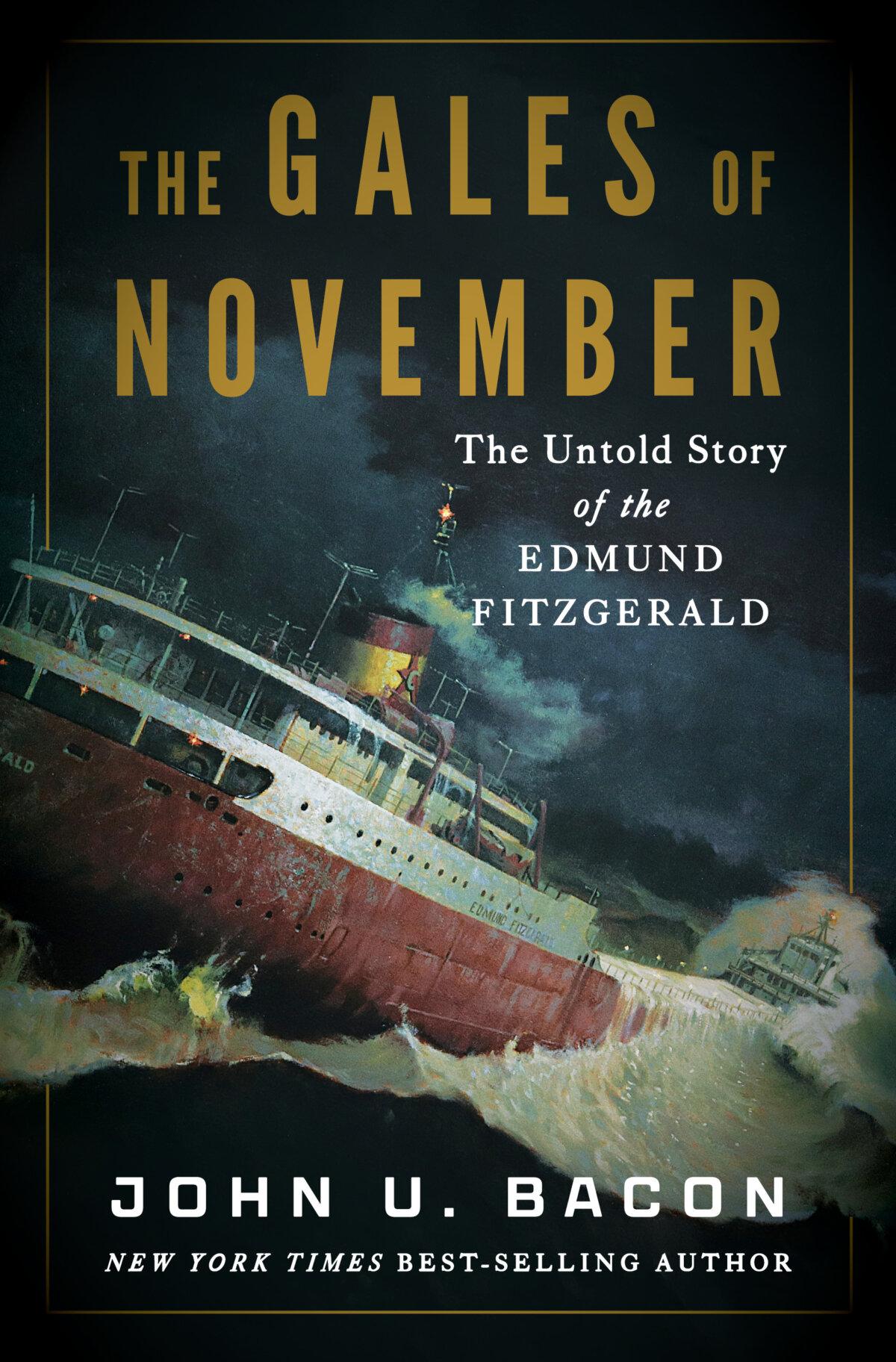
Fifty years later, there is still no conclusive theory on why this seemingly impenetrable vessel sank. John U. Bacon, who previously focused on another historic maritime disaster with his 2017 book “The Great Halifax Explosion,” ruefully admits in “The Gales of November” that the only thing experts on the subject agree upon was that the ship went down.
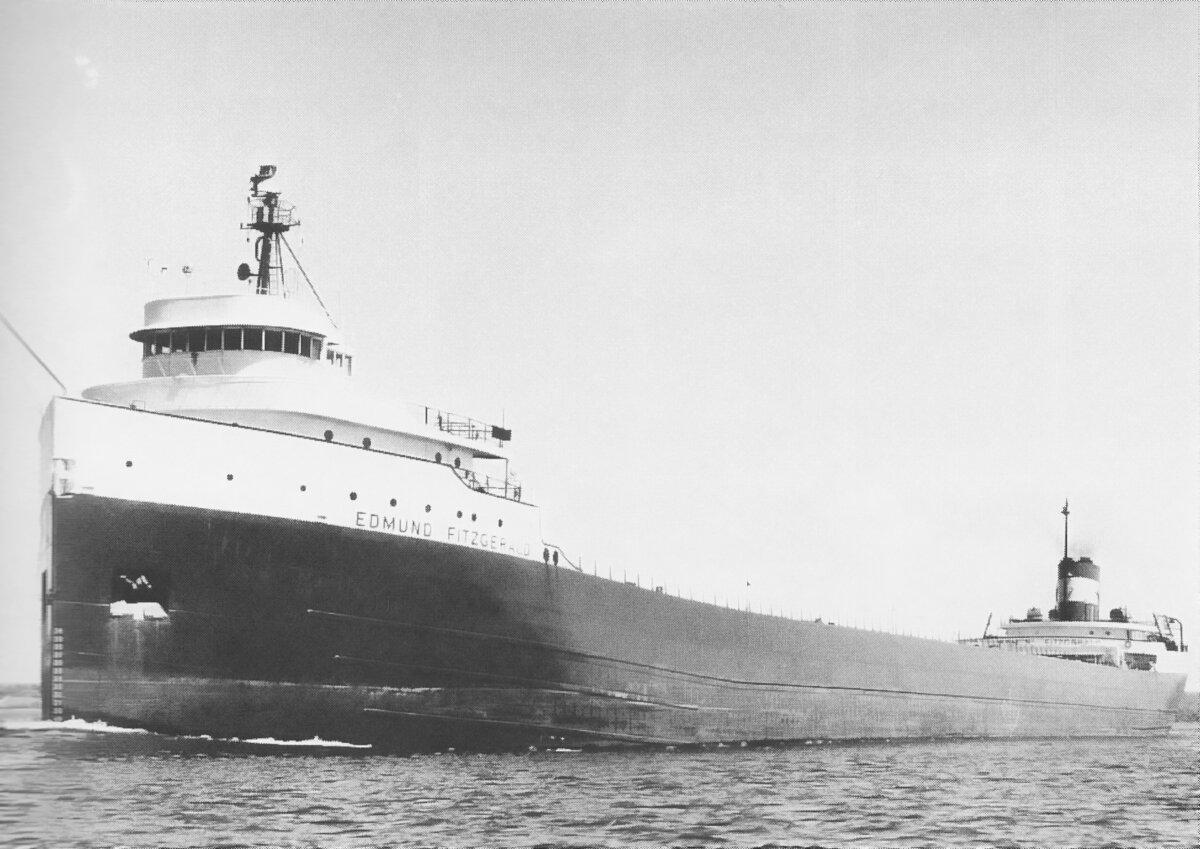
Named after the president and chairman of the Northwestern Mutual Life Insurance Company, its 729-foot-long hull made it the longest ship on the Great Lakes when it launched in 1958. It was also the most luxurious vessel of its kind. Air conditioning, carpeting, and televisions were features throughout its living quarters, while the food service was at a high-class restaurant level.
A Deadly Lake
Bacon begins his book with a clarification on a subject that confused many people: How could a massive freighter get shipwrecked on a lake? As John Tanner, former superintendent of the Great Lakes Maritime Academy, explains to the author, “People on the coasts don’t get it. The Great Lakes don’t behave like lakes. They function more like seas, big enough to develop waves, which grow as they cross the lakes.”Furthermore, the absence of salt in these freshwater lakes enable the waves to rise more sharply and crash with great violence on whatever sails across them. Between 1875 and 1975, at least 6,000 ships were claimed by storms across the Great Lakes.
Journey Into Tragedy
However, the Edmund Fitzgerald doesn’t set sail on its fatal voyage until midway through Bacon’s 464-page book. For the first half of “The Gales of November,” Bacon crams in far too much esoteric and irrelevant information on the geography and the economy of the Great Lakes before the ship was constructed and during its halcyon days.
Much of this input, such as a full chapter on the 1913 wreck of the freighter Waldo and a section on the arts and cultural scene in Detroit (including two paragraphs on Berry Gordy’s founding of Motown Records), would have benefited from judicious editing.
Where Bacon succeeds comes in detailing the lives and personalities of the doomed ship’s crew. Perhaps the saddest story involves deckhand Bruce Hudson, who was on leave with a bad injury but returned for the doomed voyage. Before Hudson sailed, he learned his girlfriend was pregnant and began planning for a new life together.
The ship’s last journey was supposed to be the final voyage in the long career of Capt. Ernest M. McSorley. With a full cargo of more than 26,000 long tons of taconite ore pellets, the Edmund Fitzgerald traveled from Superior, Wisconsin, on the afternoon of Nov. 9, 1975. Bound for a port near Detroit, it was accompanied by another freighter, the SS Arthur M. Anderson, bound for Gary, Indiana.
Both ships were caught in a devastating storm. McSorley acknowledged the ship was facing uncommon difficulty in his radio communications with the Anderson.
When Cooper, the captain of the Anderson, contacted the Coast Guard station in Sault Ste. Marie, Michigan, to report the ship’s perilous situation, Petty Officer Philip Branch took the message but did not act on it. Branch was also indifferent when the Anderson’s captain reported the Edmund Fitzgerald stopped responding to radio calls. Branch later explained, “I considered it serious, but at the time it was not urgent.” He was not censured for his dereliction of duty.
What Went Wrong?
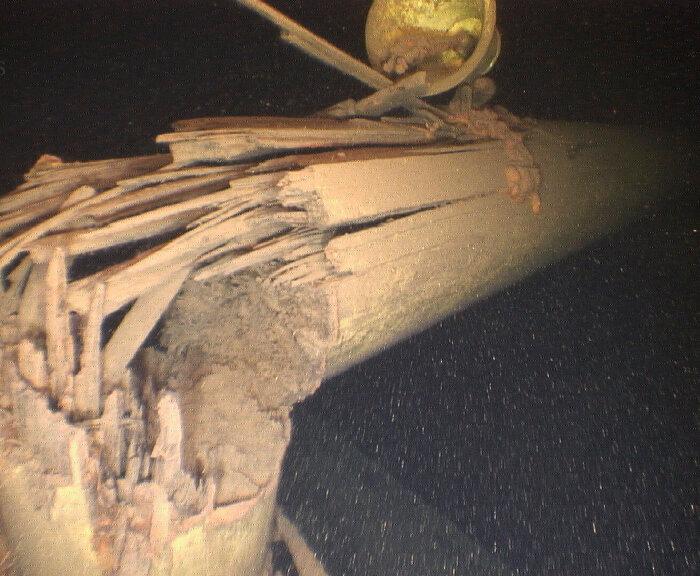
The freighter’s wreckage was located in Canadian waters by a U.S. Navy team four days after it sank. The ship was broken in two parts, and while several surveys of its ruins were made, none could definitively determine how the ship collapsed.Multiple theories on the ship’s demise range from faulty hatch closures to grounding on the treacherous Six Fathom Shoal near Caribou Island to faulty navigational charts that McSorley used to sail the ship into the worst part of the storm. Bacon shares the theories without advocating one over the others.
But at least one prominent person didn’t appreciate the gravitas of the work. When Jimmy Fallon sought Lightfoot’s permission to make a comedy skit based on the song, the musician angrily shut him down. Of course, Bacon takes his book’s title from one of the lines from Lightfoot’s poetic lyrics.
“The Gales of November” is an uneven work, but when it is on target, it is a compelling and often heartbreaking memorial to the Edmund Fitzgerald’s lost crew.