The full moon will loom higher in the night sky this December than it will for nearly the next two decades. Due to a rare event involving the moon’s orbit that occurs only every 18.6 years, next month’s full moon, dubbed the Cold Moon, will reach the absolute extreme.
To top it off, December’s full Cold Moon will seem significantly bigger and brighter than usual as it'll be a supermoon—the last of three supermoons in 2025.
On Dec. 4, at 6:14 p.m. Eastern Time, the Cold Moon will reach technical fullness—when it’s exactly opposite the sun—making it as round as it can possibly be. However, for those wanting a wider window for viewing, it will look almost full the nights before and after the full moon occurs.
Extreme Heights Every 18.6 Years
Next month, the moon will rise higher than what’s typical for the month of December—when the full moon regularly falls closest to the solstice and is the highest of the year.It’s common knowledge that the moon’s arc rises and falls with the seasons; it rises to its highest in winter and is at its lowest in summer (while the inverse is true in the case of the sun). We know this ranging arc is effectuated by the Earth’s axial tilt of 23.4 degrees with respect to the its orbital plane, or elliptic. It’s the reason we have four seasons.
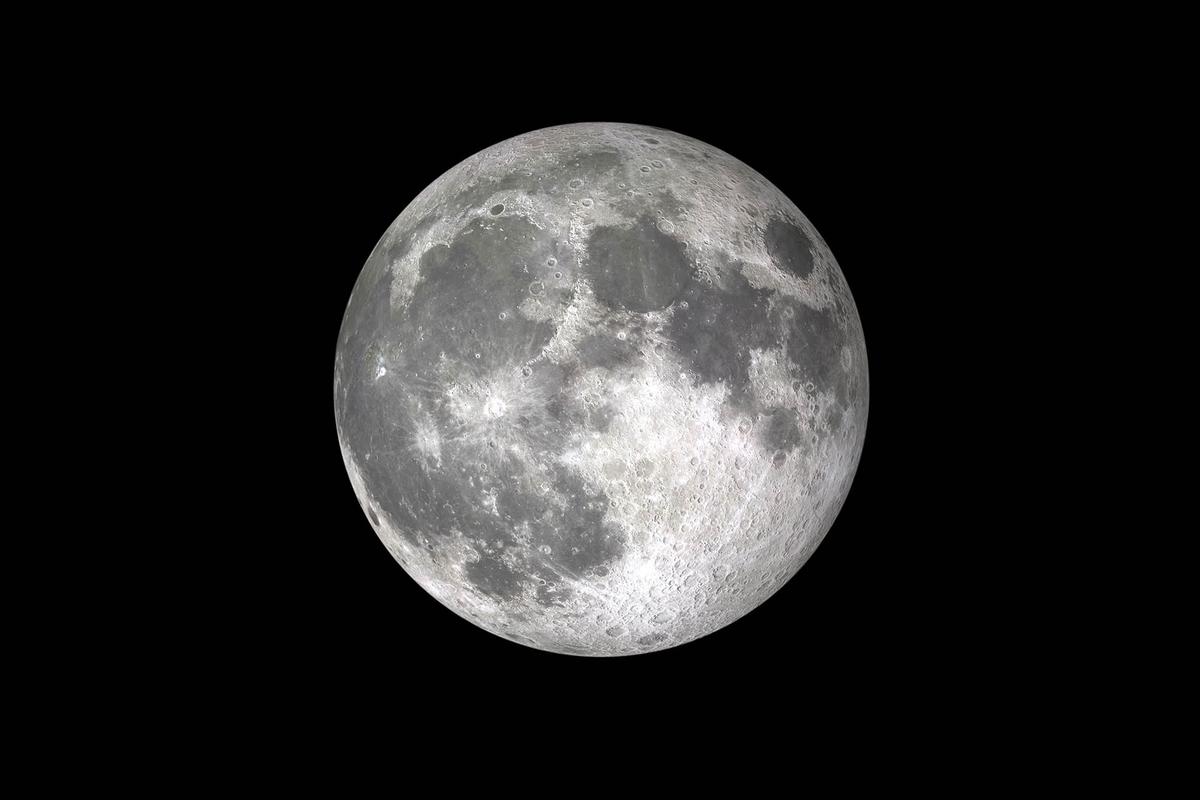
But there’s a more obscure celestial mechanism at work that subtly adds or subtracts from the moon’s arc’s height, irrespective of Earth’s axial tilt: The moon’s orbital plane isn’t exactly flat with the elliptic (Earth’s orbital plane) but sits 5.1 degrees askew. It’s orbital plane must, therefore, cross the elliptic at two separate points, called lunar nodes, while an imaginary line connecting the two nodes rotates.
This rotating plane follows neither the moon’s orbit around the Earth nor the Earth’s around the sun but rotates with respect to the stars and the celestial equator. Its “nodal precession” takes 18.6 years to complete a single revolution. So while we see the moon arcing smoothly across the sky, its also bobbing up and down imperceptibly between two extremes.
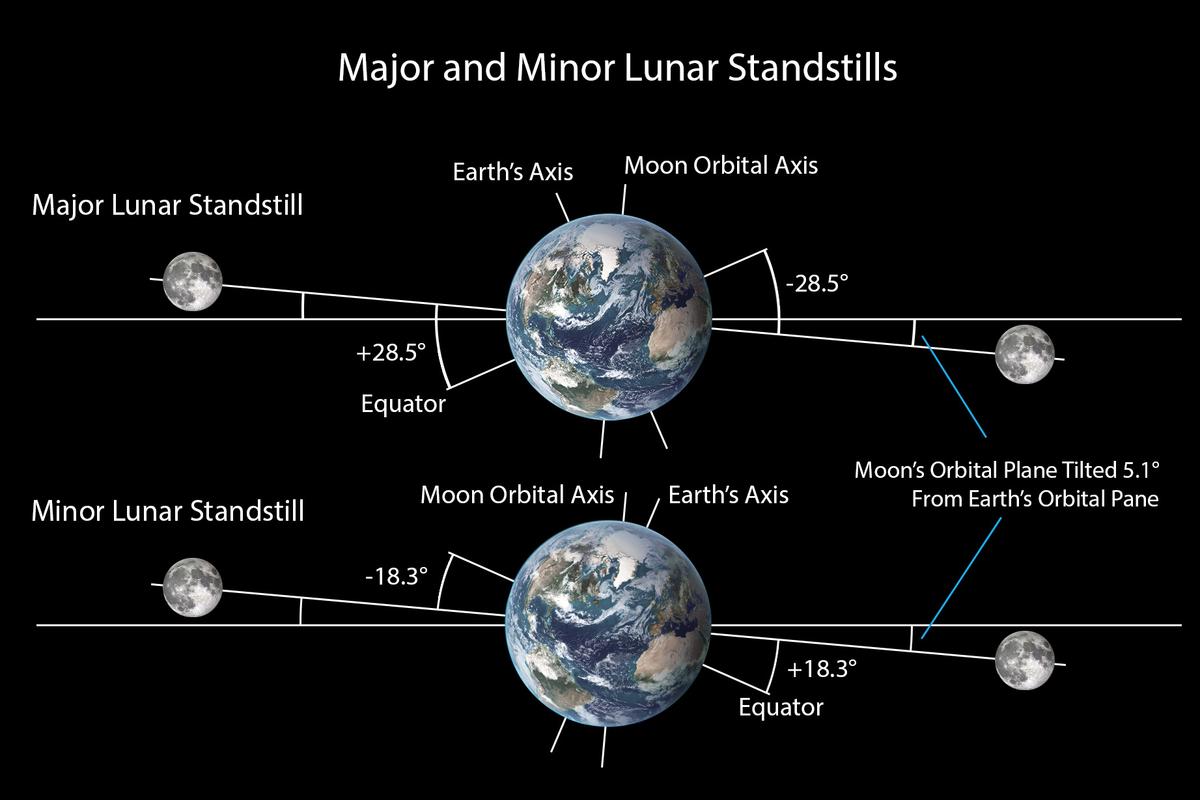
So every 18.6 years this precession will add an extra 5.1 degrees of height to the the moon’s arc (while also widening its rising and setting points to the extreme), increasing it to 28.5 degrees. This event is called a “major lunar standstill” because the moon’s arc reaches it’s extreme height and seems to pause before dipping back down—and it’s most dramatic when winter hits during the solstice.
Conversely, a minor lunar standstill is less impressive, as it’s when the moon’s orbital plane does the opposite by subtracting 5.1 degrees from the height of the moon (while contracts its rising and setting points). The moon’s declination range is minimized to about 18.3 degrees, meanings it could look like any normal full moon during the year.
The Last Supermoon of 2025
Not only will the full Cold Moon soar to its maximum, it will also loom larger and shine brighter than normal next month. This is no illusion; the moon’s diameter will indeed measure up to 7 percent larger than average while its brightness will increase by up to 16 percent. Although the casual observer probably won’t notice the difference, it absolutely will be detectable to the human eye.Obviously, the moon won’t have increased in mass, so why will it seem larger to observers on Earth? Once again, the key lies in the moon’s orbit, which isn’t exactly round but travels in an ellipse. So sometimes it’s closer to Earth and at other times farther away. When it reaches its nearest point, or perigee, the moon becomes a “supermoon” and seems larger while when it reaches its farthest point, or apogee, it’s called a “micromoon” and seems smaller.
Full Cold Moon Folklore
With all this talk of moon sizes and arcs reaching extreme heights, the lore behind the full moon has gotten lost. Why is it called the Cold Moon? The answer must seem as simple today as it did to the Native American tribesmen who named it so many centuries ago.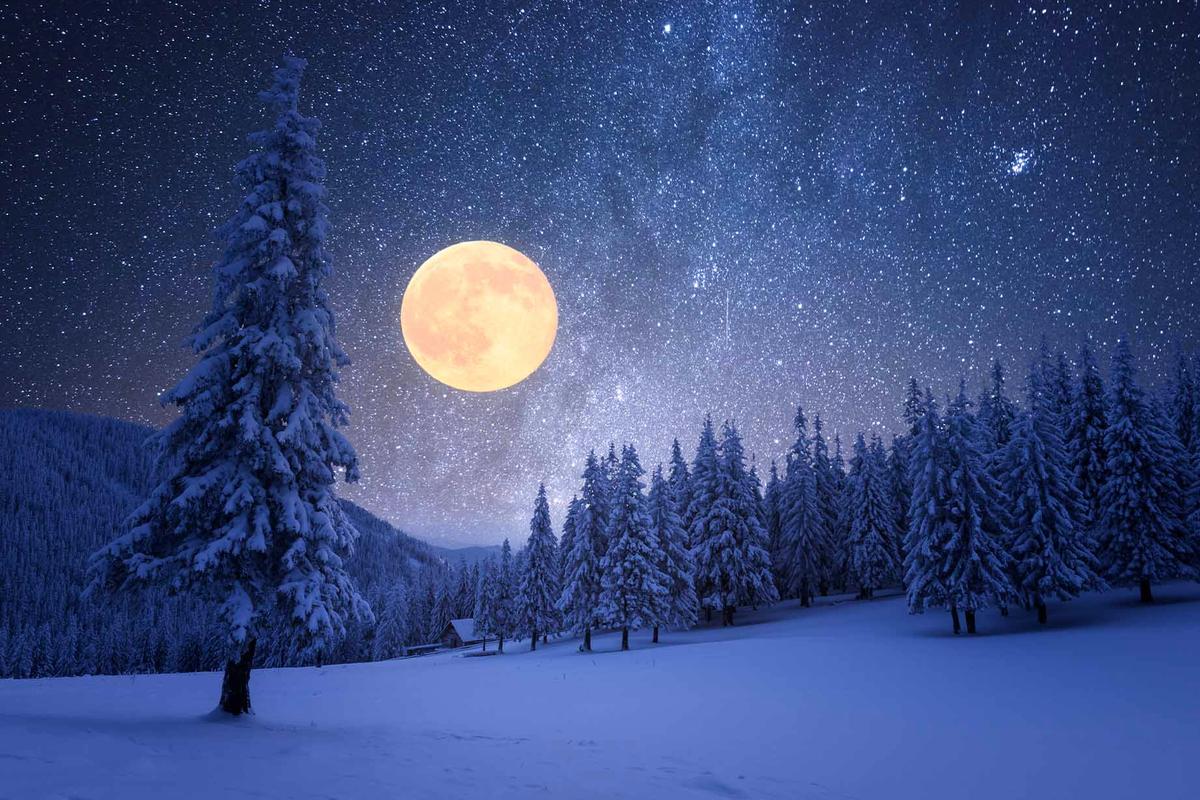
Hearing the cracking in the trees caused by wood and bark contracting in the cold weather, the Cree came up with “Exploding Trees Moon” while the Oglala named it “Moon of the Popping Trees.”
In homage to the majestic bucks, the Dakota called it the “Moon When the Deer Shed Their Antlers.” The names “Snow Moon” of the Haida and Cherokee, as well as “Winter Maker Moon” of the Western Abenaki, are as understandable to people today as the Cold Moon.