NR | 1h 40m | Drama, Romance, War | 1944
Once the music stops, the movie shifts into a more familiar gear, with Wayne doing what he does best: playing John Wayne.
Set against the backdrop of World War II, “The Fighting Seabees” follows Wedge Donovan (Wayne), a brash and respected construction company owner. His civilian crews are contracted by the U.S. Navy to build airstrips, roads, and fuel depots on Pacific islands, which were often under threat of Japanese attack.
The workers are civilians unarmed and untrained for combat, making them easy targets. After some of his men are killed on the job, Donovan grows increasingly frustrated with the Navy’s slow-moving bureaucracy and demands that his crews be given the right to defend themselves. When official approval stalls, he takes matters into his own hands; he arms his men for their next mission, a decision that ends in disaster.
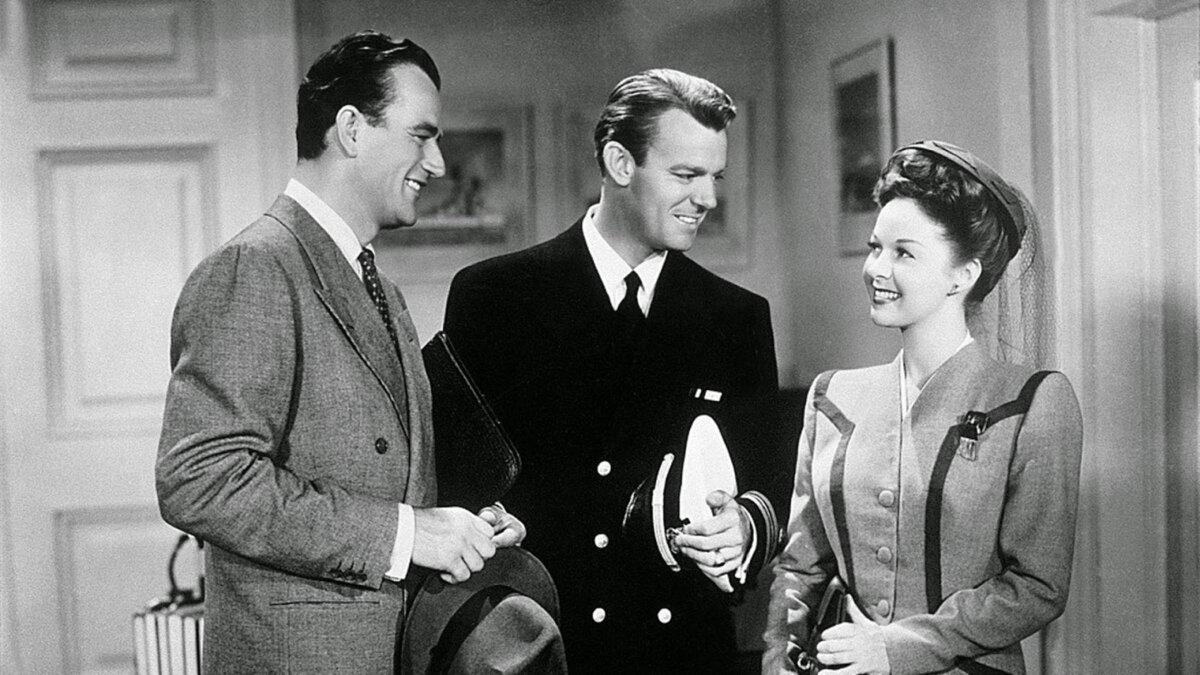
Donovan’s rogue actions catch up with him during a Japanese assault. His hotheaded leadership leads to avoidable casualties, including a serious injury to war correspondent Constance “Connie” Chesley (Susan Hayward). Both Donovan and Navy Lt. Commander Robert Yarrow (Dennis O’Keefe) are romantically entangled with her.


The incident forces Donovan to confront the cost of his defiance and ultimately changes his outlook. The Navy finally approves the formation of the Construction Battalions, C.B.s or Seabees. Donovan is now in uniform and helps to lead the first wave of trained, armed builders.
War as Spectacle
This film about military construction crews is anything but dull. Packed with large-scale battle scenes and colorful supporting characters, it leans more into war movie spectacle than expected from a film about bulldozers and cement mixers.The romance subplot slows the pace, but Susan Hayward adds spark to her role, and Dennis O'Keefe keeps his dignity in a thankless part. For those nostalgic for movies where men burst into song before charging into battle, this film hits the sweet spot.
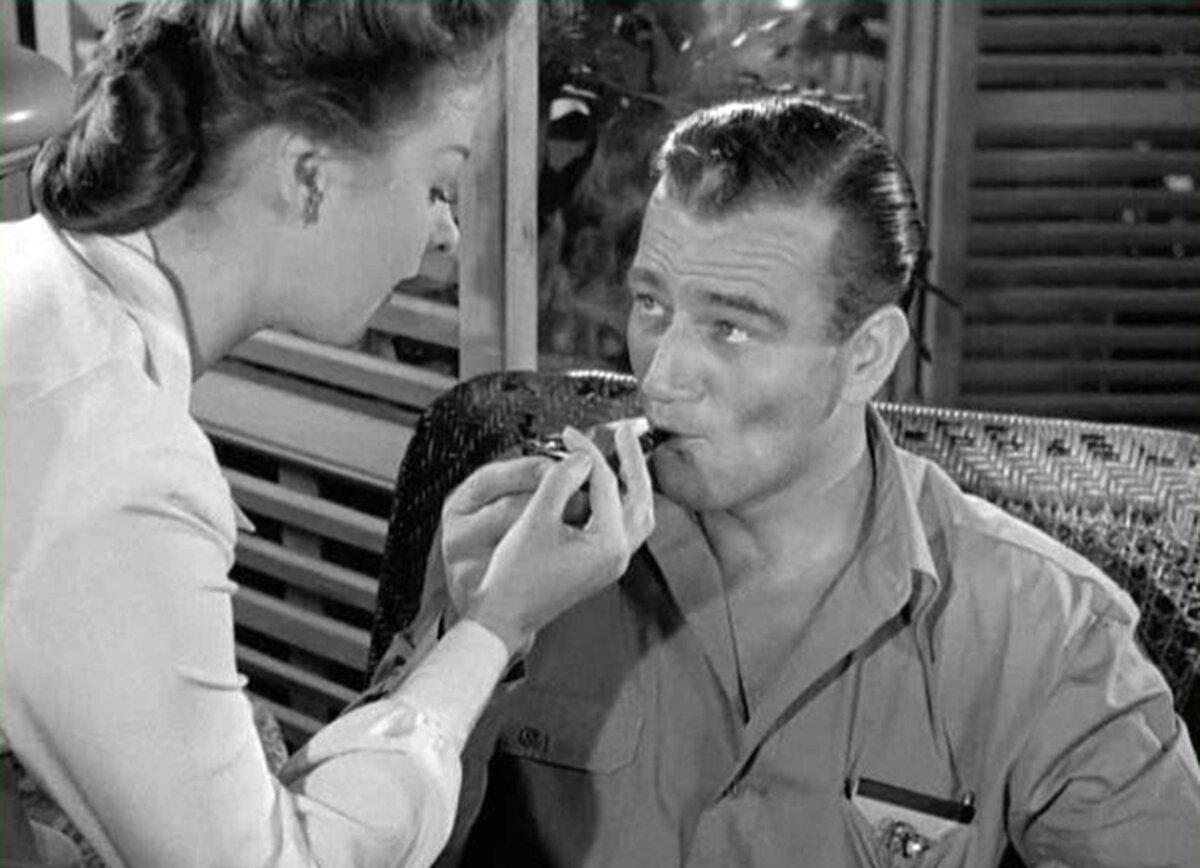
At its core, “The Fighting Seabees” is more about mythmaking than realism. Rugged civilians transform into war heroes, bulldozers into weapons, and one man’s pigheadedness into patriotic virtue.
Donovan, for all his recklessness and ego, becomes the film’s unlikely moral center. He’s criticized, humbled, and eventually celebrated, even as his decisions leave bodies in their wake.
The enemy is broadly drawn, often dehumanized. The film’s tension lies within its hero. Will he fall in line, or must he break the rules to do what’s right?
The movie thrives in its portrayal of the Seabees themselves, an eclectic crew of rough-and-tumble men whose personalities shine through the gritty action. Played by familiar character actors like William Frawley and Paul Fix, they offer more than just cannon fodder for the Japanese forces. Their heroic sacrifices and interesting personalities make their deaths impactful. This balance between bombast and the personal makes the film stand out from typical wartime action films.
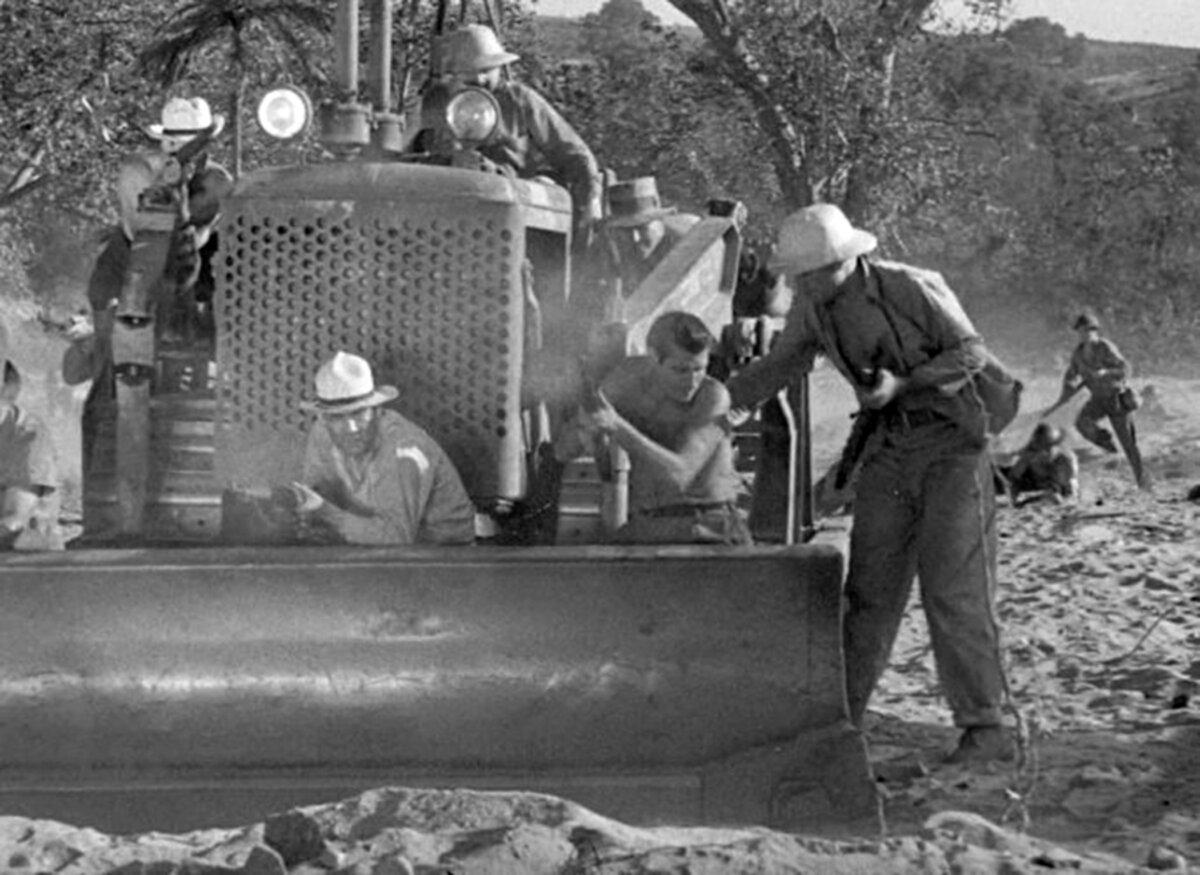
Director Edward Ludwig’s handling of the film’s combat sequences is another highlight. Explosive set pieces convey the chaos of war without veering into gratuitous violence. The large-scale destruction and intense battle sequences add gravitas to the story. The tension between duty and personal pride runs throughout the film, as Donovan’s stubbornness leads to victory, but not without a cost.
The Seabees emerge as a cohesive, battle-hardened unit, and Donovan’s transformation into a team player feels both earned and inevitable. While it may not be the most nuanced war film, “The Fighting Seabees” delivers on its promise.
There’s action, patriotism, and a touch of melodrama, making it an entertaining watch for fans of old-school Hollywood war films.