After the fall of the Western Roman Empire in 476, Europe splintered. The blood-bought stability Rome had once guaranteed most of its citizens became a distant memory.
Wars ensued across the European continent, spreading famine and disease. Three centuries of conflict between competing kings devastated the former empire’s infrastructure, including ports, schools, libraries, and other centers of cultural exchange.
Turmoil in Central Europe
Charlemagne descended from the Franks, a Germanic tribe that settled in present-day France.The first Frankish king was Clovis I (circa 466–511). A member of the Merovingian family, Clovis was the first noteworthy Frank to convert to Catholicism. Most other Germanic tribes were either pagan or Arian. The term “pagan” referred to polytheistic non-Christians, while Arianism was a Christian heresy that negated the triune nature of God.
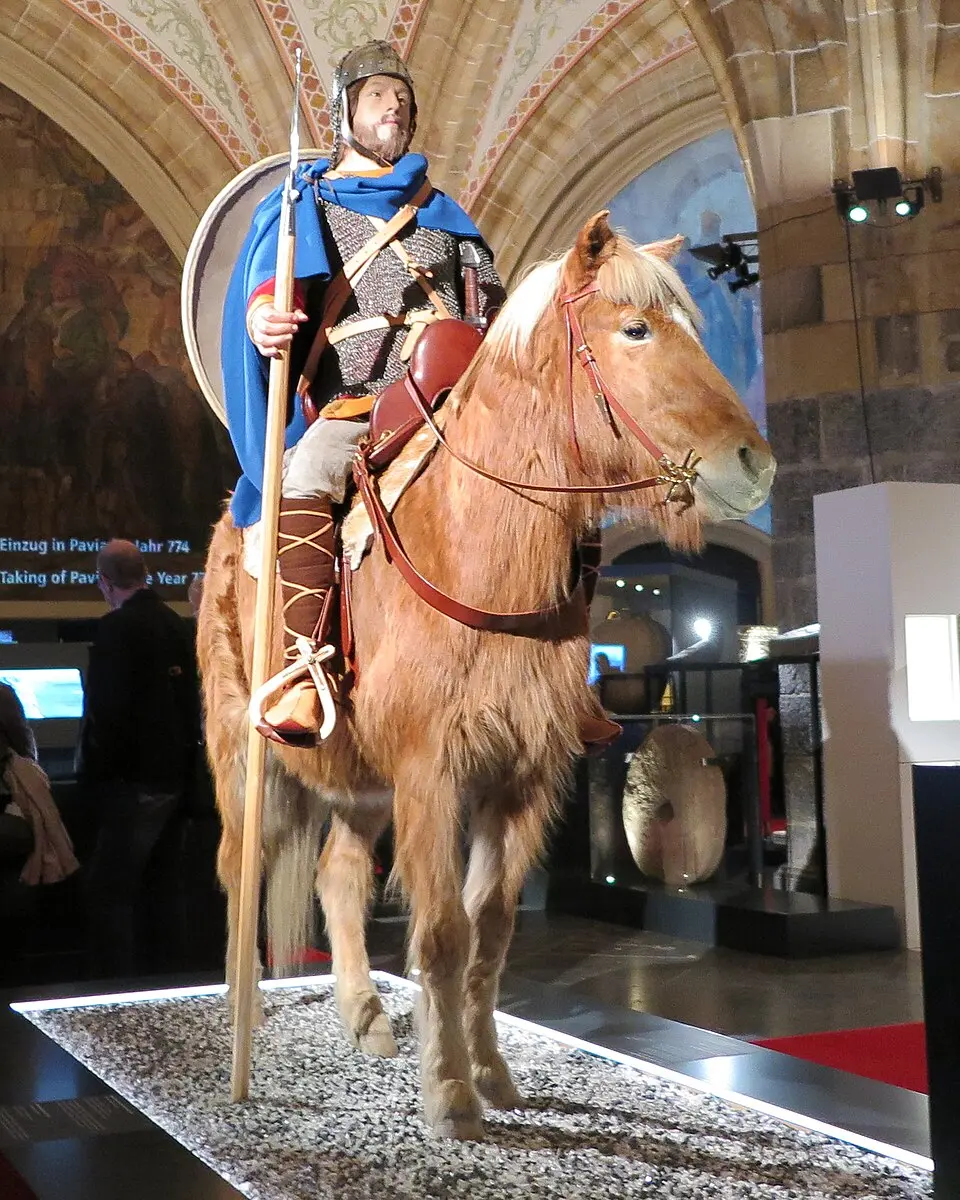
Clovis’s baptism spurred widespread conversions among the Franks. Their kingdom drew strength from a homogenous religious identity. Belief in Catholicism also earned them support from the Catholic Church in Rome, which later proved vital for their political aspirations in Europe.
By the 700s, the Merovingian king was little more than a ceremonial head of state. Executive power lay with the “mayor of the palace,” a title that granted one authority to vet court personnel, appoint administrators throughout the kingdom, and command the royal army.
In 751, with the approval of Pope Zachary (679–752), the last Merovingian king was deposed, tonsured, and confined to a monastery in present-day Saint-Omer, France. The throne went to Pepin III (714–768), also known as “Pepin the Short,” a mayor of the palace who plotted to govern the Franks in his dynasty’s name.
Charles’s Ascent to Power
When Pepin III died, his two sons inherited the Frankish kingdom as joint rulers.Though bound by blood, Charles and Carloman tried to undermine one another in a series of ploys. Charles’s sympathizers attributed their quarrels to misjudgment by Carloman’s counselors, while the younger brother’s allies depicted Charles as a power-hungry despot.
In 771, as the threat of civil war loomed, Carloman died unexpectedly of natural causes. His sudden death proved convenient for Charles, who became the Franks’ absolute ruler.
Like his father, Charles continued to defend the papacy in Rome. He vanquished the Lombards in northern Italy, repelled the pagan Saxons in present-day Germany, and ventured into northern Spain to defend papal territories from the Muslim caliphate that ruled the Iberian peninsula.
His shrewdness, fierceness, and more than 50 military campaigns earned Charles the grander name “Charlemagne,” which is French for “Charles the Great.”
In 800, on Christmas Day, Charlemagne traveled to Rome, where Pope Leo III (750–816) crowned him Emperor. The Carolingian Empire covered most of modern France, Germany, Belgium, the Netherlands, and Italy. As the first western emperor after 300 years, Charlemagne made new, powerful enemies. But he also gained the power to lift Europe out of turmoil.
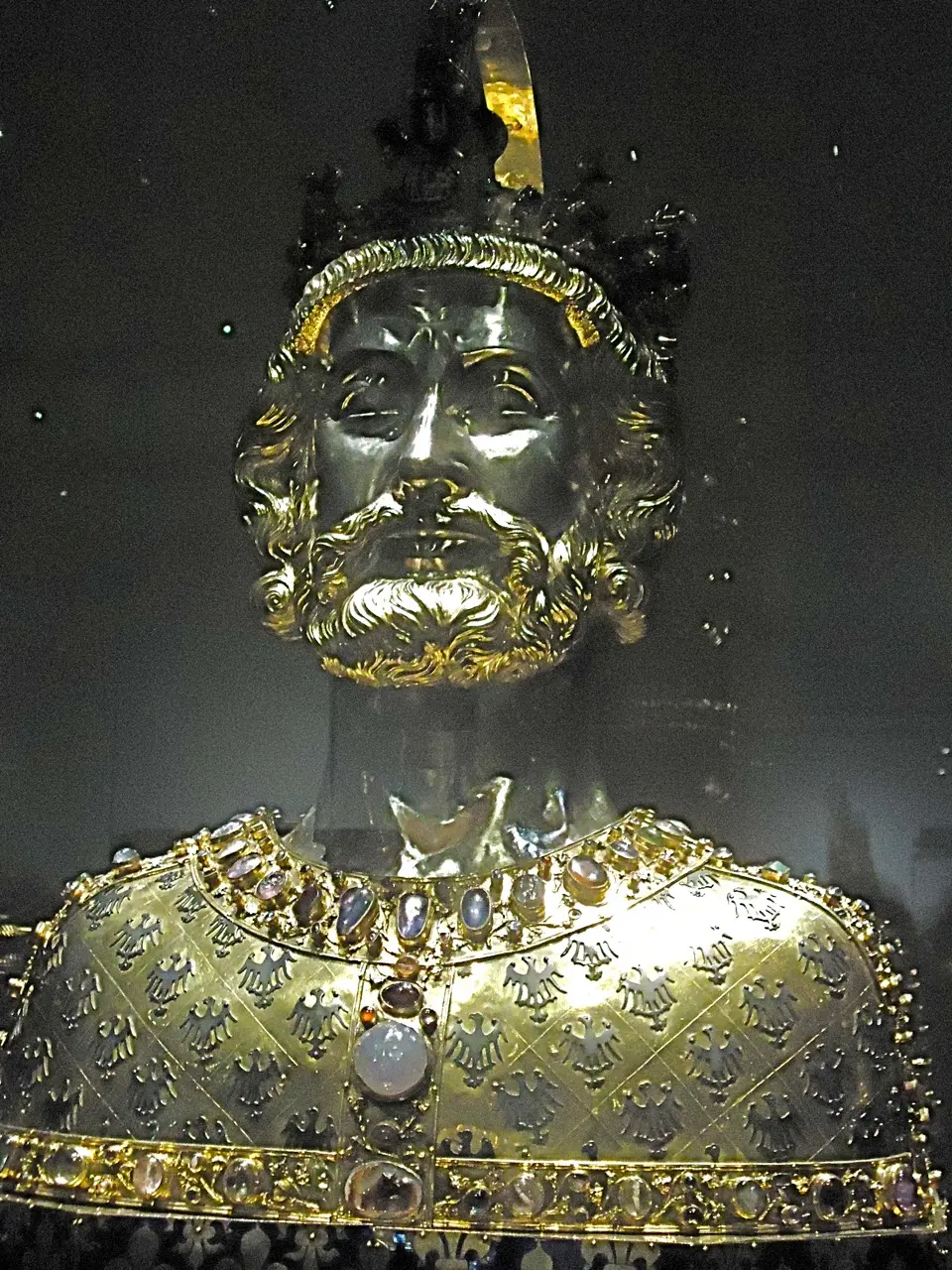
‘The Life of Charlemagne’
Charlemagne’s life was chronicled by Einhard (circa 775–840), a loyal scholar and courtier who left behind telling documents about the new emperor’s reign.Einhard also commended Charlemagne’s eloquence, which won him delicate debates and crucial support from hesitating allies: “[Charlemagne] had the gift of ready and fluent speech, and could express whatever he had to say with the utmost clearness.”
In the 700s, Latin was still the formal language of diplomacy. It was also the official language of the Catholic church, which by then availed itself of Latin translations of the Hebrew Old Testament and the Greek New Testament.
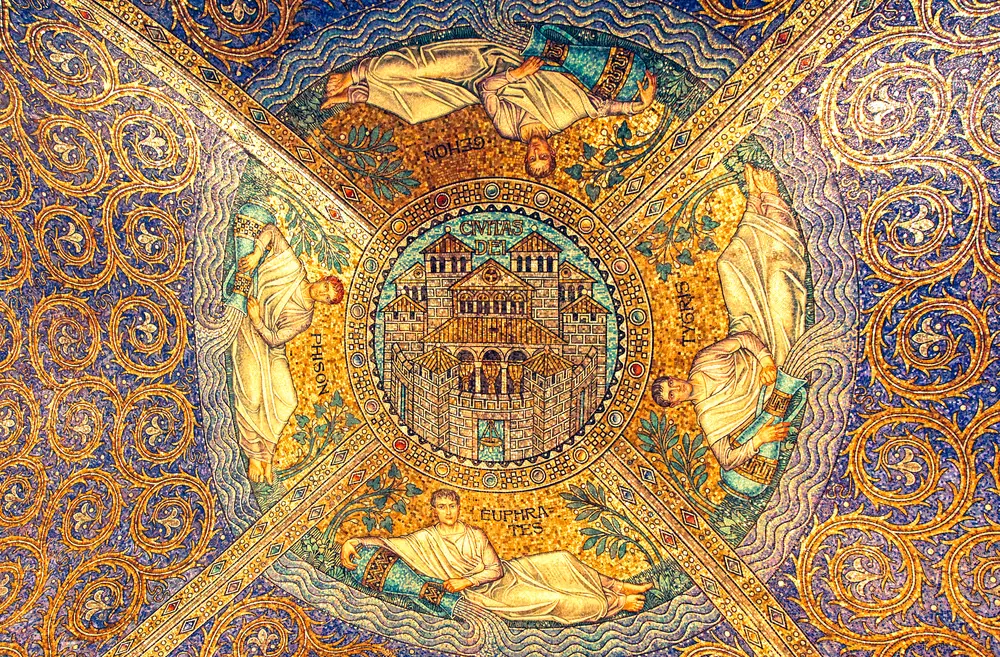
Charlemagne was a devout Christian. His piety took many forms. He built impressive cathedrals like the one in his native Aachen, where he was buried in 814. The cathedral is one of Europe’s oldest; its rich layout embodies the aesthetic shift from the round shapes of Romanesque buildings to the upward-reaching, pointed arches of Gothic architecture.
Spurred by his love for Latin, Charlemagne toiled to reform the church and education. The ancient language was for him a portal into faith—a path to enrich his spiritual life, and to help others enrich theirs.
Charlemagne’s Educational Reforms
In 789, Charlemagne’s court published a “General Admonition.” The text declared Charlemagne the spiritual steward of the Frankish Empire. As such, he was responsible for the moral soundness of his people, which depended closely on the church’s integrity.Vexed by what he deemed a disorganized clergy who took its obligations too loosely, Charlemagne exhorted priests and bishops to resist corruption and perform their duties for the sake of everyone’s salvation. Part of the problem, he believed, lay in people’s ignorance of Latin, which precluded genuine connection with Christian literature, including the Bible.
To promote literacy, Charlemagne first turned his palace into an academy. The emperor’s “palace school” had hitherto instructed trainees in military strategy and court manners. Charlemagne retained but broadened the original curriculum. Details are uncertain, though the new syllabus likely included poetry, literature, astronomy, and virtually every existing discipline.
Charlemagne summoned leading intellectuals from Frankish and allied territories to serve as tutors and conduct independent research. Among the most influential academics was Alcuin of York (circa 735–804), whom Einhard called “the greatest scholar of the day.”
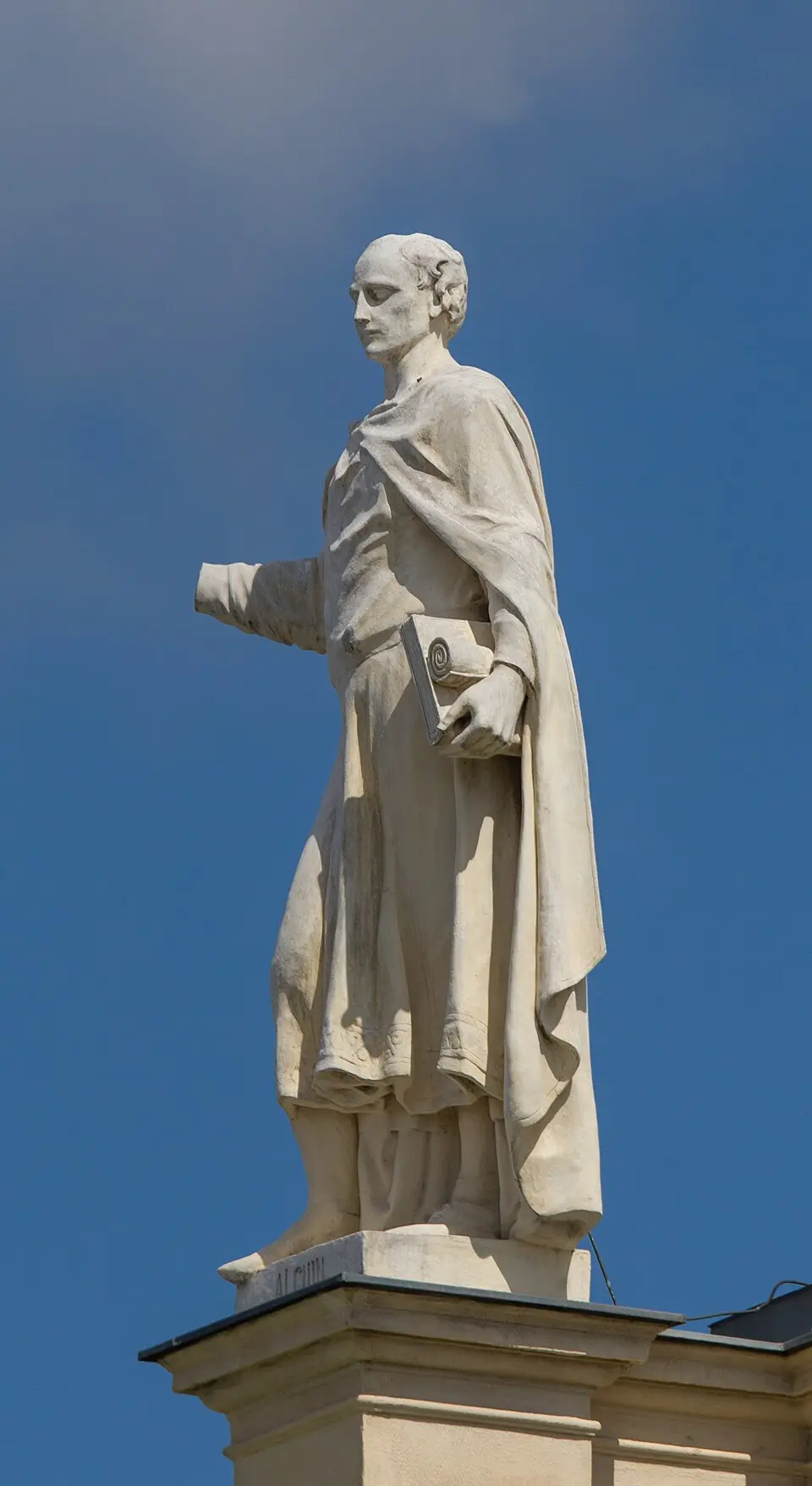
Alcuin’s leadership helped Charlemagne scale the palace school model across his empire. The “General Admonition” required monasteries to establish schools on-site. Though humbler than the imperial academy, these boys-only institutions taught clergymen and laypeople the “seven liberal arts”: Latin grammar, rhetoric, logic, geometry, arithmetic, astronomy, and music.
Alcuin supervised the formation of these schools. He also sponsored the creation of an universal Latin curriculum. The curriculum standardized teaching and helped keep the language alive, ensuring the survival of the Greco-Roman and Christian traditions for generations to come.
Carolingian schools were also required to teach singing and liturgical hymns. Pupils memorized the Psalms and other anthologies of religious songs, which were believed to encourage a deeper relationship with the Bible.
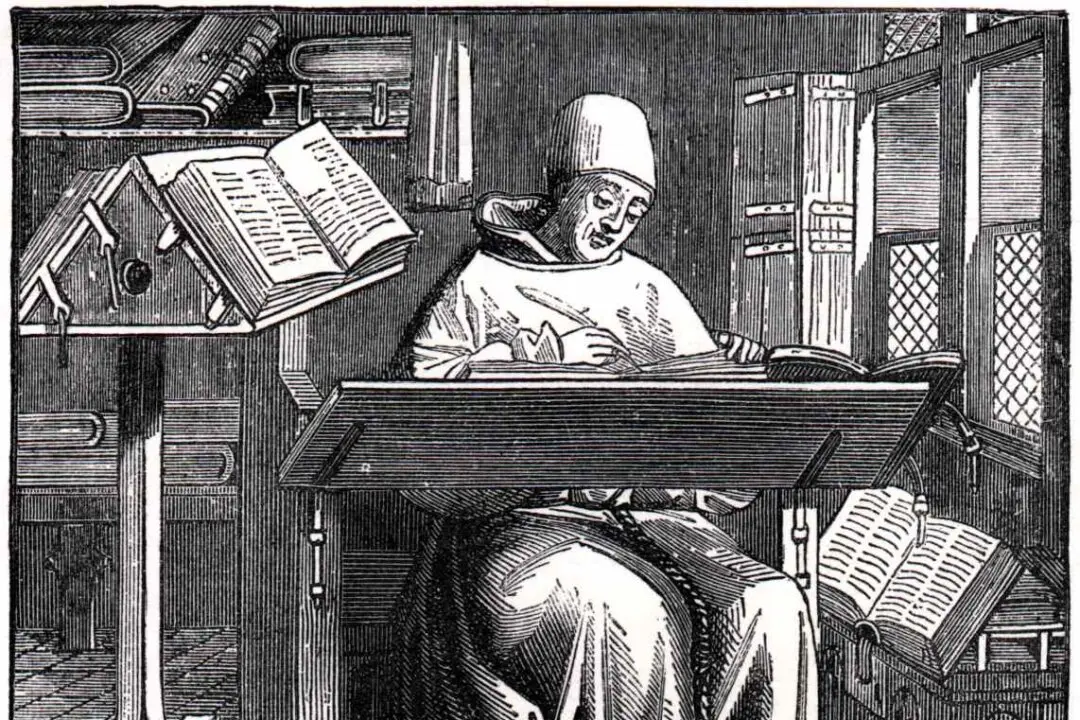
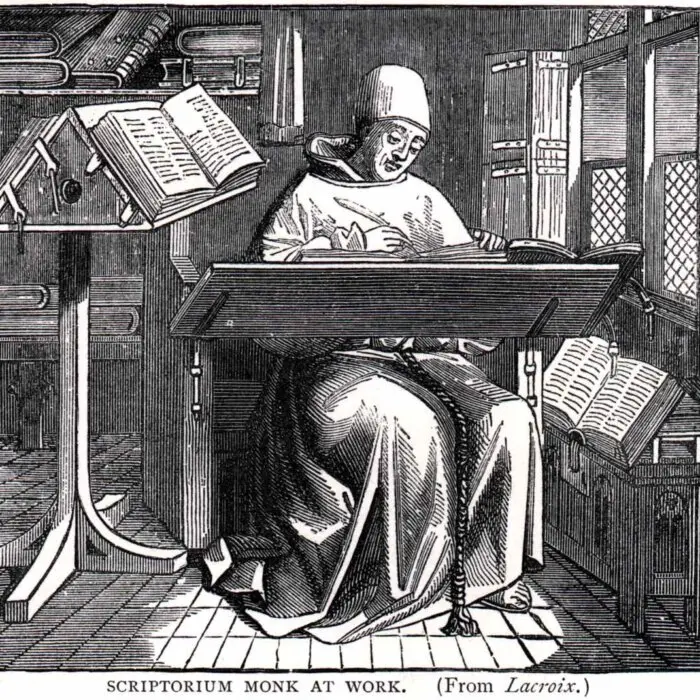
To facilitate the transcription, transmission, and study of texts, Alcuin and his fellow scholars introduced a seemingly trivial but groundbreaking invention: lowercase letters. Officially called the Carolingian minuscule, this new tool revolutionized writing.
Until the late 700s, scribes had almost always used upper-case letters. They put no spaces between words, nor did they use punctuation. This habit saved precious paper, but it hindered legibility; experts continue to struggle to decipher pre-Carolingian manuscripts.
Preserving the Past
Charlemagne’s efforts weren’t unprecedented. Three centuries earlier, the political counselor Boethius (circa 480–524) and the politician-turned-monk Cassiodorus (circa 485–585) made similar attempts. Boethius spent countless hours translating Greek philosophy into Latin, while Cassiodorus founded the Vivarium: a monastery in southern Italy dedicated to copying and translating valuable texts. Their purpose was the same: to preserve edifying literature for posterity’s sake.Though widely influential, these efforts were largely singlehanded. Only a systematic top-down program like Charlemagne’s could ensure lasting change.
According to a 2011 estimate by Dr. Eltjo Buringh, Carolingian monasteries produced more than 100,000 manuscripts in the 800s alone, of which about 7,000 survive. Only 2,000 survive from the entire historical record before the 9th century.
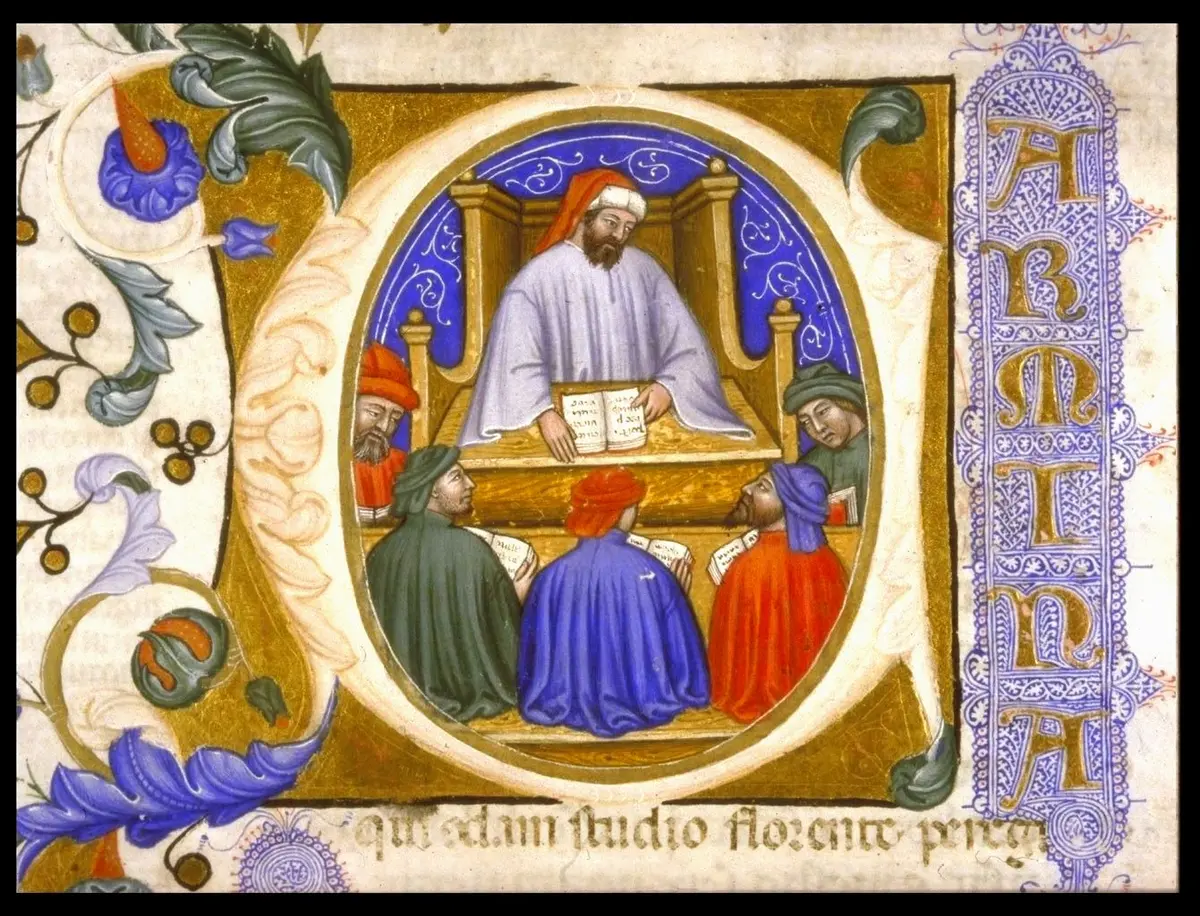
Charlemagne was mainly interested in Christian literature. But, like Boethius and Cassiodorus, he also understood that the Greek and Roman traditions were worth safeguarding, for they offered useful insights into ethics and politics.
The emperor’s efforts to promote literacy and deepen his people’s relationship with God resulted in the preservation of key religious and philosophical texts. Those texts later fueled movements as different and pivotal as the Protestant Reformation, the Italian Renaissance, and the French Revolution.
The Carolingian Renaissance’s indelible mark is indeed a testament to the world-shaping power of the written word.