In the 6th century, at the twilight of the Roman Empire, competing kings sought absolute control over Italy. Their schemes wrought destruction over a once-peaceful land that had reared poets, orators, and patrons of the arts. War destroyed monuments, schools, and libraries; it endangered literacy and threatened the survival of Rome’s cultural inheritance.
Yet hope remained. Amid the ruins of his conflict-ridden home, a devout politician retreated to the countryside and founded a monastery. The religious center was meant to preserve books and safeguard wisdom. But why, in times of war, did Cassiodorus turn to ideas?
An Empire in Shambles
Historians often attribute the collapse of the Roman Empire to invasions by the “Goths,” an umbrella term for Germanic tribes from northern and eastern Europe.
The Goths migrated westward largely because of Attila the Hun (circa A.D. 406–A.D. 453), a fierce, bloodthirsty conqueror whose destructive campaigns made him known as “The Scourge of God.”
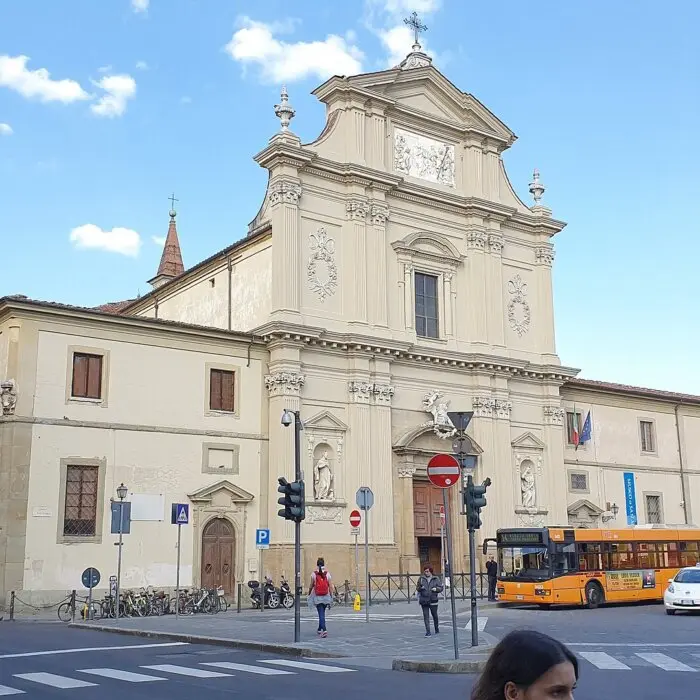
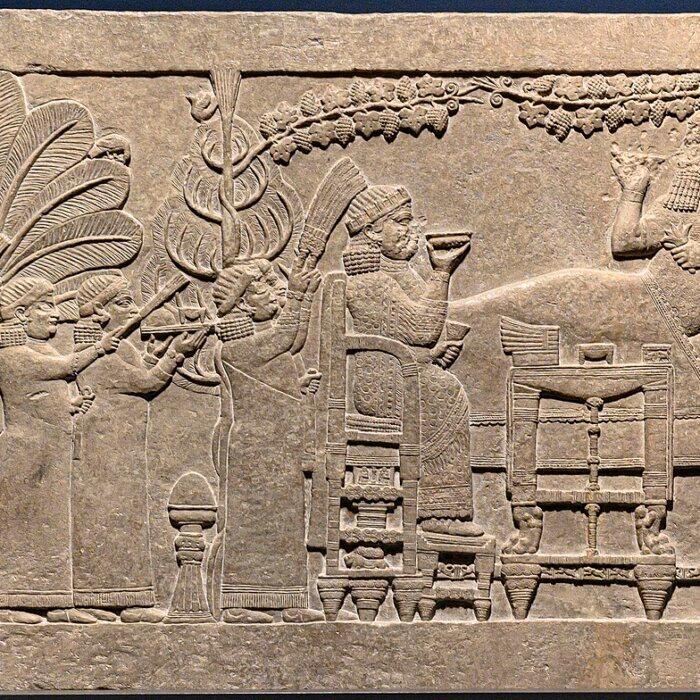
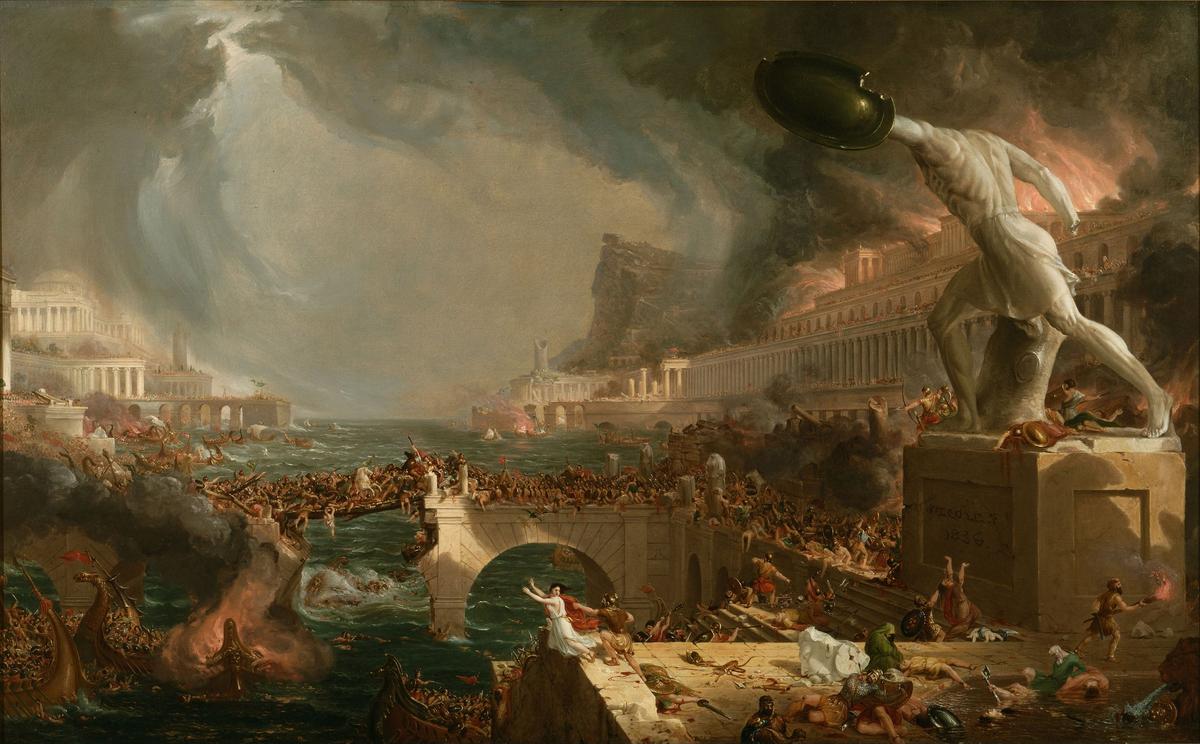
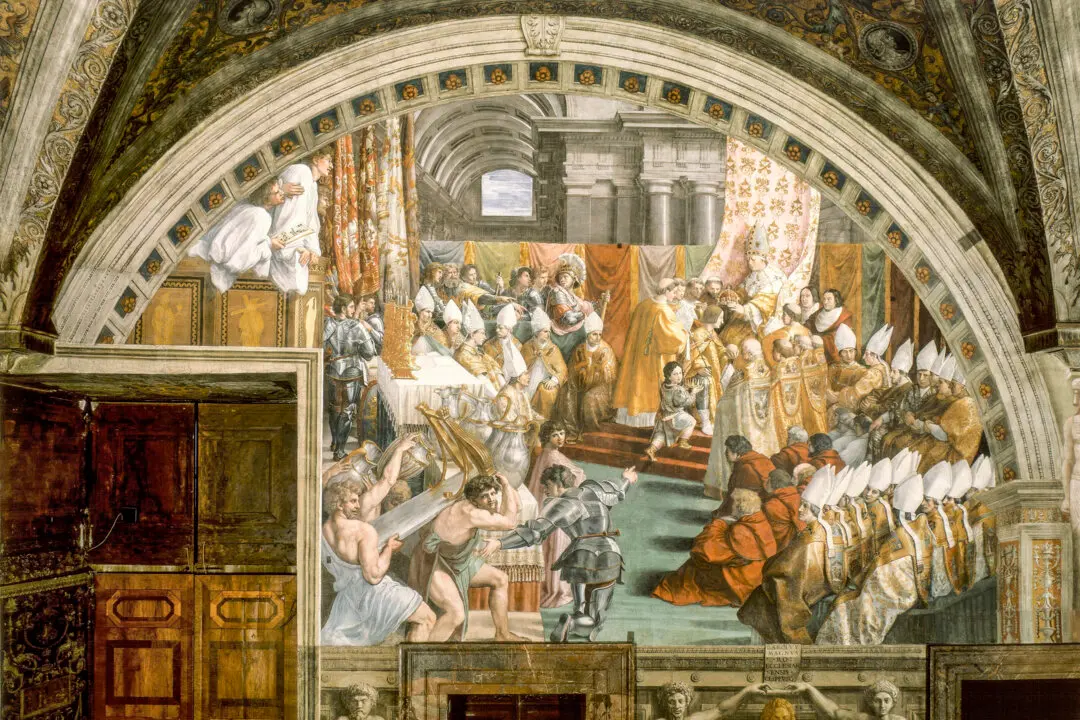
The Roman Empire’s collapse was gradual, but scholars usually choose A.D. 476 as its last year. Odoacer (circa 433–A.D. 493), a Gothic commander and former member of the Roman army, deposed Rome’s last emperor: a 10-year-old puppet regent named Romulus Augustulus (460–530). He then established a new kingdom and annexed most of Rome’s territories in and around Italy.
Yet the Empire endured. Since the early 4th century, it had been managed from Constantinople (Istanbul), which became its capital by decree of emperor Constantine (272–337).
Constantine had also made Christianity the Empire’s official religion. These decisions were largely responsible for splitting the Empire into east and west. Although the Goths took over Rome’s western territories, Constantinople remained the formal seat of the Eastern Roman Empire. Its survival kept afloat much of the cultural inheritance that the Gothic invasions were threatening.
The Gothic War
Odoacer’s kingdom didn’t last long. The Eastern emperor Zeno (circa 425–491) contracted the Ostrogoths, a Gothic tribe led by Theodoric the Great (circa 454–526), to invade Italy. Theodoric seized Odoacer’s lands, forced him to capitulate in Ravenna, and murdered him at a banquet falsely advertised as a reconciliatory ceremony.
Theodoric claimed the throne and became the monarch of the Ostrogothic Kingdom. Although he’d previously served the Eastern emperor, his allegiance lay with the Ostrogoths, hence his frequent incursions into eastern Roman territories.
When Theodoric died in 526, his grandson succeeded him. Like Romulus Augustulus, Athalaric (516–534) was very young. He lived an excessively hedonistic life and died around age 18.
Athalaric’s death plunged the Ostrogothic Kingdom into chaos. Exploiting its instability, the Eastern emperor Justinian I (482–565) launched a full-blown campaign to reconquer Italian territories and restore Rome’s former glory. One of many “Gothic Wars,” the conflict lasted almost two decades.
Countless wars preceded Justinian’s campaign. But almost none of them inspired the same yearning for cultural preservation. As battling armies destroyed cities, schools, and libraries throughout the Mediterranean, a few champions of literacy emerged. Most notable among them was Cassiodorus, a politician who devoted his later life to stewarding literature.
Cassiodorus: Statesman and Scholar
Flavius Magnus Aurelius Cassiodorus (circa 485–585) was born near Catanzaro, southern Italy, from a long line of accomplished politicians and military generals. He began his career as advisor to his father, who was Theodoric the Great’s chief political aide.
An able diplomat and shrewd strategist, Cassiodorus quickly rose through the ranks. His public service culminated with the same role his father had once served. The “Praetorian Prefect” was like a modern chief of staff, except that Cassiodorus also controlled a battalion of elite imperial guards.
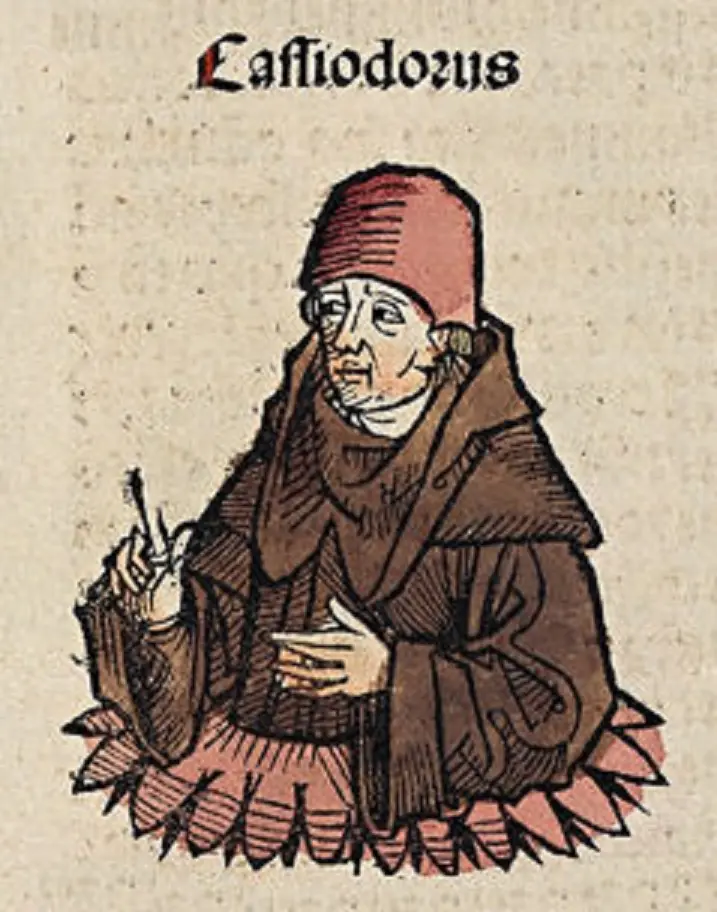
His successful career suggests a thorough education in law. Cassiodorus also studied Greek and Latin literature, likely with the support of private tutors. This extensive education made him a compelling rhetorician. He was often tasked with drafting official letters for Theodoric and Athalaric’s courts.
Near the end of his political career, Cassiodorus published a selection of his correspondence under the Latin title “Variae” (“miscellany”). The letters show a curious, perceptive mind. Between formal sentences to kings and emissaries, Cassiodorus often digressed on music, mathematics, and philosophy. In a message to an administrator in southern Italy, he spoke fondly of his native town, where “life passes without sorrow, since hostile seasons are feared by none.”
Shortly after Justinian’s Gothic War, Cassiodorus left for Constantinople, where he spent seven years studying theology and nourishing his Christian faith. Time away from politics allowed him to begin writing historical accounts, philosophical treatises, and theological commentaries.
Greek was also the language of the New Testament and of early biblical commentaries, which mattered greatly to Christians like Cassiodorus.
His long stay in Constantinople put him in a unique position to bridge the Latin and Greek worlds. He taught Greek privately and translated Greek texts into Latin. In his later life, he abandoned politics altogether and returned south, where he left his most significant mark.
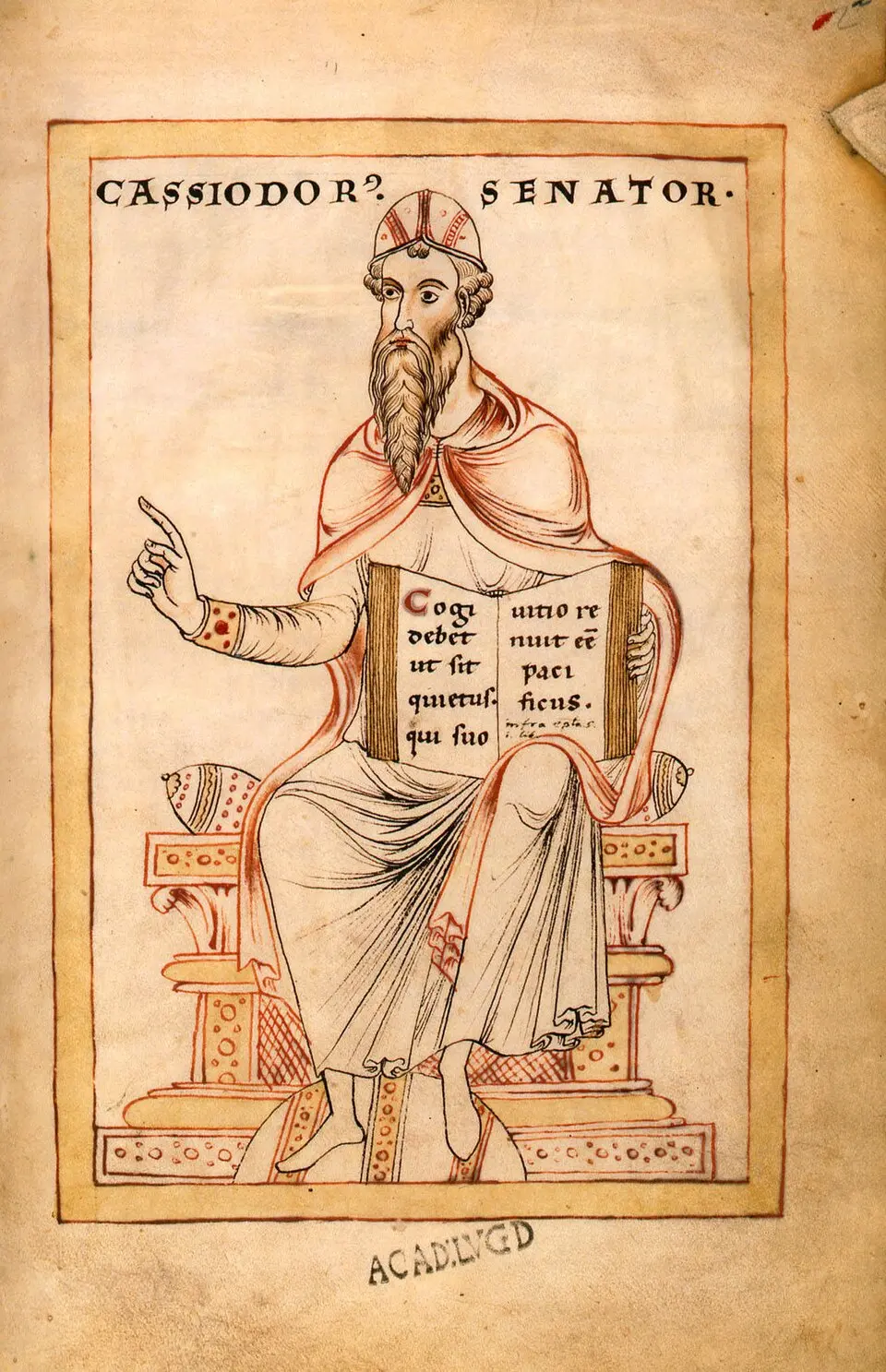
The Vivarium
Cassiodorus’s family owned a large estate near his birthplace in Catanzaro. There, by the Ionian shores that joined the eastern and western Mediterranean, he founded a monastery.
Unable to settle in Rome, the former politician chose his native town as an alternative.
The Vivarium included a communal residential area for monks and secluded buildings for hermits who wished to live in solitude. The complex had a large library and a bookstore for visitors. According to the Christian principle of charity, it also offered shelter to the needy and treatment for the ill.
The monastery had no central authority. Although senior monks taught Greek and other subjects to junior members, everyone had considerable time for self-guided study. Cassiodorus wrote to his fellow monks:
“I was moved by divine love to devise for [the monks at the Vivarium], with God’s help, these introductory books to take the place of a teacher. Through them, God willing, I believe that the textual disposition of Holy Scripture and a compact sketch of secular letters may be unfolded.”
The Vivarium’s curriculum included works from “earlier writers which we justly praise and gloriously herald to later generations.” The “introductory books” were meant to help “anyone who seeks to know the source both of worldly knowledge and of the salvation of the soul.”
Although it was formally a Christian institution, the Vivarium’s main purpose was to preserve manuscripts. Monks were tasked with finding, copying, translating, and annotating Greek and Latin works in hopes of saving them for posterity.
Most books in their library were Christian, be they copies of Scripture or biblical commentaries. But the Vivarium’s vast collections spanned virtually every author and genre available at the time. Against criticism from more traditionalist peers, Cassiodorus openly encouraged his fellow monks to study and preserve non-Christian authors like Cicero and Aristotle, whose teachings in rhetoric and ethics he deemed indispensable to become a well-rounded person.
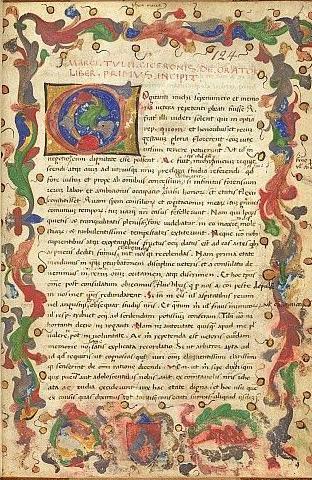
The Vivarium’s editions quickly garnered interest among the learned, not least because of their dignified designs. Moved by Plato’s notion that beautiful things are also good, Cassiodorus stressed the need to produce elegant, ornate manuscripts. He even suggested that, for a Christian, creating a beautiful manuscript of sacred texts was a “holy work.”
Cassiodorus’s Legacy
Few monasteries in the 5th century had undertaken such demanding intellectual tasks. Their interest in manuscripts was sporadic, and their efforts were disorganized. After Cassiodorus, rigorous transcription and translation became essential activities of any monastery.
Against his hopes, the lengthy Middle Ages brought more war and instability. Often immune to political vicissitudes, monasteries like the Vivarium became bastions of culture and centers of learning. If Plato and Aristotle’s works, copies of the Bible, and other foundational texts survived centuries of conflict and neglect in the West, credit belongs almost exclusively to monks-turned-scribes throughout Europe.
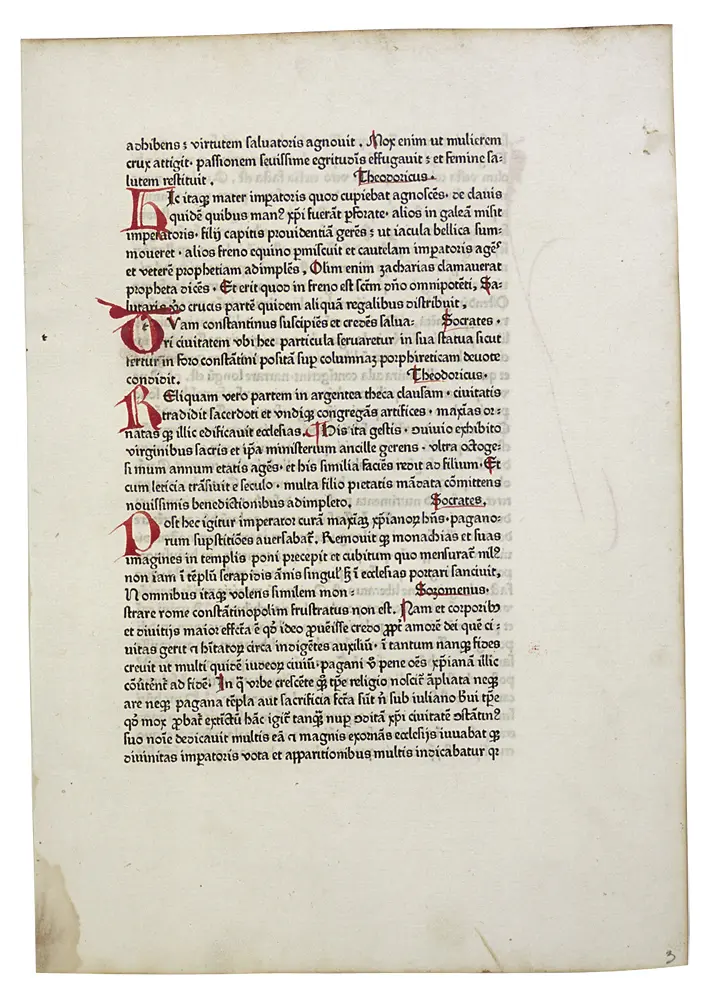
Cassiodorus’s world-shaping devotion to knowledge stemmed from the conviction that a thriving civilization feeds on good ideas. He understood that a functioning society’s organizing principles emerge from sound thinking; that part of the antidote to war and cultural decay is careful study, not as a self-serving pastime, but as a path to preserve knowledge, discover wisdom, and forge a better future.