In 1861, Cadet George Armstrong Custer (1839–1876) graduated last in his class at West Point. Four years later, when the Civil War ended, he was a major general commanding a division of cavalry.
“Custer Luck,” as some called it, had graced the fortunes of this young officer throughout four years of war. Again and again, he led his men from the front, galloping ahead of them and urging them to attack, always at great personal risk. Though he was wounded once, and though 11 horses were shot out from under him, he seemed to entertain no fear of death and remained very much alive at the war’s end.
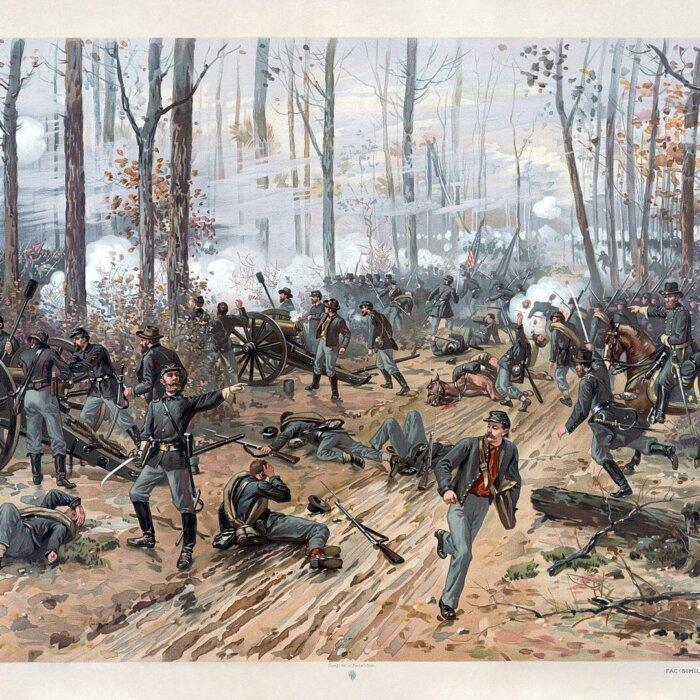
In volume two of his monumental history “The Civil War,” Shelby Foote described Custer’s attack on Jeb Stuart’s cavalry at Gettysburg:
“Custer, whose love of combat was exceeded only by his ache for glory, saw the rebel column approaching and moved fast. ‘Come on, you Wolverines!’ he shouted, four lengths in front of the lead regiment, his long yellow ringlets streaming in the wind.”
Foote then noted that Custer’s Michigan troopers made up the majority of Northern casualties in this sideshow to Pickett’s Charge. Moreover, by the war’s end, Custer’s Michigan troopers suffered “a larger number of killed and wounded than any other cavalry brigade in the Union army.”
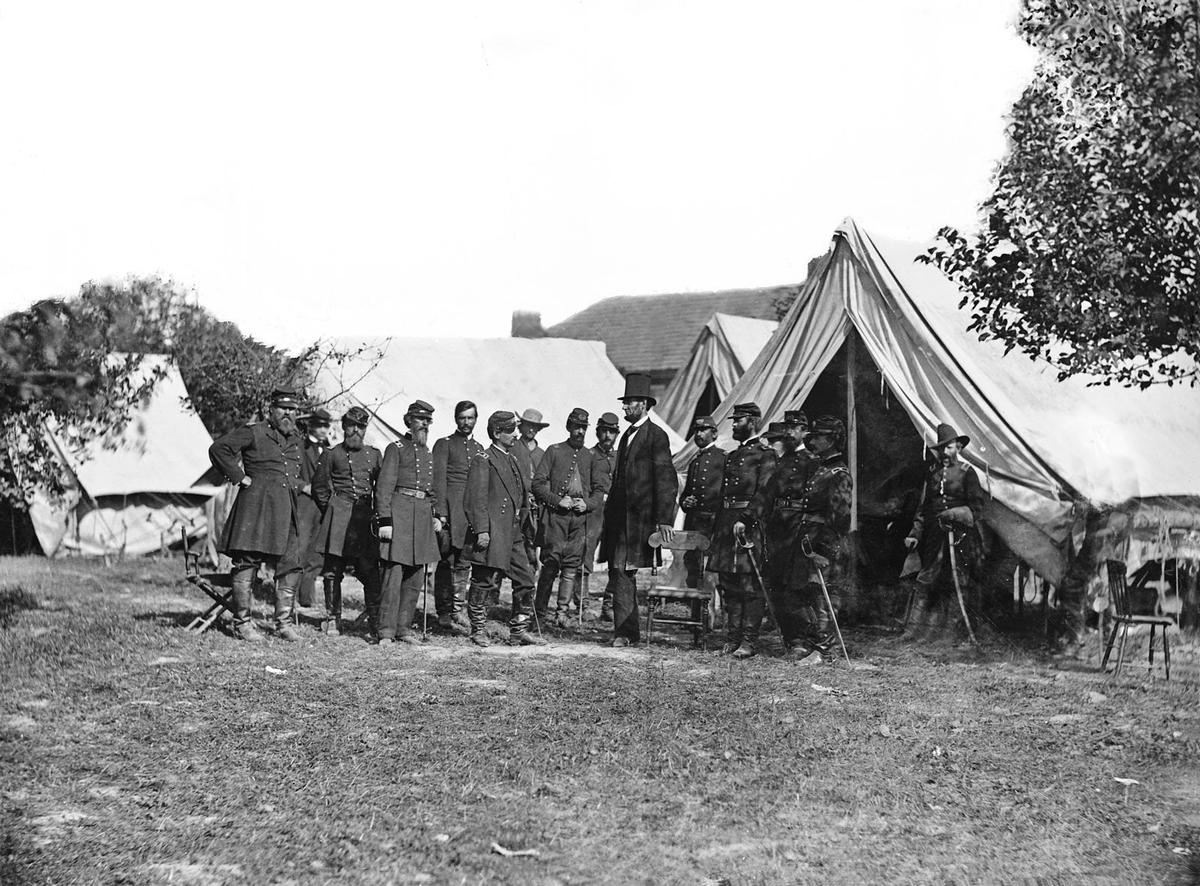
Lincoln and his generals at Antietam, Capt. George Custer at far right. Photographed by Alexander Gardner. Library of Congress. Public Domain
Dandy, Glory Hunter, and Warrior
In this same volume, Foote cited a staff officer’s impression of Custer as:
“One of the funniest human beings you ever saw, and [he] looks like a circus rider gone mad! He wears a huzzar jacket and tight trousers, of faded black velvet trimmed with tarnished gold lace … high boots and gilt spurs complete the costume.”
Yet despite this “flamboyant personality and a reputation as a glory hunter,” these things “did not interfere with his effectiveness when sheer courage was called for.”
In the Historynet article “Judging George Custer,” Stephen Budiansky went a step further in his positive evaluation of Custer’s wartime performance. He rightly contends that despite his self-promotion and glory-seeking ways, Custer emerged from the Civil War a national hero, beloved by most of his men and “simply the greatest cavalry tactician of the Union Army.” He also points out that few today remember Custer’s successes on the battlefields of Virginia and Pennsylvania, but all have heard of “Custer’s Last Stand” at the Battle of Little Bighorn in what is now Montana.
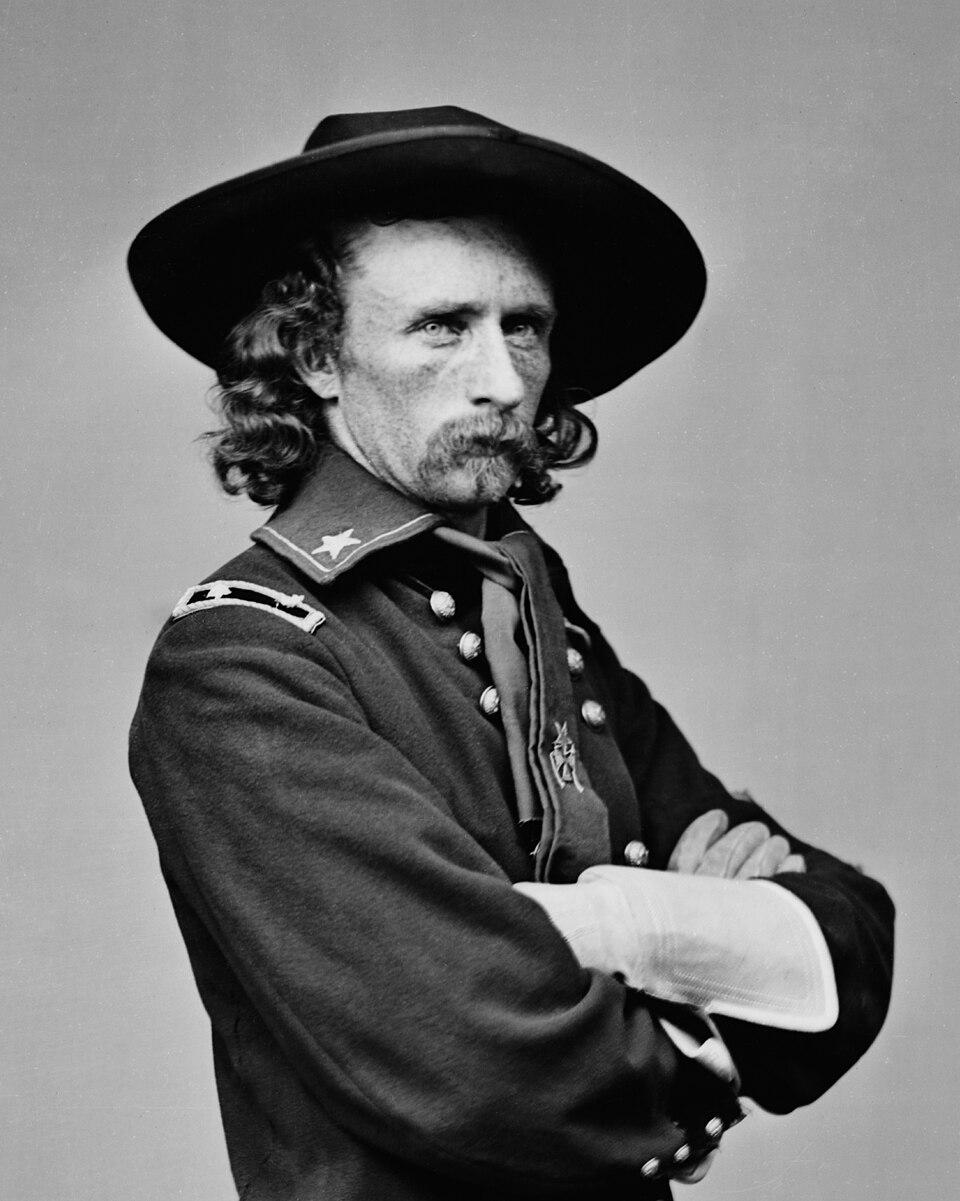
Brevet Maj. Gen. George Custer in his field uniform. 1865. Photographed by Matthew Brady. Public Domain
Battle on the Bighorn
On July 25, 1876, just days before America celebrated its centennial, Lt. Col. George Custer ordered an attack on a huge encampment of Native Americans. The population of this collection of tribes estimated in the thousands, included women and children, and had more than 1,000 warriors. Operating on scanty intelligence, Custer divided his force, often a dire risk in combat, and engaged the Native Americans.Of the five companies directly under Custer’s command, all died in this short and vicious battle. Two hundred men were dead, including two of Custer’s brothers, a brother-in-law, and a nephew. Another 35 troopers from those companies that Custer had dispatched to attack from other directions were also slain by Indian bullets and arrows.
Custer Luck died that day, but the Custer Myth was born. Budiansky’s article briefly describes the many books, paintings, and movies that have contributed to this legend, concluding that “Custer and the Last Stand became a symbol of everything from undaunted courage to unmitigated folly, selfless sacrifice to mad vanity, heroic tragedy to genocidal mania.”
Since the Battle of Little Bighorn, historians and biographers have tried to understand why Custer initiated the battle that led to his doom. Some blamed hubris, his overweening confidence in himself and his troopers, and in their ability to defeat any number of Indians. Some wonder if he feared disappointing his commanding officer, Phil Sheridan, who admired Custer and had launched the broad campaign in the hope of preventing the hostile tribes from scattering. Others have questioned Custer’s military acumen: his decision to divide his forces in the face of an enemy of undetermined strength.
When Courage Is Not Courageous
All of these possibilities are supported by evidence, yet one cause of that day’s disaster likely outweighs them all: courage unrestricted by prudence.Historian and Custer biographer Sandy Barnard made this important observation:
“Even in 1876, Custer seemed fearless. Nearly every soldier shows fear when the guns are firing. As a young Union general, Custer was often impulsive, impatient, and overly passionate in his duties, but he demonstrated quick thinking and courage. … On the battlefield, Custer seemed to hold no fear of death.”
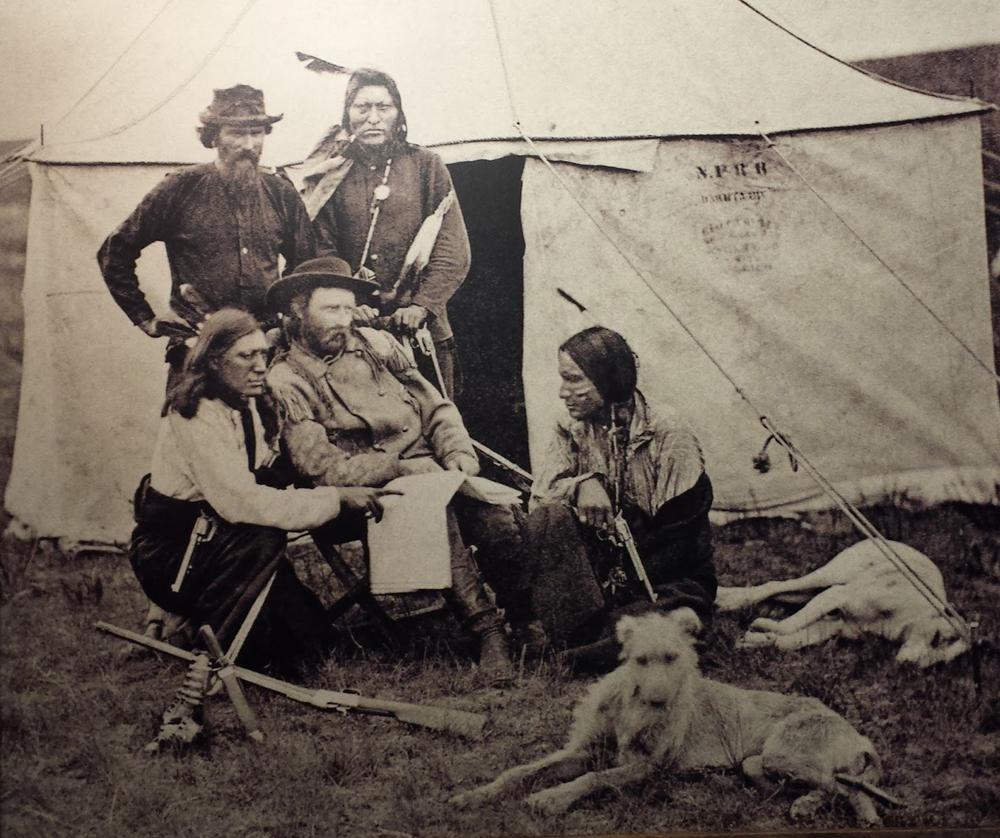
The Indian Scout Bloody Knife (L) kneels next to Custer (center). Staghounds lounge in the foreground. Public Domain
To have no fear of death, especially in a military commander, is both a virtue and a vice. It’s all well and good to be personally unafraid of dying, but when commanding soldiers, a disregard for the grave can bring death to others as well as oneself. Custer’s rash decision to launch an attack clearly lacked the guardrails of caution.
Courage unblemished by the common sense of prudence all too often leads, as it did on the Little Bighorn, to disaster.
Correction: An earlier version of this article misnamed the state where the battle took place.
What arts and culture topics would you like us to cover? Please email ideas or feedback to [email protected]