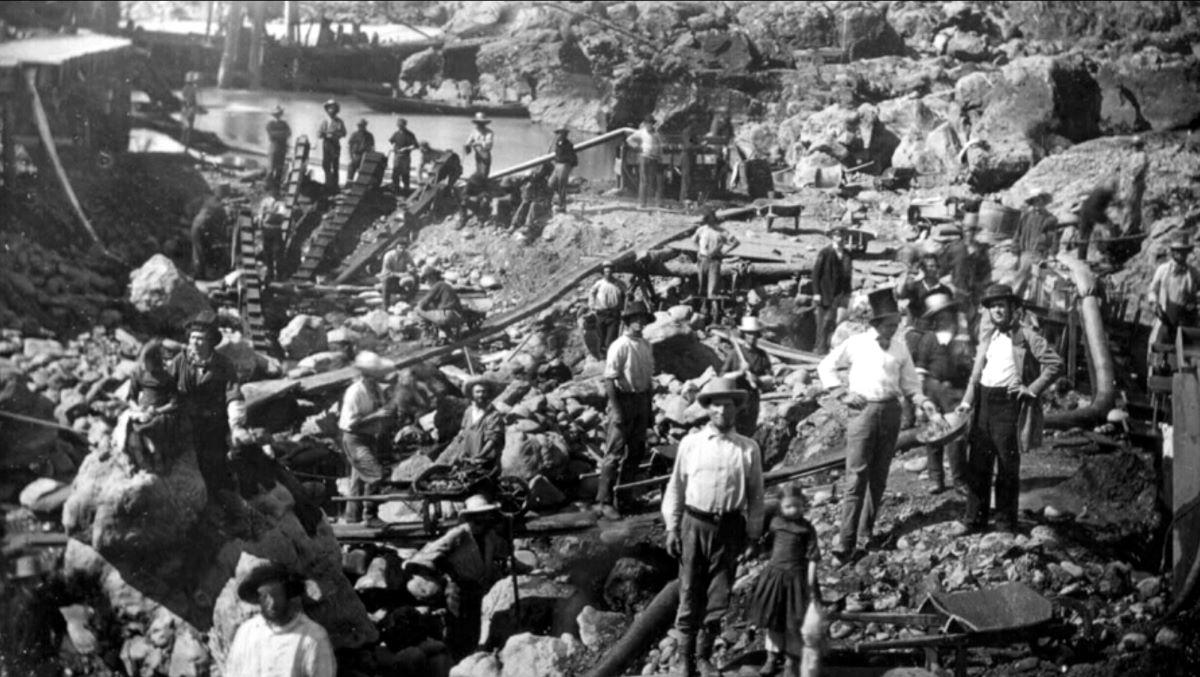
In 1847, the population of San Francisco was less than 500. The city of the Golden Gate began to boom, however, after several events. The Treaty of Guadalupe Hidalgo was signed in February 1848, ending the Mexican-American War and ceding 525,000 square miles of territory to America. Almost simultaneously, gold was discovered at Sutter’s Mill in California. Rumors of gold circulated, quickly boosting the population to 20,000. In 1849, San Francisco received another an explosive population boost thanks to President James K. Polk.
After Polk’s message was published, an additional 80,000 arrived in California, many moving to San Francisco. On Sept. 9, 1850, California was admitted as the 31st state. The California Gold Rush continued another five years, propelling average, even poor Americans, into the upper classes. Indeed, it was not just Americans who struck it rich, as the Gold Rush proved to attract fortune seekers from around the globe. Considering this global diversity, communication was key for citizens—and noncitizens—of the new state.
A Congressional Duty
The Gold Rush had advanced America’s westward expansion at an unexpected pace. A vast majority of the West had not been settled. Those traveling across the country to California via wagon trails found the six-month journey dangerous for numerous and obvious reasons: harsh weather, mismanagement of supplies, illness, and Indian attacks.There were two other options to reach California. Taking a ship around the horn of South America and up the Pacific Coast; or taking a ship to the Chagres River in Panama, crossing the Isthmus on land, then boarding another ship up the Pacific Coast. These two options were safer (though they came with their own risks) and more comfortable, though not much faster.
A Dangerous Route
Up until the end of the 1840s, the overland mail route extended as far as Independence, Missouri, to Salt Lake City via the Mormon Trail. A new route was authorized by Congress to extend from Salt Lake City to Sacramento. The $14,000 annual contract for carrying the mail to California was awarded to Absalom Woodward and George Chorpenning. Starting in both locations at the same time, the new mail carriers agreed to deliver the mail to the assigned cities once a month. It proved a much more difficult task than anticipated.
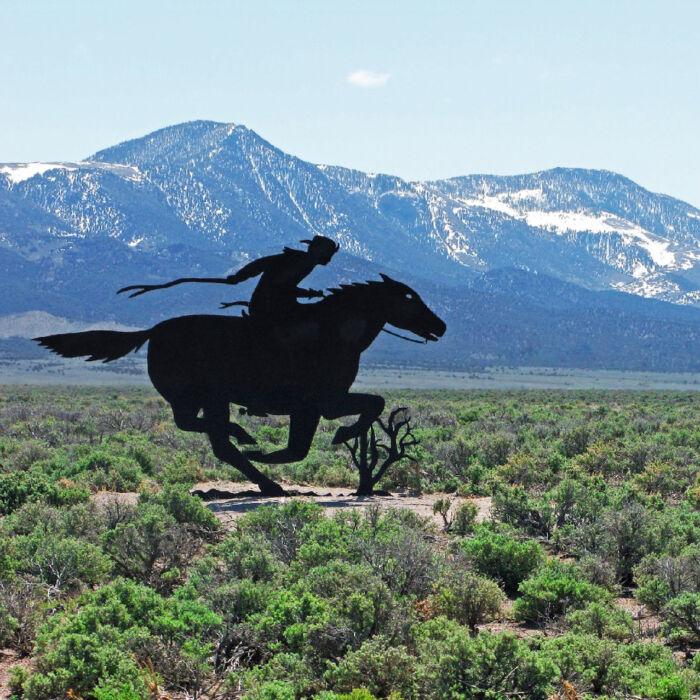
Chorpenning began the route on May 3, 1851, heading east and successfully arriving in Salt Lake City a month later. When Woodward attempted his eastward trek in summer, he was foiled by attacking Indians and he barely escaped. His second attempt, when heading back to Sacramento in August 1851, was again foiled by Indians. The following month, Indians killed two of his mail carriers, and, in October, Indians attacked again though the carriers escaped. Trying once more in November, Woodward and his team worked their way to Salt Lake City. They never arrived.
Chorpenning nonetheless continued the mail service. After traveling through the Sierra Nevada Mountains during that first winter of 1851 to 1852, which nearly killed one of the teams of men and mules, it was decided to use a different route. Chorpenning established the winter route, sending the mail to San Francisco where it was sent south on a ship to San Pedro, disembarked, and then taken overland to Salt Lake City.
The Transcontinental Route
As Chorpenning was completing his first four-year contract and hoping for a second, Congress authorized the U.S. Post Office Department to establish a new, much longer, and faster mail service that would use “good four-horse coaches or spring wagons, suitable for the conveyance of passengers” twice per week. The six-year contract was worth $600,000 per year—far and away the largest it had offered for mail service.Interestingly, part of the contract required this new mail route, which would extend from some point along the Mississippi River to San Francisco, to be created by the contractor and not the government. Additionally, as railroads continued to pop up across the eastern section of the continent, it was believed that this transcontinental pathway would hold sway over the location of the eventual transcontinental railroad.
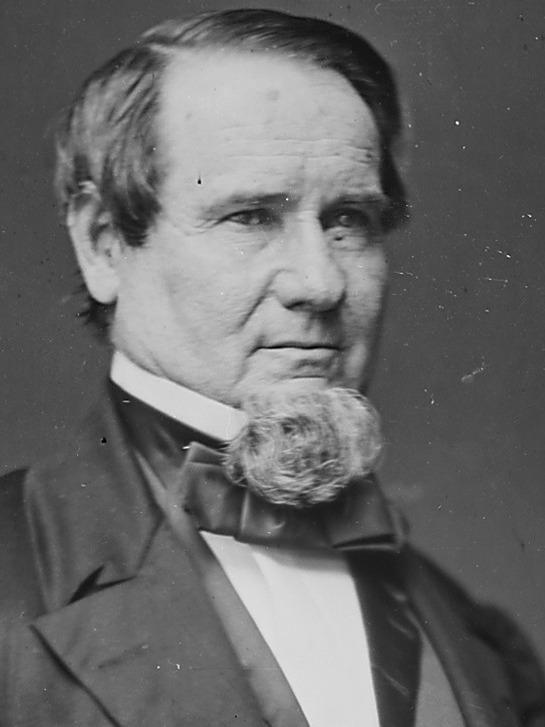
The day after Congress authorized the contract, President James Buchanan appointed Aaron Brown as postmaster general. After numerous routes were submitted to Brown, he found none of them suitable and thus chose one himself (despite the contract). Considering the possible role this route would play for the future railroad, there was debate over the route being in the north or south—indeed congressmen from neither the North or South wanted the route too far in the opposite direction. Nonetheless, Brown decided on a rather southerly route.
The Butterfield Overland Mail Company
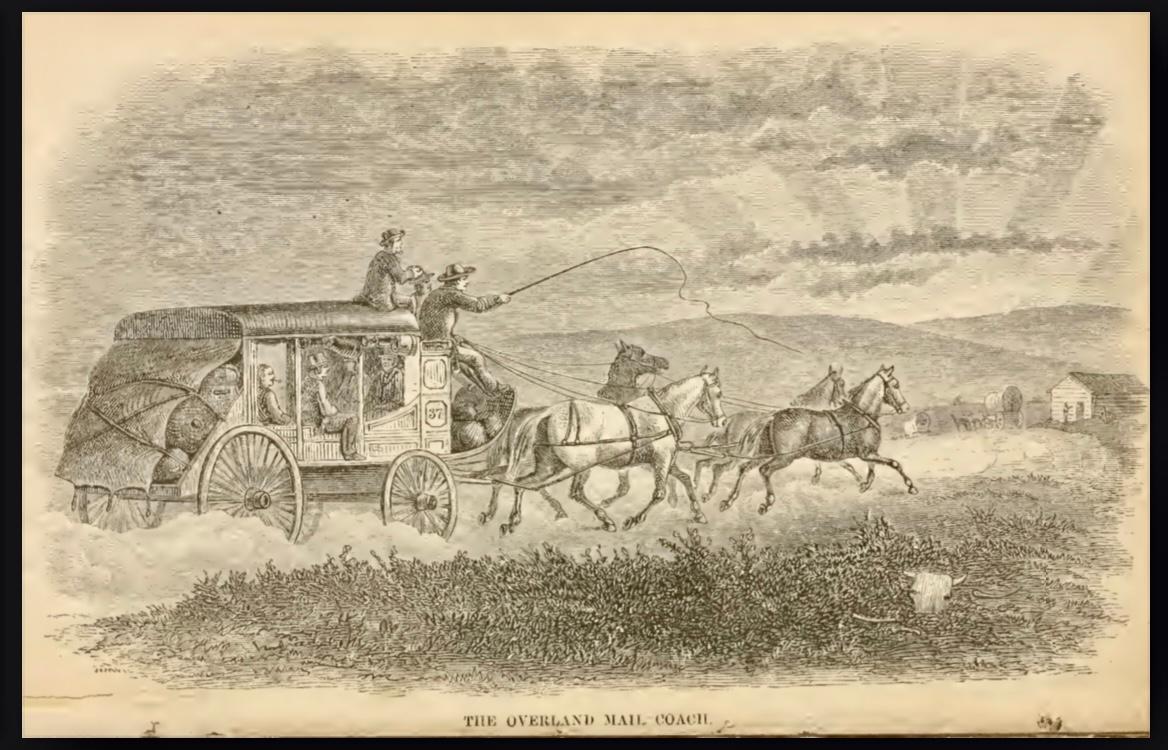
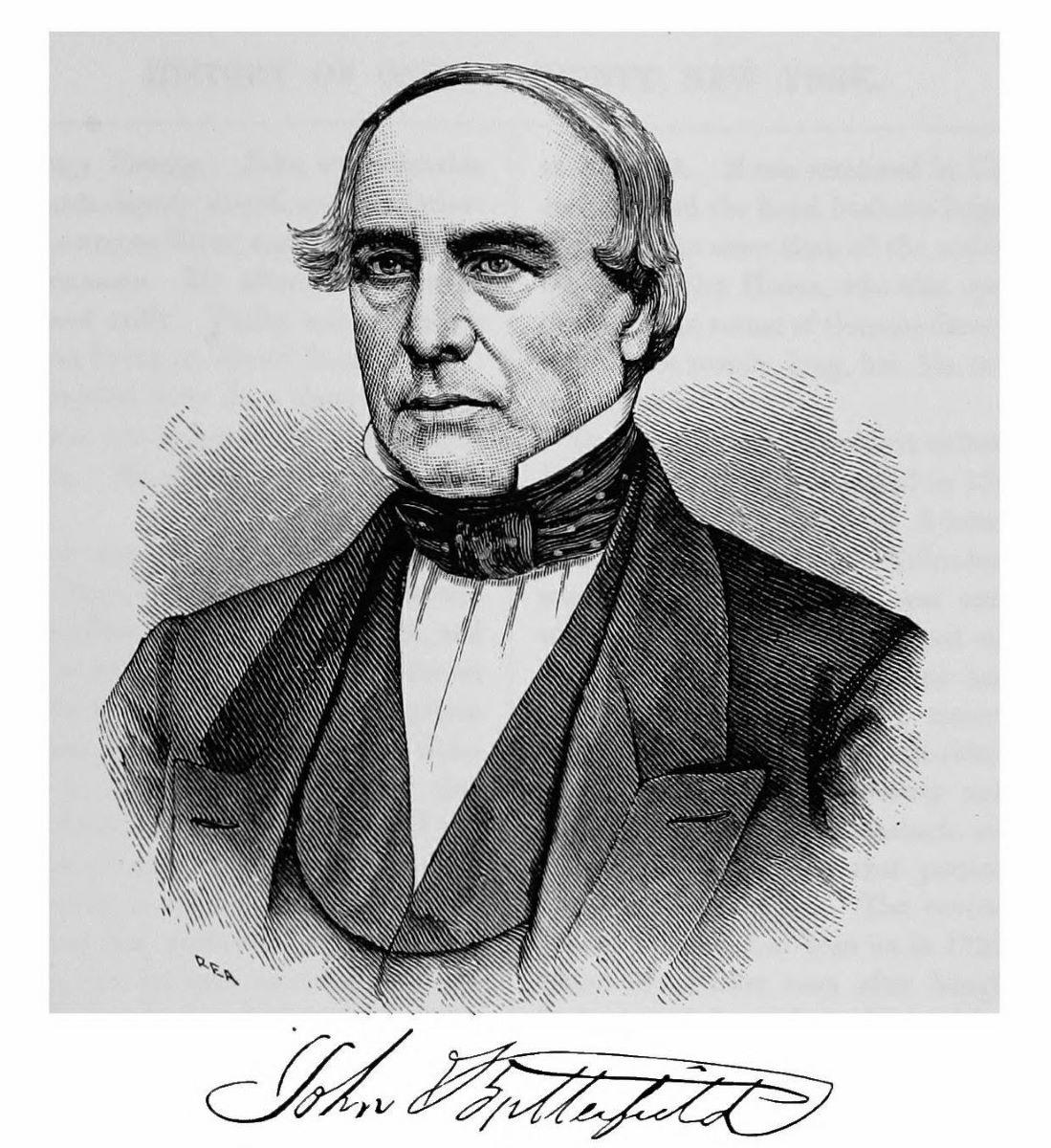
The new stagecoach route was the longest in the world, stretching approximately 2,800 miles. In September 1857, the contract was awarded to John Butterfield, who had been a stagecoach driver early in his career before becoming a successful businessman. He had actually once partnered with Henry Wells and William Fargo in a business venture.
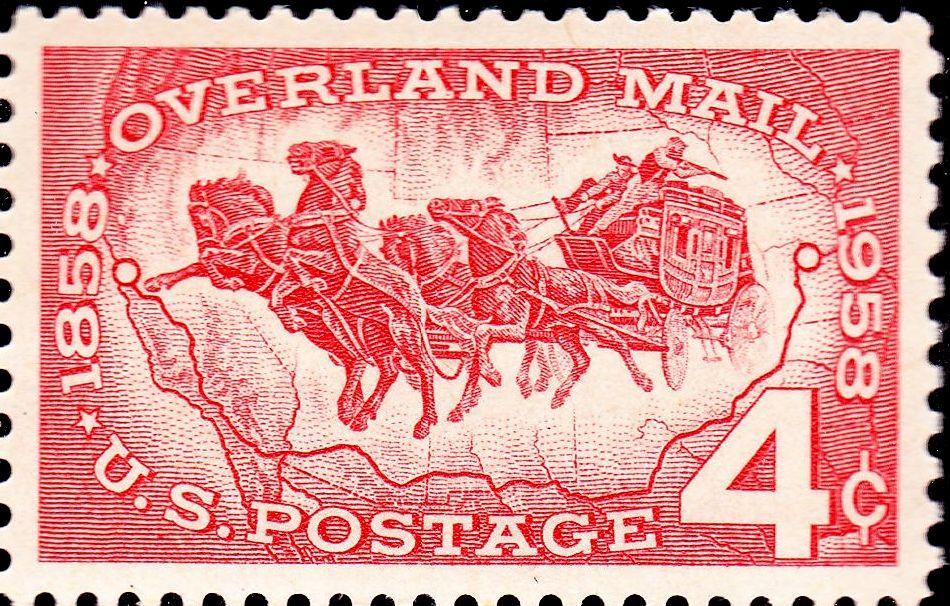
Butterfield was a visionary, sensible businessman and exceptional organizer. He sent agents to scout areas to establish way stations and water storage tanks every 10 to 15 miles (some sources suggest every 30 miles). After about a year preparing the new route and spending approximately $1 million to do so, the Butterfield Overland Mail Route was ready. It was during this week in history, on Sept. 15, 1858, that, technically, the first transcontinental mail service began.
War and Technology
When Postmaster General Brown died unexpectedly on March 8, 1859, he was replaced by Kentuckian Joseph Holt, who immediately worked to reduce the number of trips mail carriers took to California in order to save money for the government. The Post Office routes to California were financially inefficient enterprises. The Butterfield Overland Route, however, was saved by the dictates of its contractual agreement.The Butterfield route was fast, though it was outpaced by the famous Pony Express, which could cover the approximately 2,000-mile journey from St. Joseph, Missouri, to Sacramento in about 10 days. The Pony Express, however, lasted only 18 months when it was eventually outpaced and overcome by the establishment of the transcontinental telegraph line in October 1861.
The Butterfield Overland Mail Company suffered a similar fate, but for a different reason. When the Civil War began in 1861, the federal government was forced to cancel its contract as the route now ventured through Confederate territory.
Much of the Butterfield equipment was shifted to other mail companies. A number of stagecoaches were confiscated by the Confederacy. The war spelled the end of the Butterfield Overland Mail Company, though other mail companies utilized different routes, like the Oregon Trail and the Mormon Trail, to reach the Pacific Coast. But even these mail companies were eventually put out of business with the completion of the transcontinental railroad in May 1869.