Some literary characters become mainstays of popular culture. Their recognizability transcends the popularity of the fiction works which introduced them.
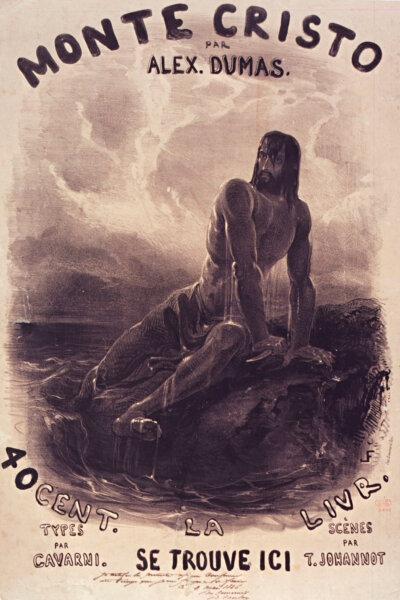
One such character is the Count of Monte Cristo. Many people will recognize the name of this eponymous hero (or antihero) despite never having read the epic French novel of the same name.
“The Count of Monte Cristo” (“Le Comte de Monte-Cristo” in French) was written by Alexandre Dumas (1802–1870), the adventure novelist also known for penning “The Three Musketeers” and “The Man in the Iron Mask.” It was first serialized from 1844 to 1846 before being published as a book in 1846.
This classic tale of transformation and revenge in Napoleonic France has been frequently referenced in movies, television shows, and popular tunes for decades. The almost 120-chapter novel was first adapted for dramatic presentation by Dumas himself shortly after the first publication. To tell the whole story required no less than four plays.
Swashbuckling With Sound
During the silent era, swashbuckling movies flourished, as athletic stars like Douglas Fairbanks and John Barrymore fenced their way through adventure stories with no need for dialogue. “The Count of Monte Cristo” was one of three movies released in 1934 which proved that swashbucklers could be just as effective in talking pictures.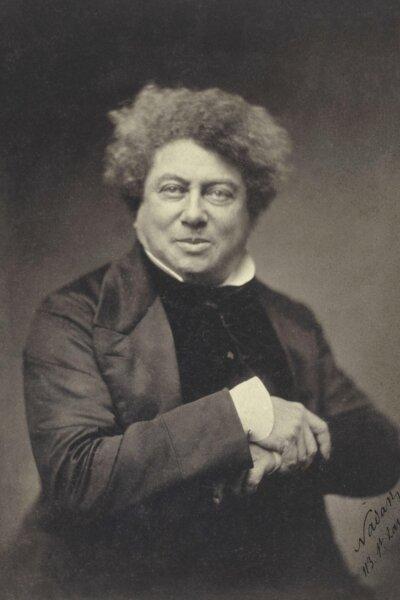
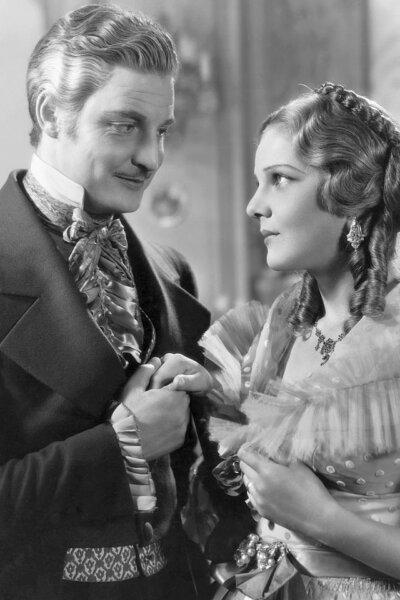
Protagonist Edmond Dantes, aka the titular count, was played by Robert Donat, a British actor best known for his Oscar-winning performance in “Goodbye, Mr. Chips” five years later. Here, he had the difficult job of playing a character who transforms from a hopeful 20-year-old sailor into an enigmatic 40-year-old nabob.


Donat is the biggest name in the cast. His childhood sweetheart, Mercedes, is played by Elissa Landi, a star of the mid-1930s. The rest of the cast is comprised of classic character actors. This group includes Sidney Blackmer, Louis Calhern, Irene Hervey, and Raymond Walburn.
This film was produced by Reliance Pictures, released by United Artists, and directed by Rowland V. Lee. Because of this picture’s success, Warner Bros. wanted to hire Donat for their foray into sound swashbuckling the next year, “Captain Blood.”
An Incredible Story
For a film of this length to adapt a book of that length, it obviously could only present highlights. No doubt due to its original serial format, the novel includes numerous subplots which have little bearing on the central plot and weren’t included in the movie. In addition, condensing the characters streamlined the story.When the book begins, Dantes is on top of the world. He’s just been promoted to captain of his ship, and he’s about to marry his beloved fiancée, a Catalan woman from the fishing village. Little does he realize that he has rivals on several sides. Mercedes is ardently desired by Fernand, a fellow Catalan she’s known since childhood.
Dantes is also fiercely envied by Danglars, second mate on his ship. Danglars resents that the much younger man has been advanced to captain, the position he feels he deserves. Danglars preys on Fernand’s jealousy and convinces the simpler man to send a slanderous letter, accusing Dantes of being a Bonapartist spy.
The deceitful plot is further advanced by corrupt official Villefort, a royalist who’s eager to hide his Bonapartist father’s role in the situation. Thus, the innocent Dantes is thrown into the island prison fortress, the Chateau d’If, without trial or explanation of his crime.
He remains locked in the darkness for 14 years, his loved ones believe him dead, and his enemies flourish through mounting evil deeds. However, a fellow inmate, Abbé Faria, reveals a secret fortune to him.
Highlights of an Epic
This plot outline just touches on the story’s highlights, and so does the film in question. In addition to trimming the extraneous plot points (which often are several chapters in the book), this movie made a few key changes.Mercedes (Elissa Landi) isn’t a simple peasant girl but a sophisticated young aristocrat. The same is true of Fernand (Blackmer), who’s a much older, more cunning man of means instead of a poor young fisherman.
Although Danglars is the instigator of the conspiracy in the book, the film makes Fernand the main plotter, while the second mate is a bumbling fool who serves as comic relief.
The movie glosses over the years between Dantes’s escape from prison and his arrival in Paris as the enigmatic count. Numerous characters of the next generation were eliminated.
The second round of romantic intrigue and drama focuses on the relationship between Albert (Douglas Walton), who’s Mercedes and Fernand’s son, and Valentine (Hervey), Villefort’s daughter.
In the book, Albert is a playboy who’s unhappily engaged to Danglars’s daughter, Eugenie, a strangely feminist character who hit the cutting room floor. Valentine is engaged to Albert’s best friend, Franz, but in love with Maximilien Morrel.
Drama in a Nutshell
The original novel and the 1934 movie of “The Count of Monte Cristo” are delightfully co-dependent. If you watch the movie first, you’ll have a much easier time reading the massive book because you’ll already be familiar with the characters and concepts.The novel is so rich and the details so plentiful that you won’t find the experience spoiled at all. If you watch the movie after reading the book, there are numerous details which will make so much more sense, since they are clever but very niche references to larger subplots of the book.
In standard Hollywood form, some gray areas in this plot were made more black-and-white in the film with good versus evil more clearly defined and countless plot twists were eliminated.
In addition, the newly enforced Motion Picture Production Code required the removal of some of the book’s stranger and surprisingly immoral passages. This was probably all for the best, since 1930s Hollywood of the earlier Pre-Code Era would have inappropriately exploited these elements.
Viewed over 90 years later, this movie remains an impressively artistic and respectful adaptation of the book. While necessarily different in many elements, it’s faithful to the novel in spirit.
If you love the book, remember reading it years ago, or are curious to discover it, I highly recommend you explore this swashbuckling 1930s adventure film, which was popular enough to launch an entire film genre and countless sequels and spinoffs.