On a January day in 1941, a small, unassuming Spaniard entered the British embassy in Madrid, cast a glance around the room filled with the click of typewriters, and asked to speak to a diplomat because he had something he wished to reveal.
The man at the reception desk pressed the visitor for details. The Spaniard’s answers were evasive. So the receptionist passed him off to a secretary. She passed him to a clerk, who passed him to a minor official, and so on. It was a bureaucratic merry-go-round.
In the end, one of these officials brusquely told the Spaniard that if he had something of really crucial importance to say, he had better put it down in writing because the Foreign Office didn’t have time to give him an interview. With that, the Spaniard departed.
The British officials at the embassy had no idea, of course, that the man they had unceremoniously waived aside would prove to be the greatest double agent of World War II.
The Spaniard recalled in his memoirs,
“No one at the British embassy seemed interested in me, so out of ‘amour propre’ I decided to prepare the ground more carefully before I approached them again; clearly I must be much more specific about exactly what I was going to do and how it would adapt itself to the end I had in mind: helping the Allies.”

And so, to achieve his aim, the Spaniard would take a different approach. He would walk right into the mouth of the dragon: He would volunteer as a spy for the Germans.
The Spaniard was a man named Juan Pujol Garcia, though history knows him better by his codename: Garbo. As Nigel West wrote in the Introduction to “Operation Garbo: The Personal Story of the Most Successful Double Agent of World War II,” “There is hardly a textbook on the subject of strategic deception that fails to mention this remarkable individual.”
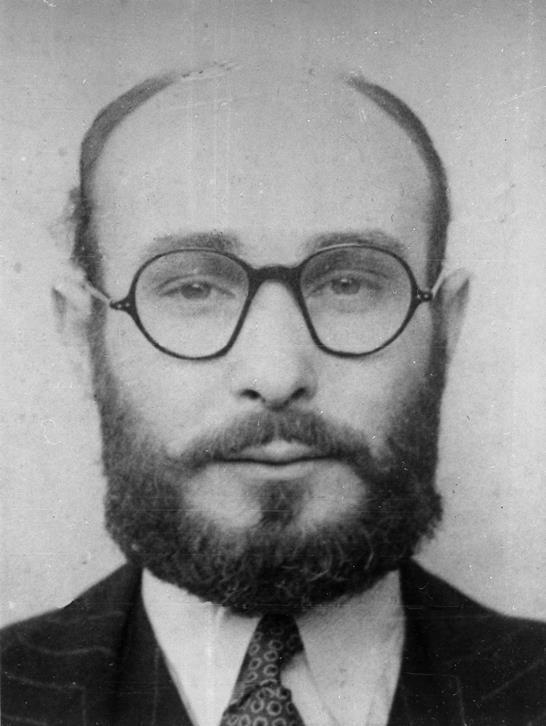
Garcia was born in 1912 in Barcelona to a well-to-do family. In his later recollections, he spoke highly of his father, describing him as “the most honest, noble and disinterested man that I have ever known. His affability was such that not only his friends, but also his enemies—if he had any—saw in him a protector and a refuge.” Garcia’s father instilled in him high ideals that would later inspire Garcia to undertake the remarkable espionage feats that helped change the course of the war.
As a boy, Garcia first attended a school run by the La Salle Brothers and then a school run by a priest, who was a friend of his father’s. However, he didn’t take to his studies and preferred other pursuits. In his own words, by the time he was a teenager, “going out with girls accounted for a fair bit of [his] time and the rest [he] devoted to sports, gymnastics and hiking.” He dropped out of high school for a period of time but quickly found his menial job soul-draining. He briefly considered going to college for a liberal arts degree, but instead settled on a different course: chicken farmer. To that end, he received a degree from the Royal Poultry School at Arenys de Mar.
A Call to Arms
The Spanish Civil war broke out in 1936, and Garcia was called to serve in the Republican military. Garcia, however, had pacifist leanings and was disgusted by what he saw as the pointless and destructive factionalism of his countrymen. For this reason, he hid from the Republican military for several years, sequestering himself in out-of-the-way apartments in the back alleys of Barcelona and other hiding spots until, finally, he became tired of being hunted and decided to volunteer—with the intention of deserting as soon as he could.He ended up as part of a stagnant and futile standoff between Republican and Nationalist soldiers huddled miserably in trenches. Equally disaffected with both groups, Garcia defected to the Nationalist side. “I hated being a soldier,” he recalled.
After the war, Garcia settled in Madrid and married Araceli González Carballo, of Lugo. They would have three children together.
The experience of the civil war calcified Garcia’s hatred for communist and fascist forces along with any ideology that sought to subjugate people through violence. Even in the effort to oppose evil, Garcia didn’t believe much in the use of force to bring about change or defeat destructive ideologies. “It is my firm belief that no liberating changes occur until and unless men use their brains, teach, argue and produce practical solutions for regaining the freedom that has been lost,” he wrote.
“I can assert with pride and a clear conscience that I have never fired a rifle, nor any other gun for that matter, with an enemy in front of me. My feelings, my scruples, even my morals would not allow me to take the sublime gift of life away from my neighbor.”
Garcia’s reluctancy to take up arms had nothing to do with a toleration of evil. On the contrary, he was a man of ideals and iron-like resolve, passion, and determination. When he learned of the atrocities being committed by Hitler and the Nazis he felt compelled to take action.
“My humanist convictions would not allow me to turn a blind eye to the enormous suffering that was being unleashed by this psychopath Hitler and his band of acolytes. ... From the medley of tangled ideas and fantasies going around and around in my head, a plan slowly began to take shape. I must do something, something practical; I must make my contribution toward the good of humanity.”
While making it clear that he harbored no hatred toward the Germans as a people, Garcia explained in his memoirs that he detested all forms of tyranny, such as that which arose in the Third Reich. “[Some] have asked me ... why I threw myself, wholeheartedly, totally and completely, with all my strength and determination, behind the Allied cause. ... The answer lies in my beliefs, the same beliefs that my father instilled into me during my childhood, beliefs which urged me to fight against all tyranny and oppression.”
Spy Business
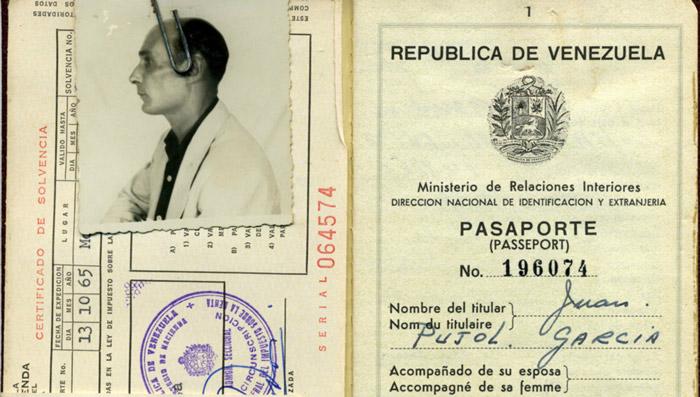
It was this that led him to visit the British embassy on that day early in 1941, since he saw the British as the only force firmly and effectively resisting the Nazis at that time. When that proved unsuccessful, he realized he needed to be able to offer the British something more concrete and so he conceived the idea of convincing the Germans he was on their side so that he could be let into their confidence, a seeming ally who would recede into the shadows and work to undermine them.An inquiry to the German embassy in Madrid led to a tense meeting at a cafe with a German agent known as Federico, during which Garcia tried to persuade the operative that he, Garcia, was an adamant Nazi and Francoist who could help the Germans. Garcia offered to go to England as a journalist and glean relevant information that he would relay to German military intelligence. In the end, after more clandestine meetings with the Germans (and a forged passport), the ruse worked. The Germans enlisted Garcia—codename “Alaric”—as their agent.
However, Garcia couldn’t make it beyond Lisbon, Portugal. Still blocked from London and failing to make contact with British intelligence, the undaunted Garcia decided to feed false information to the Germans anyway. With unrivalled daring and ingenuity, he cobbled together false reports from news releases, maps, military dictionaries, press releases, and oddments in bookstores or the news kiosks of Lisbon to give to his German contacts, who believed he was in London developing a network of informants.
Of course, Garcia was bound to make some mistakes using this method, such as when he told his German controller that on a visit to Glasgow he encountered men who “would do anything for a litre of wine.” Lucky for Garcia, the Germans knew as little of Scottish drinking habits as Garcia did. Another time, he made the bold and inaccurate assertion, “during the summer months London effectively shut[s] down due to the heat, with diplomatic missions taking refuge on the cooler shores of Brighton.”
Garcia’s charade would likely have eventually fallen to shreds if he hadn’t finally made contact with the British with the help of his wife. In 1942, she intervened for him with the U.S. embassy, which led to his official recruitment by MI5 under codename “Garbo.”
MI5 brought him to London and assigned him to case handler Thomas Harris. It proved a perfect match. The “Official History of British Intelligence in World War II” described the relationship as “one of those rare partnerships between two exceptionally gifted men whose inventive genius inspired and complemented each other.”
Together, Garcia and Harris expanded Garcia’s (“Garbo’s”) fictional spy network to 27 fake operatives, for whom they invented elaborate back stories.
“In 1941 when the Germans were all-powerful in Spain, the British Embassy in Madrid was being stoned, France had collapsed and the German invasion was imminent, little were the Germans to know that the small meek young Spaniard who then approached them volunteering to go to London to engage in espionage on their behalf would turn out to be a British agent. Still less were they to discover that the network which they instructed him to build up in the UK was to be composed of 27 characters who were nothing more than a figment of the imagination.”
These “informants” included a Venezuelan living in Glasgow, a U.S. army sergeant, a Welsh nationalist leading a fascist group called “Brothers of the Aryan World Order,” and an Indian poet.
Harris and Garcia wrote letters to the Germans in invisible ink transmitting the “information” they’d gathered from their “network.” In all, they wrote 315 letters, each averaging 2,000 words. (They later switched to radio transmissions.) The letters were intentionally verbose.
As the MI5 website notes,
“This rich vein of fantasy was maintained and enlarged under Security Service control to provide as much ‘confusing bulk’ as possible for the enemy to assimilate. The assessment of the ‘Official History of British Intelligence in WW2’ is that the Germans, in Spain at least, became so flooded with information from Garbo’s agents in Britain that they made no further attempt to infiltrate the UK.”
Harris and Garcia were careful to build up the credibility of Garbo and his 27 agents by giving the Germans snippets of true information. For instance, in the leadup to the Allied landings in North Africa, Garbo’s fake agent Clyde reported to the Germans that a convoy of troopships and warships were seen leaving a key port in Mediterranean camouflage. But this information was accurate but intentionally sent late so German High Command would not have advance warning. The Germans responded: “We are sorry they arrived too late but your last reports were magnificent.”
Through these kinds of careful maneuvers, Harris and Garcia ensured that the Germans fully trusted Garbo and his network of spies by the time of the D-Day invasions. That’s when they made their most significant contribution to the war effort.
Allied commanders knew it was essential that the Germans be misdirected about where the invasion of France would come from. Once Normandy was decided on, they wanted to make sure the Germans thought the attack would come at Pas de Calais so they would divert troops to that area both before and during the actual invasion in Normandy. This critical task was entrusted largely to the agent known as Garbo.
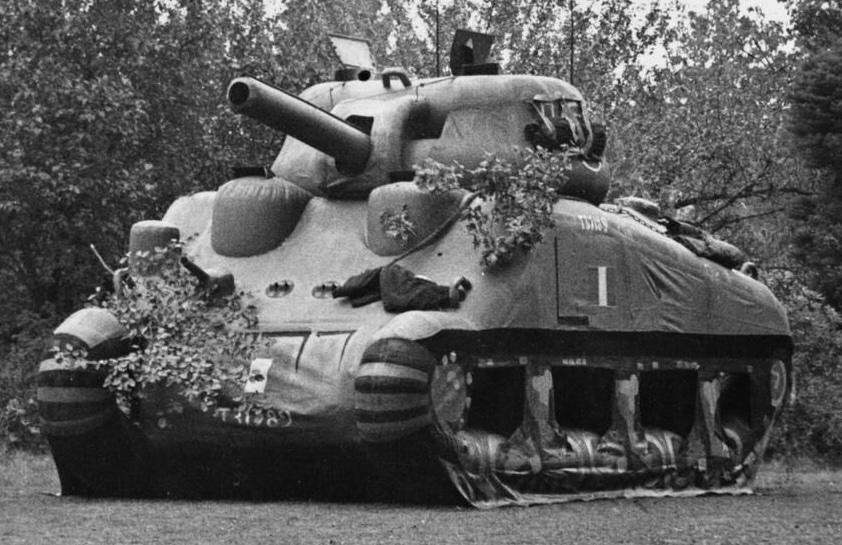
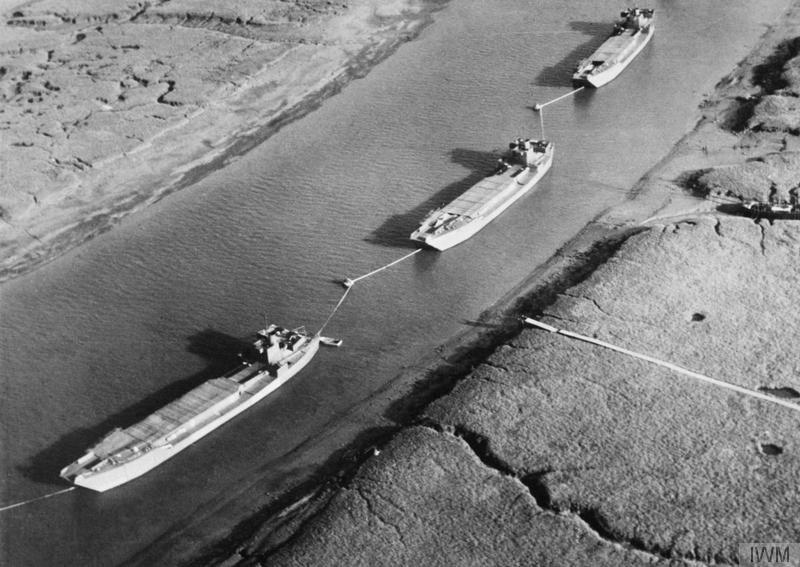
Garcia and Harris got to work concocting their confusing brew of deception. They sent some 500 radio messages to the Germans with reports from all parts of Garbo’s fake network to persuade the Germans that the bulk of the assault would come at Calais. The carefully curated clues disseminated by Garbo’s network added up to a clear picture: the First U.S. Army Group, with 11 nonexistent divisions, was poised in Kent and Essex under Gen. George Patton.
Garbo’s network would even insist to the Germans, after the D-Day landings had begun, that the assaults in Normandy were a diversion. On June 9, three days into the Allied assault on the shores of France, Garbo told the Germans that the First U.S. Army Group hadn’t moved—the “real attack” was still coming. This caused the Germans to avoid committing troops at Normandy and the surrounding area, which allowed the Allies to establish a foothold in France.
Even after all this, the Germans continued to trust Garcia. But in 1944, after a scare that he might get exposed, MI5 decided to pull Garcia out of operations. Even after the war, they sought to protect him from Nazi retribution.
Garcia was awarded the honor Member of the Most Excellent Order of the British Empire by his English colleagues. He later moved to Venezuela and added another layer of self-protection by asking MI5 to spread false rumors of his death.
It wasn’t until the 1980s that his identity and whereabouts were uncovered by writer and politician Nigel West (pseudonym for Rupert Allason). Together, they wrote the story of Garcia’s exploits, finally unveiling for the world the true story of the elusive double agent who had helped change the course of the war.