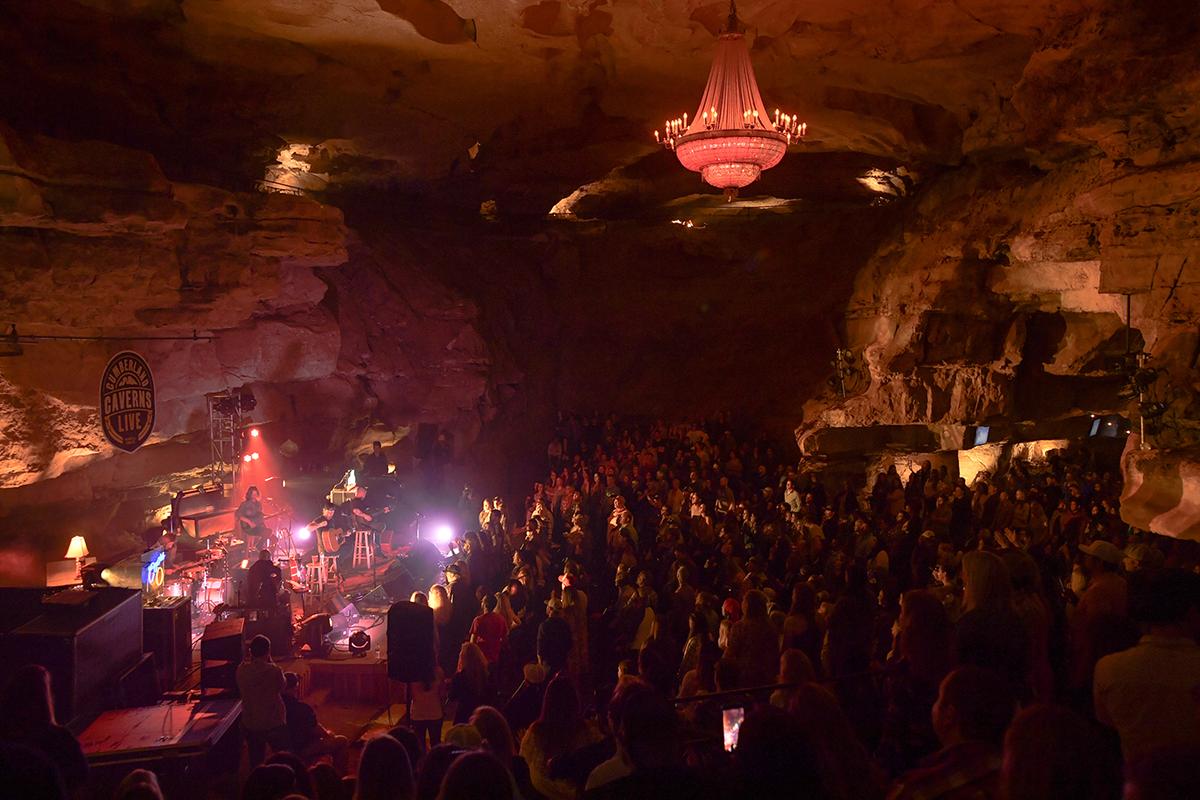
Many nights out of the year, in the heart of the Cumberland Mountains of southeastern Tennessee, live music lovers gather for subterranean shows within a cave system more than 27 miles long. Some nights, they are treated to an acoustic performance by country songwriter Travis Tritt, or to the smooth harmonies of the Oak Ridge Boys. Other nights, bluegrass takes center stage when Ricky Skaggs headlines, or The SteelDrivers perform a set. The uneven ground and remote location of The Caverns doesn’t make for a typical live-music venue. But its atypical setting is exactly what makes it so popular.
The Caverns earned its nickname by becoming a haven for the best that live music has to offer, from award winning acts to promising up-and-comers. It also earned the nickname because of the sheer magnitude of its natural beauty.
The Volcano Room
In 2008, entrepreneur Todd Mayo set foot inside the sprawling Cumberland Caverns cave system for the first time. Ample amenities surrounded him as he explored its landscape—the flow of a waterfall in his ear at times and thick walls of limestone visible in all directions.
The privately owned cave system was formed over time by two ancient rivers that cut through its rock. But as Mayo entered one of its most popular chambers, known as the Volcano Room, it wasn’t Mother Nature’s creation that caught his attention, but one formed by man.


Decades later, it would inspire Mayo with an idea that would blossom into a full-time business.
Mayo was the first to suggest that the Volcano Room would make an ideal setting for a live concert, and Cumberland Caverns staff thought it was a great idea. He teamed up with WSM, the Nashville radio station tasked with broadcasting Grand Ole Opry performances, and a business partner, Todd Jerrell. Soon, they began broadcasting Bluegrass Underground from the cave, featuring live performances by bands and artists of roots genres like Americana and folk. WSM broadcast the show to radio, and in 2011, PBS began airing the program on television.
A New Home for Live Music
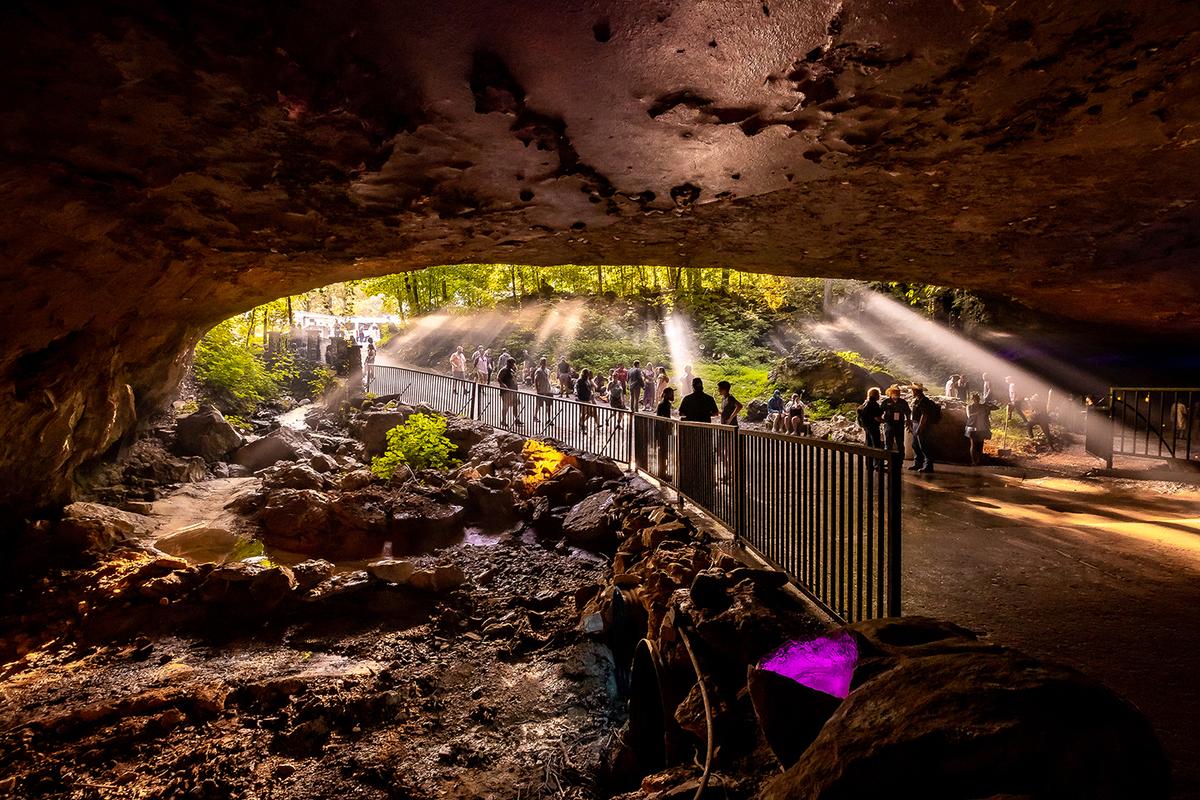
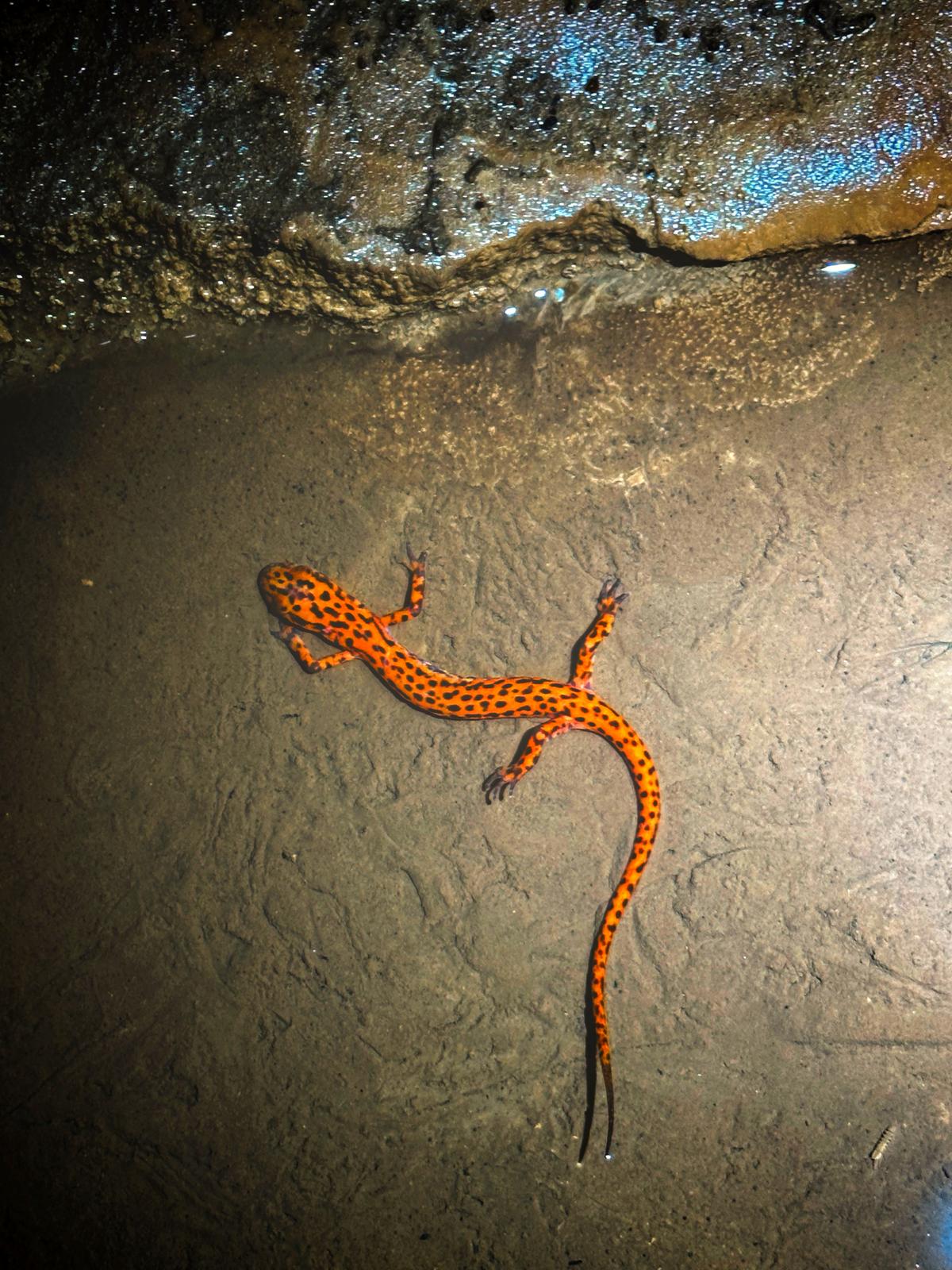
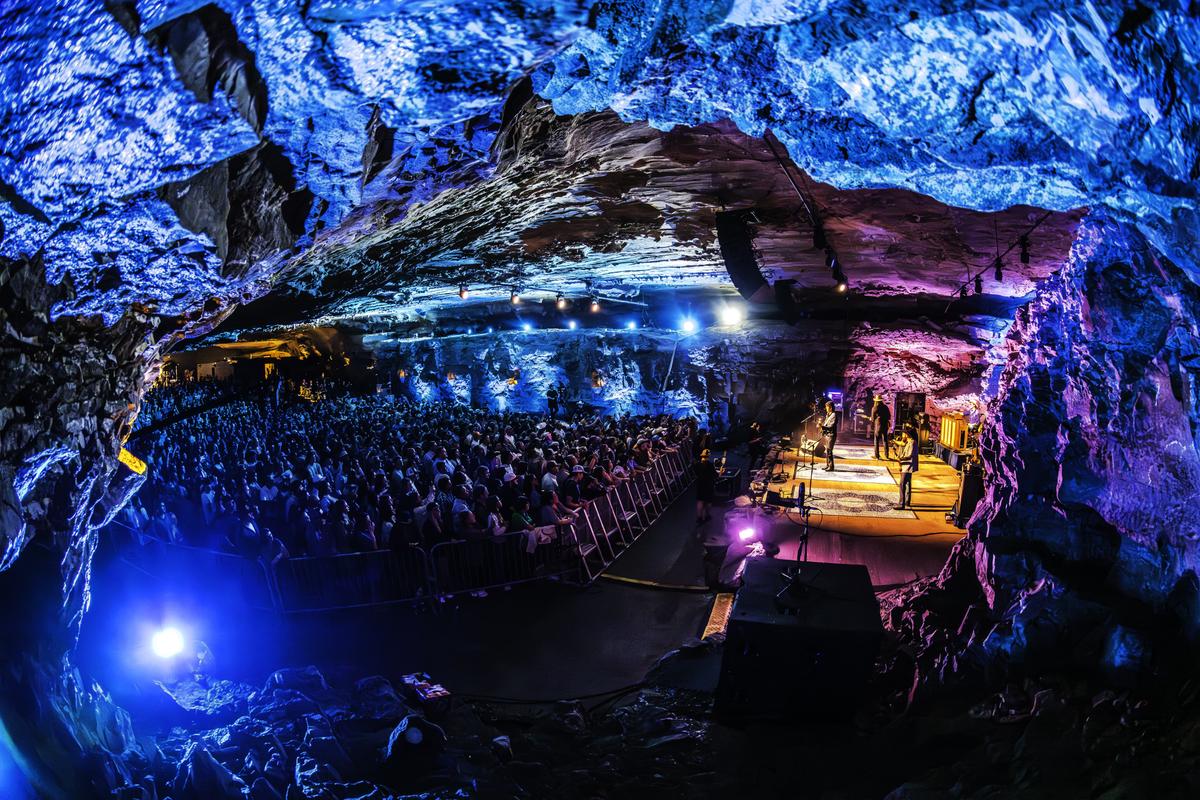
The success of Bluegrass Underground meant Mayo would eventually need a bigger venue. For Cumberland Caverns’ new home for live music, he chose Big Mouth Cave, an unmapped chamber that needed a lot of work, and a lot of oversight, due to its vibrant ecosystem. Those who worked on the project alongside Mayo were thorough. At one point, a herpetologist was hired to ensure a popular resident of the cave wasn’t harmed.
“Over an 18-month period, a fleet of earth movers excavated 30,000 square-yards of debris from the 500 foot deep, 180 foot wide cave. A team of geologists and hydrogeologists ensured that the “living cave” (tiny, moving waterways are still reshaping the cave very, very slowly) was stable enough to host concerts; archeologists ensured no artifacts were disturbed; and herpetologists ensured that the venue’s mascot—the Tennessee Cave Salamander—would be safe in its renovated home.”
As far as acoustics go, limestone found in the cave’s walls interacts well with sound waves, creating honey-smooth reverb. The shape of Big Mouth Cave in particular helps dampen and control bass frequencies.
A lighting system was installed as well, intended to cast enveloping hues, from blue and yellow to purple and green, across the walls during concerts.
Spiritual Transcendence
Classical composer Ludwig van Beethoven once said, “No one can love the countryside more than I do—for the woods, the trees, and the rocks give a man the inspiration he needs.”The master pianist loved taking long walks surrounded by nature because it helped inspire his music. History shows artists of all kinds understood the link between the natural world’s creations and creativity itself.
The Caverns offers an idyllic spot where nature’s art and man’s art meet, creating moments of spiritual transcendence for its visitors.
“It’s like you never know what can happen when you walk into a cave,” Mayo told media outlet Tullahoma News. “A man walks into a cave one man and comes out another.”