The owners of Brighton Beach Hotel had two options: move the hotel or lose it. The threat did not come from extortionists, competitors, or even the government. The threat came from the ocean.
Creating Brighton Beach
The very existence of the Brighton Beach Hotel, built in 1878, had taken a Herculean effort. William A. Engeman had a vision for this particular section of Coney Island known as Middle Division, but first he needed to purchase the land, and in order to do that, he needed to find out who owned it. That’s where the initial Herculean effort came into play.Engeman had made his fortune selling mules and horses to the Union Army during the Civil War. And, indeed, purchasing all of the deeds to the beachside property required a fortune. The area that interested Engeman was owned by several hundred landowners, each owning a small piece, typically around two acres. It took several years for Engeman to identify the individual lots, acquire the sales records for each, contact the owners, make an offer, and settle each and every one of them.
Finally, the land belonged to him. His first point of business was to build a hotel. The first hotel, built in 1870, was a two-story building called Ocean Hotel. He then followed this by building Coney Island’s first pier and later added a pavilion to it.
Building Brighton Beach Hotel
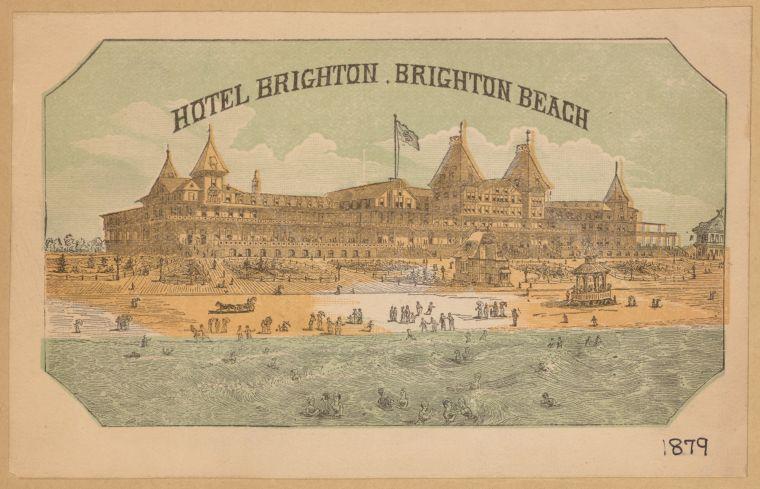
More importantly, the investment by the railroad company, which was incorporated as Brooklyn, Flatbush and Coney Island Railroad, enabled him to build another hotel. The new Brighton Beach Hotel, often called Hotel Brighton, was placed rather close to the existing Ocean Hotel.
The Brighton Beach Hotel was larger and more elegant, capable of accommodating well over 1,000 people. The Gothic-style hotel had 174 rooms at a scale of three and five stories, depending on the section of the hotel; a wraparound porch and veranda on the first and second floors, respectively; a 175-foot bar in the lobby; elevators; lounges; a ballroom; a 16-table billiard room; three bowling alleys; a flower shop; beauty parlor; card room; telegraph office; a confectionary; an ice cream shop. The facility held two concerts daily.
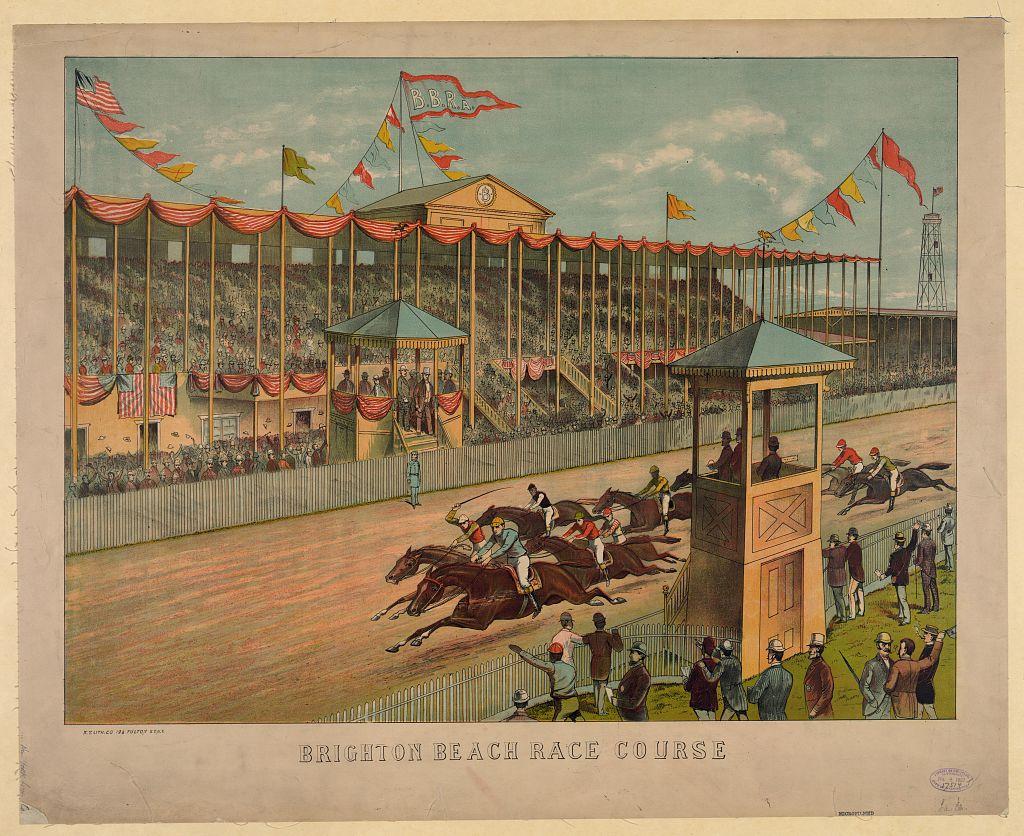
The hotel opened in the summer of 1878 to much fanfare. One report suggested it cost $300,000 to build and furnish (about $10 million today). The fanfare and foot traffic increased dramatically when the rail line, which was quickly dubbed the Brighton Line, opened on July 1, 1878, just in time for the major holiday. A year later, Engeman built his horse racetrack. Brighton Beach was a place where families of varying classes, though primarily middle to upper class, could easily reach by train and choose to stay either for the day or overnight.
Facing the Inevitable
On Jan. 11, 1884, William A. Engeman, on the cusp of his 45th birthday died of Bright’s disease. His estate was split between his two brothers, George and John, and his only son, William. The latter received half of the estate, George received 40 percent and managed the estate, including the hotel, with John receiving 10 percent. By the time of his death, it was clear that the Brighton Beach Hotel was under threat from the encroaching tides. A week after his death, it became even clearer.On Jan. 18, a major storm hit New York. The storm destroyed Engeman’s pier and washed away the grassy lawn in front of the hotel. It was the second time in three years the lawn had been washed away. Beachfront properties always run the risk of taking the brunt of powerful storms, which includes ocean surges. Bulkheads had been placed in front of several hotels along the Coney Island beaches, but the worry was becoming less about future storms and more about erosion and the reach of the sea. With each passing month, the ocean neared closer to Hotel Brighton.
Forming a Plan
By 1887, a costly plan was put into place. Brighton Beach Hotel needed to be moved further inland and soon. By this time, the tides had already reached the hotel, leaving much of its front overhanging the ocean.The Big Test
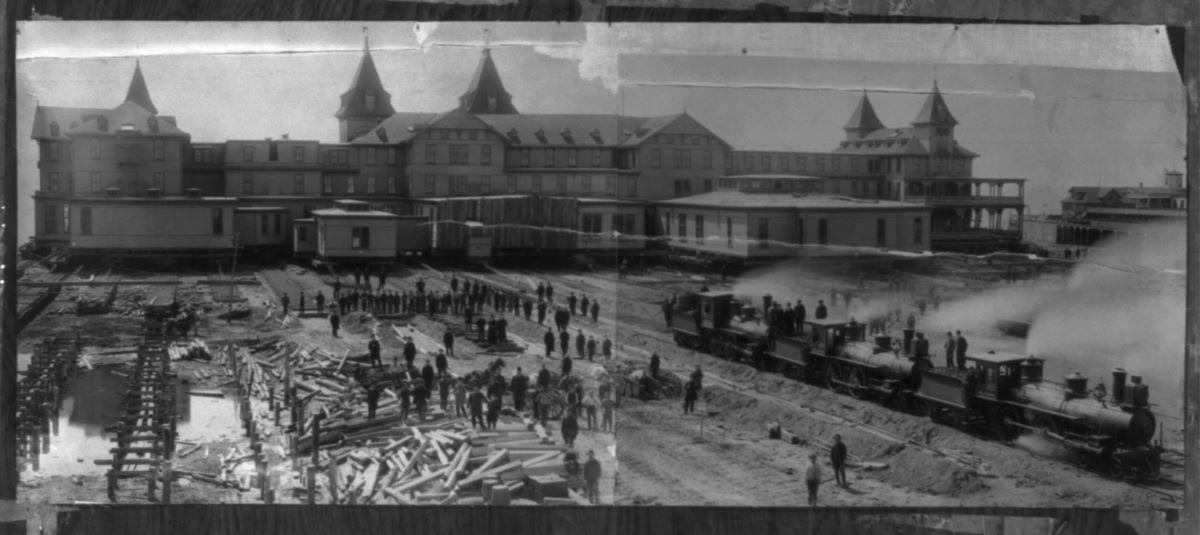
B.C. Miller and Sons, a house-moving company, which had been used to move the Brighton Bath Pavilion, was contracted for the risky endeavor. In late 1887, the company dug underneath the hotel, removed foundation, and replaced the foundation with hydraulic jacks. Once all of the jacks were in place, the company removed the rest of the hotel’s foundation. The workers then placed 24 railroad tracks underneath. Once the tracks were laid, 112 flat railcars, each with a carrying capacity of 60,000 pounds, were placed on the tracks and underneath the lifted hotel. To further complicate the plan, the hotel had to be lowered by the jacks simultaneously. Despite the difficulty, the hotel was successfully lowered on the railcars. The effort, even by this point, was certainly, for the time period, Herculean.It was time to test out whether the plan would even work or whether the movement of the hotel would destroy the structure and make the entire effort a waste. A large steel cable and tons of rope connected the railcars with six locomotives. These steam engines were separated by two railroad tracks, with three steam engines on both. These connected engines were scheduled to pull the cable connecting the railcars, and thus the entire hotel. Of the many things that could go wrong, the train engineers needed to ensure that their trains moved at the same exact time and at the same exact speed.
A Record-Setting Move
Now that it was clear the hotel could be moved successfully, it was several weeks before another attempt was made. A new foundation further inland was being laid, along with gas and water pipes, for the soon-to-arrive hotel. While this work was being done, the ocean made one last grasp for the hotel. On Feb. 25, 1888, a powerful storm hit New York. Fortunately, the hotel and the railcars it rested on remained intact.
It was during this week in history, on April 3, that the six locomotives on two tracks began pulling the 112 railcars holding the 8-million-pound hotel along 24 train tracks. The entire effort was scheduled to take about 10 days to complete. As the hotel was slowly pulled, the rails that had been passed by the cars would be pulled up and placed further ahead. It was a constant pulling up and laying down of rails.
“The hotel, when permitted to rest again, will be 550 feet inland from its former site,” the Evening World reported. “It will be the biggest case of house-moving on record.”
The Herculean effort to move the Brighton Beach Hotel was a success. It was reported that not even a pane of glass was cracked. The hotel not only survived the trip, it remained a staple of the Coney Island area for the next three decades.