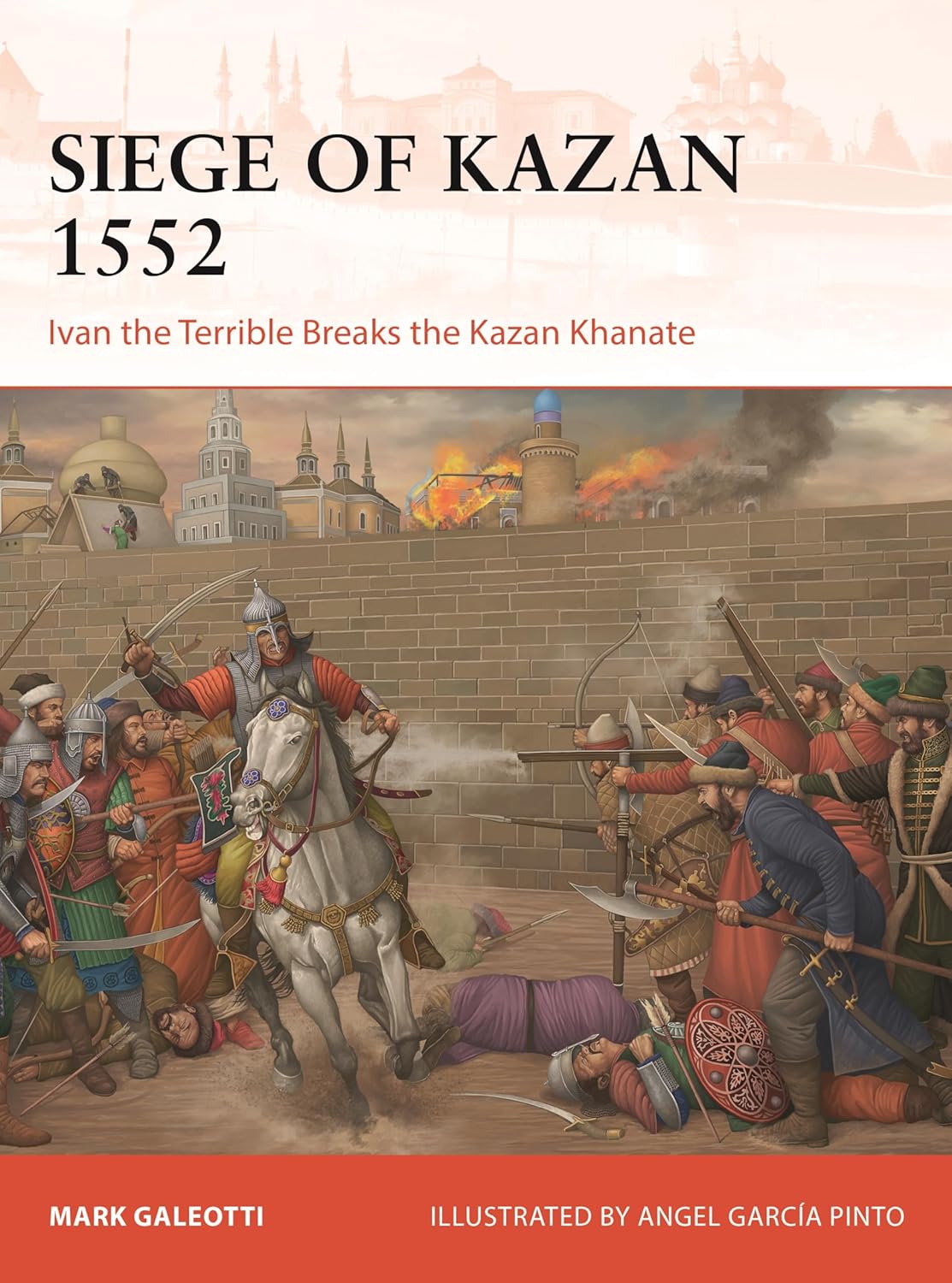
Proximity, technological advancement, and numerical superiority: Ultimately, these three conditions led to the Muscovite victory over the Kazan Khanate during the middle of the 16th century. In Mark Galeotti’s new book, “The Siege of Kazan 1552: Ivan the Terrible Breaks the Kazan Khanate,” readers are introduced to the power struggle between the Orthodox Christian Russians and the Muslim Kazanians over a strategic area at the confluence of the Volga and Kazanka rivers, an area which has now long belonged to Russia and is its fifth largest city.
The author discusses the motivations behind the Muscovites’ invasion of the Kazan Khanate and the eventual siege of the city of Kazan. There were three primary motivating factors: the expansion of the Khanate into Muscovite lands, the disruption of Russian (Muscovite) trade on the Volga River, and the Muslims’ slaving raids into Muscovy.
Early Failures
The story of the siege focuses on the Muscovites’ new king, Ivan IV, who would later become famously known to history as Ivan the Terrible. Having been crowned the grand prince at age 3, the boy was crowned king at the age of 16. Hardly had he been crowned ruler of Muscovy in 1547 that he called for the attack on Kazan in the winter of 1547 to 1548, and after its utter failure, attacked again in 1549 to 1550.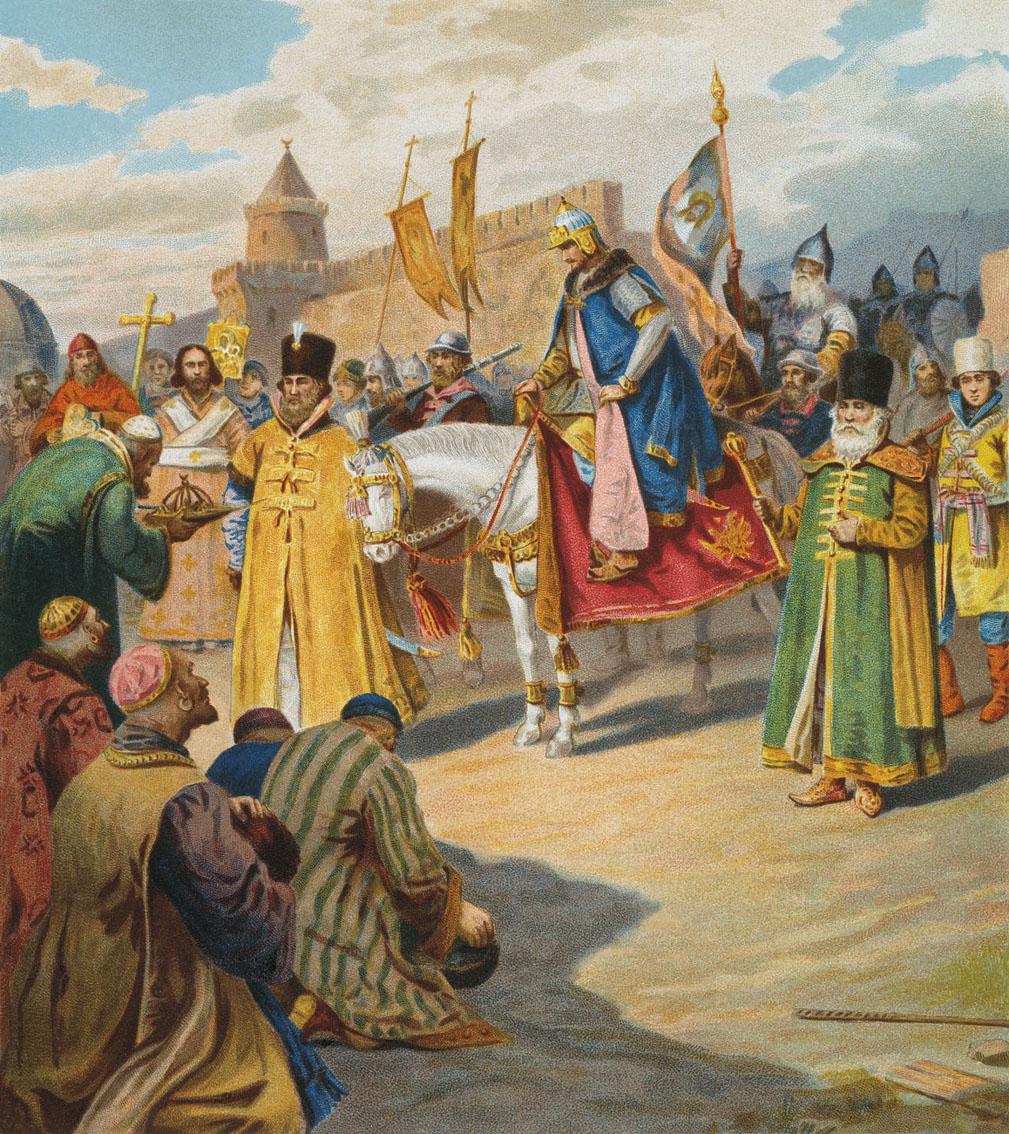
The second attempt fared better, though it, too, was not a success. As Galeotti notes, the attempts by the Muscovites were greatly hampered by the mild winters, which thawed the rivers and turned the land into mud. The author notes a moment during the 1547–1548 campaign in which soldiers awoke on the frozen Volga River to the nightmare that, according to the quoted Nikon Chronicle, “by some act of God, it grew warm and a thaw came, and all the ice was covered in water.” The result was an immense loss of weaponry and manpower.
Weapons, Planning, and Numbers
The other precondition was technological advancement; for the Muscovites, it was their artillery. By this time, gunpowder-based weapons had been around for several centuries, and the Russians continued to develop their guns to make them more powerful and more accurate.The Kazanians, including their allies, like the feared Tatars of Crimea, however, did not. As Galeotti notes, “While Kazan had begun to adopt simple handguns, their artillery was still inadequate in number and antiquated in design.” The dichotomy of advanced gunpowder technology proved decisive.
Despite the advancements, the battle was anything but a sure thing for the Russians. The Muscovites’ battle plan was methodically effective. The siege against the city with its primarily wooden walls, included siege towers, fire-heated shells, and mining. The latter effort required engineers to dig deep underground toward the Kazan walls and lay explosives. The explosions ripped apart gates and sections of the wall, opening up passages for the Muscovites. And this attack, of course, was bolstered by the Russians superior numbers as well as superior technology.
A Clear and Concise Study
“The Siege of Kazan 1552” is an interesting and rather clear-cut study of the conditions for military success and failure. Additionally, the previous failures assisted in the eventual success, ensuring the young Russian king did not repeat mistakes. Furthermore, the success helped elevate Ivan IV’s standing in Muscovy, and, according to the author, “Kazan was only the start of Ivan’s ambitions to the south. Ideally, he wanted to bring all the khanates under his control, to end the slave raids, and, even more importantly, prevent their becoming staging posts for Ottoman expansion towards Muscovy’s underbelly.”For readers interested in the ultimate disintegration of the khanates or the early military deeds of Ivan the Terrible, this is a good study. There are insightful maps, images, and illustrations by Angel García Pinto. Galeotti has written a clear and concise work on the Siege of Kazan.