In his short story “The Clockmaker,” Robert Louis Stevenson presents a case in which amoeba contemplate their own existence and that of the grand being who rewinds the clock in the room. Some of the amoeba doubt the Clockmaker, while others believe that the Clockmaker is real and a benevolent being. Stevenson points out that faith and doubt are very real forces battling for dominance.
The Neglected Carafe
A large carafe of water sits on the table in a particular room in a particular house. The maid hasn’t emptied or cleaned this carafe in a month and it, therefore, has given life to a civilization of amoeba.
This civilization grows and, though each amoeba doesn’t live very long, they seek to better their lives by better understanding their existence. Amoeba philosophers, scientists, poets, theologians contemplate the civilization, the carafe they live in, the room which surrounds them, the chimney, the mantlepiece, and, above all, the clock, which rests on the mantlepiece.
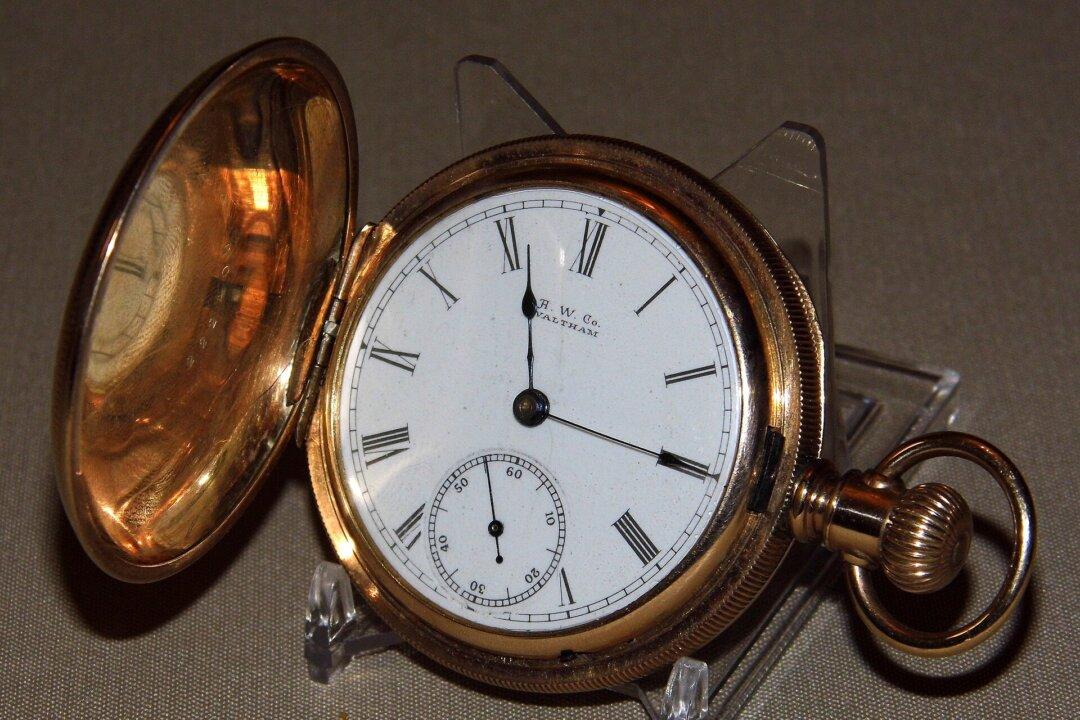
One amoeba philosopher posits the “The Room Theory,” which acknowledges that “[t]he room [is] not filled with drinking water; neither [are] its walls of the same substance as the table cloth.” This philosopher takes his belief even further and believes that “[i]n the animalcular Kosmos there was one feature of superlative abnormality: the clock, with its pendulum, its dial, and its hands.” His belief in the room hinges upon the clock, its rough consistency, its accuracy, and its changing face.
Its study of the clock supports its belief in the Clockmaker, for, in the early formation of the amoeba civilization, an earlier generation of amoeba saw the Clockmaker enter the room. Unlearned amoeba describe the incident in these words: “In the old cannibal days ... an animalculae of unheard-of bigness came through the wall; he had the sun in one claw; the movement of his swimming shook the whole caraffe; and before going out again, he did something to the clock.”