When you think of opera, what comes to mind? People killing themselves and each other, stealing other people’s spouses, and singing at each other in loud, angry voices? Opera’s reputation for melodrama is certainly not unfounded, as many of the most classical operas are extremely tragic and even gruesome in subject matter. However, thinking that all operas are the same would be like assuming that all movies are the same. Just as there are different film genres, there are different operatic styles.
Just as popular as the tragedy or dramatic opera is the operatic comedy. Sometimes defined by terms like “opera comique” in French or “opera buffo” in Italian, this popular genre was mastered by composers like Gaetano Donizetti and Gioachino Rossini. Besides the famously upbeat overture which is now permanently considered the “Lone Ranger” theme song, Rossini’s biggest claim to fame is “The Barber of Seville.” This comic opera is one of the most beloved pieces in the standard repertoire, and it’s a crowd pleaser from start to finish.
About the Opera
Since opera is nothing more than history kept alive through song, let’s start with this work’s background. It was written in 1816, based on the first play in Pierre Beaumarchais’s beloved Figaro trilogy, which also included “The Marriage of Figaro” and “The Guilty Mother.” Mozart’s take on “The Marriage of Figaro” (“Le Nozze di Figaro”) was already a big hit in the opera world, but “The Barber of Seville” wasn’t unclaimed territory either.For the past thirty years, Giovanni Paisiello’s own version of “Il barbiere di Siviglia” was so esteemed that no other composer’s adaptation could touch it. In fact, when word reached him that the impetuous young Rossini planned to pen his own opera about the wily Spanish barber, Paisiello laughed it off as unworthy of his attention or concern. After it survived the initial boos and jeers of Paisiello’s loyal fans, Rossini’s version quickly eclipsed its predecessor’s fame.
The story is perfect fodder for comedy. Lovely young heiress Rosina (mezzo-soprano) is the ward of the elderly, greedy Dr. Bartolo (bass), who’s planning to marry her and claim her dowry. He keeps her as almost a prisoner in his home, under the watchful eye of his spinster housekeeper Bertha (soprano). However, he’s been unable to stop her from catching the eye of his nemesis, the Count Almaviva (tenor), who serenades her beneath his balcony. The handsome and wealthy young count enlists the help of the wily barber, Figaro (baritone), to gain entry to the house and Rosina’s heart.
A ... Traditional Production?
Before attending any opera production, I check to see whether it’s a traditional production. I have no interest in seeing “Rigoletto” set in a Las Vegas nightclub or “The Magic Flute” reimagined as a video game, thank you very much. I consider it a very positive trend that in the past few years, far more top-level opera companies are presenting operas in their original setting than they were 10–15 years ago. I especially appreciate that I’ve seen many very traditional productions at San Diego Opera during the past few years.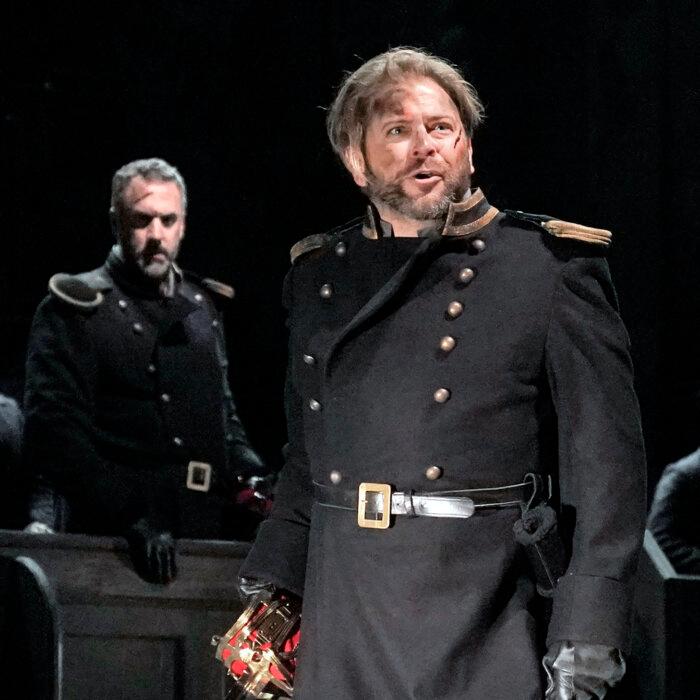
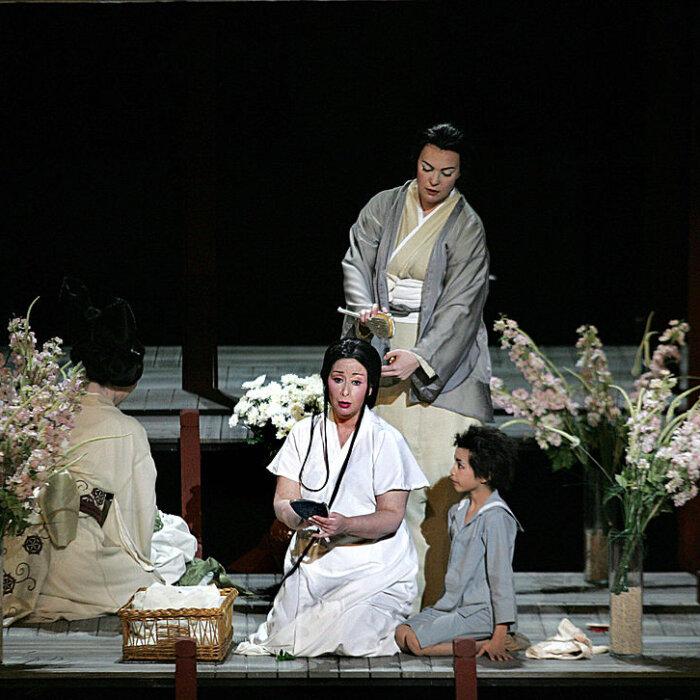
In theory, “The Barber of Seville” was no different. The costumes and hairstyling were beautiful and historically accurate, and the sets were very grand and effective in creating a believable Seville onstage. However, the more one sees modern opera productions, the more one realizes that having the correct setting doesn’t make the whole performance historically accurate, especially when it comes to comedies. Grand melodramas like “Tosca” and “Madama Butterfly,” both of which I’ve seen produced with taste and dignity by SDO, don’t lend themselves to “hoking up.” Unfortunately, today’s directors often turn to very contemporary humor when staging anything meant to be funny.
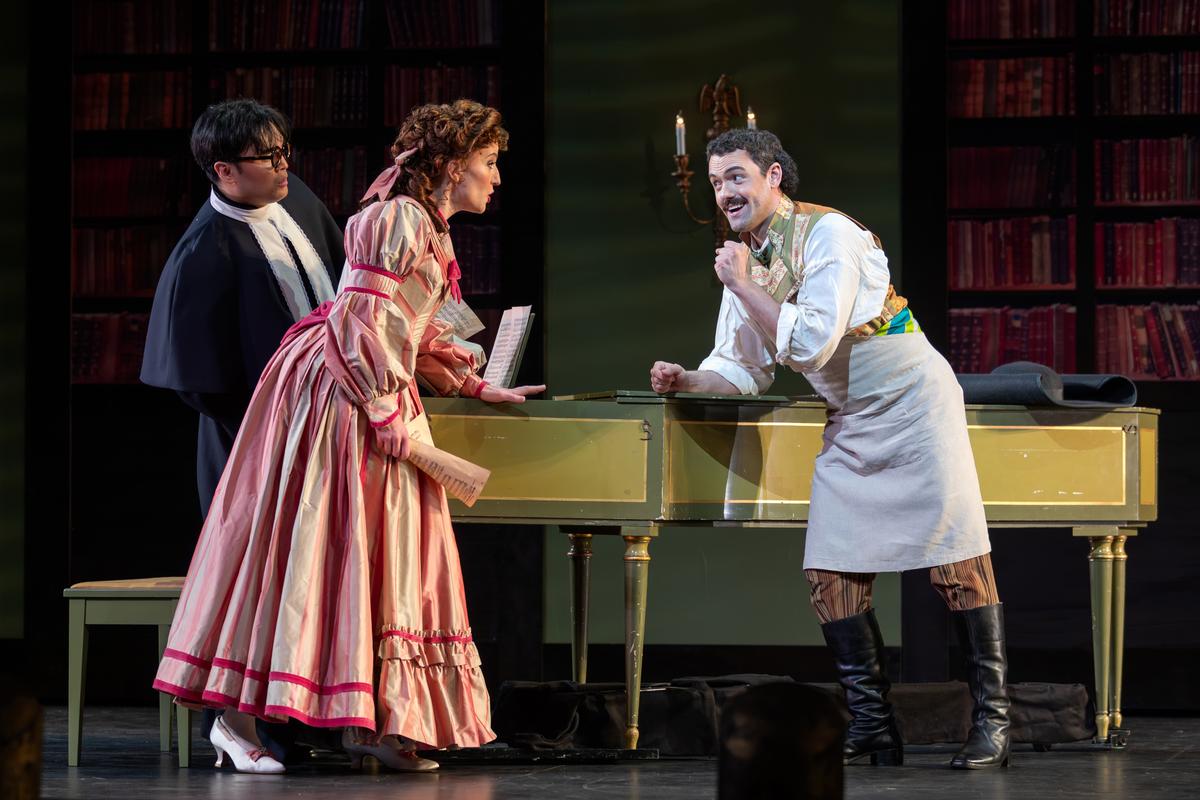
Just Too Funny
There were two cast members who immediately distinguished themselves the moment they stepped onstage: Patrick Carfizzi as Bartolo and Craig Colclough as Basilio. Mere hours after the closing show, this pair of low voices boarded a plane to New York City to return to the Met stage two days later. The most prestigious resume doesn’t always translate to the best performance, but it was very obvious who the two veterans were in this cast. The vocal power, flawless operatic style, and especially the stage presence of these two world-renowned bass-baritones was unmistakable and very impressive.This isn’t to say that the rest of the cast wasn’t good. It was very pleasing to see younger singers in the three main roles, making them more believable as the characters. SDO-regular Stephanie Doche was vocally excellent as Rosina, executing impressively clean runs in the coloratura with her full mezzo-soprano voice. Dean Murphy was charmingly roguish as the title character, and his stage presence was commanding from the moment he entered. Minghao Liu made an endearing count, bringing out the character’s innocent, sensitive side.
For Art’s Sake
In general, this was a lovely production with some excellent singers and a refreshingly traditional aesthetic. The fresh, youthful voices of the leads were nicely complemented by an impressive assortment of supporting talent. It was noteworthy how many singers were making their SDO debut in this production. The SDO chorus, which included only men in this show, was excellent as usual, nicely coordinated both vocally and physically, even when the staging was a little goofy. Although I found them distracting at times, the supernumeraries did an admirable job.“The Barber of Seville” was the middle show in San Diego Opera’s 61st season. As part of a trio of opera’s greatest hits, this Rossini work sits as a surprising between two beloved tragedies, “Pagliacci” back in October and “Carmen” as the season’s last mainstage show. “Carmen” is coming up soon, going onstage at the Civic Theatre on March 27–29. From the advance publicity, this looks like a fairly traditional production of this masterpiece with a strong cast in both leading and supporting roles. Any reasonably accurate staging of this French drama set in Spain is worth seeing for its thrilling music and captivating story. If you live in Southern California, I recommend you look into SDO’s upcoming production.
Overall, the inappropriate and excessive modern humor in “The Barber of Seville” made it less enjoyable than other San Diego Opera productions I’ve seen. However, the charisma, enthusiasm, and professionalism of the talented cast redeemed the overall effort. I never blame the performers for staging, knowing they’re just trying to survive in a tough industry and have to do what they’re told, whether they agree or not. Instead, it’s the duty and responsibility of the director and producers to answer for the staging decisions. At its best, operatic staging should make the glorious music shine the more, instead of taking away from it.