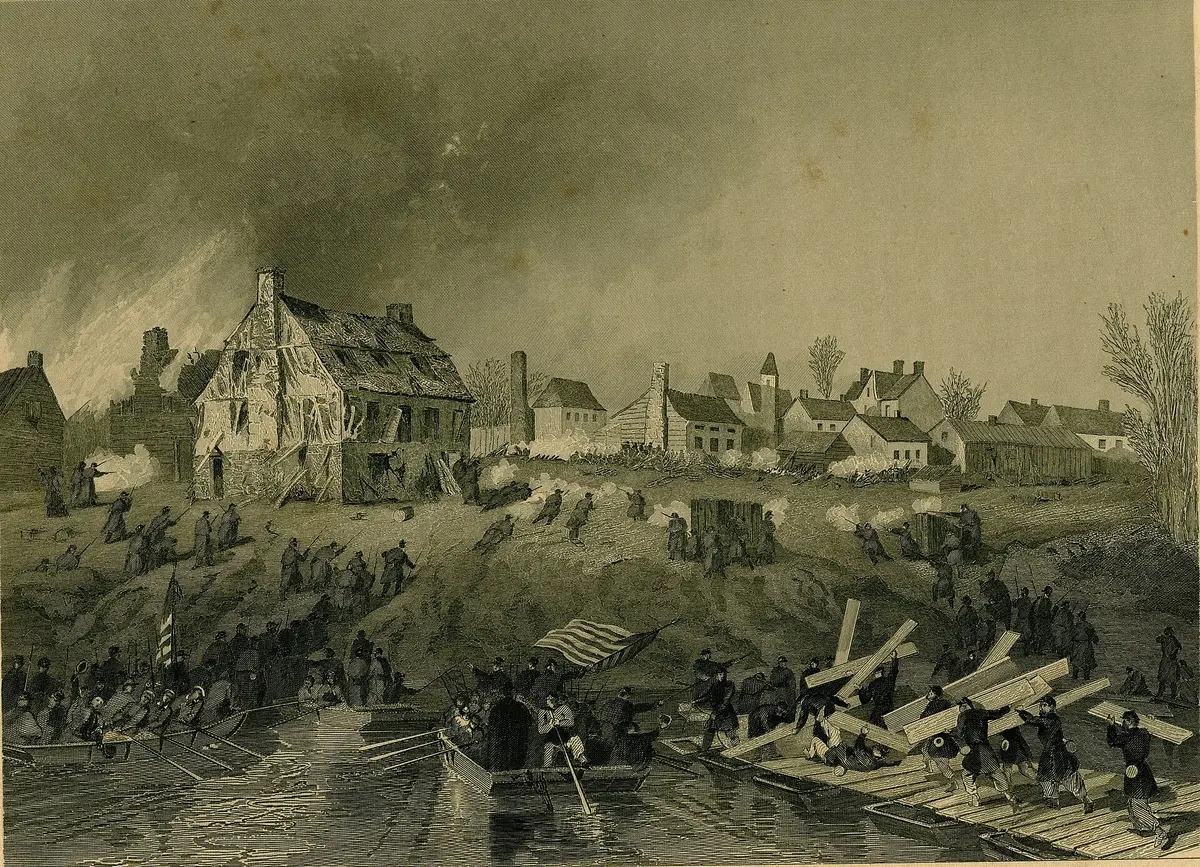
The dates: Dec. 13 and 14, 1862. The place: Fredericksburg, Virginia.
Nightmare in the Darkness
Nightfall brought the opportunity for escape. The walking wounded and the men hidden among the dead and dying slipped away to safety. A valiant band of stretcher bearers managed to rescue injured soldiers shot closer to Union lines.Meanwhile, the wounded soldiers farther up the slope filled the night with shrieks and moans, begging for help, for water, and even for a quick death. In the Sunken Road, the Confederates would have heard this chorus of cries, some undoubtedly with pity, others with grim satisfaction. The long night reinforced a remark made by their commander, Robert E. Lee. While watching the devastation of Marye’s Heights he remarked, “It is well that war is so terrible, otherwise we should grow too fond of it.”
Men on both sides who endured that night would doubtless have agreed. The next morning, one of them decided to do something about it.
The Birth of an Angel
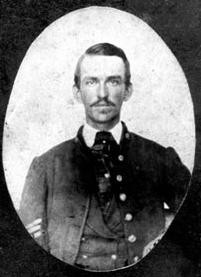
Sgt. Richard Kirkland (1841–1863) of the 2nd South Carolina Volunteers was just 19, the son of a yeoman farmer. He joined a volunteer outfit before the outbreak of war and became an experienced soldier, having seen action at Bull Run, the Peninsular Campaign, and Antietam. Like the other men around him, he’d fired away at the attacking Union soldiers as they tried fruitlessly to gain the Confederate lines.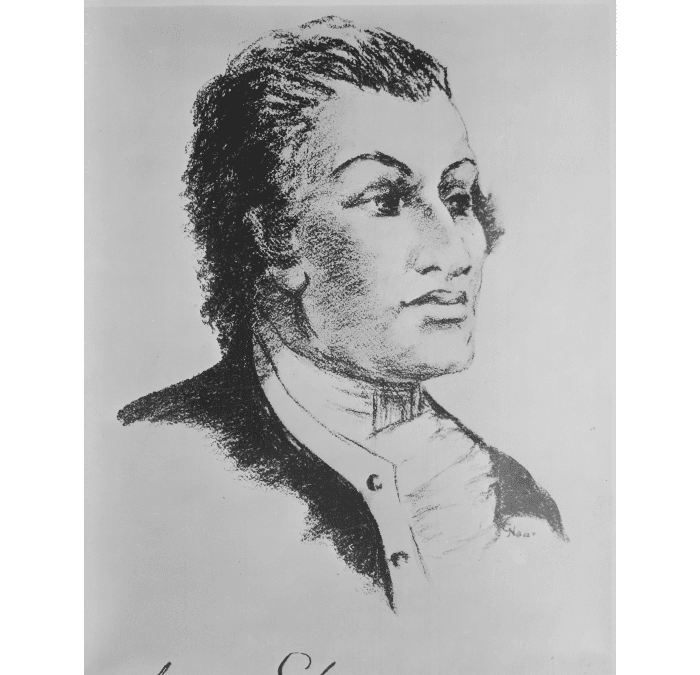

Having listened to the cries of the Union wounded through the night and into the morning, Kirkland approached his superior officers and asked permission to take them canteens of water. Depending on which account we credit, his request was twice refused before he finally went to brigade headquarters in a house behind the Sunken Road and sought permission from Gen. Joseph Kershaw. Years later, Kershaw remembered telling the young soldier, “Kirkland, don’t you know that you would get a bullet through your head the moment you stepped over the wall?” Kirkland acknowledged that possibility, then repeated his request. The general relented.
According to Kershaw’s account, Kirkland left, then returned almost immediately to ask if he might carry a white handkerchief when he crossed into the open field, but Kershaw was not authorized to show a flag of truce to the enemy and had to deny the request.
Kirkland was undeterred. He went to a well near the headquarters house, filled his canteen with water, returned to the Sunken Road, stepped through a breech in the stone wall, and exposed himself to the enemy.
The Controversy
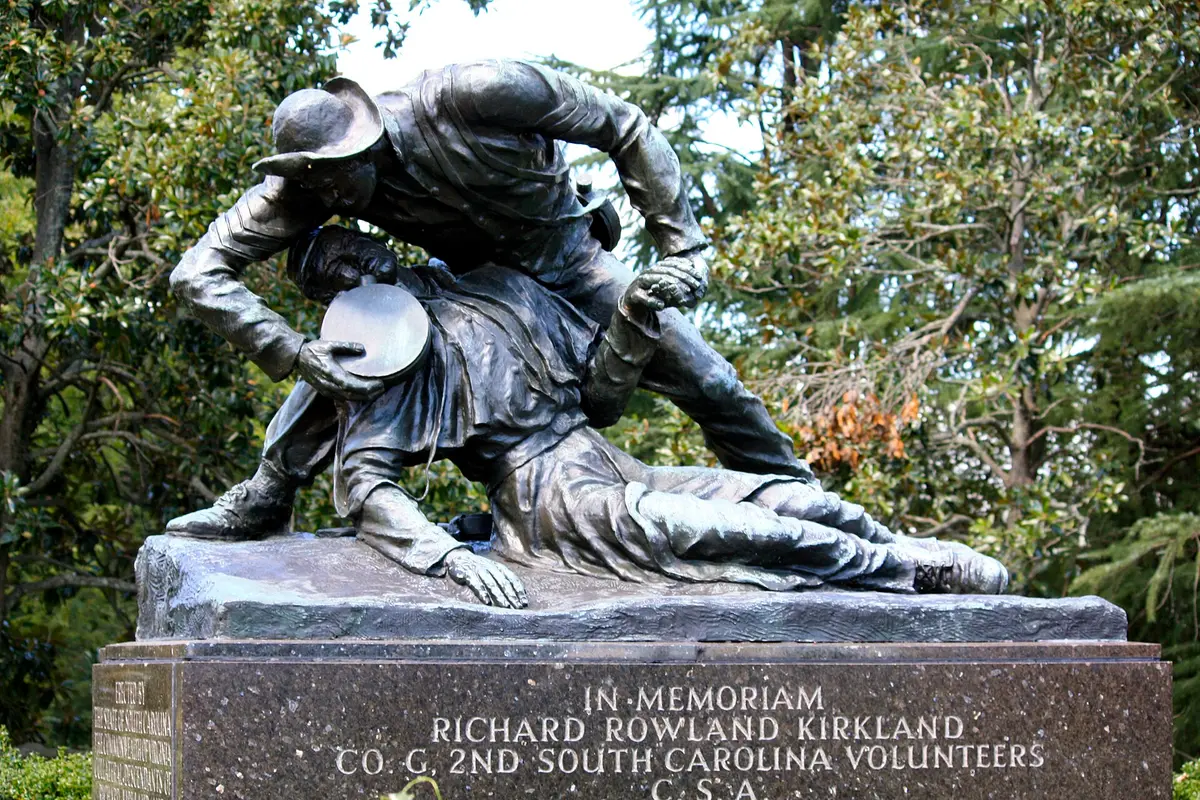
Though his bold appearance must have astonished the soldiers on the opposite side of the field, no one fired at him. Some witnesses, in fact, later attested that the Union troops cheered Kirkland as they grasped his act of mercy. At least one report tells of another Confederate soldier running more canteens to Kirkland and helping him give water to the wounded.Some investigators have recently raised doubts as to whether this act of compassion took place. They wonder if the passage of years may have embellished the “Angel” story. However, the bulk of the evidence demonstrates that a soldier in gray did indeed deliver water to the thirsty casualties in blue, and that this man was Richard Kirkland.
The poet Walt Whitman, who was then working as a nurse in a Washington hospital, wrote that several wounded soldiers in his care spoke of Confederates giving water to the wounded. Others from Kirkland’s outfit later told of his brave deed of mercy.
Aftermath
Near the Sunken Road stands a monument to Kirkland, which reads in part: “At the risk of his life, this American soldier of sublime compassion brought water to his wounded foes at Fredericksburg. The fighting men on both sides of the line called him “The Angel of Marye’s Heights.” The east face of the monument reads “Dedicated to national unity and the brotherhood of man.”As for Kirkland, he fought at the battle of Gettysburg and then at Chickamauga in September 1863, where he was shot and mortally wounded. He urged the other soldiers with him to make their escape from the charging Yankees: “I am done for. You can do me no good. Save yourselves and please tell my pa I died right.”
On that December day in Fredericksburg, Richard Kirkland also lived right.