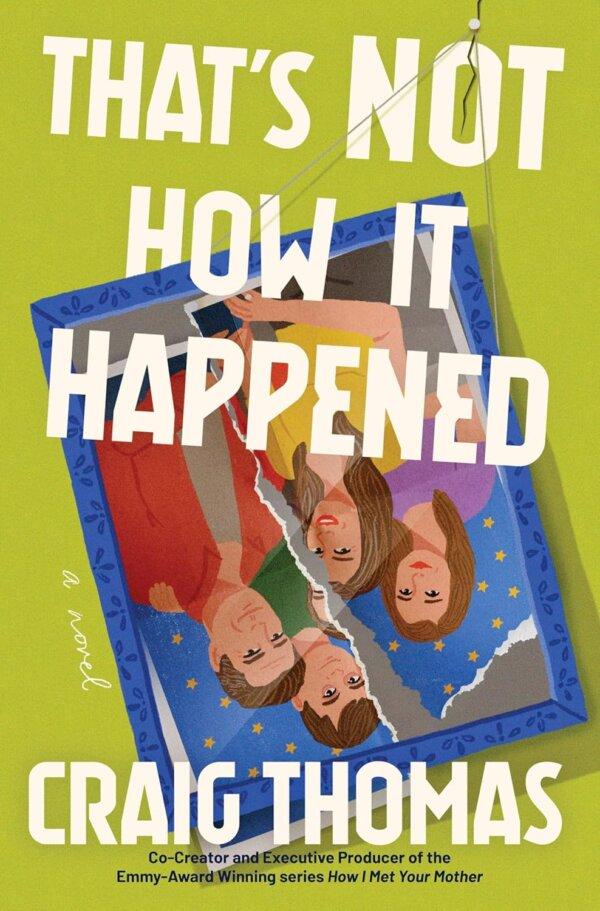
In “That’s Not How It Happened,” Craig Thomas’s latest novel, Paige McConnell used to be a successful investigative journalist. Her husband, Rob, was a notable Hollywood screenwriter and script doctor with a hit rom-com to his credit. All of that changed when their son, Emmett, was born with Down syndrome.
The couple loved their son deeply and took steps to ensure his lifelong needs were met. Ultimately, that meant relocating back to New York from LA, putting both of their careers on hold, and doing whatever they could to pay for Emmett’s medical needs. They later had a second, “neurotypical” child, Darcy, who grew up admiring her big brother but also wanting to protect him.
Once Emmett reached adulthood and became more independent (and very serious about his girlfriend, Amy), Paige decided to write a memoir about her experiences raising Emmett. The book wasn’t a spectacular success at first.
Then, a movie-star-turned-book-influencer named Merritt Berkshire got hold of Paige’s book and showered it with praise. Suddenly, movie producers began knocking at the McConnells’ door.
Paige is ecstatic about the sudden windfall. Rob sees an opportunity to leave his community college teaching job and get his Hollywood career back by adapting Paige’s book into a screenplay.
How I Broke My Family
Author Craig Thomas is well known in entertainment circles as the co-creator of the hit sitcom “How I Met Your Mother.” He is also the father of a son with a developmental disability similar to Emmett’s. If the mantra is to “write what you know,” Thomas is firmly in his niche here.
Each chapter of “That’s Not How It Happened” is divided into sections voiced by each of the four McConnell family members. They share how they got to this point, their history and recent developments, their take on those events, and what they plan to do about them.
Much of it is a stream-of-consciousness catharsis, expressing every emotion, thought, and ponderation. It’s like reading a blog post about the family’s latest personal crisis from four different points of view.
If readers are fans of Thomas’s sitcom, they’ll recognize his writing style here. It’s very conversational and bantering. The pace is impulse-driven rather than considered, and it’s laden with pop-culture references throughout. This writing voice can be either a blessing or a curse, depending on one’s preferences.
This kind of approach can work very well for a 20-minute TV program. In novel form, however, it’s a bit like someone talking “at” you rather than “to” you for an extended period. A friend might endure long passages of emotional “unloading” from someone he or she cares deeply about but perhaps not from a random stranger.
New readers and those accustomed to reading long social media threads might find this approach more familiar and accessible. If you haven’t picked up a book since you were a kid, it could be an ideal entry point for getting back into long-form books.
Tinseltown Effects
As for the plot, it’s a lot of fun to observe the differing perspectives that Paige (the newbie) and Rob (the seasoned hand) have on Hollywood production development. Overall, Thomas has an interesting take on how a real-life story can be compromised by the demands of filmmaking and the need to appeal to a broad audience.The book also touches on how our culture judges worth based on performative metrics. Greater value is placed on what looks good onscreen or what goes viral than on something’s actual merit.
The author’s firsthand experience with the insanity of Hollywood development feels all too real at times. His novel captures how this “unreal” world can disrupt a family’s foundation, especially when they’re thrust into a spotlight.
Families are complex entities. The memories and values precious to each member are almost impossible to capture accurately on film. It’s no surprise that the interplay between ego, truth, and the Hollywood machine can fracture these relationships.
Messaging Muck
On the downside, the specter of identity politics frequently seeps into the story. This is hardly surprising, when activist messaging is still de rigueur in Hollywood for selling film rights. Darcy is a (prerequisite) lesbian. How bold.Occasionally, Thomas does try to push back against this mindset. “That’s Not How It Happened” satirizes Rob’s “culture-sanitizing” students as they dismiss all his classic film examples for various microaggressions.
However, this satire becomes a non-factor by the end when Rob has a clichéd mea culpa moment, dismissing his own success because he’s an “entitled, able-bodied white guy.” Cue eye-rolling.
Nevertheless, underneath all this leftist messaging, pervasive profanity, and occasional stylistic schlock is a genuinely good story. Sift through the nonsense, and you can indeed find the heart of “That’s Not How It Happened.”