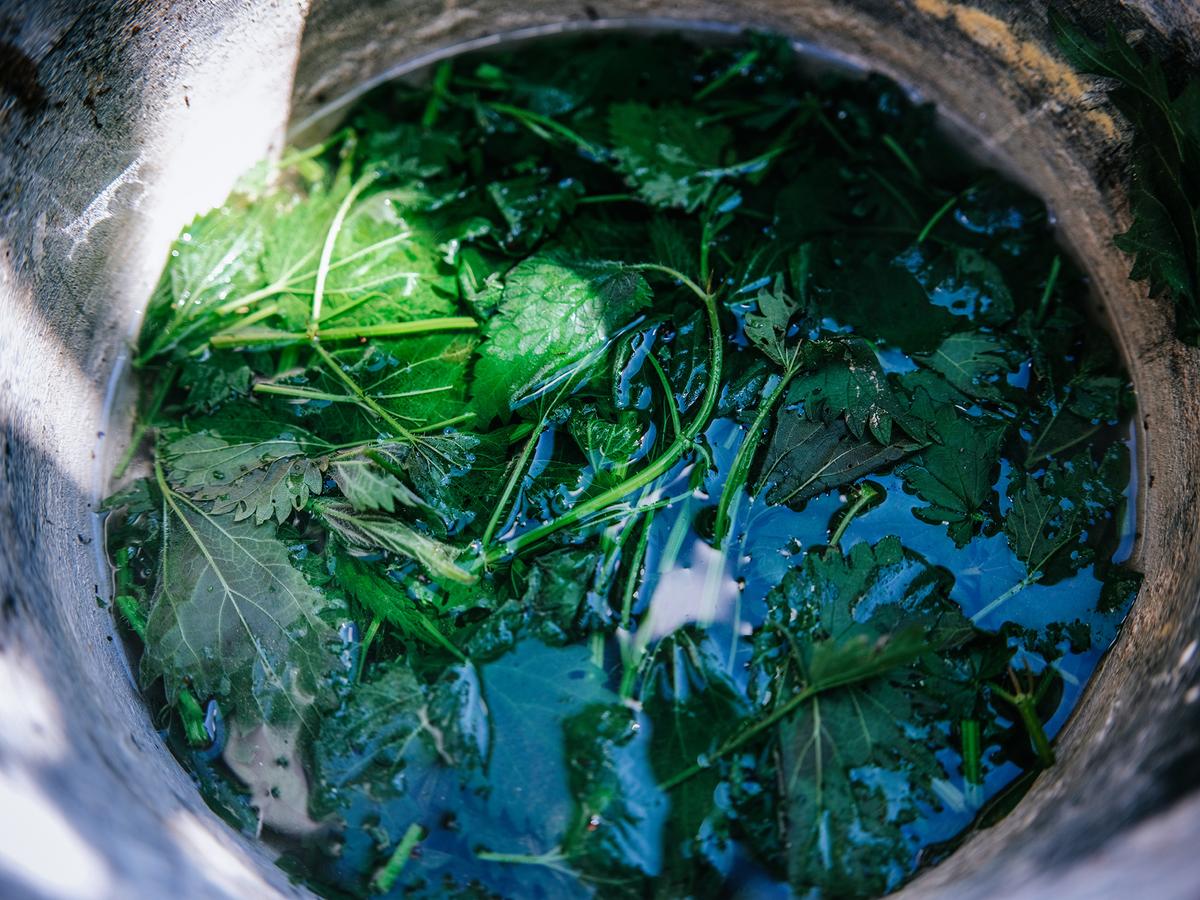
At first glance, stinging nettle (Urtica dioica) doesn’t exactly invite you in. Its jagged leaves cling to a leggy stem and are covered in fine, nearly invisible hairs. If you brush against it while mucking through the woods on a beautiful spring day, you’ll soon learn exactly how it found its name. The plant delivers a vicious, burning sting and leaves tiny welts along bare skin that can last for hours. But the plant’s defensive mechanism, designed to keep predators at bay, hides something deeply useful: a superfood of sorts.
Nettles are among the first plants to appear in spring, pushing through damp soil as the landscape begins to wake. Typically found near streams, forests, and field edges, they thrive in moist, shady areas and return year after year with ease.
Nettles as Food
You may want no part of eating a plant that can leave your bare skin covered in welts. You wouldn’t be alone. But here’s the magic: Nettles lose their sting when exposed to heat or even when pulsed in a food processor. Suddenly, that wild plant transforms into something more familiar, resembling spinach or other hardy greens but with a deeper, richer flavor.You can eliminate the sting through cooking, crushing, and drying. Most recipes start with blanching in salted water for 1 to 2 minutes, which sets the color and makes handling easier.
Some of the most practical uses include the most traditional ones. Nettle soup made with broth, potatoes, butter, and cream is both filling and common in France and the British Isles. In Italy, you might see them blended into a pesto, added to risotto, or worked into a frittata. In Nepal, you might enjoy nettles sautéed in mustard oil with dried chili and a pinch of salt. Just about any dish that calls for cooking spinach or kale can work for nettles, too.
Nettles Nutrition
Nettles earn their place in the kitchen for both their seasonality and their deep, vibrant green flavor. But, like most leafy greens, they’re exceptionally dense in minerals such as iron, magnesium, and calcium, and provide meaningful amounts of vitamins A, C, and K. Vitamin A supports eye and reproductive health and boosts immune function. Vitamin C nourishes cells and reduces oxidative stress linked to chronic diseases, while vitamin K aids in blood clotting and promotes bone health.

Like other deeply colored leafy greens, nettles are rich in polyphenols and chlorophyll, compounds that promote cellular health and reduce inflammation. They are also high in fiber, which supports gut and metabolic health.
Harvesting Nettles
Foraging for your own nettles is the easiest and most practical way to find them. If you’ve never worked with them before, be sure to use a good guidebook or take a friend who is familiar with regional plants and best practices. Look for young nettles in early to mid-spring, when they’re at their tenderest and before they begin to flower, which can turn the greens bitter. Always wear long sleeves and gloves when handling the plant, snip off its tops, and store in a plastic bag. Never harvest more than 20 percent of a patch, and avoid nettles near roadways or polluted areas.If you’re not into foraging, look for bundled nettles at farmers’ markets and specialty grocers in early spring.
Nettle and Mint Tea
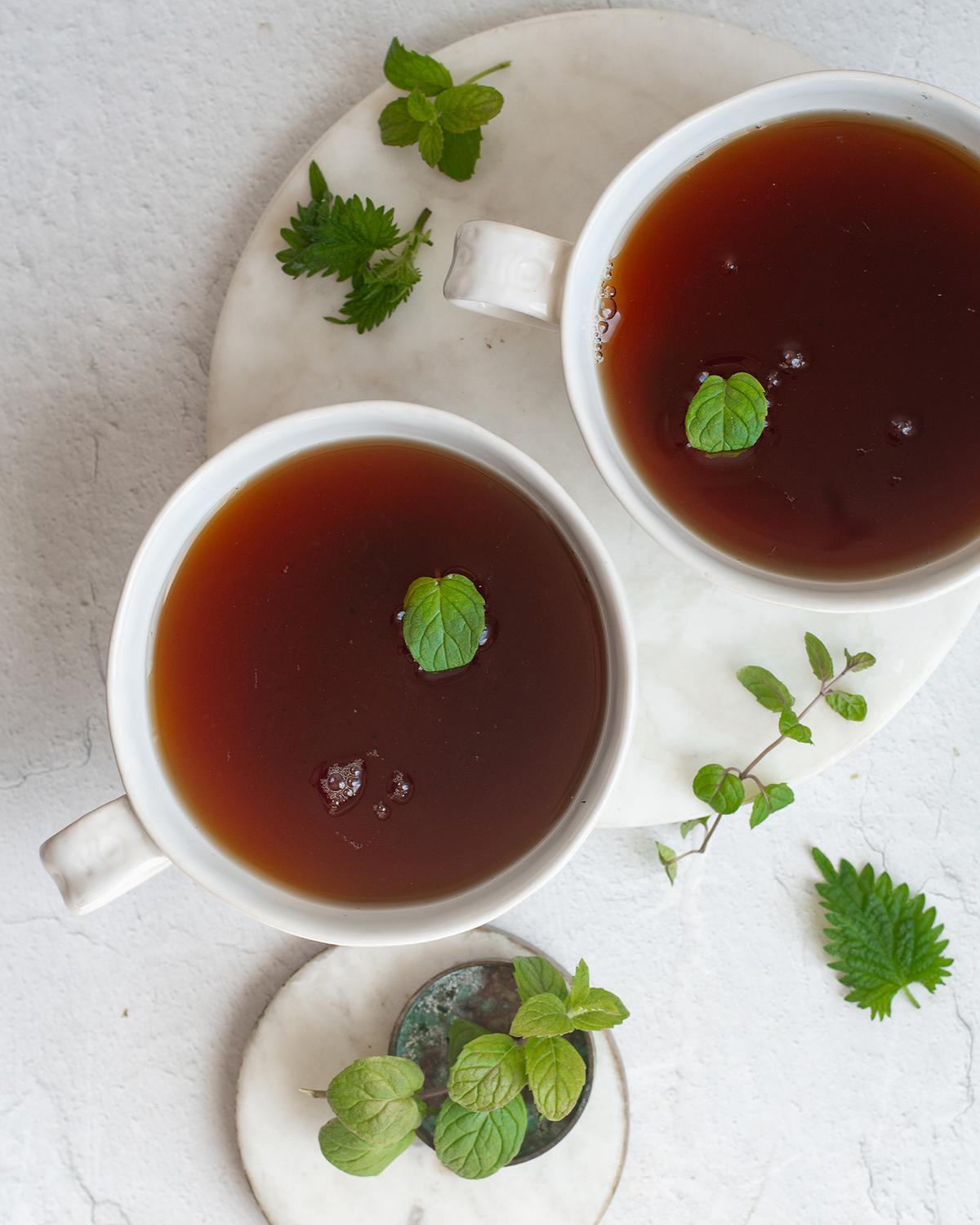
Servings: 4
- 4 cups water
2 tablespoons dried, cut, and sifted stinging nettle
2 tablespoons dried, cut, and sifted mint
Nettle Soup
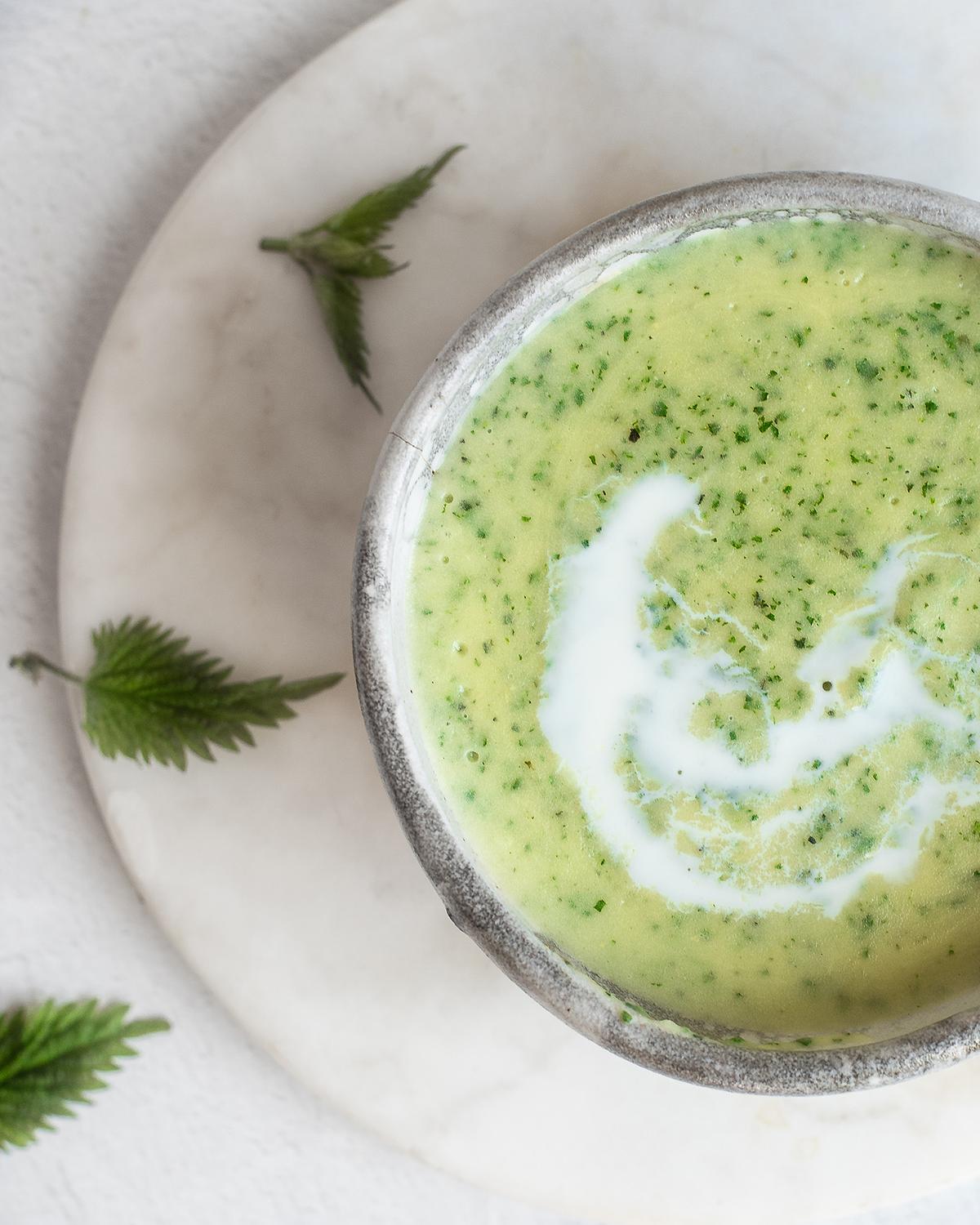
Servings: 6
- 2 tablespoons salted butter
1 small yellow onion (finely chopped)
1 pound Russet potatoes (peeled and cubed)
6 cups chicken broth
4 cups coarsely chopped stinging nettles (leaves and tender stems only)
1 cup heavy cream (plus additional for drizzling)
Sea salt (to serve)
Stir in the potatoes and then pour in the broth. Increase the heat to medium-high, and then bring the contents of the pot to a boil. Immediately reduce the heat to medium and simmer until the potatoes soften, about 20 minutes. Turn off the heat, add the nettles, and let them wilt. Stir in the cream, then blend with an immersion blender until smooth. Serve warm and store any leftovers in a tightly sealed container in the fridge for up to 3 days.