This copy is for your personal, non-commercial use only. Distribution and use of this material are governed by our Subscriber Agreement and by copyright law. For non-personal use or to order multiple copies, please contact The Epoch Times Reprints.
If you’re in your 20s with no savings, some debt, and a budget that feels like it has no room to breathe, the standard personal finance advice wasn’t written for you. Instead, consider this plan.
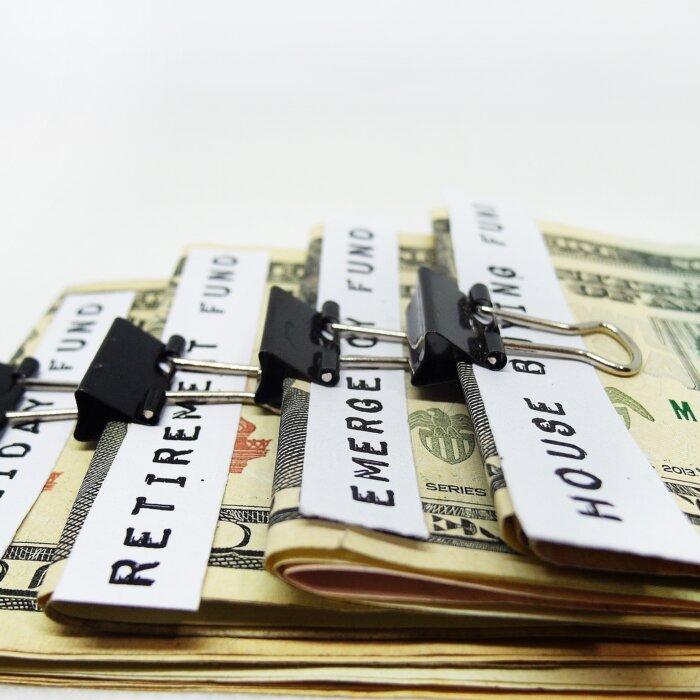
Start by tracking your actual spending for 30 days, build a starter emergency fund of $500 to $1,000, then set up one automatic transfer to begin growing your money—in that order. Everything else comes later.
The Details: How to Start Budgeting From Scratch
The financial pressure on today’s 20-year-olds is structurally different from a generation ago. For example:
Rent consumes a higher share of take-home pay than at any point in recent history.
Entry-level salaries have not kept pace with the cost of living in most major metropolitan areas.
Even at its current moderated levels, inflation has permanently raised the price of groceries, utilities, and transportation.
The result? A significant portion of people in their 20s are failing to budget. It’s not a lack of discipline; it’s because the advice they’ve been given doesn’t account for the actual numbers in their actual lives.
Before you can save, invest, or pay down debt strategically, you need to know where you actually stand. That’s Stage 1.
Stage 1: Stabilize—Know Where Your Money Is Actually Going
Before you build a budget, you need a spending audit. For the next 30 days, track every transaction: Not what you planned to spend but what you actually spent.
Use your bank’s transaction history, a free app, a simple spreadsheet, or a notebook if that’s what you'll actually use.
You’re looking for two things:
your real fixed expenses (rent, minimum loan payments, insurance, phone)
your variable spending patterns (groceries, dining, subscriptions, transportation)
Most people discover at least one budget leak, a recurring charge they forgot about, a spending habit that is larger than they realized, or a subscription they haven’t used in months.
Eliminating everything isn’t necessary. Identify one controllable leak and redirect that money.
The output of Stage One is a single number: your actual monthly cash flow after all real expenses. This is your starting point.
Stage 2: Protect—Build Your Starter Emergency Fund
This is not the full three- to six-month emergency fund you'll eventually want. That goal is real, but it’s not first. Before you pay down debt aggressively, before you open an investment account, before anything else—save $500 to $1,000.
The starter emergency fund breaks the paycheck-to-paycheck cycle by giving you a buffer between your life and your credit card. Your car needs a repair? Your phone breaks? A $500 cushion means that’s an inconvenience, not a financial crisis that sets you back three months.
Open a separate, accessible savings account with a good yield. Online banks with high-yield accounts can be a good option—current rates are meaningfully higher than traditional banks, and the account is often free to open.
Set a target of $500.
Automate a weekly or biweekly transfer of whatever your cash flow audit revealed you can move—even $25 at a time.
Do not touch this money for anything that is not a genuine emergency.
This stage has one rule: it comes before aggressive debt repayment and before investing. The math on this is sometimes debated, but the behavioral reality is not. Without a buffer, any financial disruption sends you back to zero and back into debt.
Stage 3: Grow—One Account, One Automatic Transfer
Once your starter emergency fund is in place, you have two decisions to make.
1. Should you pay down student debt or start investing?
If your student loans are federal and your interest rate is below 6 percent, consider making minimum payments and direct extra money toward investing—specifically, capturing any available employer 401(k) match first. Long-term returns on index fund investing have historically outpaced low-rate federal loan interest, and time in the market matters more at your age than marginal debt reduction.
If your loans are private with rates above 7 percent or 8 percent, pay those down aggressively before investing beyond your employer match.
2. Should you contribute to a 401(k) if there’s no employer match?
If your employer offers no match, skip the 401(k) for now and open a Roth IRA instead. Roth IRAs are almost always the better first investment account for entry-level employees in their 20s. Do note, however, that a 401(k) may still be preferable if it has better funds, lower costs, or if you expect a higher future tax rate.
Your contributions go in after tax, that money grows tax-free, and you can withdraw contributions (not your earnings—your contributions) without penalty if you genuinely need the money before retirement.
The 2026 contribution limit is $7,500 (for people under 50). You don’t need to hit that number. Start with whatever your cash flow supports after your emergency fund target is met. Even $50 a month invested consistently in a low-cost index fund is a real start.
Set up one automatic transfer from your checking account to your Roth IRA on payday. Automate it and leave it alone.
Frequently Asked Questions About Budgeting in Your 20s
How Do I Build an Emergency Fund When I Have Nothing Left at the End of the Month?
Start with your spending audit. Most people in this situation discover at least one controllable expense (a forgotten subscription, a food delivery habit, a recurring charge) that can be redirected. Even $25 a week adds up to $1,300 in a year. The starter emergency fund target of $500 to $1,000 is deliberately modest precisely because it needs to be reachable on a tight budget. Automate the transfer so it moves before you have a chance to spend it.
Is It Worth Opening a Roth IRA If I Can Only Contribute a Small Amount Each Month?
Yes. The value of a Roth IRA at your age is the decades of tax-free compounding that follow. A $100 monthly contribution started at 25 is worth significantly more at retirement than the same contribution started at 35. Open the account, contribute what you can, and increase the amount as your income grows. Starting small is not a failure. Not starting is the bigger issue.
Should I Use the Debt Snowball or Debt Avalanche Method?
The debt avalanche method—paying off your highest-interest debt first—saves the most money mathematically. The debt snowball method—paying off your smallest balance first—generates faster psychological wins that help some people stay motivated. If you are disciplined and motivated by numbers, use the avalanche. If you need early momentum to stay on track, use the snowball. The best method is the one you will actually stick with.
What If My Budget Audit Shows I Have Literally No Margin?
That means your income problem is bigger than your spending problem, and no budgeting framework will fully solve it. In that case, focus on income before optimization: a part-time income source, a raise conversation, a skills investment that opens a higher-paying role. Budgeting is a tool for allocating money you have. If incoming funds are structurally insufficient for your fixed costs, the priority becomes changing that number.
Adam H. Douglas is a journalist and writer specializing in personal finance and literature. His recent work explores money management, book reviews, veterinary medicine, and long-term financial planning. He currently resides in Prince Edward Island, Canada, with his wife of 30 years and his dogs and kitties.