Stacked Arms and a Final Salute

In this installment of “When Character Counted,” we meet a man who understood and practiced the virtues and obligations of citizenship, even at personal cost.
Stacked Arms and a Final Salute
Gen. John B. Gordon surrendered Confederate arms to Union Gen. Joshua Chamberlain. Photos by Matthew Brady. Public Domain
|Updated:
0:00

On July 2, 1863, Confederate Gen. John B. Hood launched a series of assaults on the Union flank at Gettysburg. With his men running out of ammunition and casualties running high, Joshua Chamberlain (1828–1914) ordered his men to fix bayonets and then led the charge down the sloping ground of Little Round Top into their attackers. The Confederates broke and ran, only reassembling at the base of the hill. The Union flank was saved. Decades later, Chamberlain received the Medal of Honor for leading that attack.

While some have lauded Chamberlain as the hero for that charge, as in Michael Shaara’s popular novel, “Killer Angels,” others have accused Chamberlain of vanity and even outright deception regarding his role in the battle. None deny his bravery under fire—he fought in 24 battles and numerous skirmishes and was wounded six times, nearly dying at Petersburg—but his role at Gettysburg remains controversial.

His part in the surrender of Lee’s army, however, reflects his chivalric character at its best.
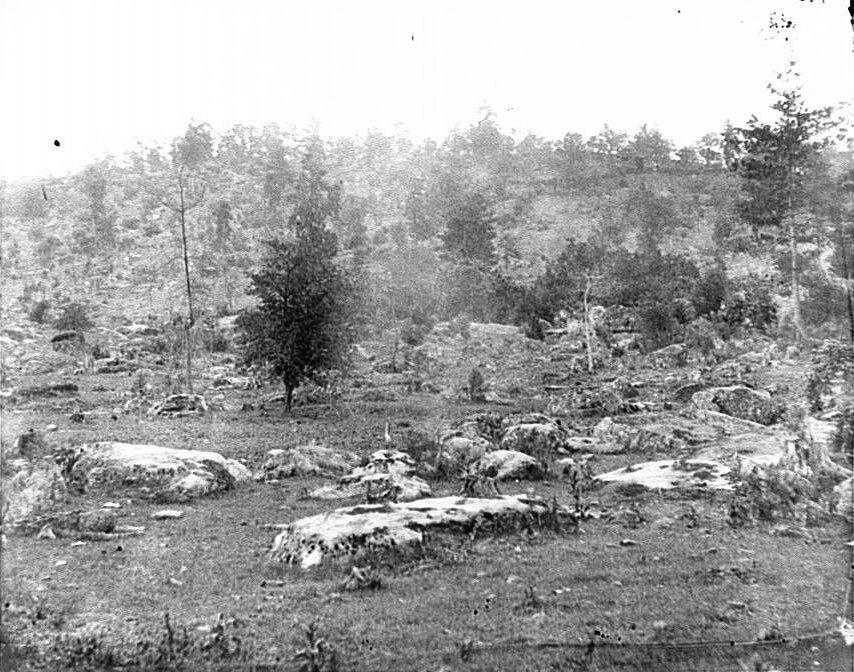
The western slope of Little Round Top, photographed by Timothy H. O'Sullivan in 1863. Library of Congress. (Public Domain)
The western slope of Little Round Top, photographed by Timothy H. O'Sullivan in 1863. Library of Congress. Public Domain

The Professor Goes to War

Chamberlain grew up on his father’s farm in Brewer, Maine, and in 1848 entered Bowdoin College. Students and faculty knew him as a serious student with a penchant for languages, including Greek, Latin, German, and French. There, he took some classes with Calvin Stowe, husband of Harriet Beecher Stowe of “Uncle Tom’s Cabin” fame, and was once present when she read from her pre-published manuscript of that novel.

A devout young man, Chamberlain intended to go into the ministry and possibly become a missionary, but then he met and married Fannie Adams and took up a teaching position at Bowdoin, where he taught rhetoric and modern languages.

Chamberlain hailed from a family of men who had fought in America’s wars since the Revolution. Consequently, when the war between North and South erupted, he left Bowdoin and was made a lieutenant colonel in the 20th Maine Volunteer Infantry Regiment. He respected his men for being volunteers like himself and worked hard to get to know them.
According to historian Ronald C. White, this relationship proved vital to his leadership and to his success in the field. White notes that “when they got into such a battle as Little Round Top, they were willing to follow him. They believed in him.”
Then came Lee’s surrender at Appomattox, and Chamberlain took a principled step for honor and dignity that later pleased some and angered others.

The Winners Salute the Vanquished

After signing the surrender, Gen. Lee left for Richmond while Grant rode to his headquarters in City Point. Before leaving, however, Grant had arranged for the surrendered Rebels to march between Union ranks, stack their muskets, and furl and surrender their flags. Chamberlain found out around midnight that Grant had left him in charge of the particulars of this last parade.
As this ceremony began, Chamberlain felt impelled to salute the bravery of the men he and his soldiers had fought for so long and in so many arduous battles. He ordered his men, as he stated years later, to “‘carry arms,’ as it was then known, with musket held by the right hand and perpendicular to the shoulder. I may best describe it as a marching salute in review.”

Seeing what Chamberlain had commanded, “By word of mouth [Confederate] General Gordon sent back orders to the rear that his own troops take the same position of the manual in the march past as did our line. That was done, and a truly imposing sight was the mutual salutation and farewell.”

Chamberlain then describes the emotions shown by soldiers on both sides as the arms were stacked, some 27,000 stands of weapons by the end of the day, the Confederates sometimes kissing their flags goodbye with tears in their eyes, the Union soldiers whose “battle-bronzed cheeks were not altogether dry.”

Chamberlain undoubtedly knew that such a salute to an enemy so many Northerners hated might bring negative reactions from the press and the public. Like Grant in his surrender terms with Lee, however, perhaps he hoped that such a gesture might encourage other Confederate forces to surrender and bring the sundered country together again.

A Firm and Seasoned Substance of Soul

Following the war, Chamberlain served four one-year terms as governor of Maine, remained active in Maine’s Republican party, and became president of Bowdoin for a time.
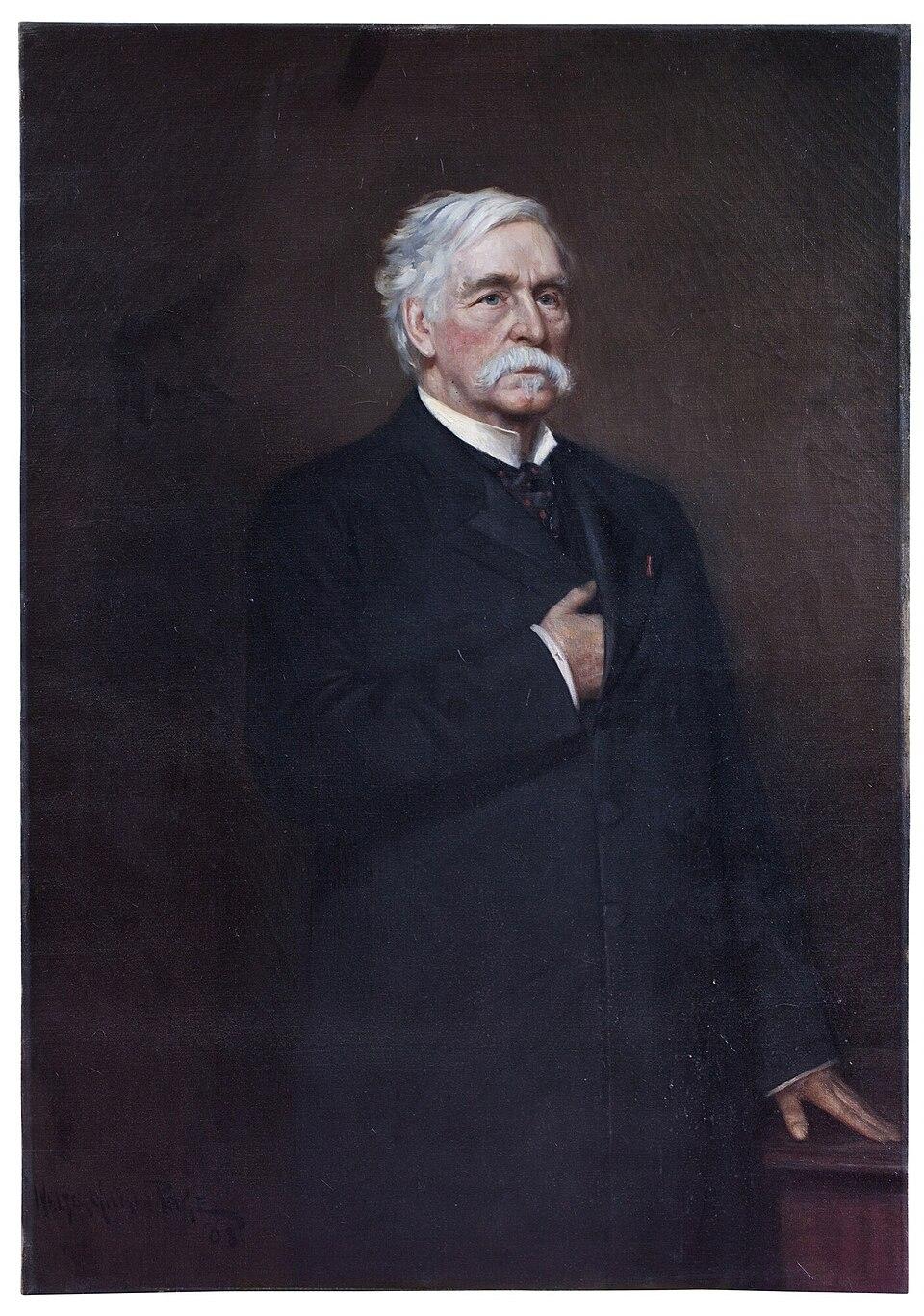
The official portrait of Joshua Lawrence Chamberlain as president of Bowdoin College, 1908, by Walter Gilman Page. Bowdoin College Museum of Art. (Public Domain)
The official portrait of Joshua Lawrence Chamberlain as president of Bowdoin College, 1908, by Walter Gilman Page. Bowdoin College Museum of Art. Public Domain
Even into his retirement, he continued to write and speak about the war. In his online biography of Chamberlain, historian Charles Calhoun observed: “Although never forgotten in Maine, Chamberlain largely faded from national view for most of the 20th century. No statue of him was ever erected at Gettysburg; few historians studied his campaigns. But amid the surge of interest in the Civil War in the 1990s he re-emerged as an exemplary figure among the Union generals, the very model of the citizen-soldier.”
In 1889, Chamberlain spoke at the dedication of the 20th Maine Monument at Gettysburg. Ever the teacher, he offered some thoughts on character, which, given these installments for “When Character Counted,” are worth repeating here:

“The lesson impressed on me as I stand here and my heart and mind traverse your faces, and the years that are gone, is that in a great, momentous struggle like this commemorated here, it is character that tells. I do not mean simply or chiefly bravery. Many a man has that, who may become surprised or disconcerted at a sudden change in the posture of affairs. What I mean by character is a firm and seasoned substance of soul. I mean such qualities or acquirements as intelligence, thoughtfulness, conscientiousness, right-mindedness, patience, fortitude, long-suffering and unconquerable resolve.”

What arts and culture topics would you like us to cover? Please email ideas or feedback to [email protected].
Google LogoMark Us Preferred on Google
Jeff Minick
Jeff Minick
Author
Jeff Minick has four children and a passel of grandkids. He has written two novels, “Amanda Bell” and “Dust on Their Wings,” as well as “Learning as I Go” and “Movies Make the Man.” You’ll find more of his writing at JeffMinick.substack.com.