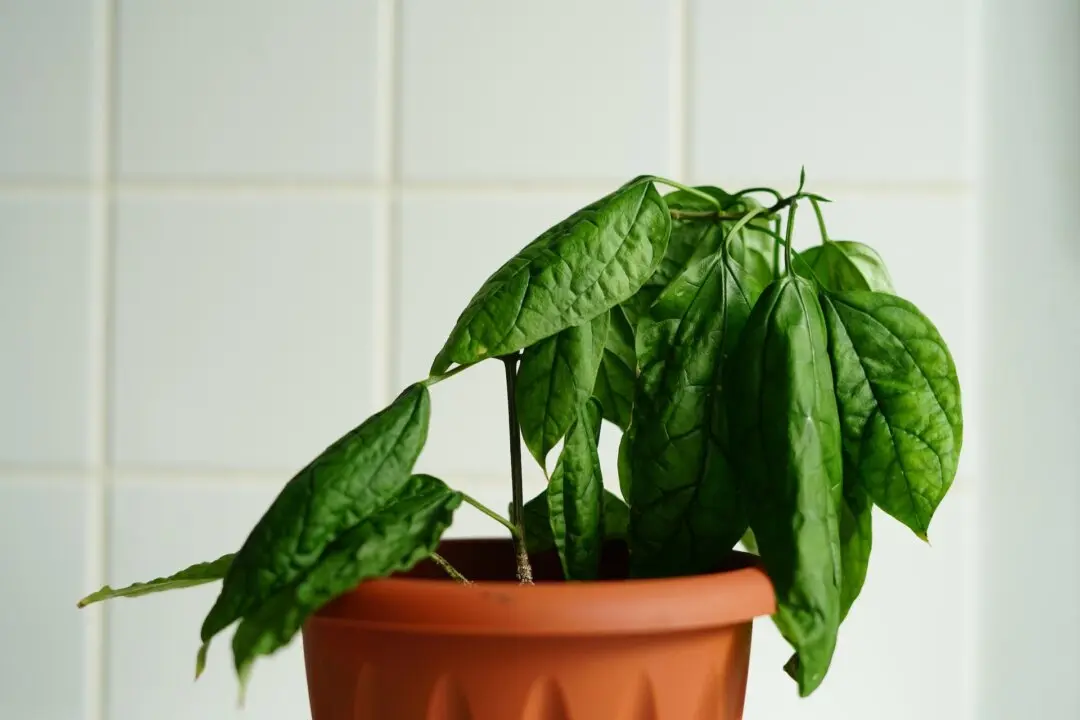
They can be placed on a patio or balcony, so anyone can grow strawberries, herbs, or flowers just about anywhere. Be sure to get plants that have similar requirements for light and watering. Use small growing species, such as herbs like parsley, thyme, and chives, and pansies, nasturtiums, and violas; the last three have beautiful flowers that are also edible. Avoid invasive plants such as mint that will send up new sprouts in all the other openings in the pot.
If you fill the pot with new sterile soil, you won’t have any weeding to do, and the plant roots may have fewer disease problems. Most potting soil has some fertilizer, but you will probably need to fertilize the plants by midsummer.
Strawberries are often planted in these pots because they are small plants with a shallow root system, so each plant doesn’t compete with the others for water. The fruit will often turn out better as well, since they are not growing on the ground, where they are susceptible to bacterial and fungal disease problems. Strawberries can be planted in the pots in areas of the country that can’t grow them successfully in the ground. In these areas, the plants are replaced each spring.
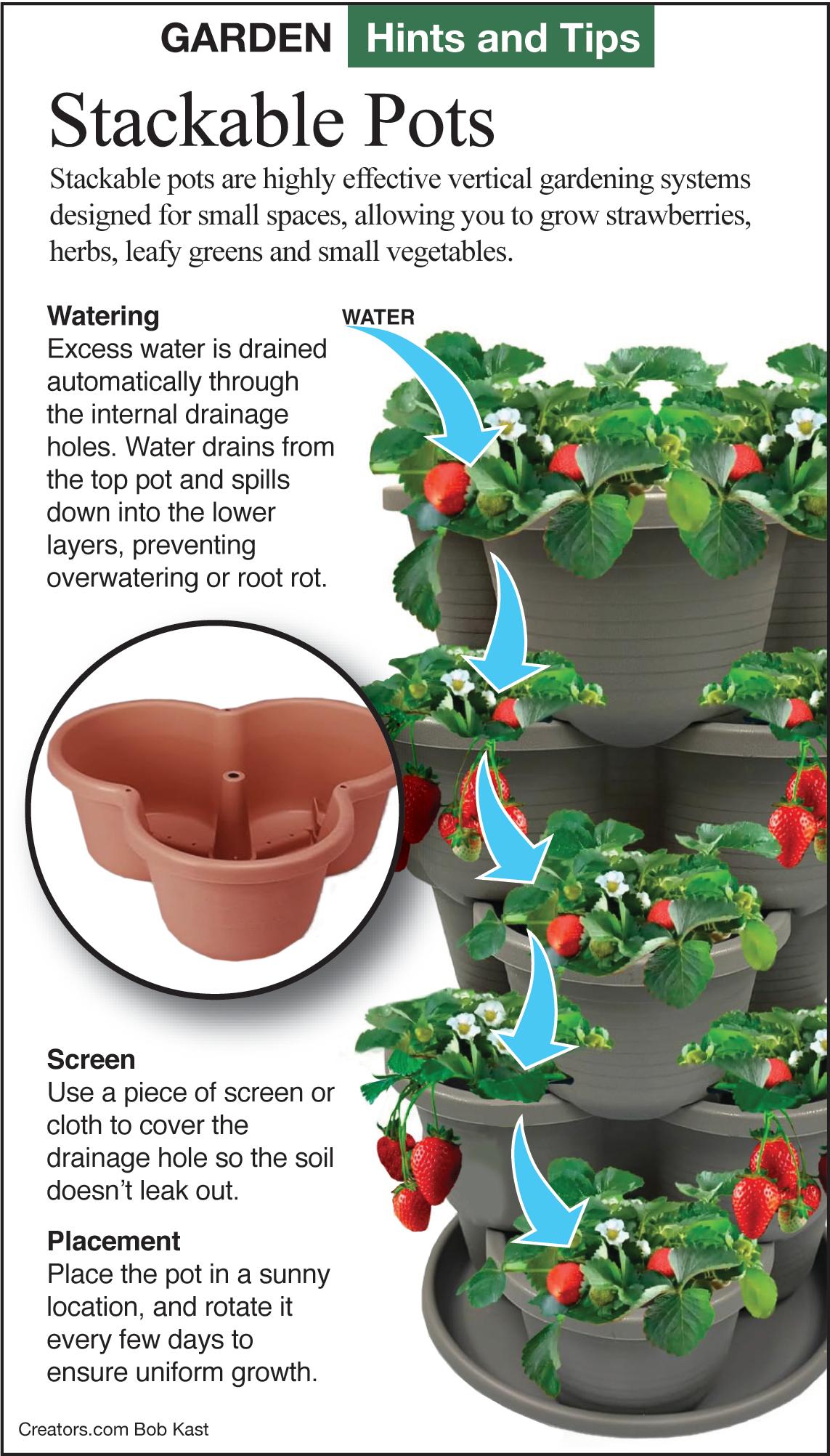
For stackable pots, just plant each layer and then add it to the stack. If you try a strawberry pot, cover the bottom hole with a piece of screen or cloth that will let the water out, but not the soil. Never add a layer of gravel to the bottom of the pot. It does not increase drainage. In fact, it slows the drainage in the bottom layer of soil. Fill the pot to the bottom of the first set of side holes. Stick the roots through the hole and spread them out by reaching into the pot from the top. Next, add more soil up to the next holes and repeat until you can plant a few in the top. To prevent the soil from falling out of the side holes, you can cut a piece of cloth or weed barrier fabric slightly bigger than the side hole in the pot. Cut a slit for the plant and wrap the fabric around the stem so that the cloth keeps the soil from washing out of the hole. If you replace the plants, you should replace at least half the soil, if not all of it.
Stackable pots have drainage systems to allow water from the top to spill down into the lower layers without overwatering the top layers and underwatering the bottom layers.
It used to be that strawberry plants produced fruit only in the spring, but now there are strawberry plants that don’t stop producing flowers and fruit all summer long (unless it gets too hot, in which case they will pause until the weather cools off). They are called everbearing, and they make the best varieties for strawberry pots. Tillicum, Ozark Beauty, Seascape, and Quinault are good everbearing varieties.
If the pot is in a cool, protected location over the winter so that the plants and soil in the pot don’t dry out, the strawberry plants could last several years before you would need to replace them.