Many lighthouses around the country are inactive, serving as reminders of a time when these navigational aids along America’s coasts were essential for guiding ships. However, St. Augustine, Florida’s lighthouse, completed in 1874, is still an active lighthouse for the U.S. Coast Guard.
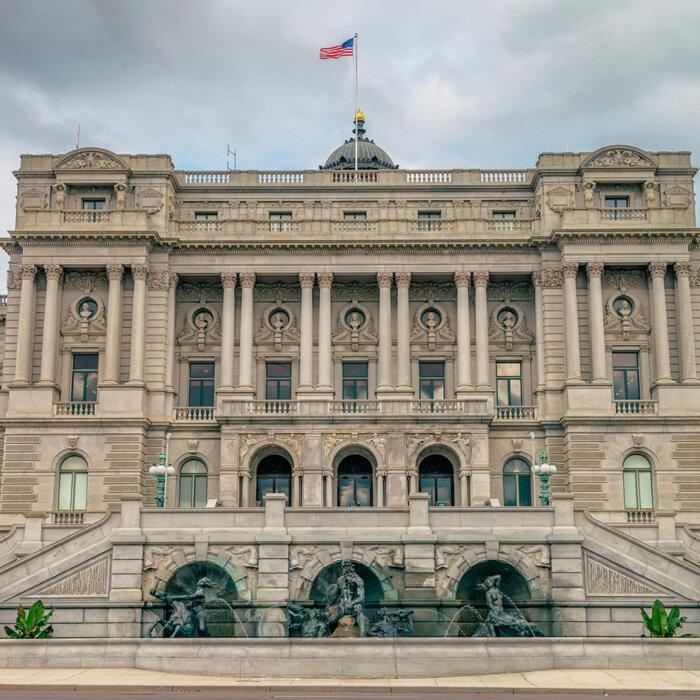
Its architect was Paul J. Pelz, famous for designing the Library of Congress’s Jefferson Building in Washington.
Visitors can climb the 219 steps on the spiral, nautilus-shell-like staircase to the lighthouse’s tower and observe what has become a rare sight: a working first-order Fresnel lens. After the glass, bull-eye-shaped, panel lens was invented by French civil engineer Augustin Fresnel in 1822, it became the lens of choice for lighthouses across America. It appealed because it could refract a strong beam of light both horizontally and vertically. When lighthouses began to be decommissioned or equipped with modern technology, the original Fresnel lenses were taken down and primarily put on display in museums.
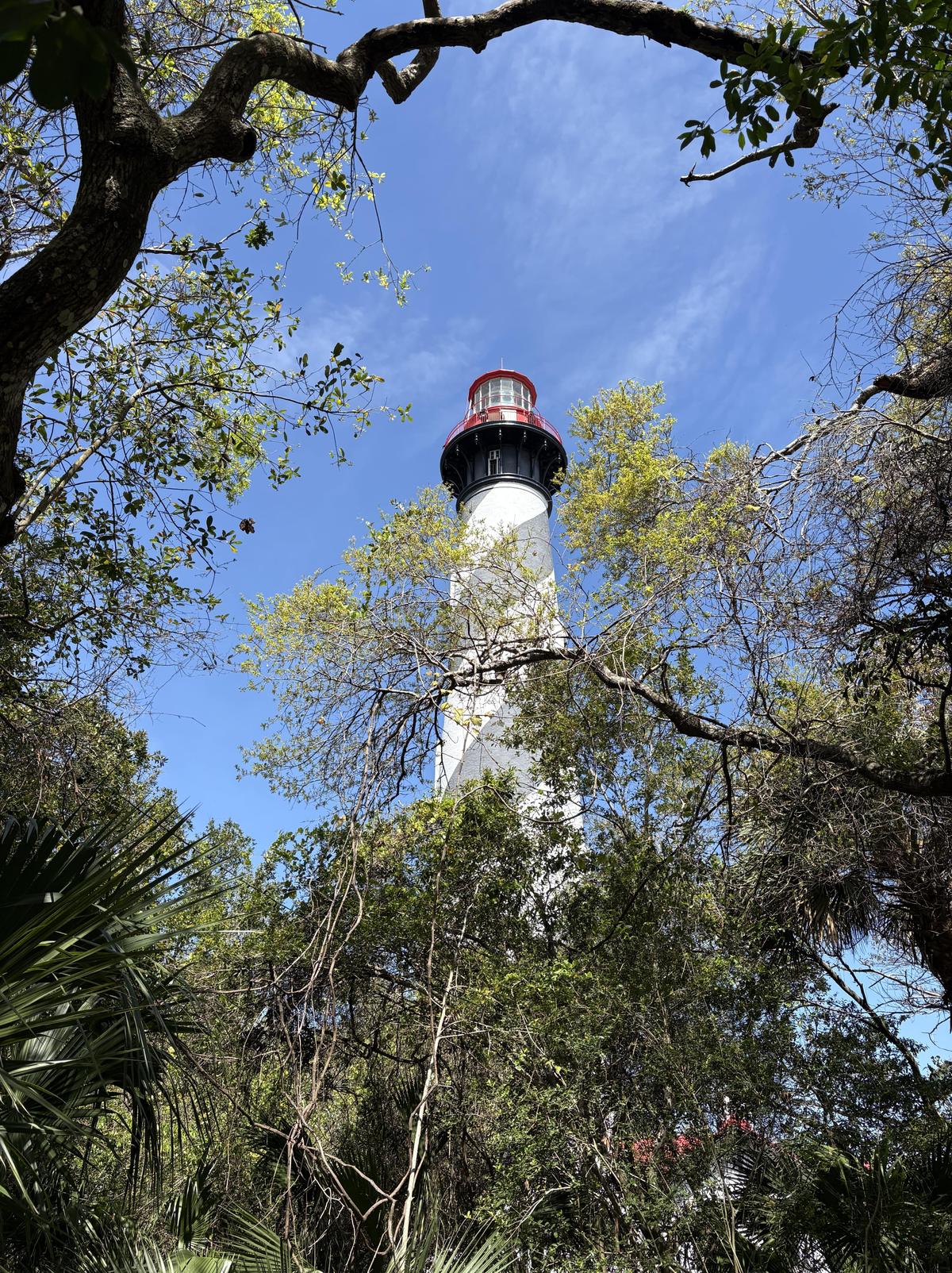
The St. Augustine lighthouse is visible through the town's verdant trees. Deena Bouknight
St. Augustine’s lighthouse is unique in that the original 9-foot tall, 6-foot wide Fresnel lens, built in 1873, still occupies the lighthouse’s lens room. Each day, it can be viewed operating with its clock-like mechanism.
From the ground at night, people can see the Fresnel lens operating: a magnification of a 1,000-watt lightbulb to over 600,000 candle power, which is visible 24 miles offshore. The light flashes every 30 seconds.
While climbing or descending the stairs in the 165-foot-tall lighthouse, visitors can rest upon the eight landings and take in the vast views from the large windows. The views include expansive marshes, the Atlantic Ocean, and the United States’s oldest port city.

The tower’s black and white swirl and red cast iron top can be seen from far away.
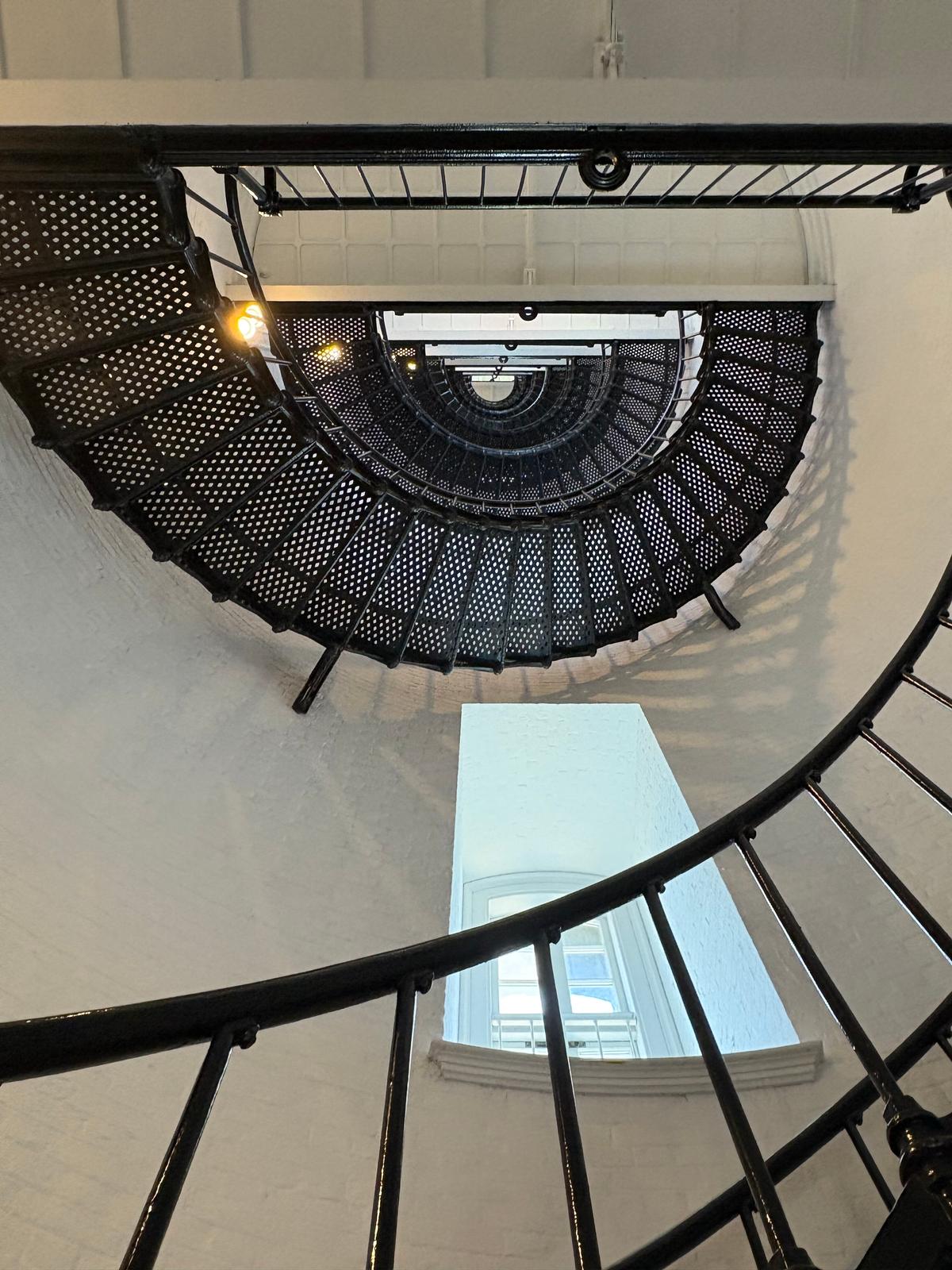
Visitors can take the stairs in the St. Augustine lighthouse to capture expansive views. Deena Bouknight
Stepping in When Necessary
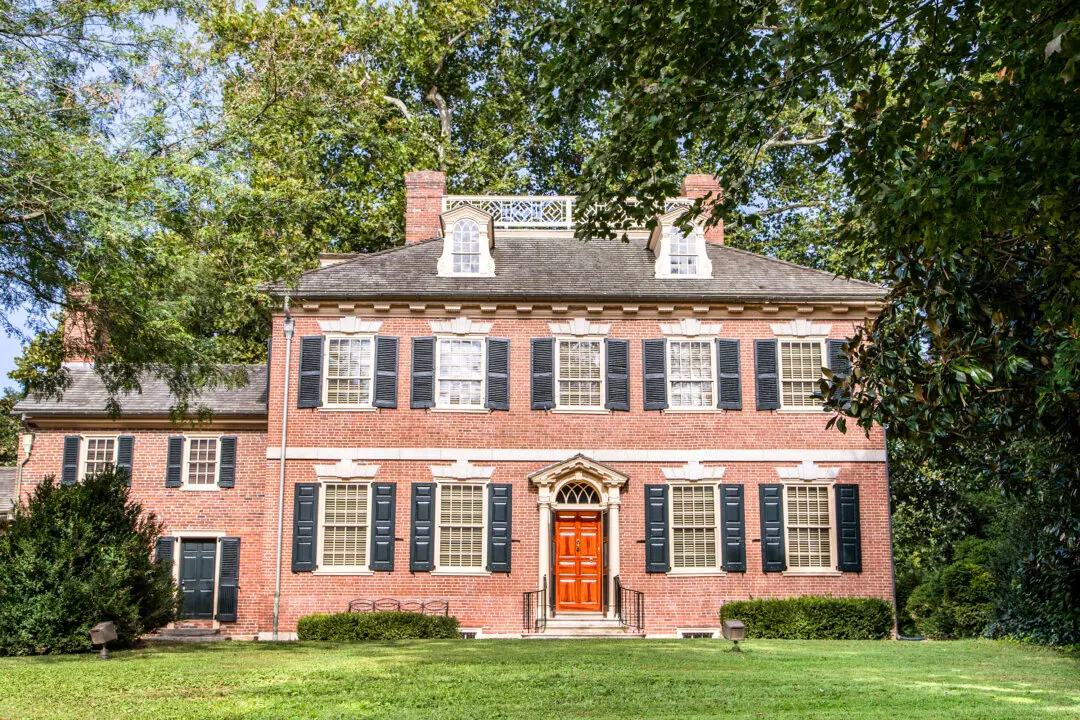
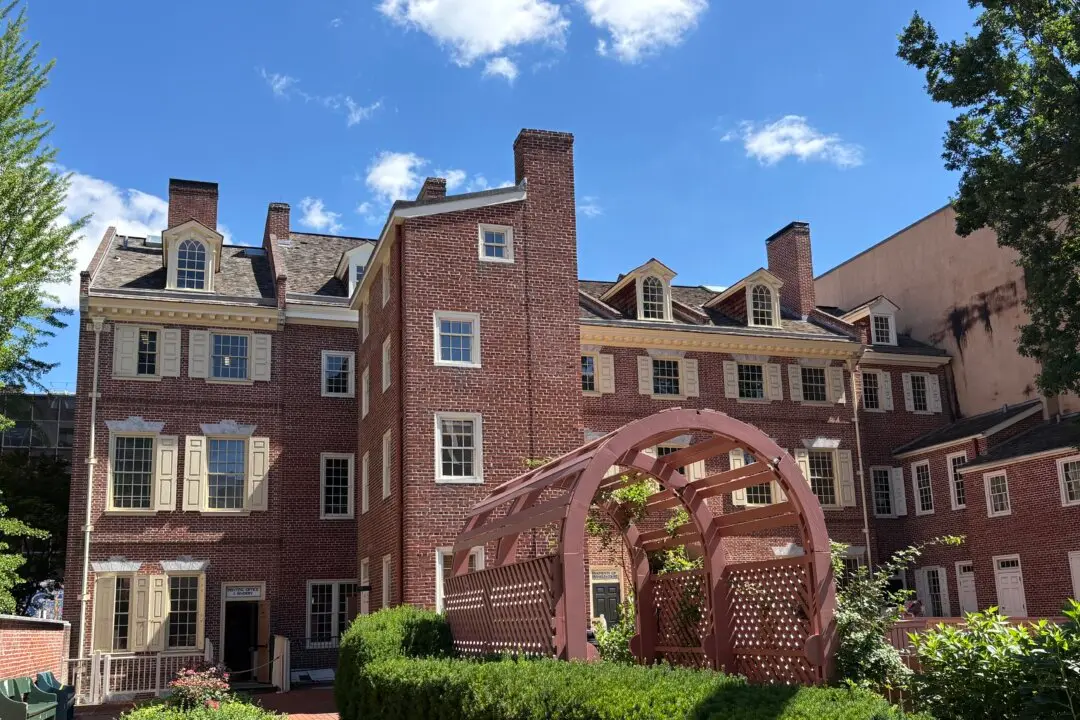
Although most lighthouse keepers at the St. Augustine lighthouse and other U.S. lighthouses were men, women often had to—or wanted to—play a role. Next to the St. Augustine lighthouse are preserved keepers’ quarters. This two-story brick house with covered porches has become a museum. It conveys not only the history of the lighthouse and the Coast Guard, but also the history of families who maintained and operated the light.At maximum capacity, two families and three keepers could be housed at the large Victorian-style house, built two years after the current lighthouse first lit up the night sky. Keepers had to carry hot whale oil, weighing about 35 pounds a pail, up the many stairs. Even though the fuel changed from whale oil to lard to kerosene over the years, it was still a heavy load.
In the museum, visitors can pick up a metal bucket filled with a weight equivalent to what the oil weighed. Because of the heavy lifting, men traditionally took on the role of keeping the oil-fueled apparatus maintained, while their wives and daughters managed the household and gardens.
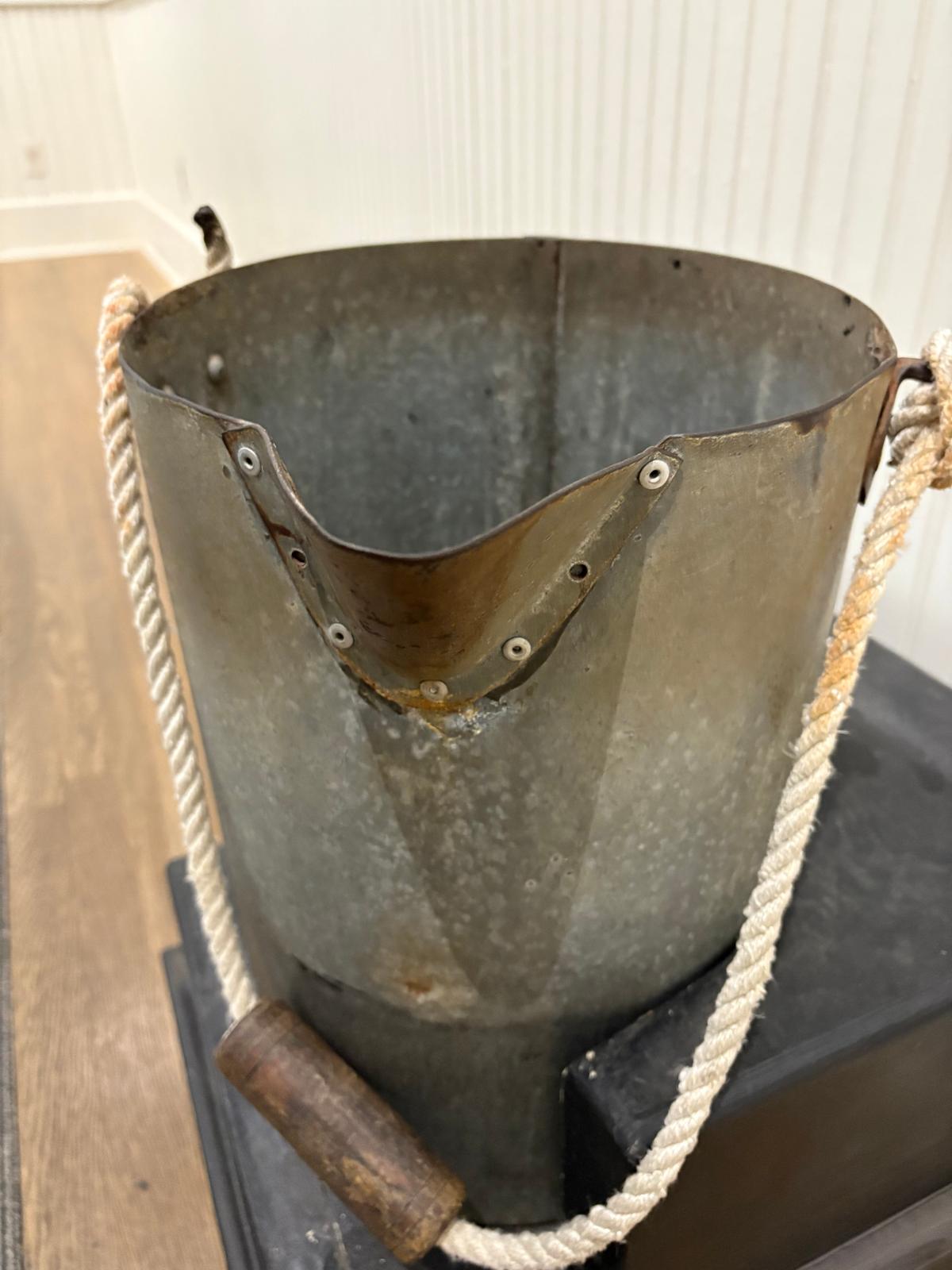
Visitors can pick up the bucket that the lighthouse keepers used to carry to the top of the lighthouse. Deena Bouknight
The museum provides remnants of how women kept the keeper’s home. A copy of “The Complete Home” is on display. This popular 19th-century book was used, as its subtitle conveys, as “An Encyclopedia of Domestic Life and Affairs.”
The Lighthouse’s Inhabitants
Occupying the keeper’s house and maintaining the lighthouse for 14 years in the late-19th century was William Harn, his wife, Kate, and their six daughters. Interestingly, before becoming a lighthouse keeper, William served in the Union Army during the Civil War and was at both the Battle of Gettysburg and the surrender of Robert E. Lee at the Battle of the Appomattox Court House in Virginia.According to museum exhibits, Kate and the Harn daughters were “well known for their hospitality.” But William’s health began to deteriorate because of tuberculosis—then referred to as consumption. He died from the condition in 1889. The year before his death, the Harn women had to step up and assist William in myriad ways to keep the lighthouse doing its job.
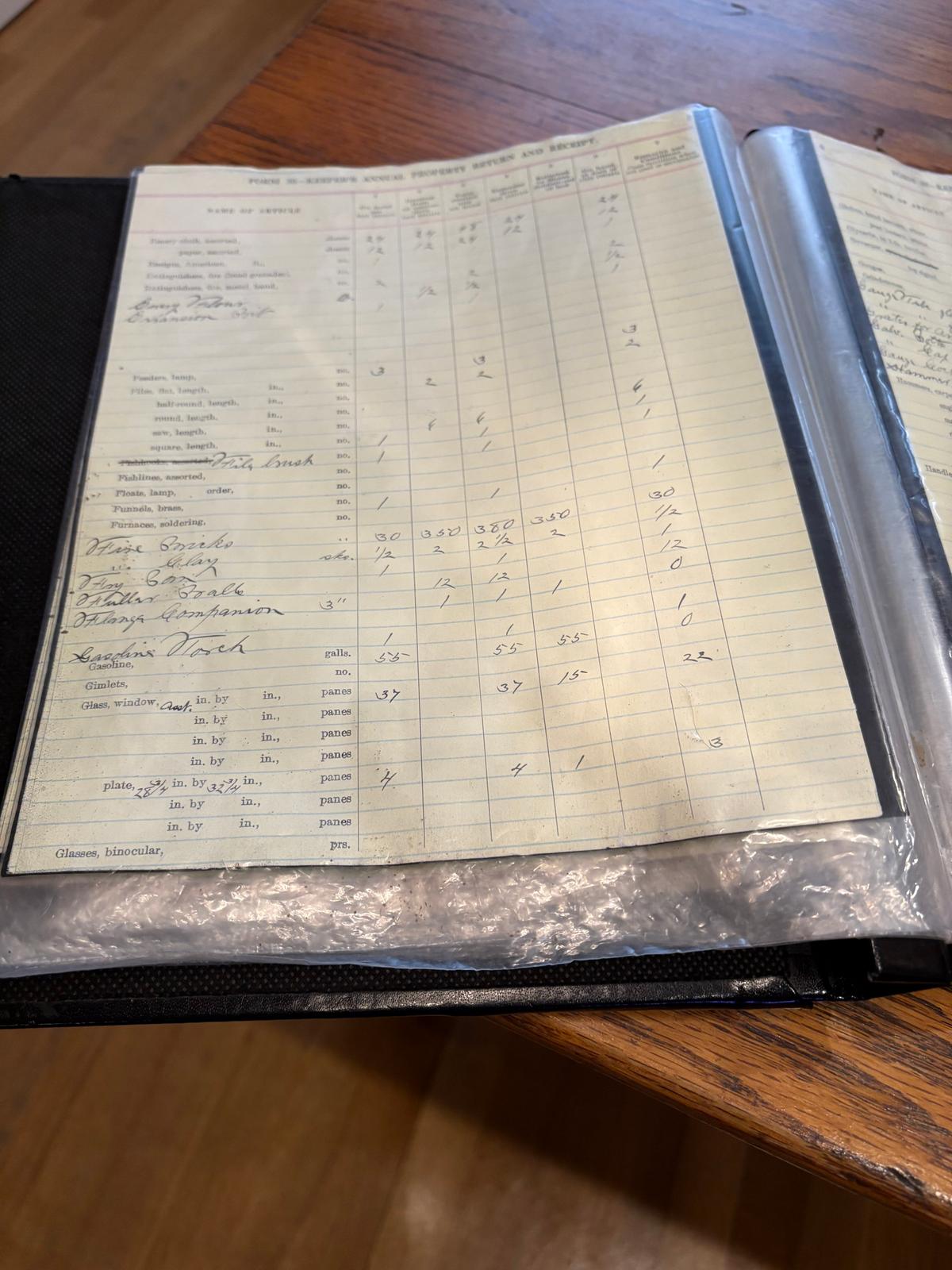
William Harn, his wife Kate, and other lighthouse keepers kept logbooks similar to this one at the St. Augustine lighthouse. Deena Bouknight
After William passed, the work on the lighthouse was considered so invaluable that the St. Augustine community petitioned the U.S. Lighthouse Service to hire Kate as an official assistant. Signage in the museum states:
“In the keeper’s logbook, as she takes over as second assistant keeper, her name changes from ‘Mrs. Harn’ to simply, ‘Kate,’ which was a measure of her change in status. Kate remained in St. Augustine until 1892, when she and her children moved back to [her native state of] Maine.”
Presumably, Kate and her daughters knew the history of Maria Andreu, another female keeper of the St. Augustine Lighthouse. In 1859, her husband, then the official lighthouse keeper, tragically fell to his death while whitewashing St. Augustine’s first lighthouse. It was eventually replaced by the current structure. Despite her loss, Andreu made sure the light kept guiding ships into St. Augustine’s harbor until the Civil War began.
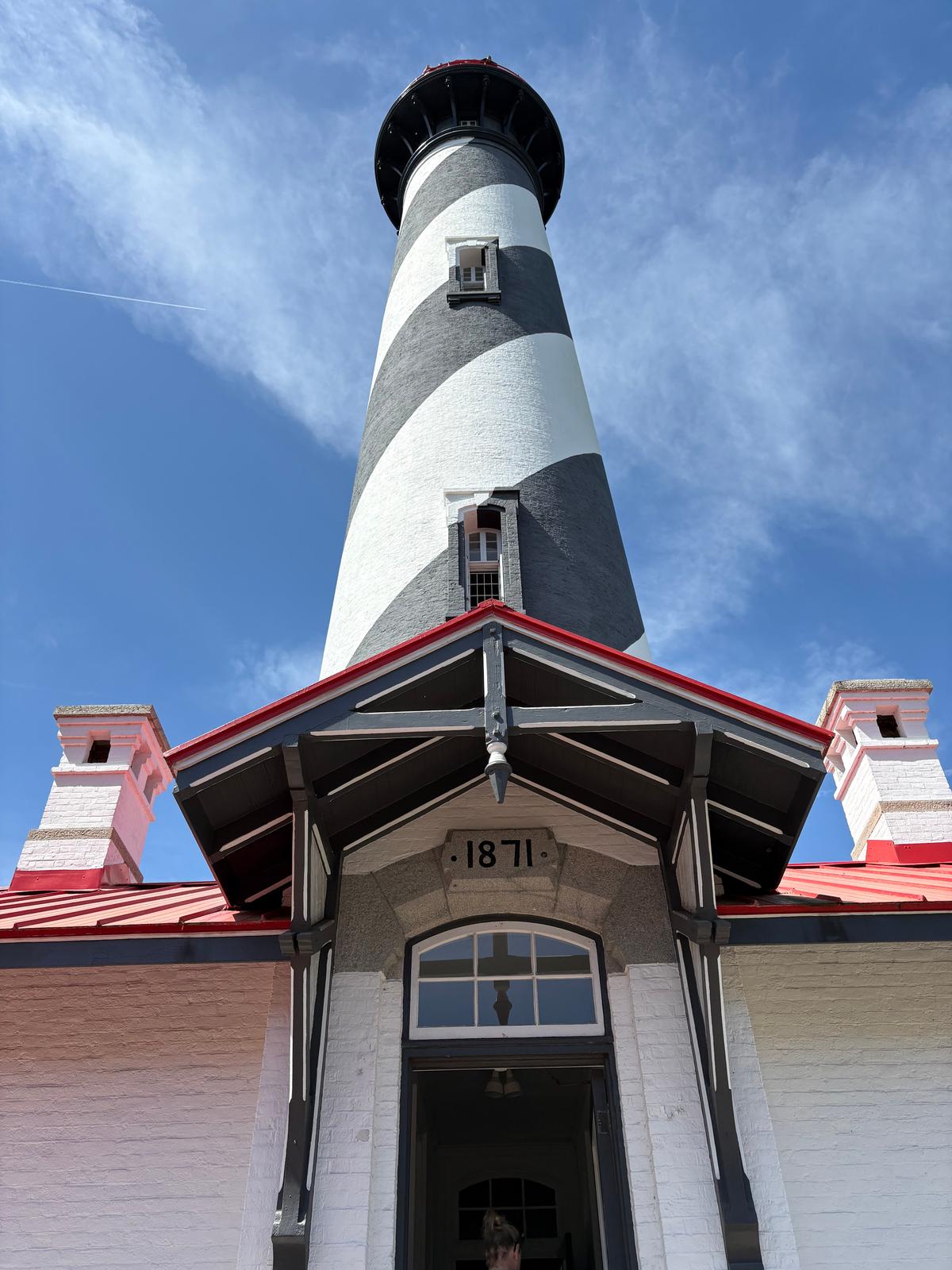
The lighthouse's characteristic swirling black and white stripe makes it visible from miles away. Deena Bouknight
Though the Boston Light lighthouse is the only U.S. lighthouse still legislatively mandated to require a keeper, St. Augustine’s stands tall as a reminder of the unique structure’s historic importance—and the fortitude of both men and women who made sure the beacon stayed illuminated.
What arts and culture topics would you like us to cover? Please email ideas or feedback to [email protected]