Chances are, the yard/garage sale (or rummage or tag sale, depending on one’s region) idea started because of late-summer/early-fall intensive tidying up.
Sort everything into three categories: keep, sell, and donate—or simply donate what does not sell to a worthy charity thrift store immediately after the sale. Even with the best selection, some items will remain at the end.
Other Venues
While sorting, one may uncover some “sell” items that are too expensive, need a wider market than just the neighborhood, or otherwise aren’t suitable for a yard sale. Examples include expensive jewelry or designer clothing and accessories.Consider listing these items on eBay, Facebook Marketplace, Craigslist, or one of the designer consignment shops online.

Quality and Quantity
A critical ingredient for any successful yard sale is to have good stuff. The next essential component is to have lots of it. A 15-item yard sale isn’t going to get much attention, while just a table or two, sparsely filled, might generate a drive by, but not anyone getting out of their cars. Think like a mall store; place large eye-catching items at the front of the yard, or driveway if it’s a garage sale, to make potential buyers stop.Condition
Be prepared to dust the nooks and crannies of decorative items, run a load of laundry, and possibly even iron. These efforts will pay off. Items should be in the best condition possible. Toss any broken items, or use them as an opportunity to start a free box.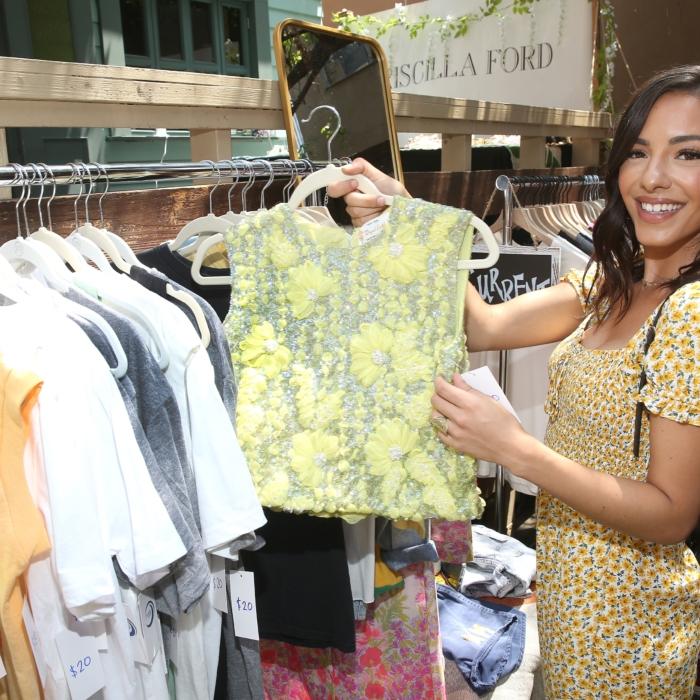

Pricing
There are several schools of thought when it comes to pricing. Some believe in not having any prices out, thinking this is a good intro to negotiation. But this is a turn-off to many potential buyers, particularly those who are shy, and also to those who don’t want to have to ask the price of every single item. Another strategy is to pre-price everything, which is a lot of work.A happy medium is to price large items and have a dollar table, or one divided into five dollars, one dollar, and fifty cents. Clothing can be hung on a rack grouped by price, tools can be sorted by price—you get the idea. And feel free to leave some unpriced items as well; a little mystery can be a good thing.
As for what price to set? Garage sale shoppers are looking for bargains. That doesn’t mean something should be given away. Do a little research, then price it lower than the buyer can get it elsewhere. How much lower is a question of supply (is it unique?), demand, and the current economy. Keep in mind the competition (like Dollar Tree, Dollar General, Five Below). But do put everything out—even quarters can add up quicker than expected. Some yard sale pros opt to price things at half off when the sale is more than half over.
Pricing items at one, five, 10, and 20 dollars, when possible, simplifies payment and reduces the need to make change. That said, have plenty of change on hand as inevitably someone will pay for a 25-cent item with a $20

Scams
In addition to the potential for shoplifting, yard sales are a popular place for passing counterfeit money, such as the aforementioned 25-cent item purchase with a $20, to get back real U.S. currency in return. Invest in a counterfeit money detector pen; it can soon pay for itself.Another common scam is for one person to say they’re paying with a $20 bill, but then hand over $10 while their friend distracts the seller. They then demand change for the $20 and are too willing to kick up a fuss until paid. To avoid this, always count out the change first and only take the buyer’s money then.
Another shopper may add up the purchase themselves, doing a bit of creative counting (in their favor) along the way. Add up all sales with a small calculator.
Keep an eye out for the tag switch, where a buyer tries to claim a ten-dollar item is one dollar.
And, the biggest mistake of all: Never let anyone into the home to use the bathroom or to try on clothing.
That said, most yard sales are a profitable day of fun. Enjoy!