A “new” Sherlock Holmes mystery? What author would dare to think that they can tread on such sacred ground, attempting to copy the style of a 19th-century master? As it turns out, thousands of writers have created pastiches of the world’s most famous deerstalker-wearing detective.
If you’re not familiar with the term, a pastiche is a literary effort that imitates the style, characters, or setting of another author’s work. This isn’t the same thing as a parody, but rather an homage to the original creator.
One of the most notable authors to find success in creating a Holmes pastiche is Nicholas Meyer. His first Holmes effort came in 1974 with the smash literary debut, “The Seven-Per-Cent Solution,” which was turned into a successful film in 1976. Meyer also went on to have a very distinguished career as a screenwriter and feature film director, including the unquestionably awesome “Star Trek II: The Wrath of Khan.”
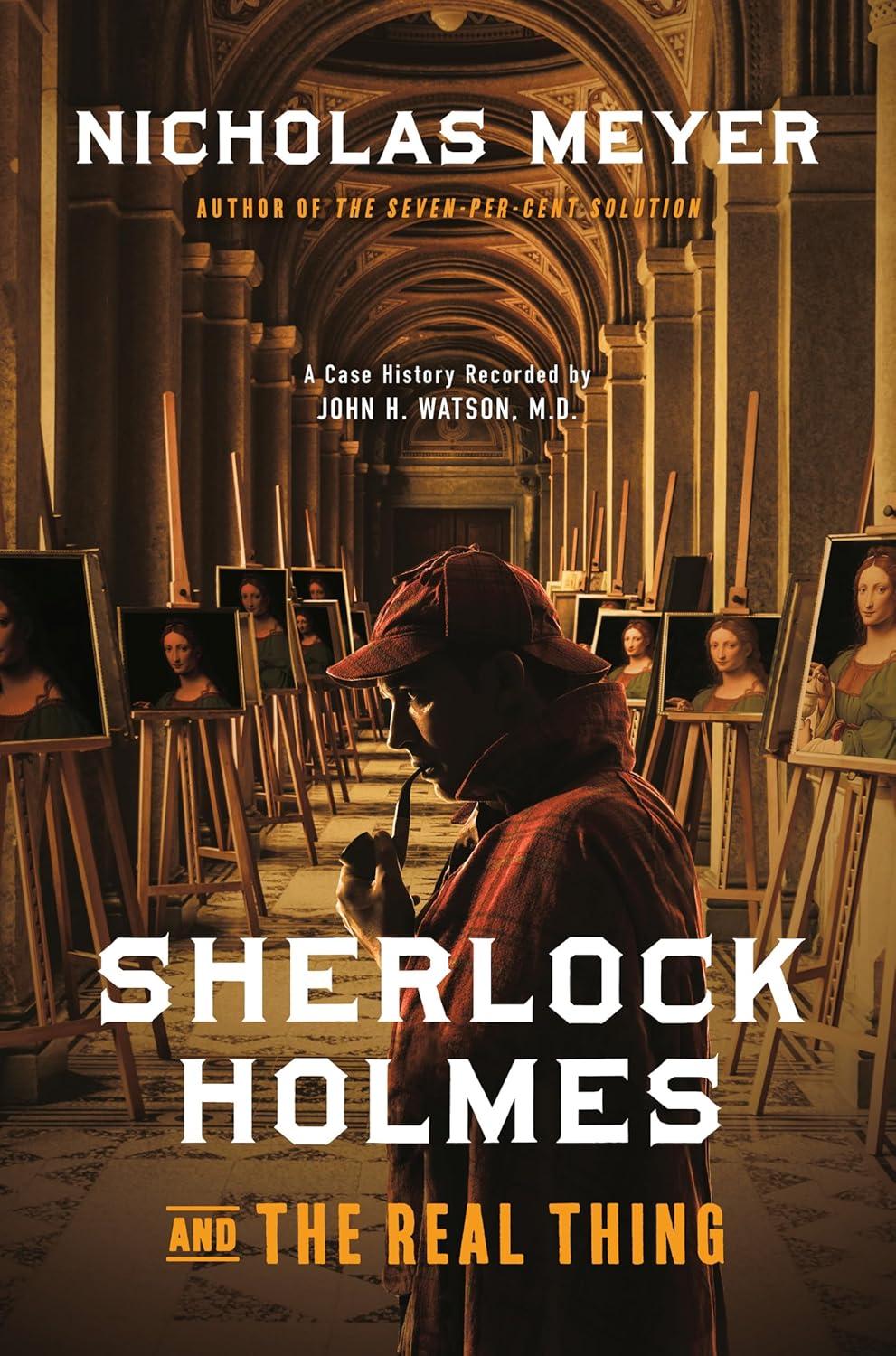
In his latest Holmes novel, “Sherlock Holmes and the Real Thing,” the detective duo must uncover the whereabouts of a missing painter who might have been involved in some shady art business.
Sherlock Holmes Pastiches
Sherlock Holmes pastiches were already appearing remarkably early in the detective’s literary life. Even before Arthur Conan Doyle completed his original canon in 1927, other writers were crafting their own Holmes adventures, drawn to the iconic detective’s appeal and the rich Victorian world Doyle had created.This Holmes pastiche tradition gained momentum throughout the 20th century, with authors taking increasingly creative liberties. Some stayed faithful to Doyle’s style and setting, while others reimagined Sherlock in new contexts, using different time periods, alternate perspectives, or unexpected genres.
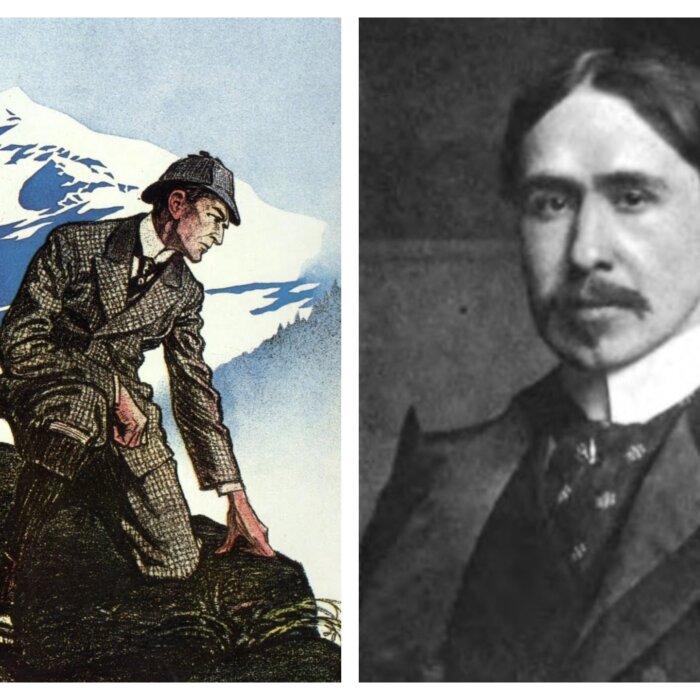
Some notable contributions came from writers like Laurie R. King, who created an apprentice and wife for Holmes named Mary Russell; and Michael Chabon, who explored Holmes’s retirement years in “The Final Solution.” When copyright protections expired and Doyle’s stories entered the public domain in the United States in 2023, the movement accelerated dramatically.
Cultural Saturation
Part of the fascination with Sherlock comes from Doyle’s choice to write as if Holmes and Watson were real people; they document actual cases, complete with specific dates, locations, and detailed descriptions of Victorian London. Holmes has become so deeply embedded in our popular culture over 130Recognizing this, Meyer begins his pastiches in a particularly cheeky and amusing way: He lists himself as the editor, not the author. Each introduction explains how he came into possession of a possibly “genuine” document written by Dr. Watson himself. Each time, a relative or admirer of Meyer happened to discover these papers in some dusty corner of an attic or an inherited suitcase.
Likewise, the photocopied pages that became “Sherlock Holmes and the Real Thing” were supposedly sent to Meyer by a 14-year-old admirer who came across the originals in his old school library. “Maybe this is all ChatGPT,” joked Meyer. “But we all want to believe.”
Is It ‘The Real Thing?’
Meyer’s first Holmes novel, “The Seven-Per-Cent Solution,” depicted Sherlock Holmes as a cocaine addict who seeks treatment from Sigmund Freud. It was unusual because it introduced psychological complexity to Holmes into Doyle’s traditionally straightforward detective format.Seven pastiches later, Meyer’s touch is very light on the interpretations of both Holmes and Watson. Instead, he chooses to make “The Real Thing” a fairly straightforward Sherlock mystery. In some ways, it’s just as challenging a task as bringing new facets to the characters. Meyer has only the plot itself to prove himself as a worthy addition to “Sherlockian” lore.
It’s a good mystery. In the depths of a harsh London winter, a bored and restless Sherlock Holmes receives a visit from Lady Glendenning, a wealthy widow and landlord. Her tenant, the portrait artist Rupert Milestone, has vanished and failed to pay rent for three months, which is highly uncharacteristic.
Inspecting Milestone’s studio in Notting Hill, Holmes and Watson find it empty, dusty, and filled with unopened mail. They also discover dried blood on the floor, hidden banknotes, and other anomalies suggesting foul play. What begins as a trivial matter of overdue rent quickly escalates into a sinister plot, with many murders to come, and even a possible romance for one of them!
While not as controversial as “Seven Per-Cent Solution,” “Sherlock Holmes and the Real Thing” is a delightful story that remains relatively faithful to Doyle’s creation. It’s an immensely enjoyable Sherlockian experience.