
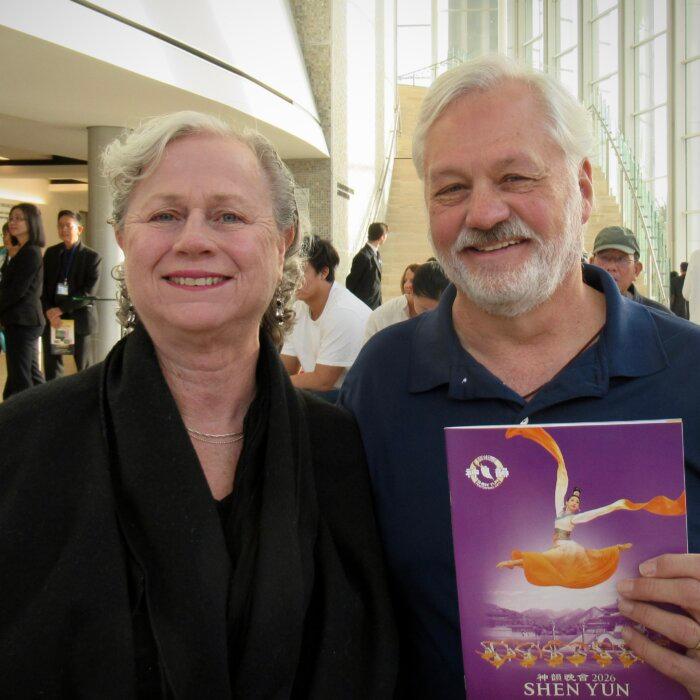
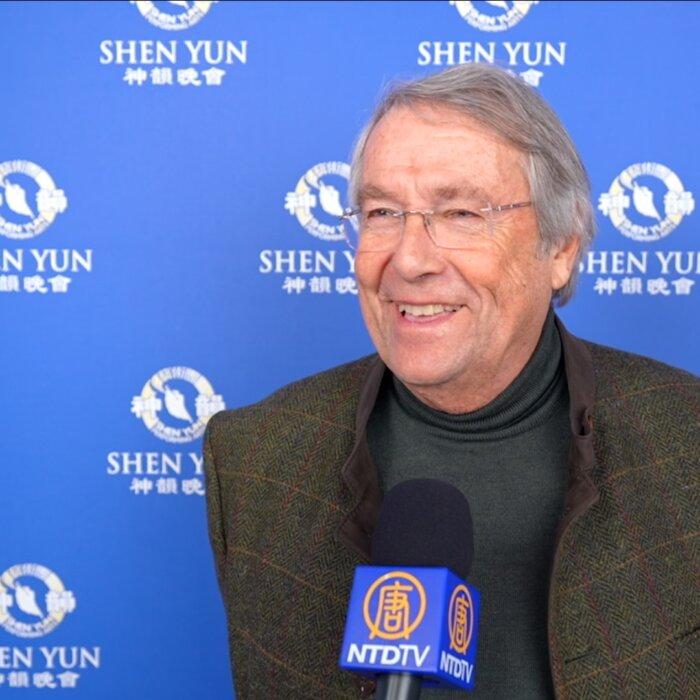
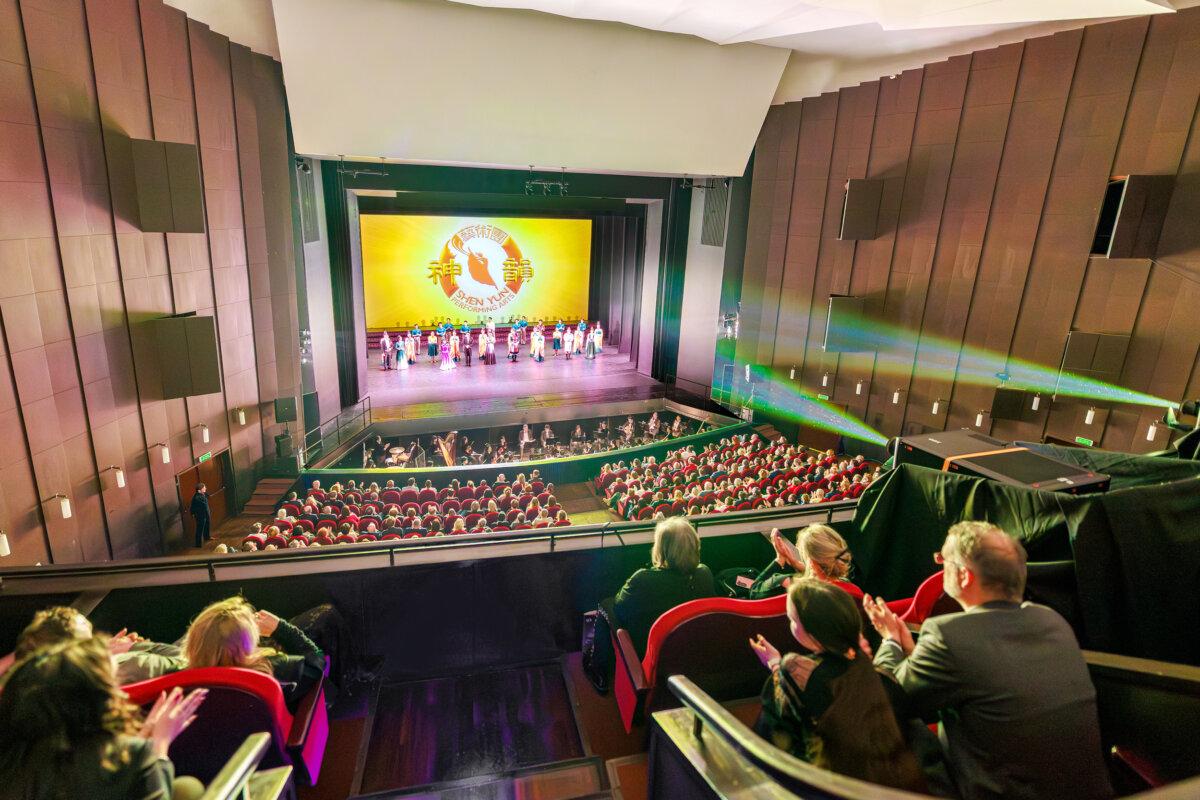
Awe and wonder, tears and laughter, hope and inspiration—these are some of the reactions of audience members attending Shen Yun. Most feel a deep, peaceful contentment. What’s behind these positive responses?
Since its inception, Shen Yun Performing Arts has dazzled over 10 million audience members worldwide. This year, the New York-based classical Chinese dance and music company celebrates its 20th anniversary. Eight dance troupes are performing a mammoth world tour—reaching a million audience members—in 170 cities in 21 countries, across five continents.
The company was formed in 2006, when a group of Chinese artists in New York’s Hudson Valley set their hearts on preserving their ancient heritage through classical Chinese dance and music.
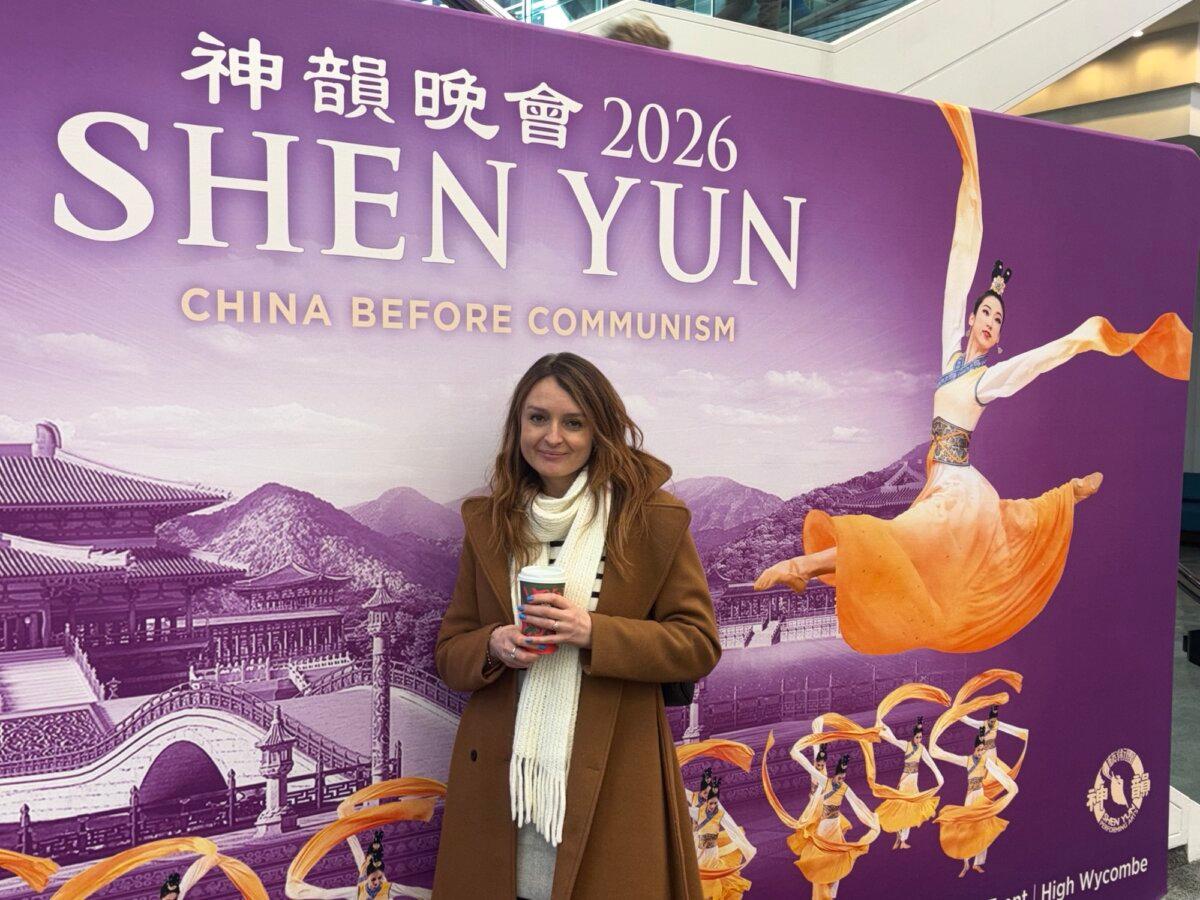
Over the years, audience members have seen—and often felt—this mission of reviving 5,000 years of traditional Chinese culture—a culture that the Chinese Communist Party (CCP) has desecrated and sought to eliminate. Presenting “China before communism,” Shen Yun reaffirms the civilization’s core moral and spiritual values.
As Tony Robbins, world-renowned author and speaker, said of Shen Yun, “It’s beautiful because it’s keeping [traditional Chinese culture] alive and it’s sharing it with the world.”
What’s at the heart of traditional Chinese culture?
Faith-Based Art
Shen Yun’s popularity is likely connected to the fact that in these tumultuous times, the expression of truth, goodness, and beauty of traditional arts are in jeopardy. Yet Shen Yun’s artistry has encapsulated these qualities, as it’s based on tradition, faith, and hope.After attending a performance in 2020, Swedish conductor Maria Eklund said that what Shen Yun is doing is actually promoting traditional culture:
“What was interesting for me to see was that somebody dares to do something really beautiful these days—not to break down the tradition and the form, but to try to build it up,” she said. “So it was very exciting to see.”
Not unlike classical arts of the Renaissance times, Shen Yun puts faith at the heart of its mission. Shen Yun artists practice Falun Gong, also known as Falun Dafa.
This Buddhist-based spiritual practice consists of meditative exercises and self-improvement teachings, based on the universal principles of truthfulness, compassion, and forbearance.
Shen Yun’s erhu virtuoso Xiaochun Qi believes that faith elevates her solos to higher realms. She has been performing with the company since it began. She told The Epoch Times:
Qi plays the erhu (pronounced “are-who”), a two-stringed instrument made of red sandalwood or rosewood, played with a bamboo horsehair bow. The erhu has a 4,000-year history in China. With its neck pointing to heaven, its enigmatic sound resembles the human voice and often moves audiences to tears.
Similarly, principal dancer Angelia Wang, who has toured with the company since 2007, said: “When performing, I imagine myself as a miniature stage. In other words, my whole soul becomes a vehicle whose only purpose is to convey the values and beauty of traditional art and culture.”
Audience members often comment on how they feel these values and inner beauty emanate from the artists in the performances.
After seeing Shen Yun, Benjamin Kong, the founder of a Traditional Chinese Medicine practice, felt that “the ancient Chinese spiritual culture was presented with such authenticity. It was like being transported back into that time period where spirituality was part of every aspect of life.”
Shen Yun’s spirituality is clear even to those not deeply aligned with Eastern practices. Father William Elder, a professor of canon law at Saint Joseph’s Seminary and College, said: “There’s a spirituality there, which is something that’s very, very impressive. You can feel the love, the compassion, the tenderness there in the dancers. I can say this as a priest—it’s a real spiritual experience.”
The atheistic Chinese communist regime began persecuting Falun Gong practitioners in 1999. Consequently, Shen Yun cannot perform in China.
Dancing With Purpose
Every Shen Yun dancer carries the true spirit of traditional Chinese culture within him or her.Principal dancer Kenji Kobayashi saw an early Shen Yun performance in Tokyo in 2007. It changed his life.
Kobayashi had long dreamed of becoming famous, solely to raise awareness of the communist regime’s persecution of his faith, Falun Gong, in China. His grandmother, who lived in China, had been abducted and tortured there.
He had wanted to be a baseball player, but after seeing the performance, he set his heart on becoming a Shen Yun dancer, a dream he achieved in 2010.
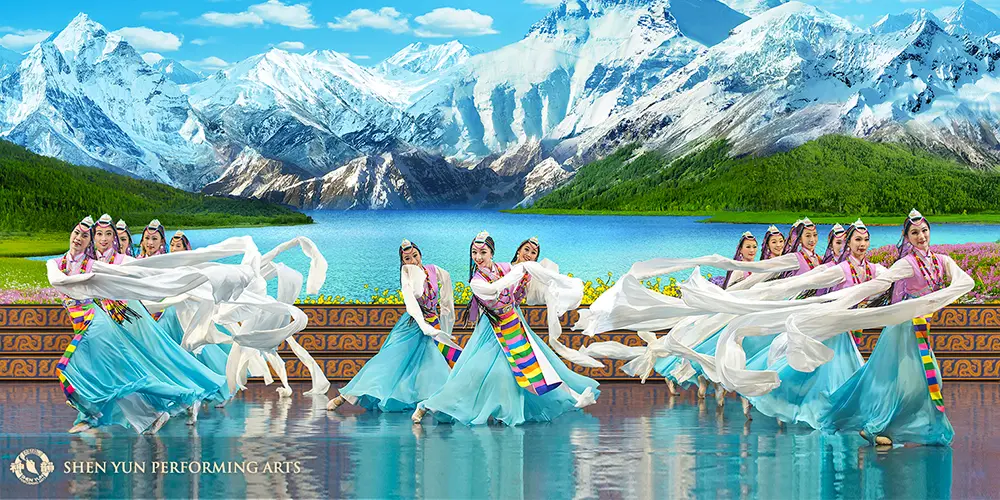
Kobayashi cited the traditional Chinese saying, “One minute on stage takes 10 years of practice.” To convey a thousand stories without uttering a single word, Shen Yun dancers commit themselves to years of disciplined, rigorous training.
But Kobayashi explained that classical Chinese dance demands that dancers master more than technique. “No matter how perfect or beautiful you can do the pose or you can dance … the culture and the history behind it is actually more important than just dance itself,” he said. “The more you understand it, the more you know it, the more you can express. That’s what really makes classical Chinese dance unique and strong.”
According to The Epoch Times award-winning book “Nine Commentaries on the Communist Party”:
Traveling Through Time and Space
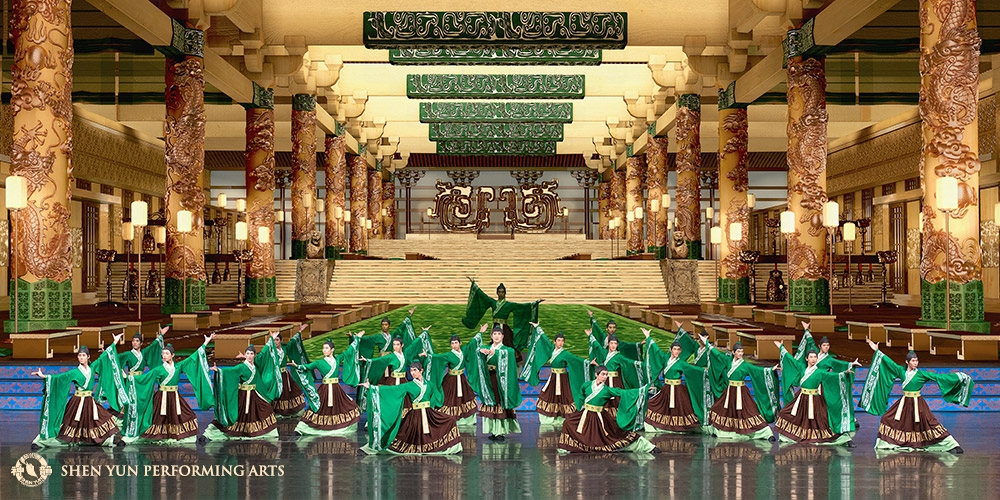
For 20 years, Shen Yun has allowed audiences to time-travel through classical Chinese dance pieces, highlighting some of China’s great historic figures, such as Taoist philosopher Lao Tzu (6th century BC) of the Zhou Dynasty and writer and poet Li Bai (c. 701–762) of the Tang Dynasty.Other dances take audiences to explore the rich culture of minority ethnic groups. For example, set against a backdrop of the Mongolian steppes, dancers mimic the soaring eagles and wild stallions of their homeland. Female dancers emerge balancing bowls on their heads, to symbolize the tradition of welcoming guests with bowls of fragrant milk tea.
All Elements of Shen Yun Reach for Perfection
As Shen Yun performers seek spiritual purity inside, they strive to express it outwardly through ever-higher standards.Australian theater critic Coral Drouyn saw this demanding quest for perfection. “I’m very big when I see shows that I’m reviewing about the quest for excellence. So many theater companies don’t reach it, don’t even try. Shen Yun has just climbed the heights and found … excellence in everything,” she said.
To reach for excellence, every year Shen Yun performs a completely new show: new sets and costumes, new songs, and new choreography and orchestral scores.
Shen Yun’s live orchestra seamlessly combines classical Western and Eastern instruments, creating the show’s signature, ethereal sound.
Seasoned Canadian conductor Boris Brott loved this unique blend of instruments:
Cherishing Tradition for 20 Years
Shen Yun is deeply committed to its mission. Shen Yun’s conductor and vice president, Ying Chen, said:“Our remarkable performers haven’t just put on a world class show—they’re carrying forward a cultural heritage and a set of values that they cherish deeply. They are among the best in the world, and their commitment is the reason we can celebrate twenty years today.”
Audiences are celebrating, too. Having seen more than six different Shen Yun performances, American television and radio host Steve Kates believes that “people need to come and see and experience Shen Yun … breathe it in, because it’s something good for the body, it’s good for the mind, and above all, it’s good for the soul.”
Shen Yun’s worldwide performances exalt faith and traditional virtues—values that could save the spirit of humanity.