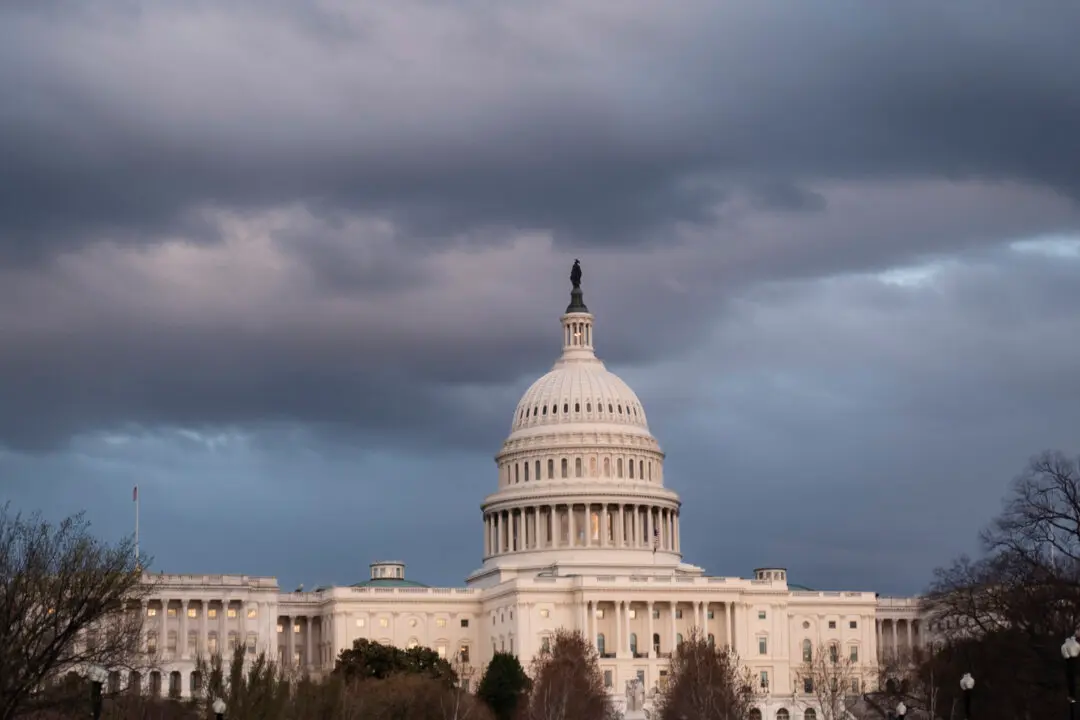
DORAL, Fla.—The Republican Party may try to buck tradition and pass a second party-line reconciliation bill under the current Congress, even before November’s decisive midterm elections.
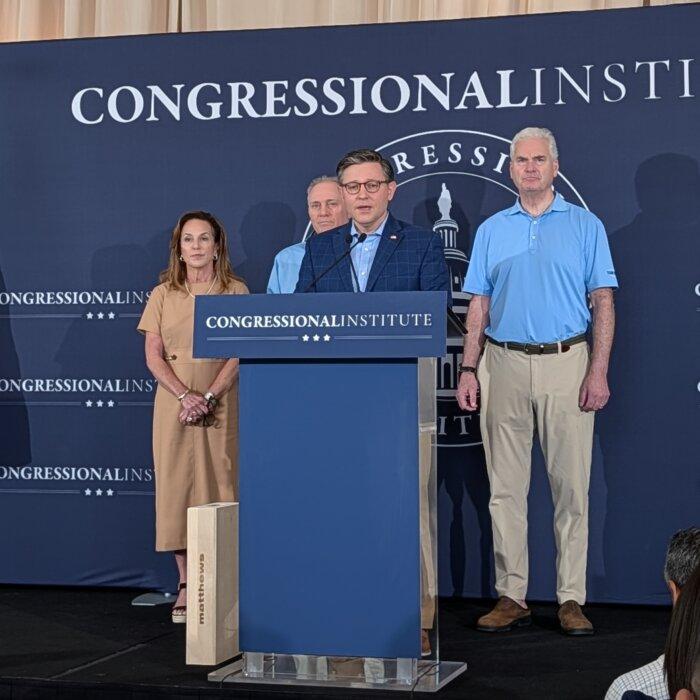
House Republicans are in Doral, Florida, for their annual policy and planning retreat from Monday through Wednesday this week, aiming to convince voters that only their party is capable of lowering prices for struggling Americans.
Asked by The Epoch Times if a second reconciliation bill was possible this year, House Speaker Mike Johnson appeared optimistic, saying he’s a “champion for reconciliation” as one of Congress’s “important tools in the toolbox.”
The House speaker said he’s nailing down what “handful of issues” could unite Republicans to garner the votes necessary to push another reconciliation bill across the finish line.
“You’ve seen the fraud that’s been put on display in states like Minnesota. California is being audited for some of their fraud, some of the big blue states, I think, they’ve got serious problems,” Johnson alleged.
“We can use potentially reconciliation as a vehicle to address some of that as well.”
Reconciliation packages are a common tool for majority parties in Congress to sidestep the Senate’s 60-vote filibuster threshold.
But there’s a critical drawback: it limits the legislation to policies related to spending, revenue, and the nation’s debt limit.
Speaking with The Epoch Times after Johnson’s press conference, Rep. Mike Kennedy (R-Utah) echoed the House speaker’s remarks that a second reconciliation package could target alleged fraud and abuse in certain states.
That could free up additional funding for the military amid the ongoing war with Iran, he said.
Johnson said he thought a “supplemental funding bill for [the] military is inevitable” amid the ongoing U.S. military campaign in Iran, but did not say if it would be tied to a potential reconciliation bill.
Roadblocks Ahead
Passing another party-line spending package might not be easy, though, according to a key architect of last year’s reconciliation bill, Rep. Jason Smith (R-Mo.).
“If you look at history, it is extremely rare for two partisan reconciliation bills to ever pass in the same Congress, extremely rare,” Smith told reporters shortly after Johnson’s initial remarks on Tuesday.
“I would absolutely love a second reconciliation bill. I would love that, but I just don’t think it will ever happen.”
But in a fireside chat interview with NBC News later that afternoon, Johnson seemed undeterred and said he was more optimistic than Smith.
“Let’s be realistic, it will not be as big, but it can be just as beautiful—reconciliation 2.0 can be just as beautiful,” Johnson said, referring to last year’s reconciliation package that President Donald Trump dubbed his “One Big Beautiful Bill.”
“I am in the process, as is necessary in a single vote, razor-thin margin majority—I have to find consensus, basically to find unanimity,” he said. “It’s a long process, but I think if we put that together, it will be much smaller in scope, but I do think it’s something that is still a priority for the leadership team.”
—Jacob Burg
BOOKMARKS
President Donald Trump has not ruled out deploying ground troops to Iran, the White House said on Tuesday. The statement came after Sen. Richard Blumenthal (D-Conn.) left a private briefing, and said the United States seemed to be “on a path toward deploying American troops on the ground in Iran to accomplish any of the potential objectives here.”
California Rep. Kevin Kiley announced this week that he has left the Republican Party and will now serve as an Independent. “It is no secret I’ve been frustrated, at times disgusted, by the hyper-partisanship in Congress,” Kiley said.
Volkswagen is looking to cut 50,000 jobs by 2030, following a decline in corporate profits. The German automaker joins the growing list of other global automakers—Aston Martin, General Motors, Mercedes-Benz, and Nissan—that have announced job losses over the past several months.
Highly competitive youth sports may be taking an emotional and monetary toll on American families. Read Aaron Gifford’s latest report to find out what lawmakers are doing about it.
Dr. Mehmet Oz, the head of the Centers for Medicare and Medicaid Services, says some people may have enrolled in Obamacare under fraudulent circumstances. “In fact, the fact that we have 23 million makes me think we have too many participants,” Oz said in a recent interview.
—Stacy Robinson