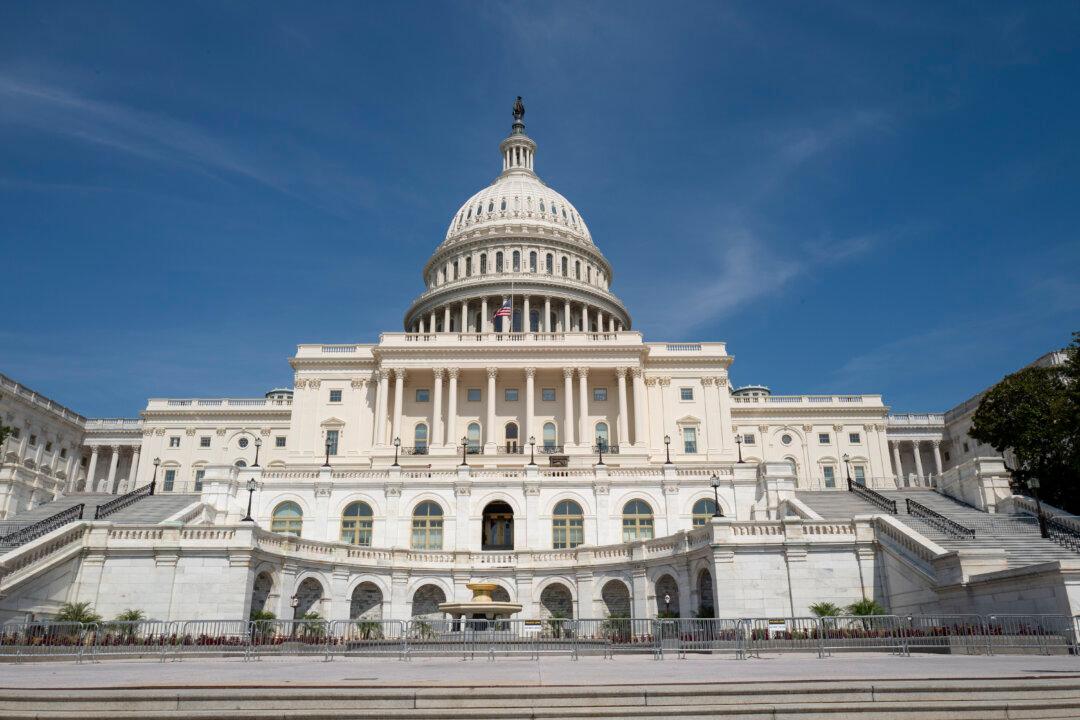
The Supreme Court issued a series of decisions on June 25 with far-reaching impact on President Donald Trump’s immigration policies, the Second Amendment, and agribusiness Monsanto.
Here’s a look at some of those rulings:
Court Backs Removal of Deportation Protections
During his second term, Trump removed deportation protections—also known as Temporary Protected Status—for nationals from some countries. Under this program, immigrants are permitted to stay in the United States for humanitarian reasons, such as conflicts and natural disasters.On June 25, the Supreme Court ruled that courts have limited power to review the Department of Homeland Security’s decisions to revoke those protections. It based its decision on a section of the Immigration and Nationality Act that barred judicial review.
The decisions in Mullin v. Doe and Trump v. Miot greenlit the Trump administration’s removal of temporary protected status for Haitians and Syrians. It also likely paves the way for ending the protections for other nationalities.
A federal judge had ruled in the Haitians’ case that the decision to remove their status was motivated by racial prejudice and likely violated the Constitution.
The majority of the high court disagreed with that argument on June 25.
Hawaii’s Gun Restrictions
The court ruled 6–3 that a Hawaii law restricting residents from carrying concealed weapons in stores and hotels violates the Constitution.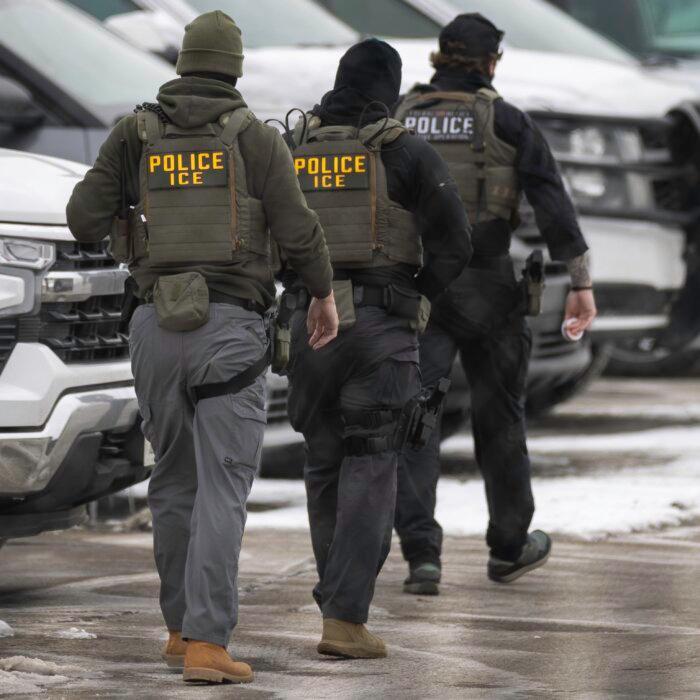
The law barred handguns from privately owned public places, such as gas stations and shopping malls, without the owner’s explicit permission.
Justice Samuel Alito said the state law could not stand because the Second Amendment “has the same meaning in all parts of the United States.”
The Hawaii law “hobbles what the Second Amendment protects,” inconveniencing lawful gun owners by forcing them “to avoid all the territory where the possession of a gun is prohibited outright, but they may also be barred from entering many places that people routinely visit in the course of their daily routines.”
Justice Ketanji Brown Jackson said in her dissent that the court’s new ruling means that any law that “regulates the carrying of firearms is presumptively unconstitutional.”
Monsanto Shielded From Liability in Lawsuits
The Supreme Court, in Monsanto v. Durnell, issued a decision that’s expected to help the agribusiness avoid liability in future complaints about its signature weedkiller Roundup.A Missouri man named John Durnell had sued, alleging that the company failed to warn about purported cancer risks from exposure to glyphosate, an ingredient in Roundup.
He won a $1.25-million verdict in state court, but the Supreme Court rejected that decision on June 25. In a 7–2 decision, the justices said the verdict rested on a faulty interpretation of state and federal law.
Writing for the majority, Justice Brett Kavanaugh said Durnell’s case rested on the idea that states could go beyond warning requirements already imposed by the federal government. He noted how the EPA had repeatedly declined to require additional warnings for glyphosate.
Authorities Can Stop Asylum at Border
In Mullin v. Al Otro Lado, the Supreme Court said federal law allowed immigration enforcement to turn away asylum seekers at the border.Its decision was based on the Immigration and Nationality Act, which provides that a migrant who “arrives in the United States” may apply for asylum. Another section states that migrants who arrive should be inspected by an immigration officer, who is expected to refer them for asylum if they intend to apply.
“An alien standing in Mexico does not ‘arrive in the United States’ by attempting, and failing, to set foot in this country,” Alito said in the court’s majority opinion.
Justice Sonia Sotomayor, joined by Justices Elena Kagan and Jackson, dissented. They said the majority had an illogical interpretation and that “any noncitizen arriving at our doorstep and seeking admission must be inspected and allowed to apply for asylum.”
Check out the full report to read about more upcoming decisions.
—Matthew Vadum; Sam Dorman; Stacy Robinson
BOOKMARKS
Iran struck a cargo vessel in the Strait of Hormuz off the coast of Oman, a U.S. official told The Epoch Times on Thursday. There are no reported casualties or impact on the environment.
One day after passing a war powers resolution to limit the president’s action in Iran, the Senate has backtracked and rejected a second resolution. The shift came after Trump met with Senate GOP and managed to change the mind of Sens. Rand Paul (R-Ky.) and Bill Cassidy (R-La.).
The lining of the Lincoln Memorial Reflecting Pool “was cut with a sharp knife or razor,” the National Park Service said on Thursday. Federal prosecutors have arrested multiple people who allegedly vandalized the pool, and issued citations to others.
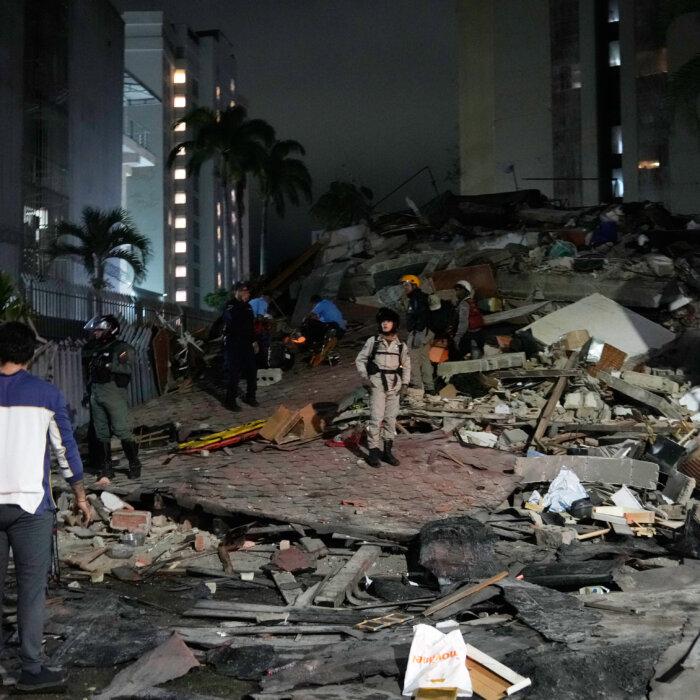
More than 180 Venezuelans were killed in back-to-back earthquakes this week. The death toll is expected to rise as search and rescue efforts continue.
Ukrainian President Volodymyr Zelenskyy says he intends to strike Russia’s war facilities preemptively. “Right now, our military is taking out targets that sustain Russia’s war effort both in the temporarily occupied territory of Ukraine and on Russia’s own territory—the very things that make this war and Russian aggression possible in the first place,” Zelenskyy said.
—Stacy Robinson