“I was never so affected with any human tale. ... I was totally possessed with it for many days. ... [T]he Ancient Marinere undergoes such trials as overwhelm and bury all individuality or memory of what he was—like the state of a man in a bad dream, one terrible peculiarity of which is, that all consciousness of personality is gone.”
Much more recently than Lamb, poet Carol Rumens opined, “The scenery remains thrillingly hellish, while laced with photographically realistic meteorological effects, and the narrative drive is irresistible.” The strange poem continues to exert its entrancing pull on modern readers.
Indeed, it is a rousing and strangely hypnotic story that occupies an ambiguous place on the fringes of dreamlands—as one would expect from Romantic narrative poetry dealing with the supernatural. Yet it is also a poignant and substantive exploration of guilt, sin, and redemption, encased in powerfully imaginative verse.
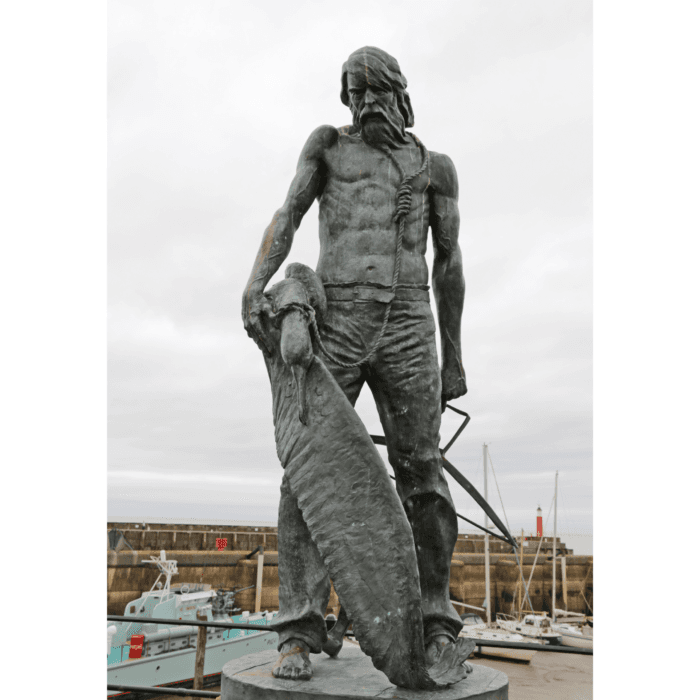
It tells of a haggard old sailor who accosts a man going to a wedding feast and, fixing him with a kind of feverish gaze, insists on telling the wedding guest about his strange and tragic past. On a sea voyage, somewhere near the South Pole, the Mariner says, he and his crew encountered an albatross who seemed to lead them out of the ice in which they were locked.
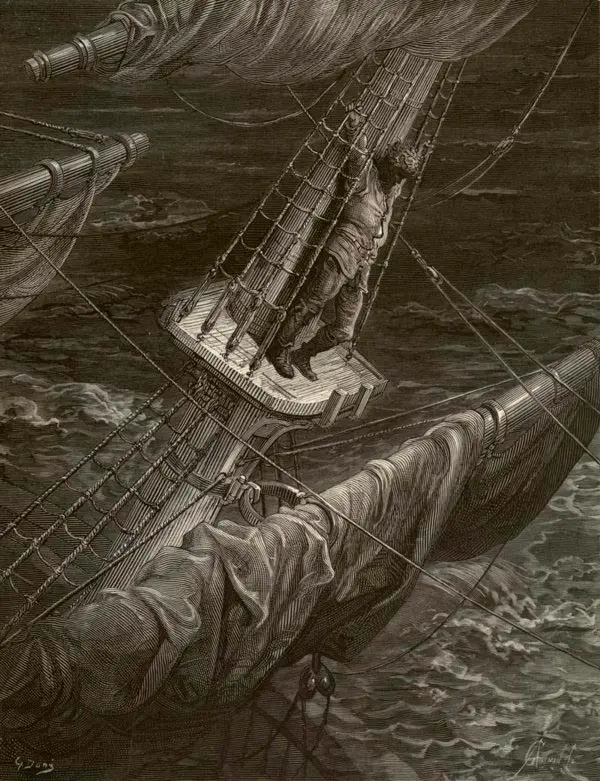
The ship breaks free and sails north, but for some uncertain reason, the Mariner shoots the bird, which ushers in a curse on the entire ship. Uncanny encounters begin, including with slimy ocean creatures and a ghost ship.

An Unsuccessful Match
As English professor Seamus Perry relates for the British Library, the origins of the poem lie in a walking tour across Quantock Hills undertaken by Coleridge and fellow Romantic poet William Wordsworth. After setting off on a November afternoon in 1797, the two poets soon began brainstorming ideas for a ballad. They sketched out the basic features of the plot—an old sailor, a beautiful bird, a curse—and agreed to write it together.As literary critic Nasrullah Mombrol notes, Wordsworth was going to “treat natural events as though they had the special interest that ballads had traditionally found in the supernatural; while Coleridge would do the converse, which is to say he would treat supernatural events as they would be experienced by psychologically real human beings.”
The Workings of a Ballad
The desire to write a ballad grew partly out of practical concerns. Ballads were popular. Both men were penniless poets, and they hoped they could make some cash by writing a crowd-pleaser.A ballad is a traditional narrative form of poetry, typically involving an alternating pattern of iambic tetrameter (four-beat) and trimeter (three-beat) lines. Most stanzas have a rhyme scheme of abcb.
Coleridge also makes frequent use of repetition as a stylistic device. He repeats words, lines, and, even with slight variations, whole stanzas. The effect of this repetition is to reinforce the hypnotic sense of an endless tale. The style reinforces the central idea that this story is a story that the Mariner must tell again and again in reparation for his crimes, a never-ending cycle of recapitulated anguish, the weight of guilt never quite shaken away, the horrific memories never quite worked out and sloughed off.
Asking the ‘Why’ Questions
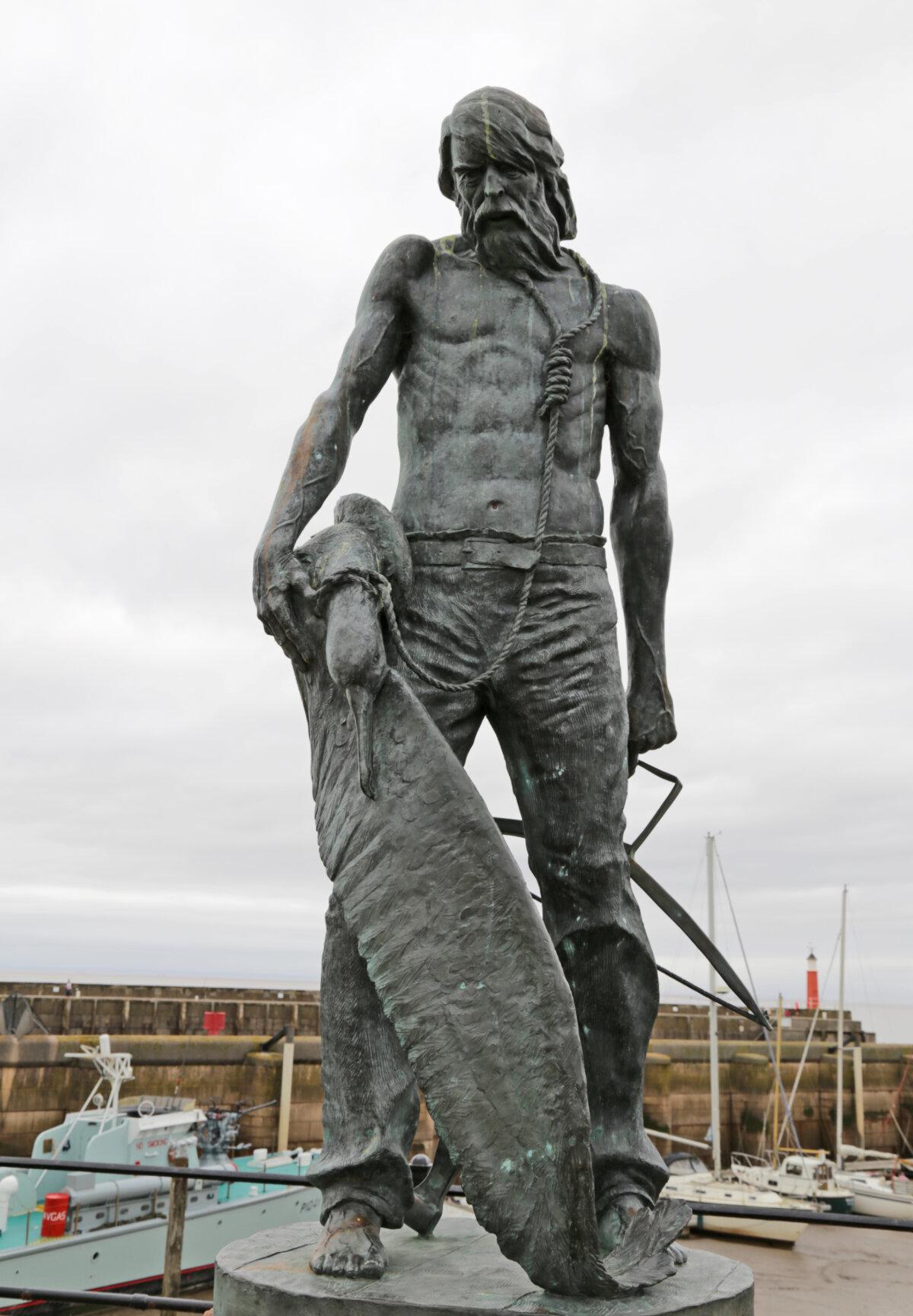
Interpretation of the deeper meaning of the poem hinges largely on a pair of key questions: Why does the Mariner shoot the albatross? And why is this such a serious crime, punished so severely?
As Perry notes, the poem is “the story of someone who does something terrible for reasons unknown and pays for it: We never learn why the Mariner shot the bird, but his protracted suffering is described in agonising detail.” Mambrol goes even further, asserting that the Mariner himself does not know why he shot the bird. And he adds, “Nothing in his character or in his story prepares us for the moment; nothing in his character or in his story has prepared him for it.”
If this is indeed so, it places the poem in the company of other psychologically penetrating literary works dealing with human motivation. The inscrutability of the decision to kill the albatross is reminiscent of that same mystery of motivation that famously surrounds the Shakespearean Hamlet’s procrastination in avenging his father’s death or the irrational, destructive impulsiveness of the unnamed narrator in Fyodor Dostoevsky’s “Notes From Underground.”
As great novelists and poets frequently remind us, human action is not always reasonable. Our decisions sometimes defy explanation, even within our own minds. Evil has always something of the quality of absurdity to it.
That explanation might not satisfy all readers, though. The intensity of the Mariner’s punishment almost demands that we understand the real nature of the crime. Mambrol articulates it this way: “The remarkable thing about the poem is its analysis of a sense of guilt without a corresponding sense of willful wrongdoing.”
A few possible explanations propose themselves. First, an allegorical reading of the poem makes the Mariner’s exact motivations less important. His decision to shoot the bird is simply symbolic of sin, violence, or ingratitude in general. Besides, in the quasi-magical world the poem takes place in, there are mysterious sets of rules that don’t apply in our world; in the world of the poem, one does not shoot birds of this kind. It is enough that we know it is so.
On the other hand, Rumens proposes an interpretation rooted in the poet’s own biography. “The power of the story may well be founded on its symbolic relation to the poet’s own sense of worthlessness and impotence,” she argues, going on to note that Coleridge suffered from an opium addiction that, in his own words, led him to perform deeds he would otherwise have abhorred.
Like the Mariner, it’s possible Coleridge felt his crimes were committed almost by accident, by the bad luck of addiction, yet he suffered serious punishment as a result. Rumens thus sees addiction as the poem’s subtext.
He prayeth best, who loveth best All things both great and small; For the dear God who loveth us, He made and loveth all.
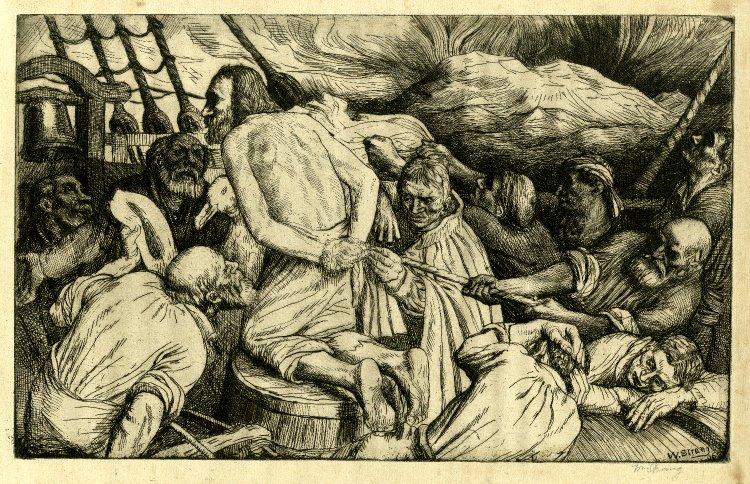
Moreover, the beginning of the breaking of the curse seems to coincide with the Mariner’s becoming aware of the goodness of the ocean creatures that surround him and blessing them “unaware.”Finally, there is a compelling Christian interpretation to the poem’s symbology. A strong interpretive tradition reads the albatross as symbol of Christ. The albatross saves the sailors from the ice. It brings new life and grace with it. It also suffers and dies unjustly, a target of human violence and recklessness, and it is directly associated by Coleridge with the cross. Killing the albatross is thus, symbolically, representative of the sinner’s ingratitude to his Savior, who nevertheless offers up His life.
The narrative framing device of the “wedding feast” that bookends the poem also lends credence to this Christian allegory, as it bears strong biblical allusions. Note that the Mariner, who, it seems, has not yet completed his penance, does not enter into the wedding feast.
But whatever the precise nature of the crime and its punishment, or the albatross and its symbolism, the poem is definitely marked by a redemptive arc. The curse does, in the end, lift. The Mariner makes it safely home, and repents—as evidenced by his urgent desire to confess his sins to the hermit he meets at the shore.
What causes the curse to lift? Cosulich argues, I think rightly:
“His redemption is effected, as was the redemption of mankind, by Love. When he blesses the water-snakes, the albatross falls off; sleep comes; the rain slakes his thirst; angels inhabit the bodies of the dead men; the ship moves on; the cross is almost lifted—almost; for, although ‘the man hath penance done,’ he ‘penance more will do.’”
And Perry says similarly, “[S]piritual alleviation seems to come only when the Mariner has changed his attitude towards the creatures of the sea: the sea-snakes which seemed, in the aftermath of his crime, ‘slimy things’ ... become transformed at the poem’s turning-point into ‘happy living things.’ ... Recognizing a joy implicit within natural appearances appears to mark a saving transition.”
Oh sleep! It is a gentle thing, Beloved from pole to pole! To Mary Queen the praise be given! She sent the gentle sleep from heaven, That slid into my soul.
Coleridge’s gloss (notes) on the poem adds, “By grace of the holy Mother, the ancient Mariner is refreshed with rain.” Rain is, too, a traditional symbol of spiritual cleansing or even baptism. All this lends support to the Christian allegorical reading of the poem.The Mariner repents and is delivered from the spectral realm he inhabited on the ship. But there is a sense that his healing isn’t complete yet. As one witnessing spirit puts it in the poem, “The man hath penance done,/ And penance more will do.”
The Mariner’s impulse of compassion toward his fellow creatures sets him on a road to recovery, but it’s a long road, as Perry points out. And Mambrol observes that the Mariner’s gesture of goodwill toward creation “sustains itself as a sense of movement toward love in a world that is hostile to love. The world’s hostility to love is what makes its creatures suffer, and the love that seeks to counter that hostility can never ignore or transcend the world’s suffering.”
The poem ends a little anticlimactically, with the Mariner delivering his moral to the wedding guest and fading into the night.
But despite—or maybe because of—its ambiguities and tensions, the poem is a fascinating, fantastical flight of fancy that looks at weight of guilt, sin, redemption through poetic images that plant themselves vividly in the mind.