
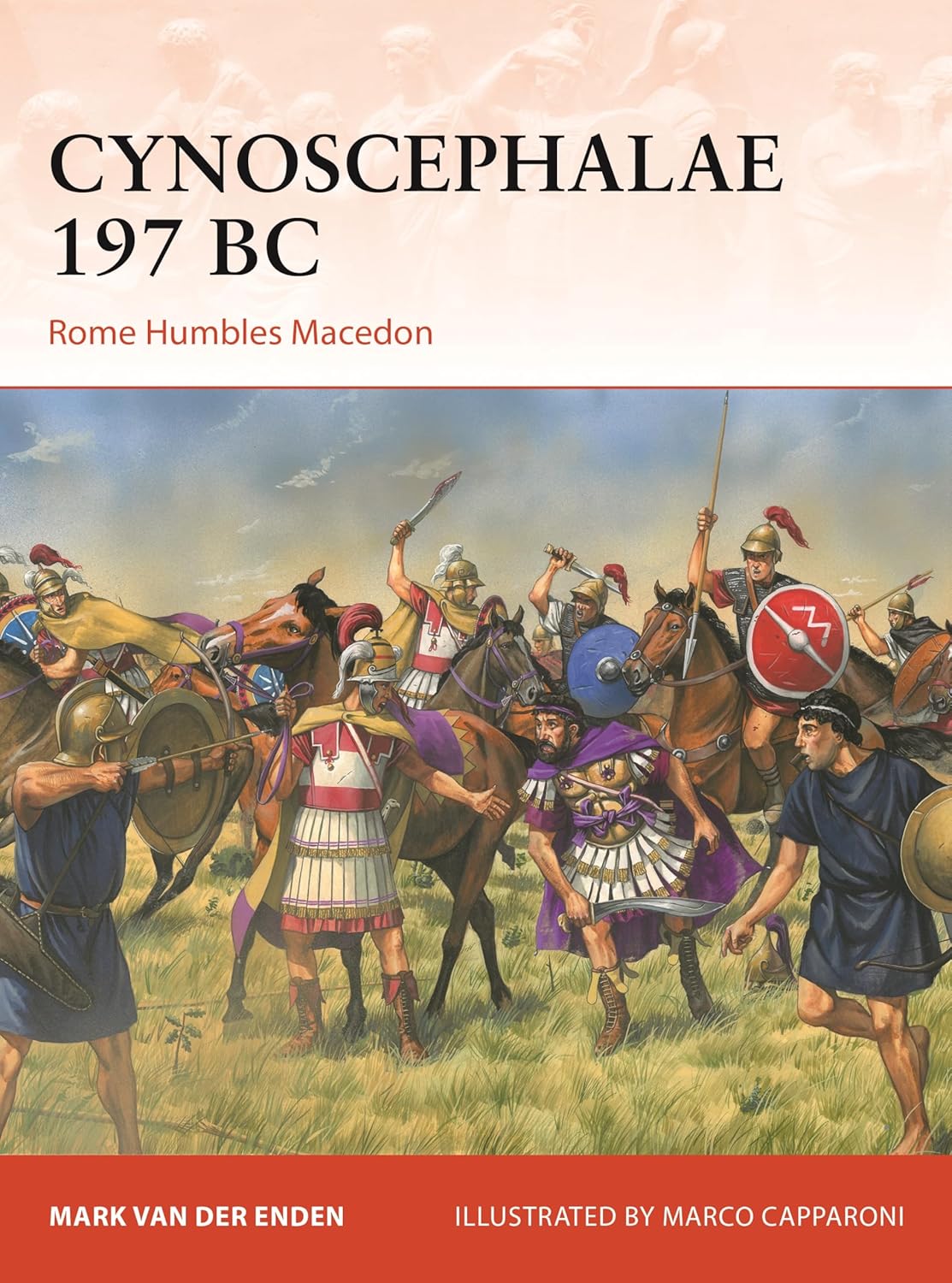
The battle of Cynoscephalae in the year 197 B.C. between King Philip V of Macedon and the Roman Republic is a microcosm that captures the decline of an empire, the rise of another, and the shadow of another empire that had recently fallen. Through Mark van der Enden’s new study of the battle, we witness how Macedon, numerous Greek cities, Rome, and even Carthage converged.
Antigonid Empire
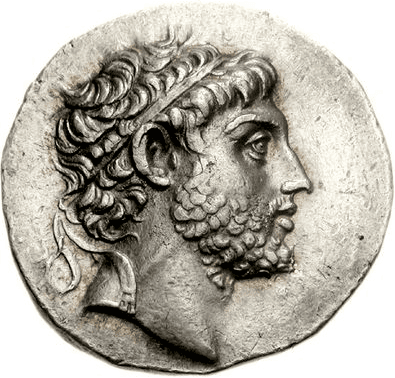
At the time of the Second Punic War, Rome was focused on the great seapower, Carthage. Macedonia, a power well known throughout the Mediterranean, was one with a rich history due to the renowned Macedonian, Alexander the Great. This power, however, was a shell of itself after Alexander’s death in 323 B.C.After his death, his vast empire, stretching from Greece to the Hindu Kush, was geographically fragmented into what would become known as the Ptolemaic Empire, the Seleucid Empire, and the Antigonid Empire. The latter empire, also known as the Macedonian Empire, was led by King Philip V from 221 B.C. to 179 B.C. After 197 B.C, however, that kingdom shrank significantly.
A Converging Narrative
“Cynoscephalae: 197 B.C.” is a clear and concise work of ancient military history that makes use of maps, illustrations, geographical photos, as well as references to the ancient historical works of Livy, Plutarch, and Polybius, among others. There is, of course, the addition of modern discoveries about the geography, military tactics, and the military weapons and armor. Van der Enden, also, in several instances, referred his “personal communications” with fellow historians to answer questions about the battle.The historical narrative presents a declining power, the Antigonid Empire, that is capable now of only defeating local, smaller enemies. The Roman Republic became the rising power as it eliminated foes and extended its political and military reach, especially after having dispensed with its peer rival, the Carthaginians. Shortly after the Battle of Zama in 202 B.C. and the defeat of Carthage, Rome set its sights on Macedon.
A Worthy Read
Carthage had introduced war elephants in their conflict against Rome. After the Battle of Zama, the Carthaginians were forced to relinquish their war elephants to the Romans. It was during the Battle of Cynoscephalae, according to Van Der Enden, that the Romans first used war elephants, and they proved to be the deciding factor. The adoption of war elephants by the Romans from the Carthaginians is an example of how military technologies and weapons evolve.
It is an engaging work not only for its description of numerous battle scenes, but also for its insightful historical analyses. The illustrated military maps prove very helpful in following the movements of the competing armies. Van der Enden provided plenty of detail on the soldiers and how they possibly maneuvered in battle. However, historians are still uncertain about how groups like the Greek phalanx or the Roman triplex acies (or battle formations) fully worked on the battlefield.
I found the book an easy read, full of good information, and presented in a way that not only made sense for the era it was describing, but also, as mentioned earlier, as a microcosm into the world of rising and falling empires, and the military methods thereof. A worthy read for anyone looking to add to their knowledge of the rise of Rome and their understanding of the inevitability of great powers.
What arts and culture topics would you like us to cover? Please email ideas or feedback to [email protected]