Ralph Vaughan Williams’s best music has a popular, almost earthy quality that he shares with very few 20th-century composers. In other words, he is nice to listen to. Pieces such as “The Lark Ascending” and “Fantasia on ‘Greensleeves’” have a natural sound that is very different from the forced experiments of his modernist contemporaries. This is undoubtedly the reason why he is so often performed and recorded.
Nurture Over Nature
Williams was interested in music from an early age, resolving to become a composer while still a schoolboy. Unlike Mozart, however, he wasn’t a child prodigy. His best work dates to later in life. (This is the reason he is old in most of his pictures.) While many of the best composers—especially German ones—came from musical families and received direct training from youth, Williams was the son of a vicar. His original style was a product of thorough study and carefully honed discipline.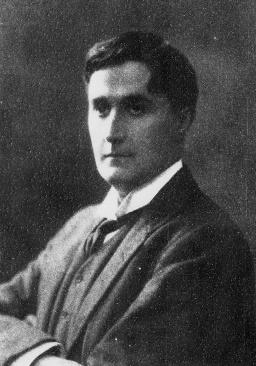
Fortunately, Williams entered the Royal College of Music and studied composition under Hubert Parry, one of the leading lights of the English musical renaissance then underway in the late 19th century. Williams’s studiousness was more painstaking than it would be today. It’s hard to fully appreciate how composers learned their craft in the days before sound recordings. How could you hear a symphony when the orchestra wasn’t in session? At some point, you had to do more than just contemplate sheet music. Parry’s method of teaching orchestral scores to Williams was to play them in the form of piano duets, learning the parts one by one.
The English Folk-Music Revival
In looking around for an alternative basis for creating a national style, Williams showed a youthful affinity for folk music. An early unpublished work, String Quartet in C Minor, composed in 1898, shows hints of folk melody in the second Andantino movement—“a reminder that the elements of this style were bred in the bone,” as one historian has put it.Fortunately, Williams lived during a time when interest in folk music was experiencing a revival. At the turn of the 20th century, the songs of the past were again becoming popular. The problem was, not very many of them were known. Most had gone unrecorded, lost to the ravages of time. Those still in existence were rapidly vanishing.
With this in mind, Williams set out on a mission: to recover these living artifacts. He spent much of his 30s carrying a notebook through different English counties, confronting elderly locals and writing down any tunes they knew.


He collected his first song in 1903, “Bushes and Briars.” Williams was haunted by the tranquil, wistful, and unsentimental flavor of this simple piece. It was so different from the bombastic romanticism of the German style; its foremost English champion at that time was Edward Elgar.

An Old Tune Refashioned
Listening to old rural bards changed Williams’s music career forever. Now middle-aged, he finally began to find his unique voice as a composer, rooted in a more natural style. After the success of “Folk Songs From the Eastern Counties,” he spent the next 50 years weaving these rhythms of the countryside into orchestral pieces, vocal works, and almost every other classical genre. One of his operas, “Sir John in Love,” contains one of his most enduring tunes: the “Fantasia on ‘Greensleeves.’”“Greensleeves,” of course, had no need of being recovered—it had been popular for centuries. (King Henry VIII is often erroneously credited with having written it, though it dates from the later reign of Queen Elizabeth I). Williams himself wove variants of this song through at least four other works: “On Christmas Night” (an adaptation of Dickens’s “A Christmas Carol”), incidental music to “The Merry Wives of Windsor” and “Richard II,” and the cantata “In Windsor Forest.”
It’s his version contained within “Sir John in Love” (an adaptation of Shakespeare’s “The Merry Wives of Windsor”), however, that’s best remembered. Williams’s arrangement for harp, strings, and two flutes is actually a mixture of two songs: “Greensleeves” and “Lovely Joan,” a tune he had collected when wandering through Norfolk decades earlier. The harp arpeggio, solo flute, and high strings begin with the more familiar melody; “Lovely Joan” is then incorporated through an interweaving flute duet, before the strings and harp return to “Greensleeves” for a sparkling conclusion.
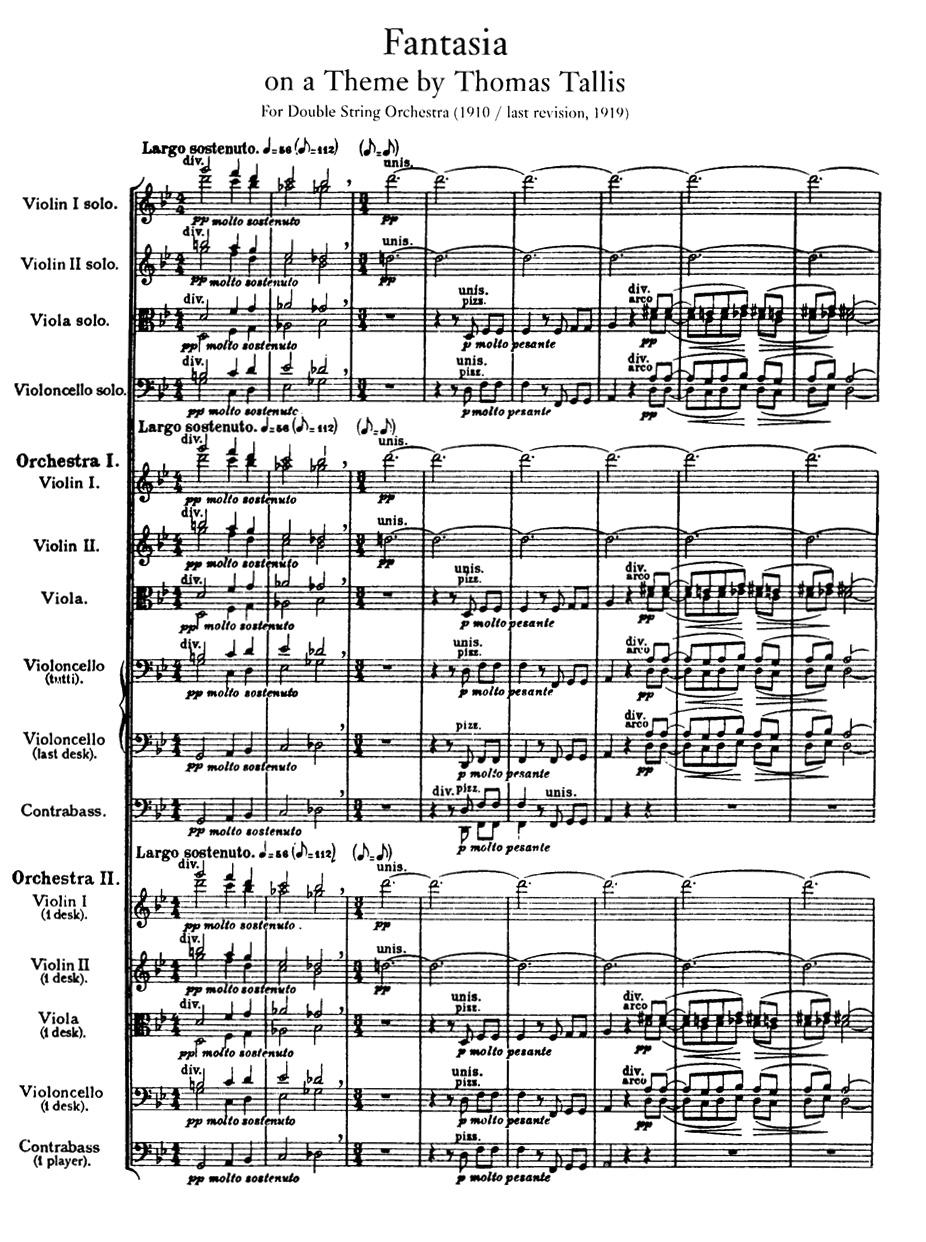
In addition to saving more than 800 folk songs from oblivion, Williams taught a large number of students, ensuring that his legacy would live on after him. His “Fantasia on ‘Greensleeves’” has since been arranged in a multitude of instrumental combinations. In tracing an entire school of English music to Williams, he must be regarded as one of the most significant composers the island nation has ever produced.