This copy is for your personal, non-commercial use only. Distribution and use of this material are governed by our Subscriber Agreement and by copyright law. For non-personal use or to order multiple copies, please contact The Epoch Times Reprints.
President Ronald Reagan demonstrating the pitching form he used in the 1952 movie "The Winning Team" by throwing a snowball on his way to the Oval Office in Washington, D.C., on Feb. 25, 1986. MIKE SARGENT/Getty Images
Thomas Jefferson once called being president “a splendid misery,” a description even more applicable today. The office brings perks, power, and prestige, but also delivers a 24/7 workload, crushing responsibilities, and relentless criticism fire from the press and other critics. Many commentators have called the presidency the toughest job in the country, if not the world.
Given all the talk about stress in today’s culture, it struck me that we might look at how those who have held the highest office in the land sought relief from the anxieties and headaches of the Oval Office.
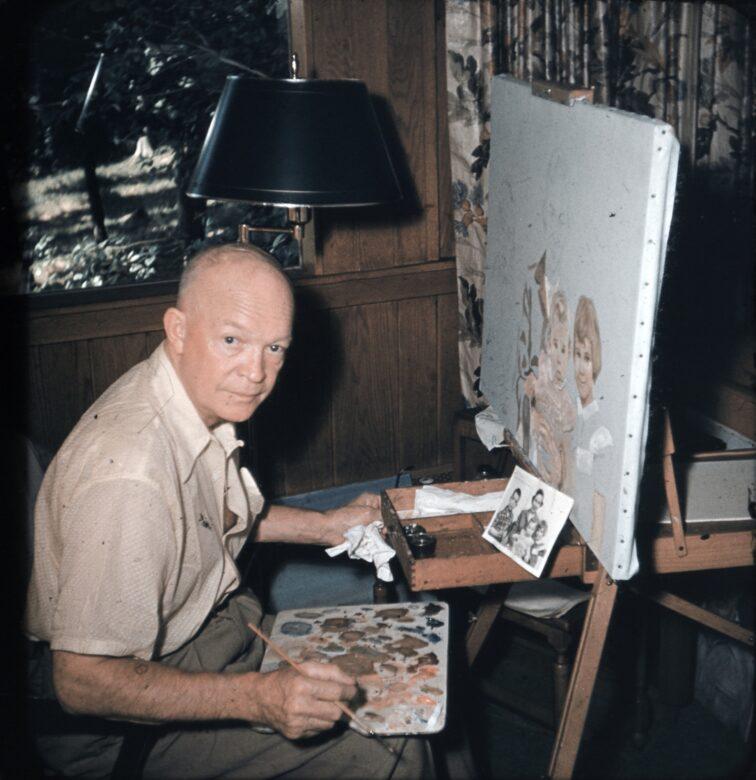
President Dwight D. Eisenhower turned to painting when he wanted to relax or focus his mind, even while serving in the White House. Dwight D. Eisenhower Presidential Library, Museum & Boyhood Home/NARA
Sports and Games
A surprising number of presidents were athletes in their younger days. Abraham Lincoln, for instance, made a name for himself wrestling, albeit those informal matches were conducted frontier style with few rules. Theodore Roosevelt was a boxer as a teenager and at Harvard. John Kennedy swam on a team at the same school, a skill that served him well during World War II when he rescued crew members from drowning after the Japanese sank his PT boat. Dwight Eisenhower, Richard Nixon, Gerald Ford, and Ronald Reagan played varsity football in college.
Once in the White House, these presidents and others often coped with the burdens of office through physical activities and table games. Though not an especially skillful player, Lincoln “was a self-proclaimed ‘billiards addict,’” which he described as a “health inspiring, scientific game.” He even had a billiards table installed in the presidential home. Richard and Pat Nixon were both avid bowlers, and three admirers built a single-lane bowling alley in the White House, which the Nixons frequently enjoyed. Of the many presidents who enjoyed poker and found diversion in a deck of cards, Harry Truman and Warren G. Harding hold first place as the most ardent in their love of the game.
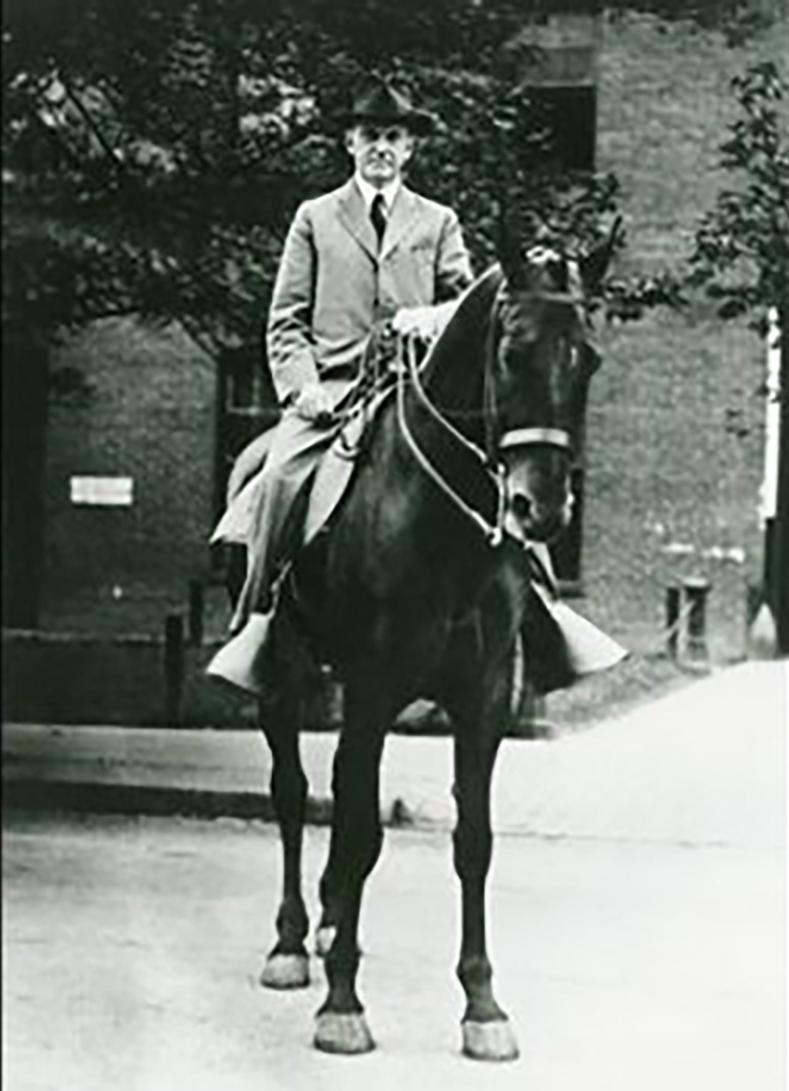
Other more energetic pastimes have also provided a means for blowing off steam. Noted for his strength, which he developed in his early years of surveying and military service, George Washington was, as Thomas Jefferson said of him, “the best horseman of the age,” and equestrian Ulysses Grant received similar compliments. Calvin Coolidge was so enamored of riding as exercise that he had an “electronic horse,” a gift from a friend, installed in the White House.
President Calvin Coolidge, who was raised on a Vermont farm, loved riding horses. National Museum of Health and Medicine
Theodore Roosevelt continued to put on the gloves and spar while in the White House, and his cousin Franklin, left paralyzed by polio, enjoyed the White House swimming pool. Ronald Reagan was well-known for splitting wood on his California ranch, Harry Truman was a walker, George Bush was a jogger, and Barack Obama liked to shoot hoops.
For more than a century, however, the king of presidential sports has been golf. Joe Biden and Donald Trump have found a change of pace and relaxation on the links, as did 17 other presidents. William Howard Taft, the first on this list to tee off, gave so much time to the game during his presidential run that Theodore Roosevelt, his predecessor, told him that he needed to give up the game and focus on politics.
Today, health experts recognize that exercise reduces stress. As the Mayo Clinic recently put it, “Exercise in almost any form can act as a stress reliever.” Our presidents were clearly on the right track.
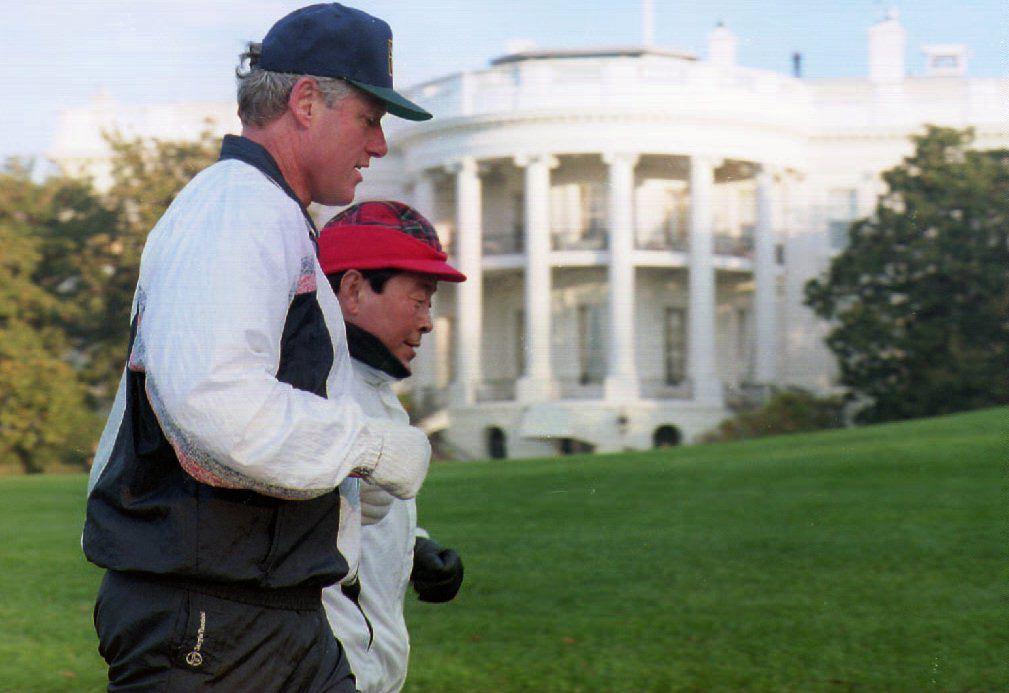
President Bill Clinton (L) and South Korean President Kim Young Sam jog around the White House track in Washington on Nov. 24, 1993. ROBERT GIROUX/Getty Images
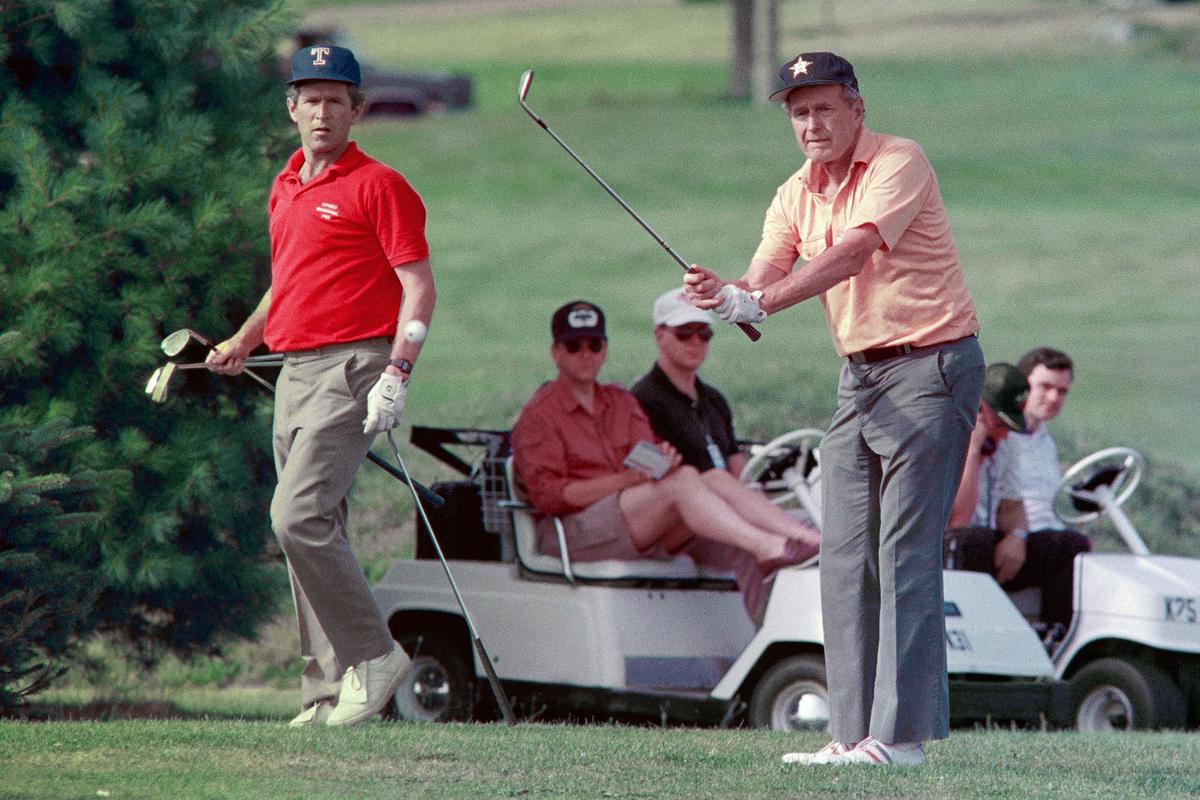
President George H.W. Bush (R) plays golf with his son, George W. Bush (L), at Cape Arundel Golf Course in Kennebunkport, Maine, on Aug. 19, 1989. GREG GIBSON/Getty Images
Reading to Relax
In July 1818, President John Quincy Adams entered an account of his daily routine into his diary:
“I rise usually between four and five — walk two miles, bathe in Potowmack river, and walk home, which occupies two hours — read or write, or more frequently idly waste the time till eight or nine when we breakfast— read or write till twelve or one, when I go to the office; now usually in the carriage — at the office till five then home till dinner. After dinner read newspapers till dark; soon after which I retire to bed.”
From this schedule, leisurely compared to later presidents, we note first the emphasis on exercise, in this case, skinny-dipping in the Potomac, which was how men took to the water in those days. We then arrive at the next block of his time, his reading. For Adams and for so many other chief executives, reading both for work and for distraction was critical in meeting difficulties and in escaping them. As George W. Bush once said, “In this job, there are some simple pleasures that really help you cope. One is books.”
Though some in the press once regarded Bush as an intellectual lightweight, we now know that he was an inveterate consumer of books, particularly of history and biography. For four years of his two terms, he and Deputy Chief of Staff Karl Rove competed against each other to see which of them could read the most books. Though Rove won, Bush read about two books a week.
Other presidents have used words and print as tools for their job and as tunnels of escape from that job. Theodore Roosevelt was known to read a book a day; he would have handily won that Bush-Rove competition. Jefferson read across a number of fields, from political theory to horticulture. Lincoln’s speeches reveal his deep reading of Shakespeare and the King James Bible. Franklin Roosevelt was a prolific reader whose crippling paralysis must have doubled that affection. Truman developed his lifelong love of reading and books in elementary school. When Eisenhower wanted a break from his many duties as president, he added Westerns to his poker and golf.
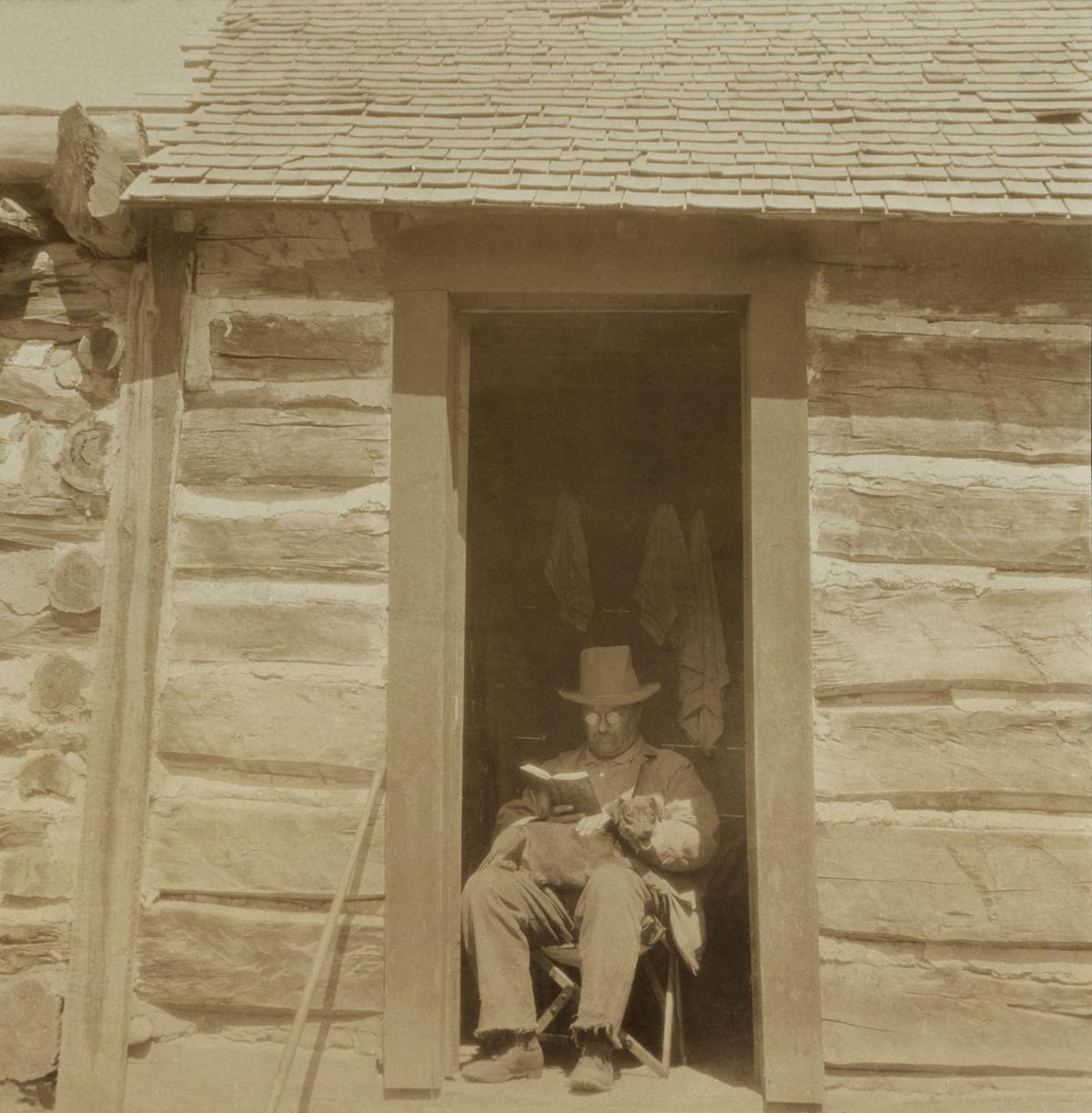
President Theodore Roosevelt reading in the doorway of the West Divide Creek Ranch House in Silt, Colo., circa 1905. On his lap is his hunting dog, Skip. Everett Collection/Shutterstock
And like exercise, experts today cite reading as a great stress-reducer, with one study showing that just six minutes of reading, depending on the material at hand, of course, can reduce your stress levels by up to 60 percent, slowing the heart rate and taking you away momentarily from your troubles.
Get-Aways
Like the rest of us, most presidents have recognized the value of a vacation, and not just one taken inside of a book. From George Washington on, they took pleasure in leaving behind the constant swirl of events, worries, and bureaucrats of the Capitol to seek a retreat in their homes or other amenable locations.
During his time at 1600 Pennsylvania Avenue, Lincoln, off and on, spent 13 months of his presidency at a cottage on the grounds of a nearby home for retired and ailing soldiers, where he worked and relaxed without the constant visitors and favor-seekers that came to the White House. Other presidents, such as Taft, Truman, and Nixon, all returned repeatedly to favorite vacation spots; for instance, Truman’s modest quarters in Key West became known as “The Little White House.”
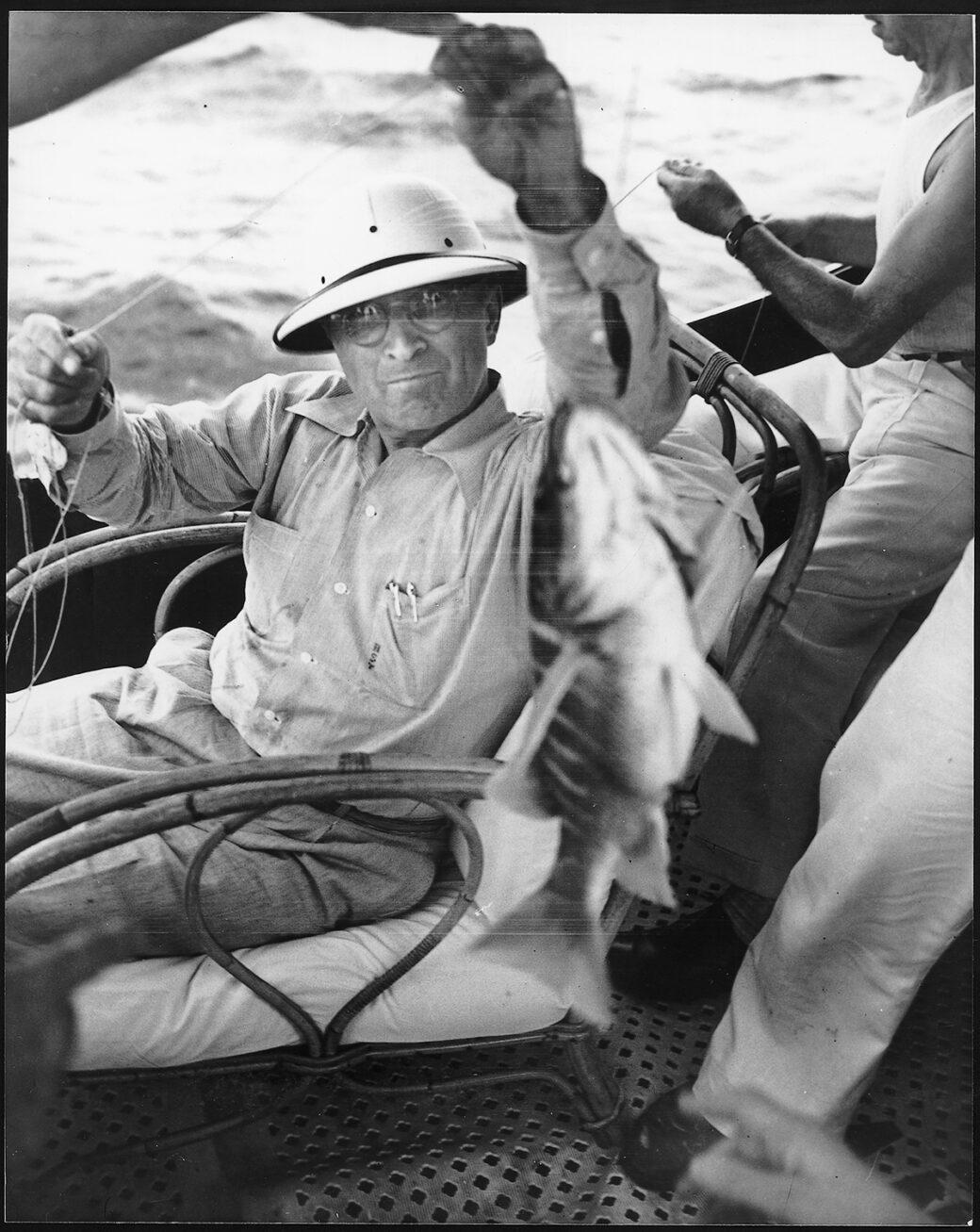
President Harry Truman after hooking the biggest catch of the day during a fishing trip in Bermuda in August 1946. Harry S. Truman Presidential Library and Museum/NARA
Since FDR’s administration, several of the presidents have enjoyed the solitude and peace offered by Camp David. Situated in Frederick County, Maryland, and named in honor of Eisenhower’s grandson, this presidential home away from home with its hills and woods has hosted visitors such as Winston Churchill and was the setting for the Camp David Accords, the groundbreaking agreements that brought peace between Egypt and Israel.
Once again, mental health experts today hold that vacations and spending time in natural settings can greatly reduce levels of stress.
In the first year of the Revolutionary War, George Washington wrote in a letter to Maj. Gen. Philip Schuyler: “Perseverance and Spirit have done Wonders in all ages.” To keep the light of that spirit burning, sometimes it’s necessary for all of us, as so many of our presidents realized, to take some time away from our difficulties, whether it’s for an hour or a week, recollect our thoughts, our strength, and our enthusiasm, and then rejoin the good fight.
Jeff Minick has four children and a passel of grandkids. He has written two novels, “Amanda Bell” and “Dust on Their Wings,” as well as “Learning as I Go” and “Movies Make the Man.” You’ll find more of his writing at JeffMinick.substack.com.