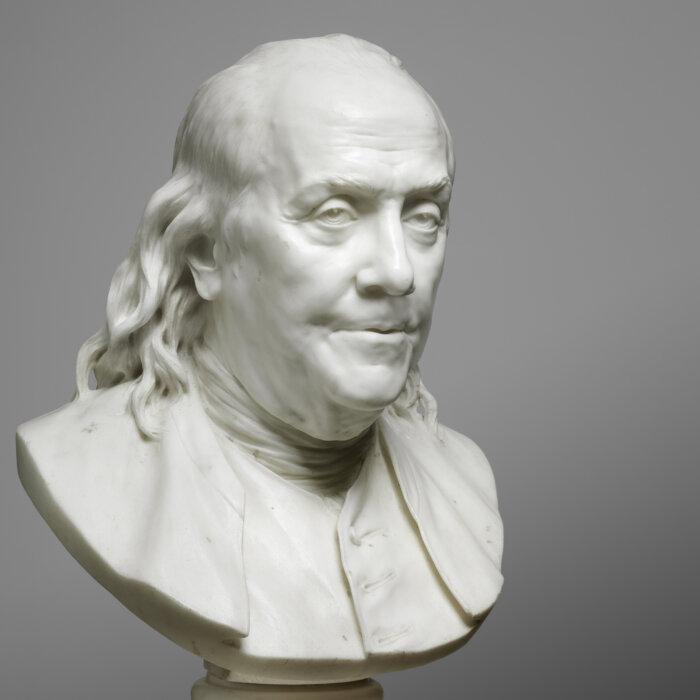
Benjamin Franklin (1706–1790) has been called the “First American” for his impressive variety of skills and talents, his developments in many colonial industries, and his role in the founding of the new democracy.
In his day, Franklin’s claim to fame was the influence he had on his community through his pen, though it was written under a different name. He was a printer by trade and read voraciously. This inspired him to write books and pamphlets or essays to educate, amuse, and enlighten his fellow citizens.
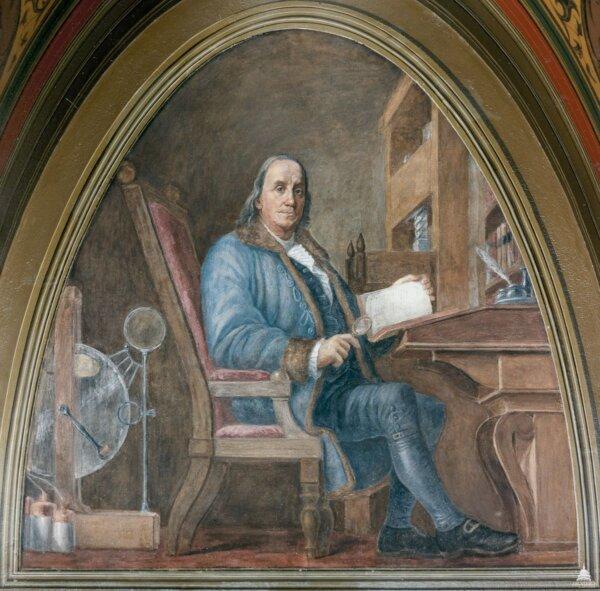
His most famous written work is “Poor Richard’s Almanack” (almanac). Franklin published the annual journals continuously for 26 years in the later years of America’s time as a British colony.
Why were these almanacs so popular? What was the inspiration behind the name “Poor Richard”? Most importantly, what do these books offer us today?
Poor Richard
Franklin published “Poor Richard’s Almanack” annually from 1732 to 1758. When he started, he was a humble, young printer. When he stopped, he’d become one of the most influential writers in the American colonies.
Each year, this volume sold around 10,000 copies, a wide distribution in those days. The average reader believed Franklin only printed these clever writings, not that he was their author.
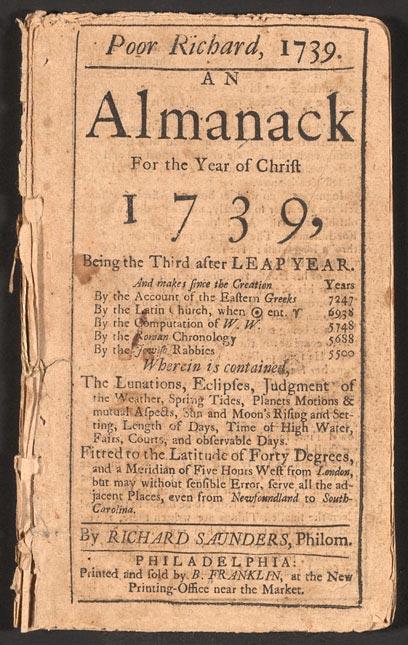
The almanac was written from the viewpoint of Richard Saunders, or “Poor Richard.” In the earliest almanacs’ prefaces, this narrator identified himself as a poor astrologer or “stargazer” who turned to writing almanacs as a way to make money from his otherwise unprofitable tools of the trade. After all, he had a wife, Bridget, to support.
Later, the more tangible character of the hapless Saunders gave way to the sage Poor Richard with wise words of advice.
Neither the character of Saunders nor the sly means Franklin used to drum up attention were his original inventions. John F. Ross explained in his 1940 essay “The Character of Poor Richard” that Saunders was heavily based on a similar character created by English satirist Jonathan Swift (of “Gulliver’s Travels” fame).
Swift’s Isaac Bickerstaff was likewise an astrologer who achieved fame by predicting the death of a respected real-life astrologer of the day. Franklin copied this sensational stunt by predicting the death of almanac-writer Titan Leeds. Despite Leed’s protests that he was very much alive, Saunders emphatically insisted that later works his competitor penned were ghostwritten.
The Almanacs’ Contents
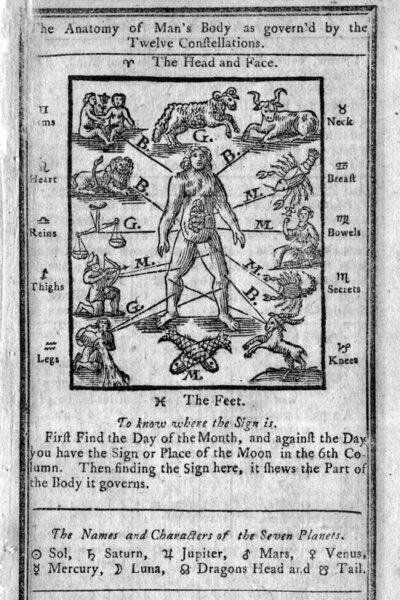
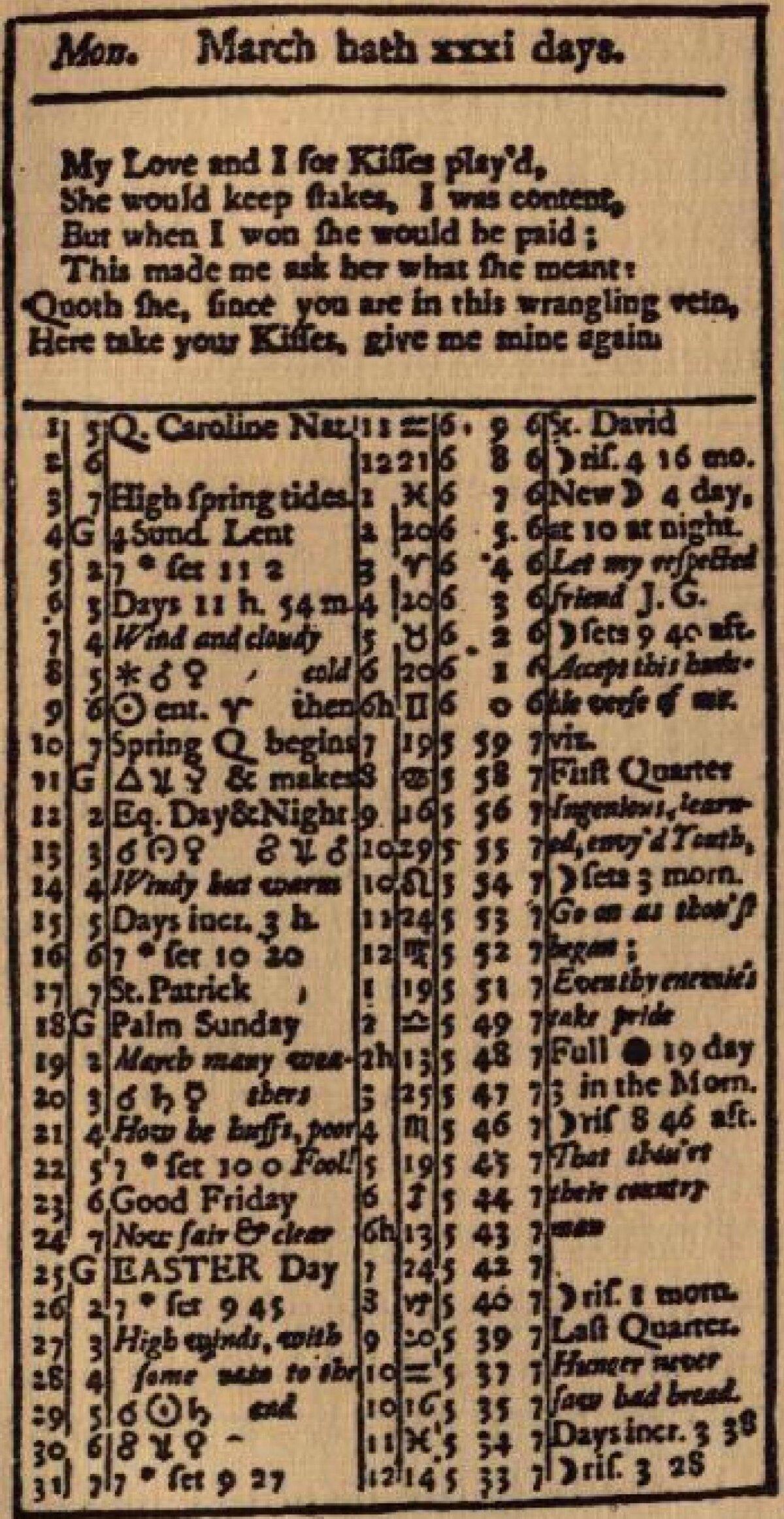
Like any 18th-century almanac, Franklin’s periodicals included the customary calendar, predictions of weather, charts of astronomical occurrences, demographics, and random trivia. Nevertheless, it’s not for these contemporary tools that Poor Richard’s Almanack is remembered—but for the proverbs.
Some of Franklin’s most recognizable quotes originated in these almanacs. In fact, many remain popular sayings today, even if few people know their origin.
The most famous is “Early to bed and early to rise makes a man healthy, wealthy, and wise.” Coming from the 1735 almanac, this piece of advice makes more sense coming from the real-life printer Franklin. His personal schedule famously began at 5 a.m. than the schedule of the fictional astrologer Saunders, who would profit from stargazing late at night.
The majority of these quotes weren’t totally original as proverbs are usually words of wisdom passed down through generations. They were rarely direct quotations from other writers, however.
As a thorough student of literature and an experienced printer, Franklin knew how to condense ideas into simple phrases that were easy to understand. He also used his knowledge of poetry to make the verses catchy and memorable, utilizing tools like rhyme and meter.
Timeless Wisdom
Almost 300 years later, these proverbs are still incredibly wise and practical advice for life. Some are mottos by which to live, like “Be slow in choosing a friend, slower in changing,” and “Fear to do ill, and you need fear nought else.” Others are observations on human nature, like “Creditors have better memories than debtors,” and “Words may show a man’s wit, but actions his meaning.”
What exactly was Franklin’s reason for including these wise tidbits in his almanac? In his autobiography, the Founding Father made the frank observation that these publications came to be so popular that he realized they could be “a proper vehicle for conveying instruction among the common people, who bought scarcely any other books.”

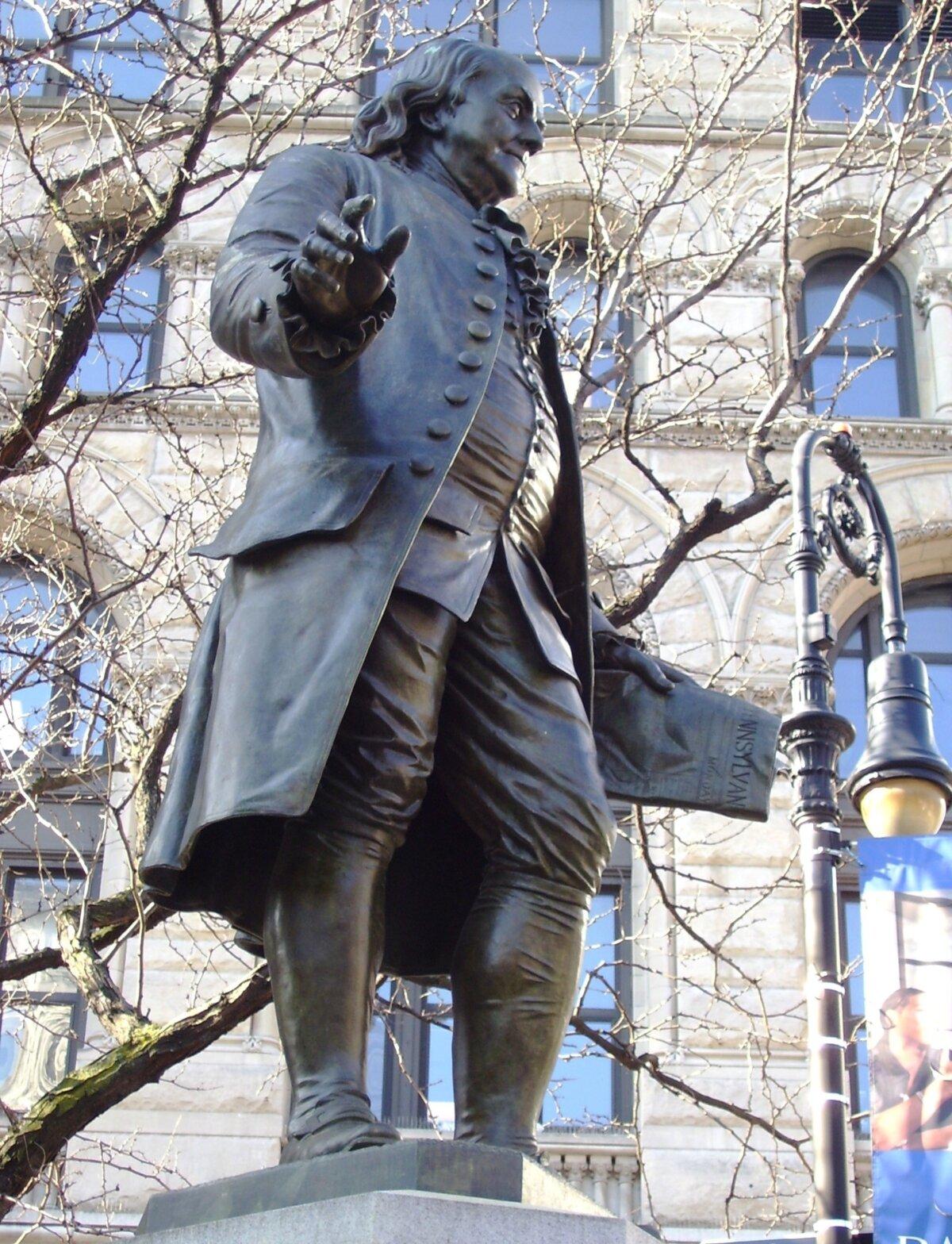
Realizing this opportunity to enlighten his readers, Franklin explained his reasons for including the proverbs:
“I therefore filled all the little spaces … with proverbial sentences, chiefly such as inculcated industry and frugality, as the means of procuring wealth, and thereby securing virtue; it being more difficult for a man in want, to act always honestly, as, to use here one of those proverbs, ‘it is hard for an empty sack to stand upright.’”
It’s no coincidence that a man who studied, condensed, and printed some of the wisest words in the English language would become a prominent player in founding a new nation.
The budding United States of America had to learn from the wisdom and folly of past civilizations and governments, based on the revolutionary ideas of freedom and equality.
Now, 250 years after declaring our independence, we Americans would do well to follow this motto from Poor Richard: “Sell not virtue to purchase wealth, nor liberty to purchase power.”
What arts and culture topics would you like us to cover? Please email ideas or feedback to [email protected].