This copy is for your personal, non-commercial use only. Distribution and use of this material are governed by our Subscriber Agreement and by copyright law. For non-personal use or to order multiple copies, please contact The Epoch Times Reprints.
In this installment of ‘Larger Than Life: Architecture Through the Ages,’ we look at a grandiose California government building influenced by beaux arts design.
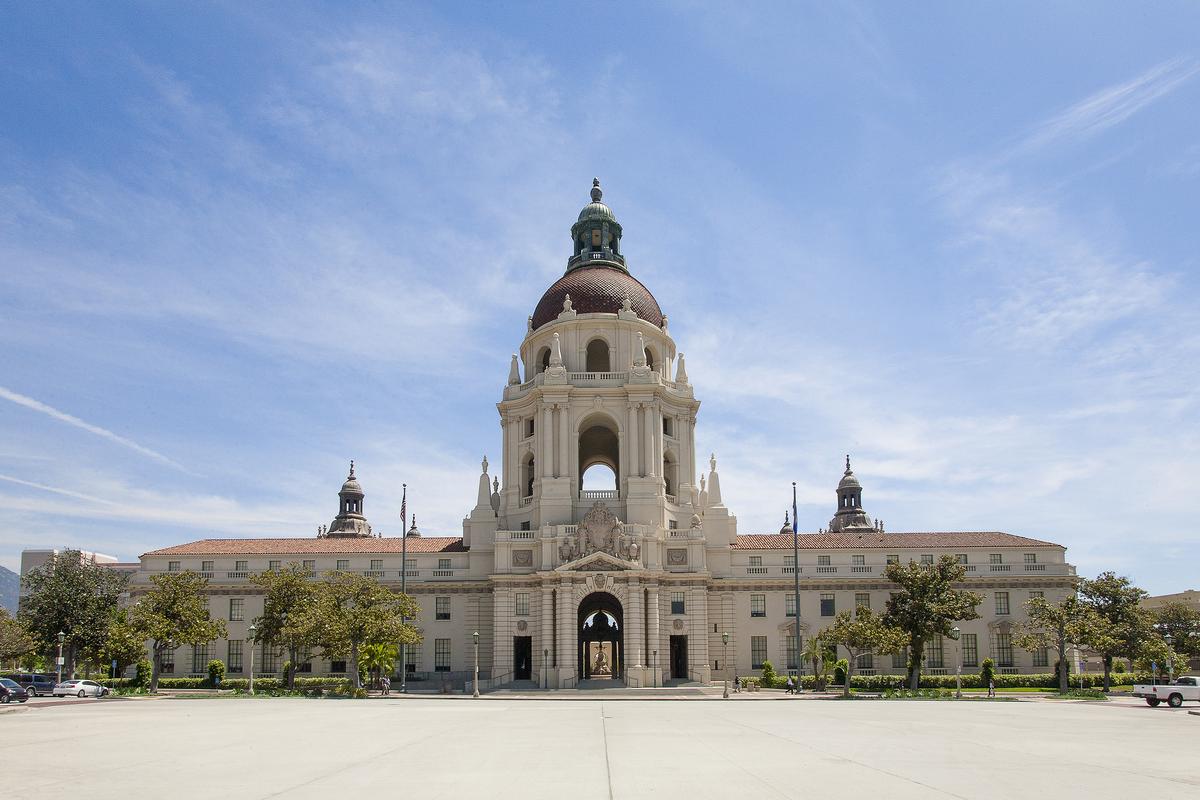
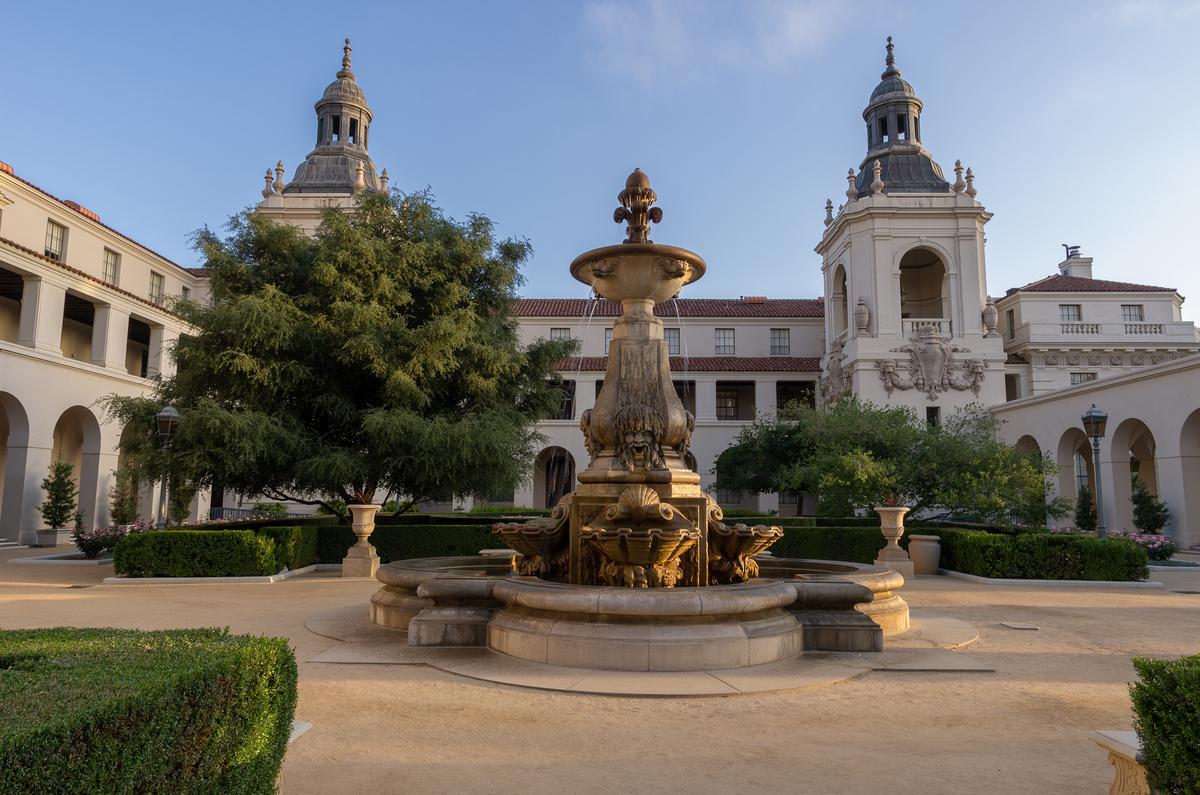
Pasadena City Hall dominates the skyline as a decorative contrast to the contemporary buildings around it. The building outlines a central Spanish colonial-style courtyard with lush trees, bushes, and flowers. The expansive structure includes 235 rooms, four small towers, and it features a domed tower with a cupola attached to its west main entrance. Mark Breck/Shutterstock
Training at the Ecole des Beaux-Arts in Paris inspired San Francisco architects John Bakewell Jr. (1872–1963) and Arthur Brown Jr. (1874–1957) to design a grand government building in Pasadena, California. Completed in 1927, the structure incorporated elements of Mediterranean Revival and Spanish Colonial Revival styles, while including many beaux arts designs that Bakewell and Brown learned in the late 19th century.
Pasadena City Hall is constructed of reinforced concrete block and finished with a stucco-plaster treatment. Covering the tower’s dome are clay tiles, while the tower’s 41-foot-tall cupola is made from copper. The main hall is built around a courtyard that features a baroque-style stone fountain. Lengthy, arched loggias, which are covered halls or passageways, provide access to the courtyard.
Beaux arts architectural designs are recognized for their symmetry and ornamented classical style, which is heavily featured in the façade’s embellishments and sculpted figures. Decorating the 170,000-square-foot structure are cast-stone mascarons (a crafted face ornamentation popular within beaux arts style) as well as columns, urns, balustrades, and fruit garlands.
Pasadena City Hall functions as administrative offices. However, due to its architectural beauty and the garden courtyard, loggias, and arcade, it serves as a backdrop for weddings and engagement photography as well as movie and television scenes.
The front façade of Pasadena City Hall displays symmetry, one of the main beaux arts characteristics. Smaller towers, as well as the building’s windows and doors, are balanced on each side of the arched entryway, which is topped with an arched and columned tower and cupola. Dedo Luka/Shutterstock
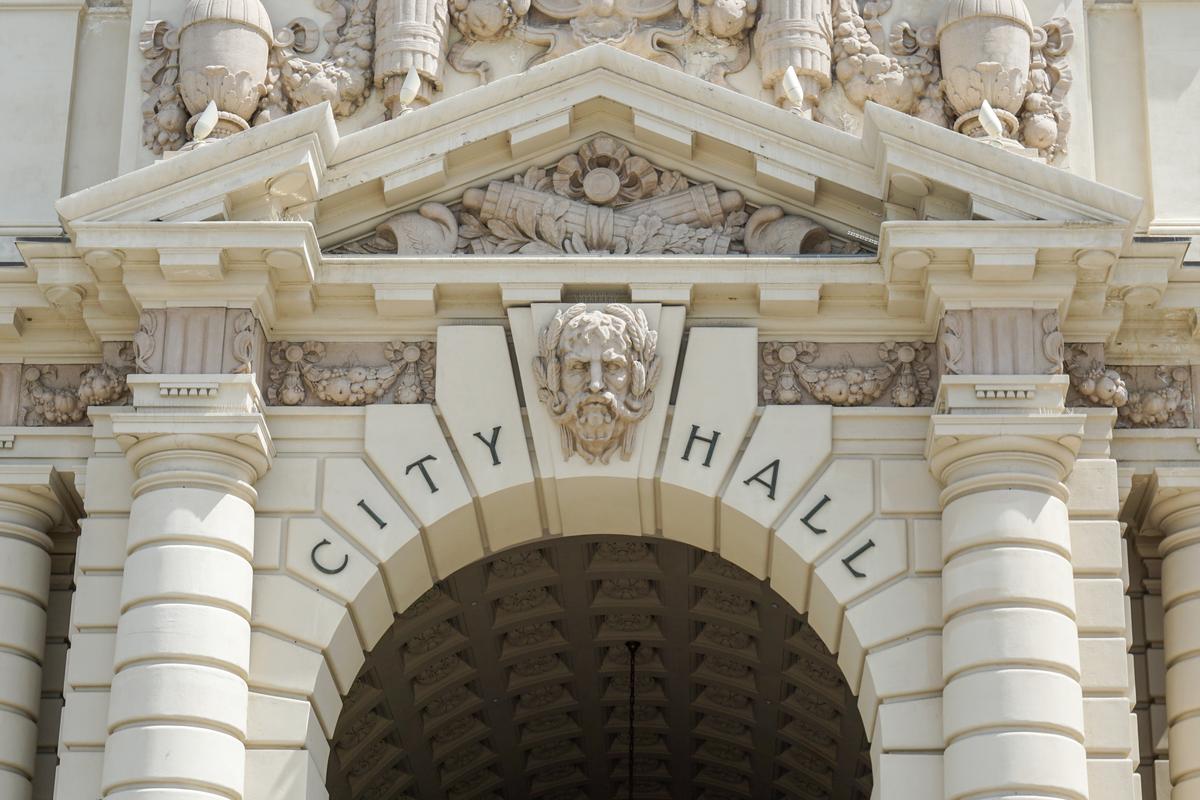
The Pasadena City Hall’s main entrance treats visitors to a conglomeration of cast stone motifs. Within the arch’s keystone is a mascaron. Crafted fruit garland decorations are displayed within niches, while sculpted scrolls are inside the pediments and the above urns. Builders manipulated the concrete and stucco around the entrance in such a way that the arch and columns appear to be constructed of cut and polished stone blocks. RobertAlvarez201/Shutterstock
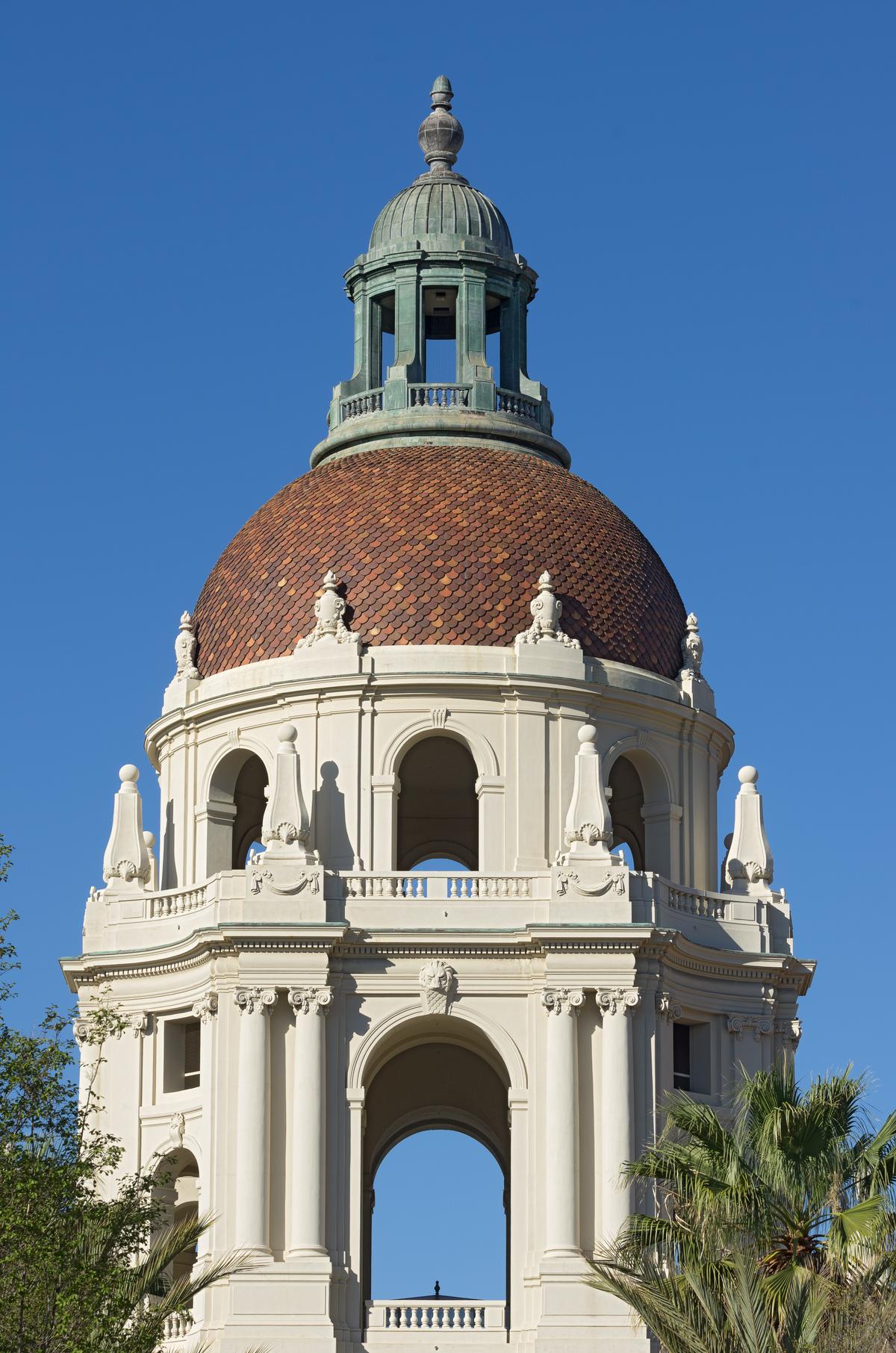
Six stories high and tiered with columns, Pasadena City Hall’s flagship circular tower includes a 26-foot high dome with a 54-feet diameter and a 41-foot-tall cupola. Red fish-scale tiles cover the dome. Columns, arches, a lion’s head mascaron, pilasters, swags, dentil molding, balustrades, an entablature, and lantern obelisks with ball finials are the tower’s primary embellishments. Angel DiBilio/Shutterstock
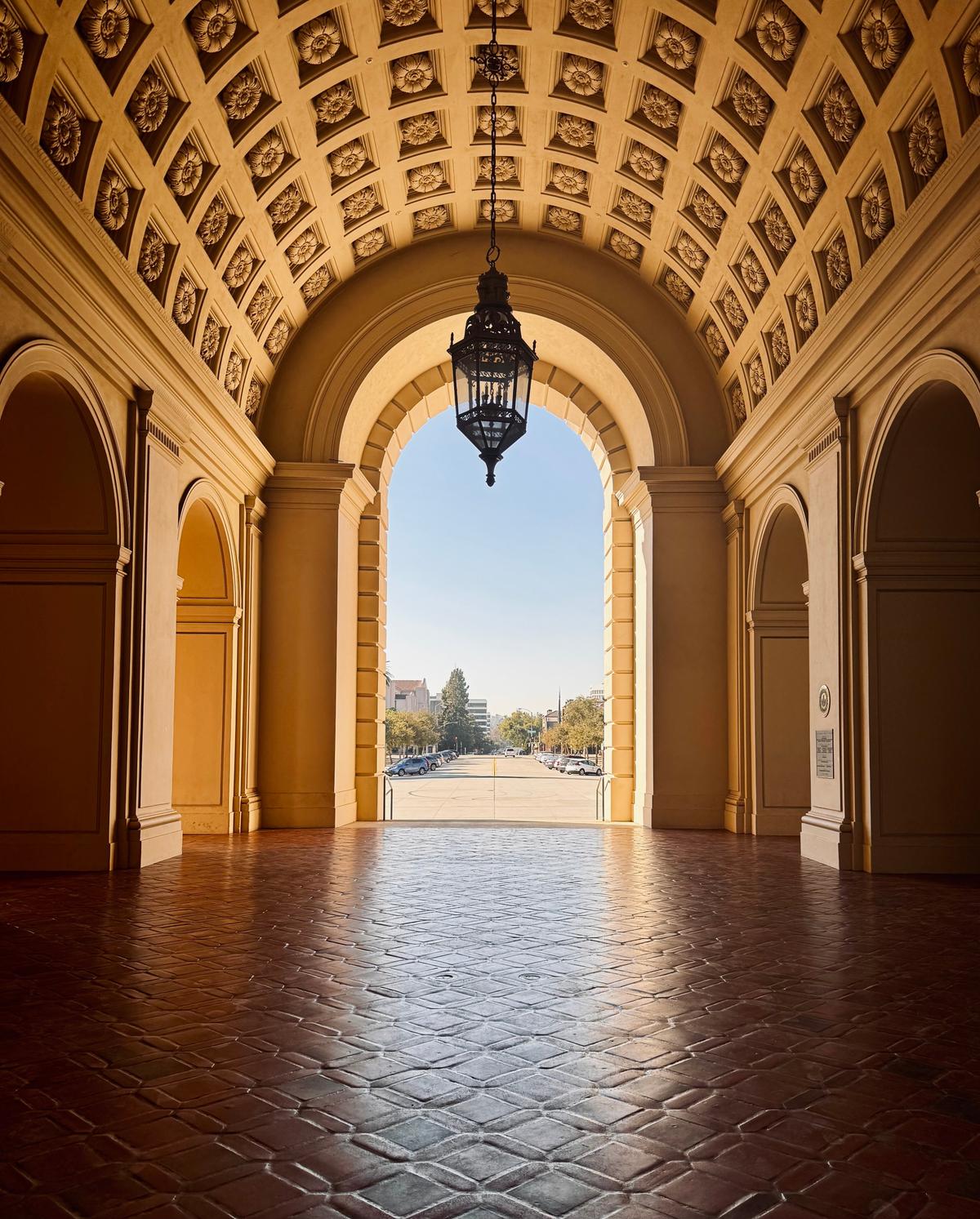
The east side of Pasadena City Hall’s courtyard is a one-story cloistered arcade, or a covered walkway that features a succession of contiguous arches that leads outside. The arcade has a red tile floor, square columns with Doric capitals at the arched opening, and pilasters defining its many arches. The barrel-vaulted ceiling is apportioned with caissons, meaning square inset boxes, which serve as frames for rosettes. Form and Flora/Shutterstock
The courtyard’s key element is its large baroque-style stone fountain. Manicured gardens and California oak trees surround the fountain, while loggias (roofed, open galleries) enclose the courtyard. Angel DiBilio/Shutterstock
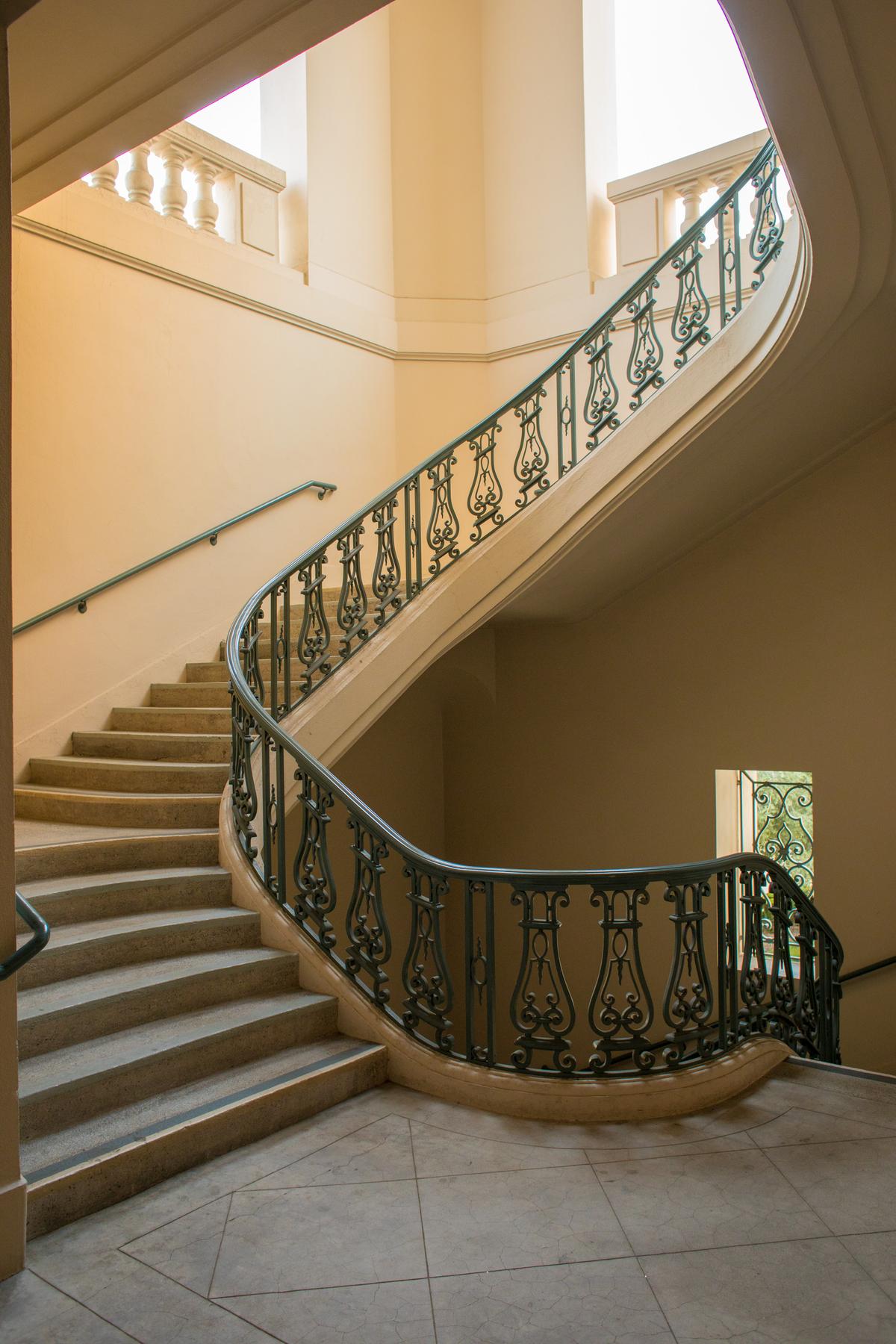
Balustrades surround the different levels of the main staircase. The curvaceous floating staircase has marble treads and a wrought iron banister, which features a classic design that resembles an ancient lyre. Justin Ta/Shutterstock
What arts and culture topics would you like us to cover? Please email ideas or feedback to [email protected].
A 30-plus-year writer-journalist, Deena C. Bouknight works from her Western North Carolina mountain cottage and has contributed articles on food culture, travel, people, and more to local, regional, national, and international publications. She has written three novels, including the only historical fiction about the East Coast’s worst earthquake. Her website is DeenaBouknightWriting.com