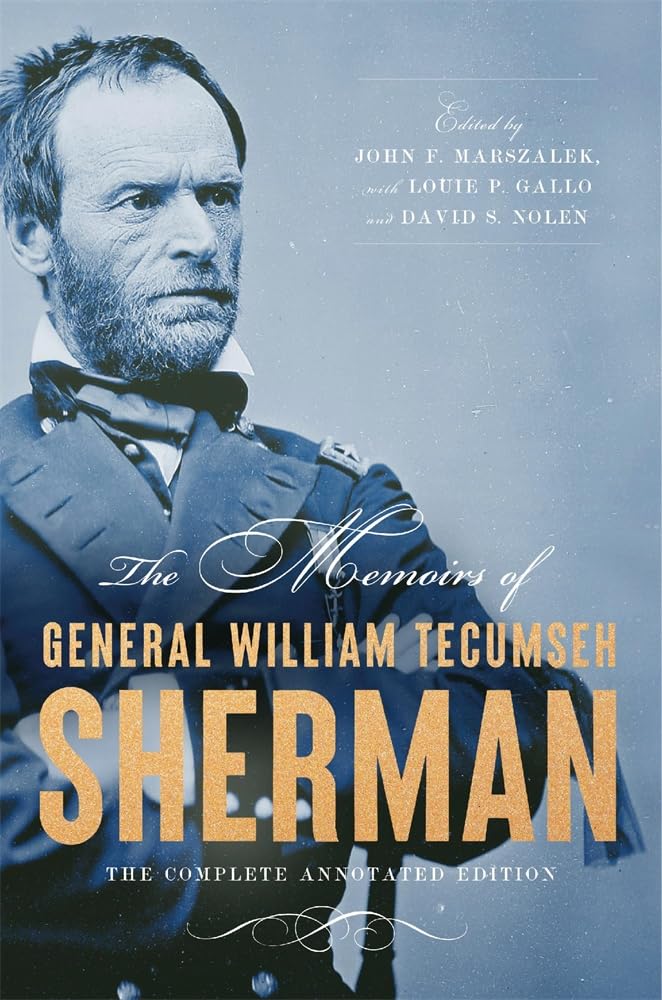
Nonetheless, Sherman felt that, as an intricate witness to the war, he should pen “his recollection of events” in order to “assist the future historian.” Among those many future historians who have been assisted by Sherman’s memoirs are John F. Marszalek, Louie P. Gallo, and David S. Nolen. These three leading Civil War scholars recently completed the first fully annotated edition of “The Memoirs of General William Tecumseh Sherman.”
This undertaking, in which 1,521 annotations were added to the memoirs, began in 2018. After seven years of exhaustive research and dutiful dedication to this important piece of Civil War history, Harvard’s Belknap Press published the edition this month, just in time to commemorate its 150-year anniversary.
Controversial Remembrances
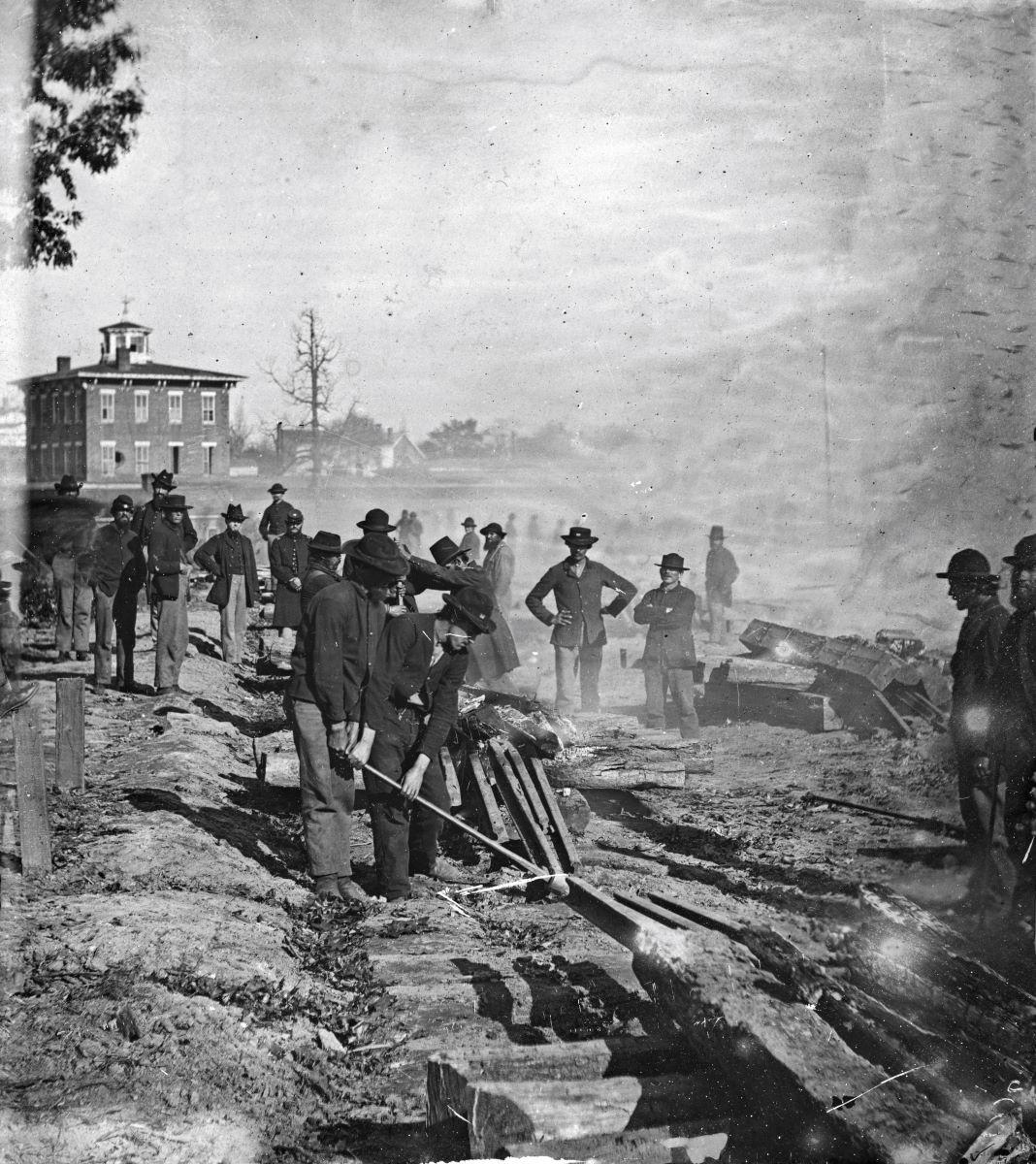
Sherman’s memoirs were one of the first of its kind published about the Civil War. Nolen indicated that it was the Union general’s work that launched the Civil War memoirs genre. Additionally, as Marszalek noted in the introduction of the newly annotated edition, “His ‘Memoirs’ were some of the earliest—and most controversial—remembrances of the war. … Consequently, what Sherman wrote in his memoirs about the way he fought the war resulted in one of the most debated books of the late nineteenth century.”
More than any other general in the Civil War, Sherman was known and remains known for his ruthless method of warfare that inflicted devastation on enemy soldiers and civilians alike. According to Nolen, Sherman embodied the transitional moment between traditional warfare and modern warfare. His methods would have a direct effect on American military theory, strategy, and tactics moving forward.

Paving the Way
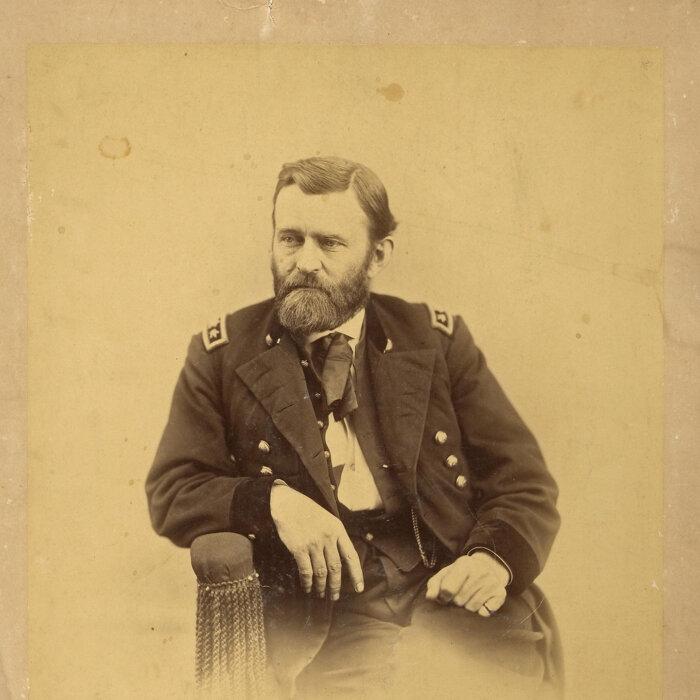
This, of course, is truly the singular aspect that made, and continues to make, the memoirs a subject of controversy and debate. Nonetheless, Sherman, having been one of the war’s most important and undoubtedly effective Union generals, paved the way for future generals to write their memoirs in a forthright and blunt manner.A decade after Sherman’s memoirs were published, Grant published his to great fanfare. Grant’s memoirs, with its story-like narrative, are arguably the nation’s most successful and cherished memoirs from any American military officer.
Nolen said that Grant and Sherman are similar in the fact that they never found any major discrepancies in the historical narrative of the Civil War. There were no moments of “waxing poetic” at the expense of the truth of what actually took place.
Blunt, but Fair
Nolen noted that Sherman’s memoirs, especially the initial 1875 edition, possessed an obvious apolitical tone. As a blunt instrument during the war, he proved to be just as blunt in his recollection of those events. That bluntness, however, was softened by his spirit of fairness.Ten years separated the first and second edition of Sherman’s memoirs, and, during that time, he received plenty of praise for his work, including from Grant, as well as criticisms from fellow officers. In his second edition, Sherman stated that he made revisions “in the light of the many criticisms public and private … where I have found material error I have corrected.” He made it quite clear, however, that he was not changing his narrative, and that “in this free country every man is at perfect liberty to publish his own thoughts and impressions … and ... that no three honest witnesses of a simple brawl can agree on all the details.”
Changing Perspectives
No doubt Grant’s literary masterpiece altered how people viewed the general-turned-president. He was long viewed as the great man, specifically by Northerners, for his efforts to end the war. Grant, who initially believed himself incapable of writing his memoirs, certainly experienced a change in his self-perception. Writing his memoirs became an enjoyable occasion, as well as an opportunity to secure his family financially. Comparatively, Nolen noted how Sherman’s memoirs altered the public’s perception of him.“We have this idea of Sherman as kind of the iron-willed, tough-minded, do-what-it-takes individual, and that is definitely true,” Nolen said. “But, then, there are moments in Sherman’s memoirs, where he writes tenderly, for example when he describes his (9-year-old) son Willie, who dies tragically right at the end of the Vicksburg campaign. He includes a letter at the moment that is just overflowing with raw emotion. His memoirs humanize him as much as they reinforce those aspects of being blunt, tough-minded, and very stern. To me, that’s some of the most compelling parts of the memoirs.”
Indeed, the memoirs of these generals elevate them beyond the stoic statues of duty, enabling readers to relate on an emotional level. This relatability to these long-past heroes is part and parcel the very reason why Marszalek, Gallo, and Nolen endeavored to produce these annotated editions. As Nolen noted, Grant and Sherman both wrote for an audience that was familiar with the culture of the day, as well as the officers on both sides of the conflict. One hundred and sixty years later, the modern audience—from the casual reader to the Civil War scholar—is receiving a reintroduction.
By making corrections to dates and places where needed, providing valuable information about military officers, and giving background to various events, this annotated work isn’t solely capturing Sherman, but much of the Civil War.
“What we hope with annotated editions like these is that it creates a platform for scholars to come in and approach the work with a fresh perspective that lays a foundation for them to build on in terms of interrogating what Sherman said,” Nolen said. “Hopefully, it will aid scholars and casual readers in that way.”