As a young boy, Nelson Glueck (1900–1971) had an interest in archaeology. As the son of Jewish immigrants, his interest coincided with his dedication to the Bible and his Judaic faith. Those aspects of his life would coincide into one of the most important biblical archaeological careers of the 20th century, or any century.
Born in Cincinnati at the start of the 20th century, Glueck quickly adopted the intellectual life, but with an eye for future adventures, of which he would encounter many. At 14, he began his studies at Hebrew Union College (HUC) in his hometown where he earned a Bachelor of Hebrew Literature. He followed this with a bachelor’s degree two years later from the University of Cincinnati. Three years later, in 1923, he was ordained a rabbi at HUC and became an influential member of Reform Judaism.
Major Discoveries
In 1934, he made arguably his most important discovery in an area called Wadi Arabah between the Dead Sea and the Gulf of Aqaba. This discovery of Khirbet en-Nahas proved to be a copper mining and smelting area, which Glueck identified as the copper mines of King Solomon.
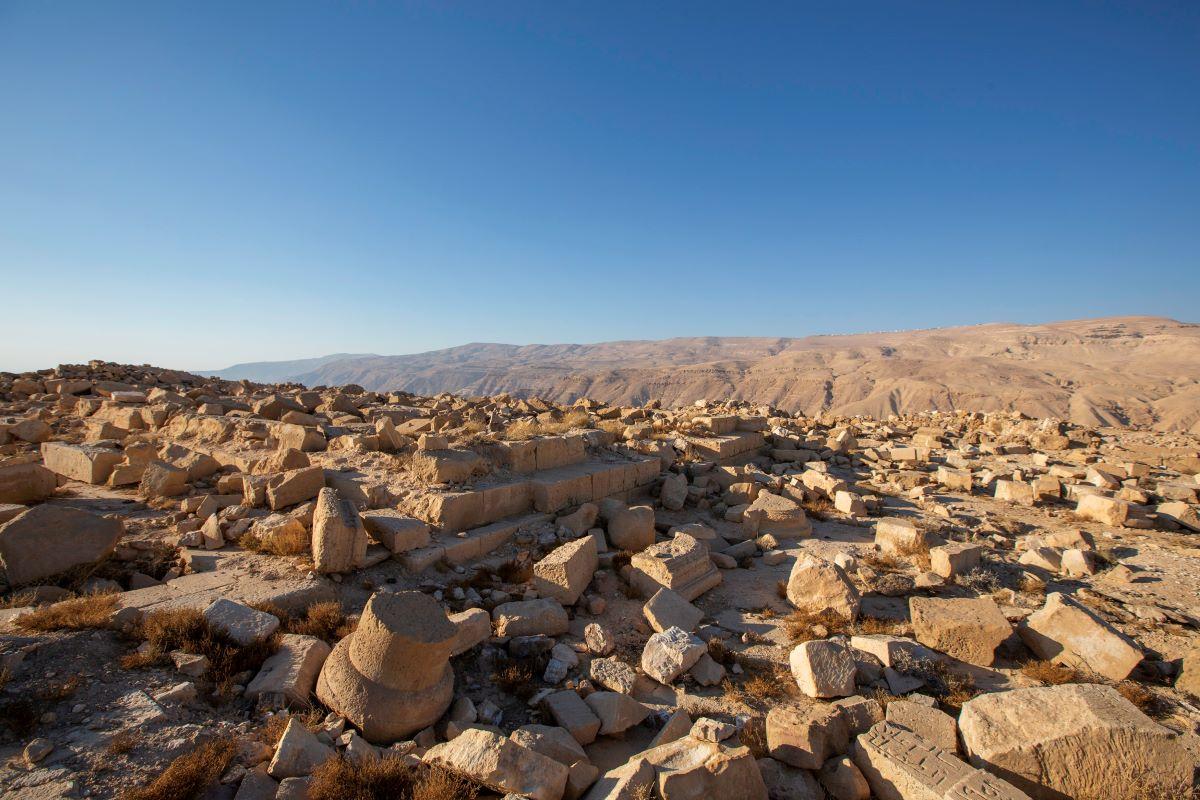
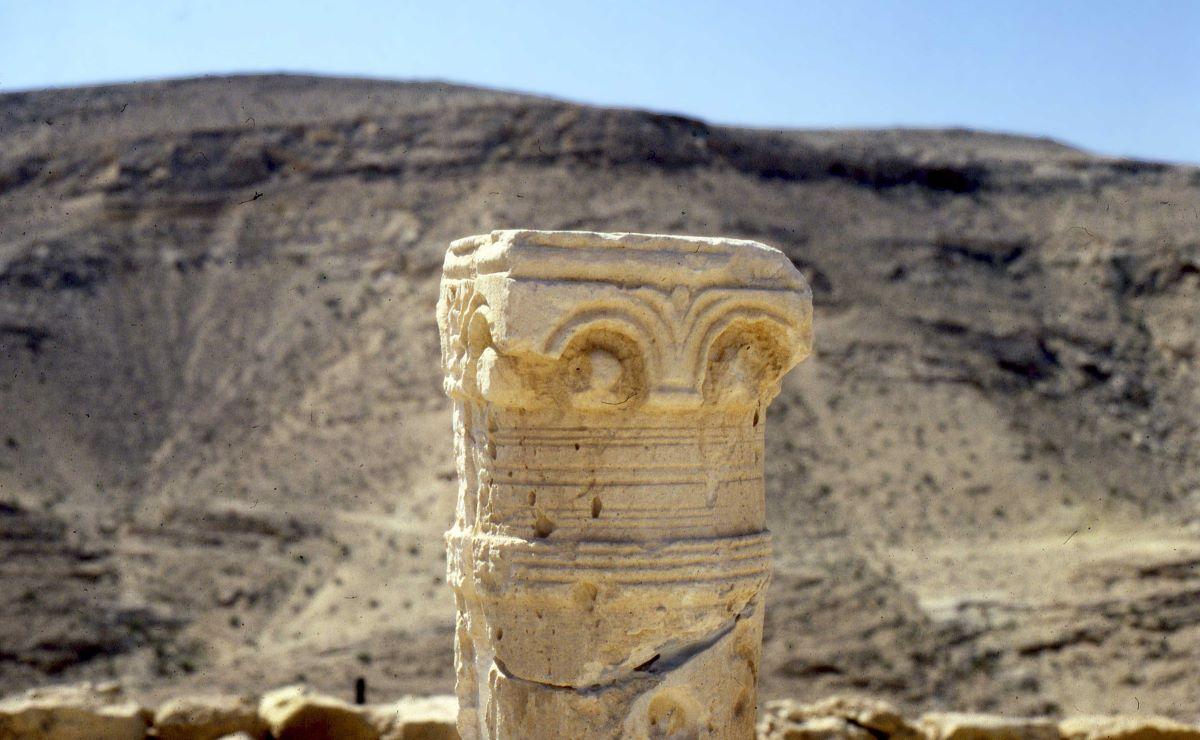
In 1937, Glueck discovered a temple complex in an area that was once part of the Nabataean kingdom known as Khirbet et-Tannur. The location of this hilltop temple was just north of Petra, the famous capital of Nabatea. One of the most significant aspects of this find was that the complex had been undisturbed. It provided the field of archaeology a direct view into the ancient world of the Nabateans.

A year later, and five years after German explorer Fritz Frank’s 1933 discovery of Tell el-Kheleifeh, which he identified as the Bible’s Ezion-geber mentioned in 1 Kings 9:26, Glueck began his own excavation of the area. From 1938 to 1940, Glueck conducted three seasons of excavation of the tell along the northern shore of the Gulf of Aqaba. Here, Glueck discovered Solomon’s Red Sea port, as well as a large structure, which he identified as a large copper smelter. Through his method of stratigraphy, which uses layers of strata to determine timelines, he was able to classify five periods of occupation in the location that ranged from the 10th century to the 5th century B.C.
Over the course of 15 years, from 1932 to 1947, he discovered more than 1,000 archaeological sites in the Transjordan area. The following decade, he then pursued his archaeological pursuits in the Negev, the desert in Israel, where he made hundreds of discoveries dating to the pre-Byzantine era.
The Spy Cover
Interestingly, during a period in the 1940s, Glueck also played a pivotal role in the war effort as a member of the Office of Strategic Services, the precursor to the CIA. His knowledge of the region’s geography and cultures positioned him as an American version of T.E. Lawrence, the famous British Army officer from World War I. While conducting archeological digs and surveys, he would also pay close attention to the local gossip or take note of any British or Nazi movements or spies.“I had the best cover of any spy, because it was real,” Glueck recalled.
Continuing the Work
Although the war had ended, the region remained chaotic and dangerous, as made obvious by the 1948 Arab-Israeli War (two decades later, there was the famous Six-Day War in 1967). “Using the Bible as a guidebook,” a 1959 Time Magazine article stated,“Glueck traced the wanderings of the Children of Israel in their exodus from Egypt, searched for relics of the Edomites, Nabataeans and other long-vanished peoples. The jaunts were no picnics; the temperature touched 113 degrees, and Arab guerrillas infested the wild country.”
“It’s a little less dangerous than it used to be,” Glueck told Time. “In former years we traveled with machine guns and grenades. Now we have only rifles.”
A Wideranging Legacy
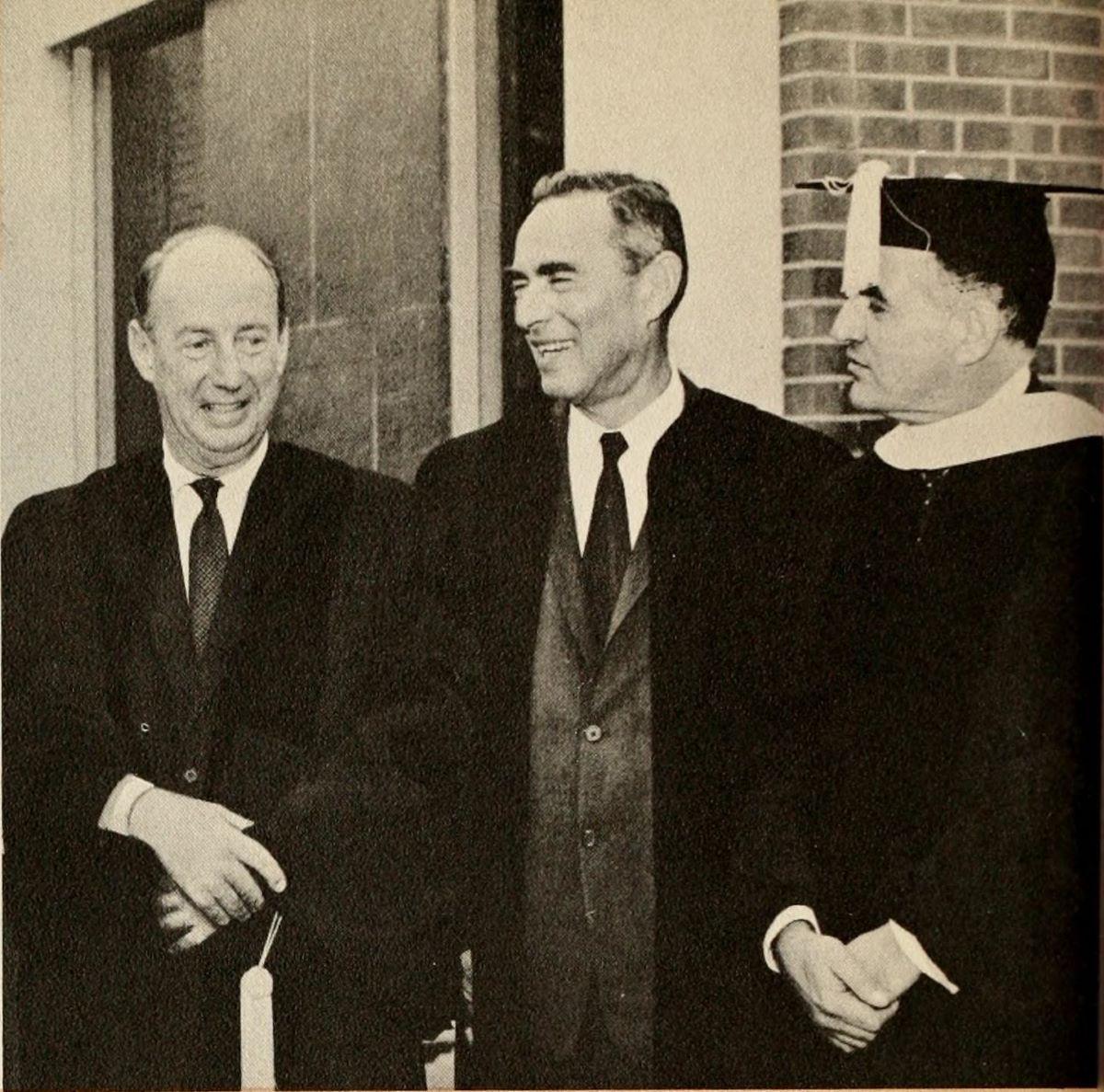
Glueck had risen through American society as not just a leading archaeological figure, but also a leading religious figure. At President John F. Kennedy’s inauguration, he gave the benediction.
Along with his field work and religious duties, he was also a professor, beginning in 1936 at HUC. In 1947, he became president of the college, a position he would hold until his death in 1971. In 1963, HUC established the Nelson Glueck School of Biblical Archaeology.
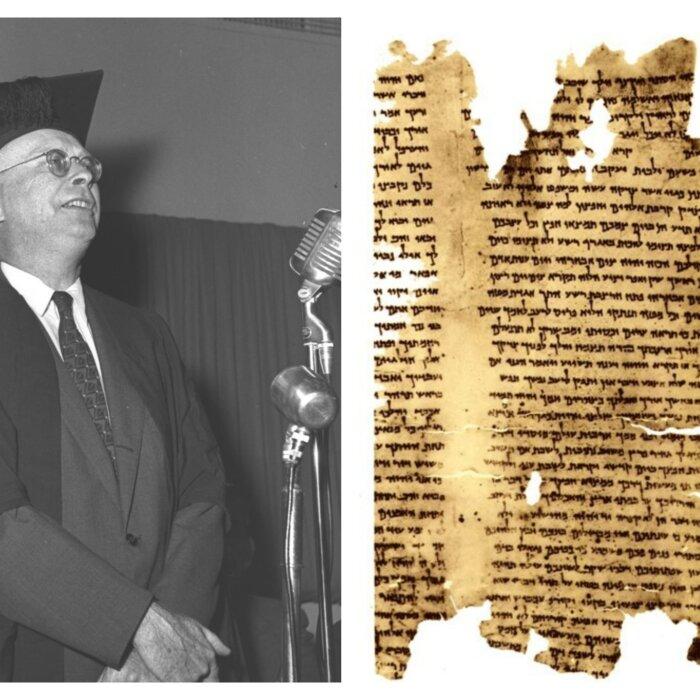
By the end of his life, Glueck was presented with 20 honorary degrees and had written several influential books, including his four-volume “Exploration in Eastern Palestine,” “The Other Side of the Jordan,” “Rivers in the Desert,” and “Deities and Dolphins.” Shortly before his death, 24 archeological scholars published a collection of essays entitled “Near Eastern Archaeology in the Twentieth Century” specifically in his honor.
One of the contributors, George M.A. Hanfmann, noted,
“For many decades, Nelson Glueck has been a shining example of a scholar who on the one hand has pioneered new methods and approaches to archaeology, and on the other, has advanced the cause of archaeology by carrying to the general public, especially in America, something of the adventure, excitement and joy of archaeological discovery.”
The advancement of the cause of archaeological study, led Glueck’s mentor and colleague, Albright, to classify him as “a hero of Biblical archaeology.”