Musician’s Muse: The 12-String Guitar

Artists like Glen Campbell created unforgettable moments with the underrated instrument.
Musician’s Muse: The 12-String Guitar
A 12-string guitar, which has 12 strings in six courses, produces a fuller, more harmonically resonant tone tone than a standard six-string guitar. thunder-st/Shutterstock
|Updated:
0:00
In the mid-1970s, country performer Glen Campbell found another signature song to add to his live show. During a performance, he took a break from playing hits like “Gentle on My Mind” and “Rhinestone Cowboy” and floored the audience with a live rendition of a famous classical work, Gioachino Rossini’s “William Tell Overture.”

Many grew up hearing it on a weekly basis as the theme song to “The Lone Ranger,” a popular Western TV show airing from 1949 to 1957. The fast-paced number played over an opening scene of the masked vigilante riding his galloping horse, Silver.

Campbell’s performance of the classic piece moved listeners so much that he added it to future shows.

Audiences would watch in amazement as he launched into the challenging number, playing with striking precision and speed. His oversized 12-string guitar was a perfect match for the piece’s rollicking melody, supported by a strings section featuring violins and his backing band.
The country singer couldn’t resist taking things up a notch—literally. For many shows, he placed the guitar on top of his head and spent the last minute of the song blindly picking strings and fretting notes—the right ones, despite his strained physical position.
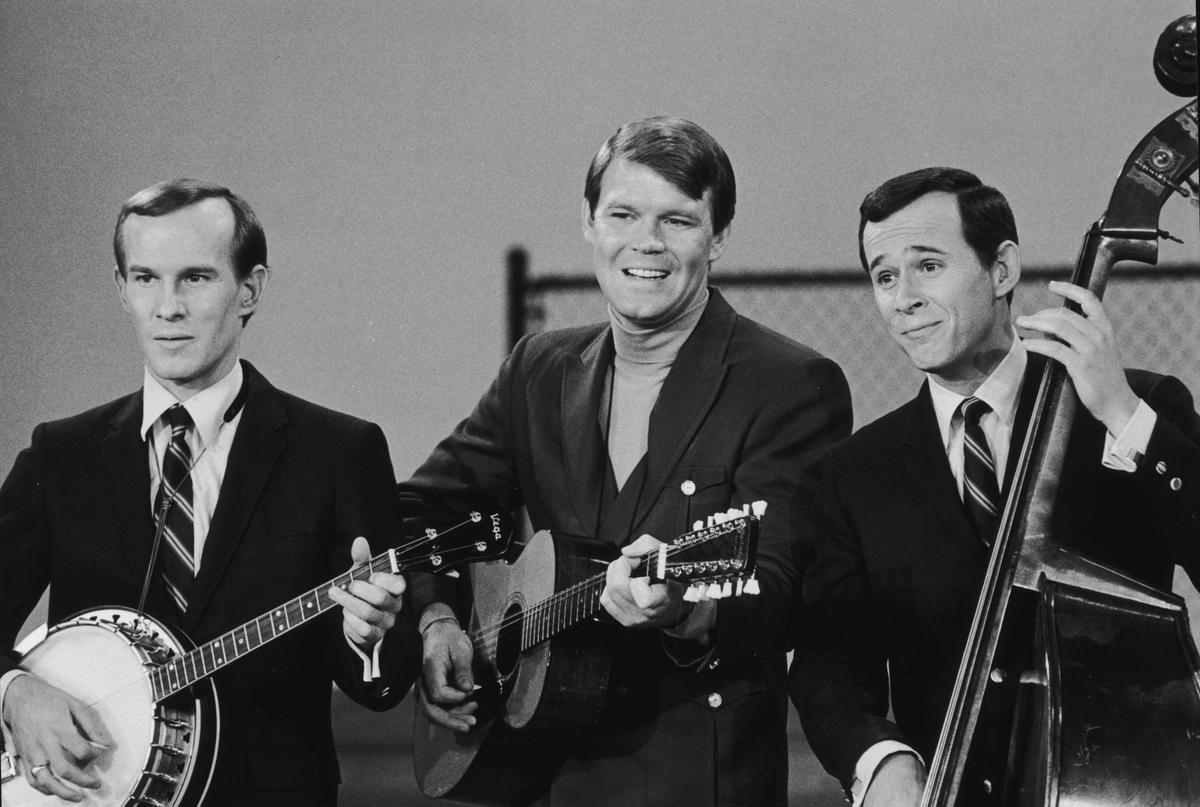
American folk singer Glen Campbell (C) performs on "The Smothers Brothers Comedy Hour" with the American comedy duo, the Smothers Brothers: Tom (L) and Dick, circa 1965. Campbell plays his signature 12-string guitar while Tom plays banjo and Dick plays standup bass. (Hulton Archive/Getty Images)
American folk singer Glen Campbell (C) performs on "The Smothers Brothers Comedy Hour" with the American comedy duo, the Smothers Brothers: Tom (L) and Dick, circa 1965. Campbell plays his signature 12-string guitar while Tom plays banjo and Dick plays standup bass. Hulton Archive/Getty Images

Campbell’s performances of the “William Tell Overture” are still talked about today, not only because he played a guitar on top of his head but also because of the instrument itself. People have long been entranced by the six-string’s bigger, bolder brother. But its large size and extra strings can make it hard to play, rendering it a novelty instrument in a historic sense.
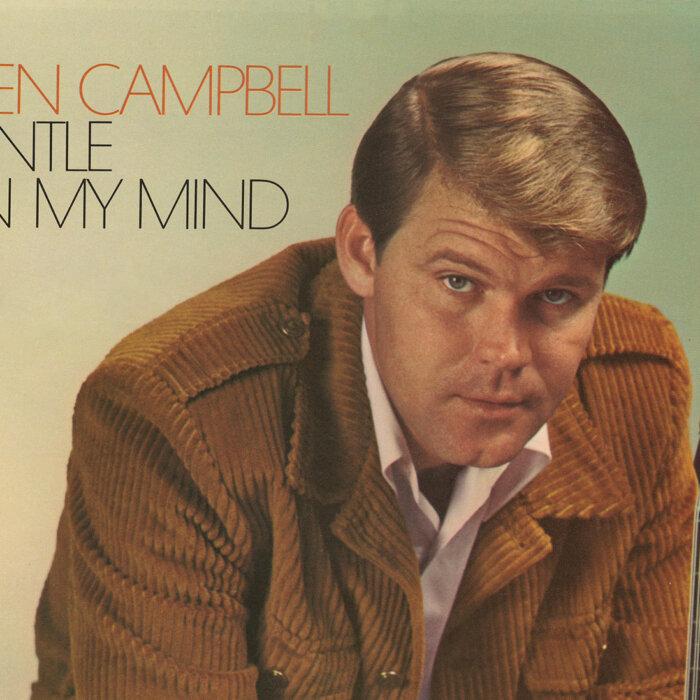
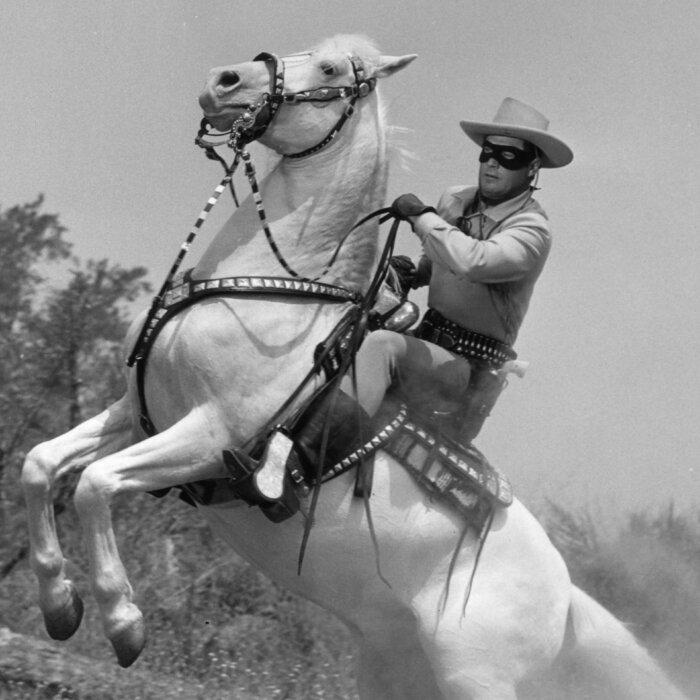
It would take visionary musicians like Campbell, and a few more of music’s finest players, to show the world that the 12-string guitar is in a class all its own.

‘Shimmering Sound’

Campbell loved the rich, booming sound of a 12-string. He played it so often that it became his signature instrument, starting out with acoustic models and then switching to electric ones later—he especially loved the Ovation 12-string guitars. He was in good company with solo performers who were the instrument’s earliest adopters. They loved it for the same reason Campbell did—for its commanding projection.
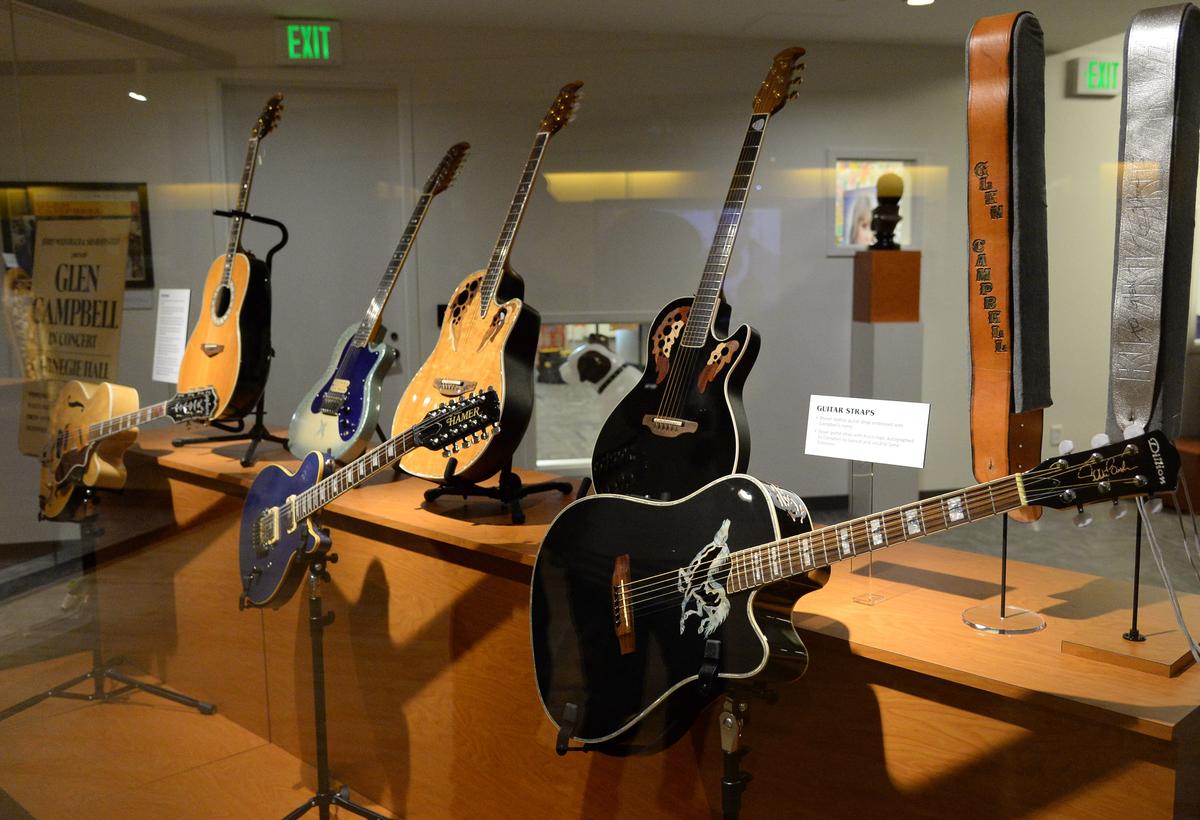
Glen Campbell's guitars, including his Hamer 12 String (bottom C), exhibited at the Country Music Hall of Fame and Museum in Nashville, Tenn. (Rick Diamond/Getty Images)
Glen Campbell's guitars, including his Hamer 12 String (bottom C), exhibited at the Country Music Hall of Fame and Museum in Nashville, Tenn. Rick Diamond/Getty Images

Early versions of the 12-string guitar debuted in the late 1800s. Even though it was seen as a novelty at first, singer-songwriters who needed help boosting their overall sound thought it was particularly useful.

“Because of their cheap price and extra volume, 12-string guitars were first used by street performers who wanted to work alone but had trouble being heard above the roar of the crowd,” shares Nashville-based string-manufacturing company Stringjoy.

The instrument’s bigger body certainly helped with sound projection, but solo performers were especially impressed with its stage presence, produced by six sets of strings.

The two highest-pitched string sets, the high E and B strings, are tuned in unison, making it sound like there are two guitars playing at once. But the four lower-pitched sets of strings, G, D, A, and low E, have a particularly distinct sound.
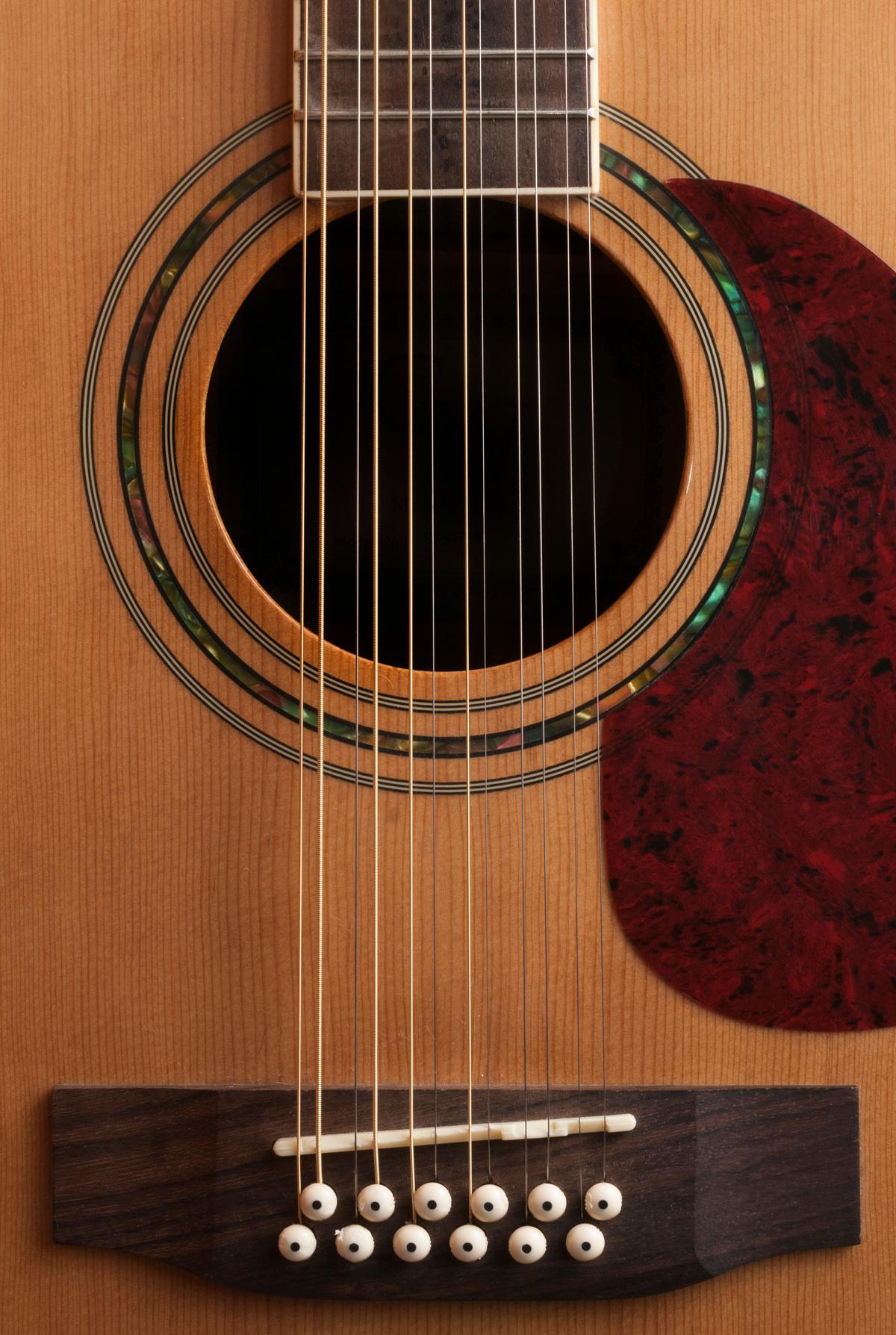
“The lowest 4 strings … all feature a second string an octave higher—this gives the 12-string its signature shimmering sound,” says musical accessories company D’Addario.
A detail of the body and strings of an acoustic 12-string guitar. (Cristian Storto/Shutterstock)
A detail of the body and strings of an acoustic 12-string guitar. Cristian Storto/Shutterstock

This “shimmering sound” is so full, listeners sometimes mistake it for a piano in recordings.

The shape of the neck also helps amplify its unique sound.

“The neck is typically wider than a standard guitar to accommodate plenty of room to each of the 6 string pairs. The result of this configuration is a wall of sound with each strum and a bright chorus effect when playing single-note melodies,” explains Eastwood Guitars.

More Muse Than Instrument

In 1974, singer-songwriter Gordon Lightfoot released his bestselling record “Sundown.” The album cover features Lightfoot sitting cross-legged, casually looking at the camera. Propped behind him is a Gibson B-45-12, his favorite acoustic 12-string guitar.
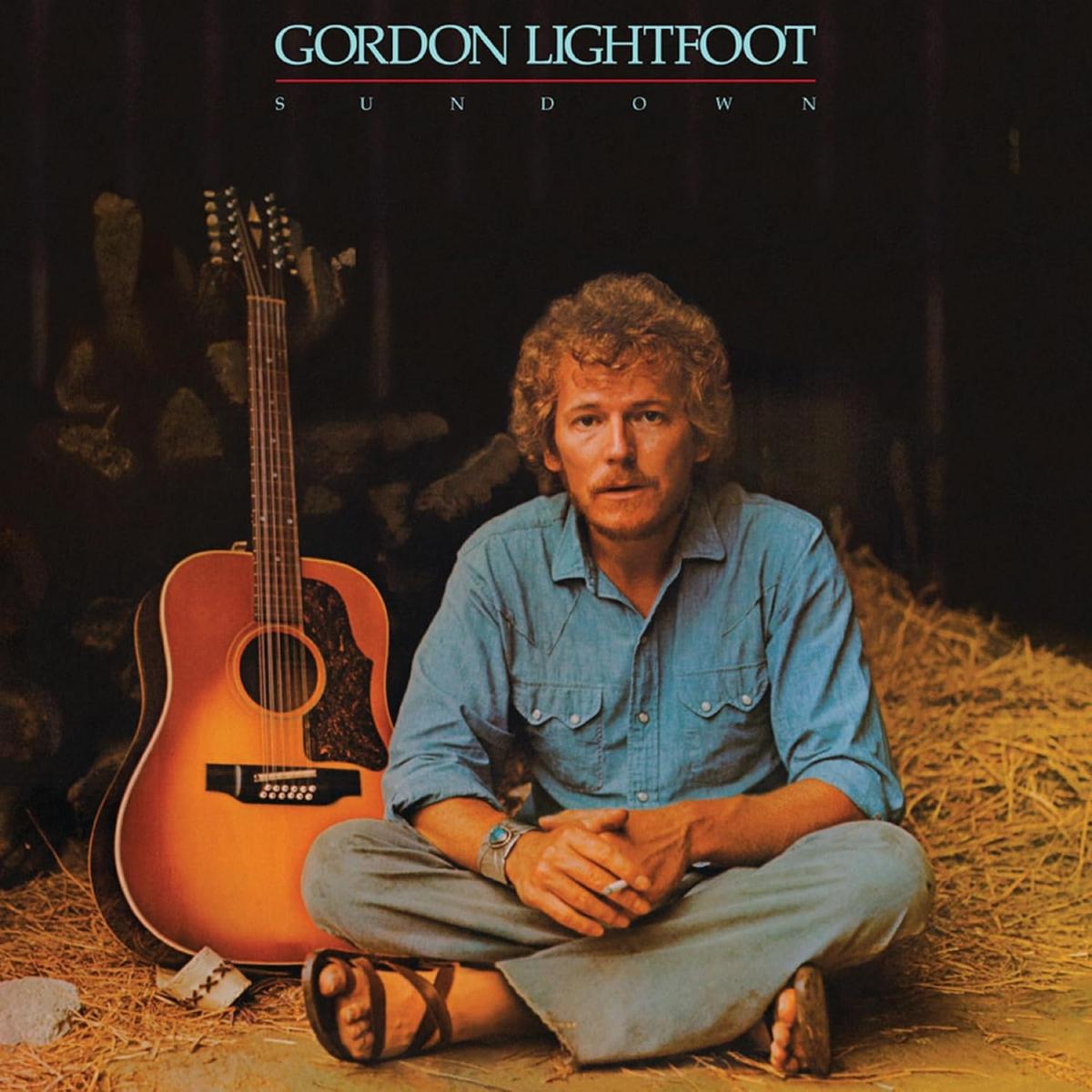
Cover of Gordon Lightfoot's 1974 album "Sundown," featuring his 12-string guitar. (Friday Music Two)
Cover of Gordon Lightfoot's 1974 album "Sundown," featuring his 12-string guitar. Friday Music Two

It can be heard on tracks throughout his catalog, including classic hits like “Sundown” and “The Wreck of the Edmund Fitzgerald.” For the singer, the 12-string was more muse than instrument.

“Gordon always returned to that 12-string,” Rick Haynes, Lightfoot’s longtime bassist, shared with Acoustic Guitar magazine.
Bandmate Barry Keane, the drummer of the group, added: “On commercial flights, Gordon always bought a first-class ticket—for the guitar.”

Affordability and Homespun Sound

Another popular songwriter in the 1970s, John Denver, recorded his famous hit, “Take Me Home, Country Roads,” with his 12-string guitar. When the song celebrating the natural beauty of West Virginia debuted on his 1971 “Poems, Prayers & Promises” record, a picture of him playing his Guild F-212XL 12-string was used as the album cover.
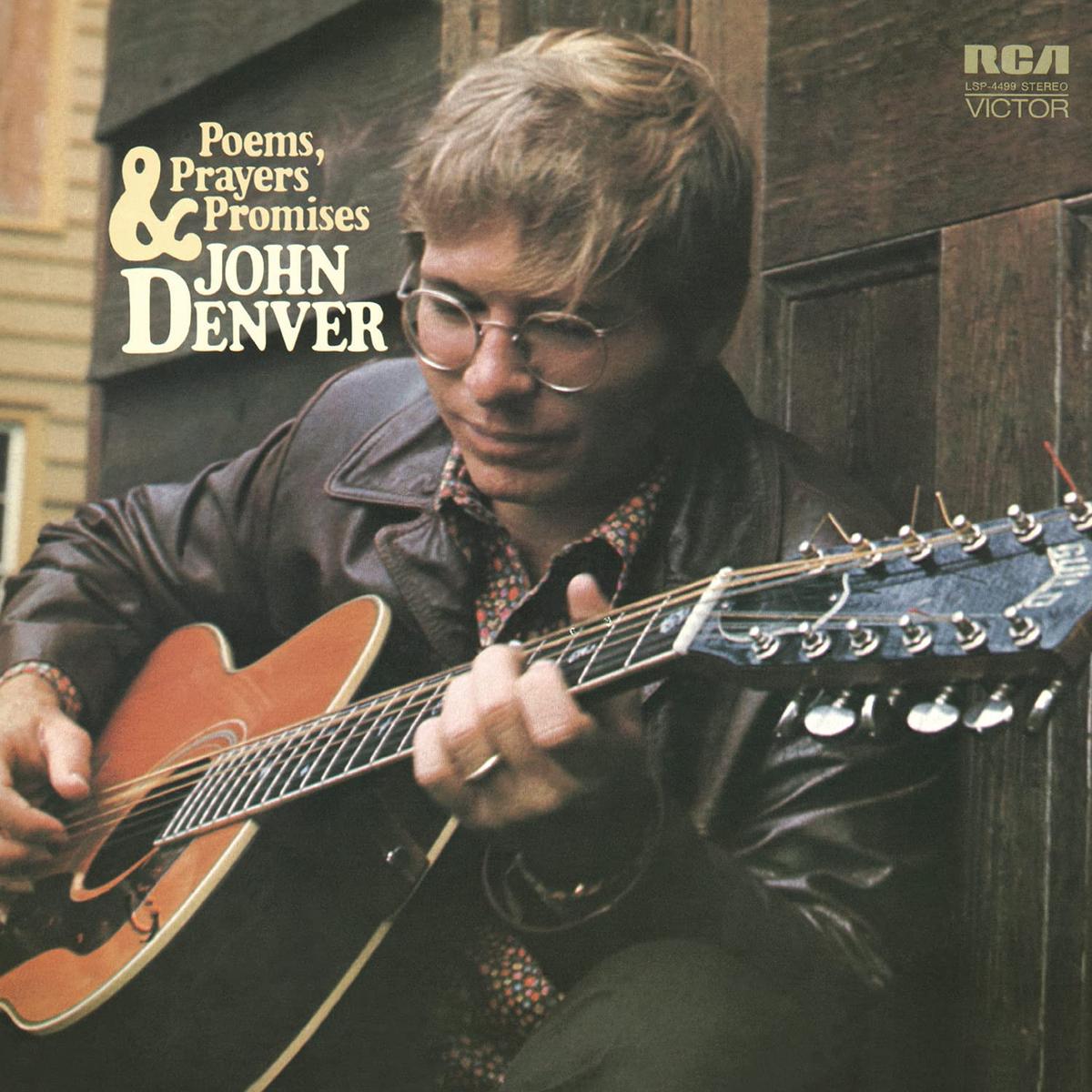
John Denver playing the 12-string guitar on the cover of his 1971 album "Poems, Prayers & Promises." (Legacy Recordings)
John Denver playing the 12-string guitar on the cover of his 1971 album "Poems, Prayers & Promises." Legacy Recordings

The imposing guitar was an appropriate choice in keeping with the song’s Appalachian theme. Not long after it became an instrument of choice for solo performers in the early 1900s, Appalachian folk and Southern blues players also embraced it because of its affordability and homespun sound.

The 12-string guitar has come a long way since its early days as a busker’s best friend on noisy street corners. Since its inception in the late 1800s, it’s been a part of some of the 20th century’s most memorable hits.

But Campbell’s acrobatic performance, playing Rossini’s “William Tell Overture” overtop his head with his 12-string at blazing speed, remains the most memorable moment of all.

What arts and culture topics would you like us to cover? Please email ideas or feedback to [email protected]
Google LogoMark Us Preferred on Google
Rebecca Day
Rebecca Day
Author
Rebecca Day is a freelance writer and independent musician. For more information on her music and writing, visit her Substack, Classically Cultured, at ClassicallyCultured.substack.com