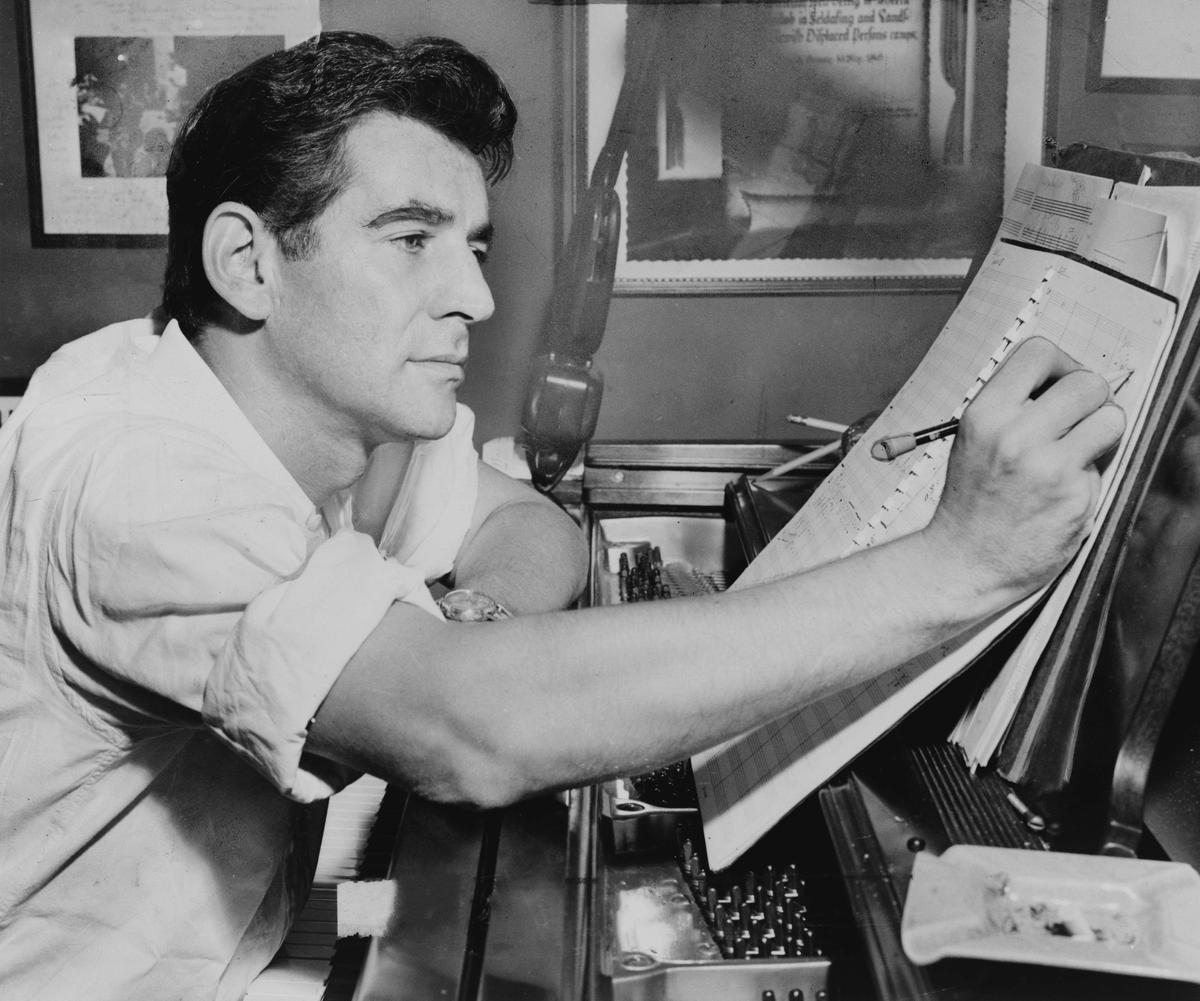
Leonard Bernstein, the great American music man, once remarked “I’ve been all over the world and I’ve never seen a statue of a critic.” Of course, statues of critics exist, but only of those who critiqued music as a secondary calling. Robert Schumann, Hugo Wolf, Johann Wolfgang von Goethe and Thomas Mann are among the most notable, but were primarily creators. It is arguable that only those who have composed, written, or performed themselves are qualified, or entitled, to pass judgement on their fellows.
No monuments were raised to the wealthy intellectual Eduard Hanslick, who neither composed nor performed. However, he was one of the most powerful critics in 19th-century Vienna and said terrible things about Bruckner, Tchaikovsky, Liszt, and Wagner. No questions were asked about his license to assess or dismiss these geniuses.
He, and his contemporaries often praised composers entirely unknown to us at present. The reader has probably never heard of Raff or Reinecke, Kreutzer or Koechlin, Franz, Fuchs, or Fioravanti, all celebrities in their own time, but forgotten today, silenced and buried in the past.
Criticism emerged as a powerful social influence in the 19th century, when the publication of scholarly journals and daily newspapers proliferated. This influence has gradually diminished in our time, due, in part, to the wildly contradictory views of “experts,” casting shadows on their own credibility, but it is still probable that a thumbs-up or thumbs-down from the New York Times can make or break a career.
With relative immunity, critics assume the role of prosecutor, judge, and jury. They launch cruel indictments, reach questionable verdicts, passing sentences based on laws they themselves have made. Philip Hale, a critic for the Boston Herald, wrote “Oh, the pages of stupid and hopelessly vulgar music! The unspeakable cheapness of the chief tune!” Time had other things to say about those “vulgar” pages and that “cheap” tune. Beethoven’s Ninth Symphony has become a rock of Gibraltar for millions, its “Ode to Joy” firm ground to stand on, its message of brotherhood viscerally felt rather than simply acknowledged as an abstract ideal.
The playwright George Bernard Shaw, known for his sharp tongue, used it in full force as a music critic. ‘‘A solid piece of musical manufacture’‘ he wrote, ’‘execrably and ponderously dull,’‘ and ’'a most abominable work.” Thus, he described the sublime “German Requiem” by Johannes Brahms, which stands eternal, a source of comfort and inspiration second only to Handel’s “Messiah.”
It is most astonishing that a work said to be “as difficult for popular apprehension as the name of the composer,” a work said to be “like a first pancake, a flop,” is perhaps the most honored, the most familiar of all compositions in the classical canon. The difficult name was Tchaikovsky, and the “pancake” was his magnificent first piano concerto in B flat minor. Henry Taylor Parker of the Boston Evening Transcript, who had trouble with the composer’s name, and Nicolai Soloviev (whose piano concertos 1, 2, and 3 are unknown) were proven quite wrong.
Among other misapprehensions, Bach’s B Minor Mass did not win him a position in the court of Friedrich August II at Saxony; the Emperor Franz Josef II told Mozart his operas had too many notes; and the Paris Gazette thought that Verdi’s “Rigoletto” lacked melody.