On an ordinary yet oddly warm winter’s day, Rafał Proszows and Mariusz Lampa set out with their metal detectors into the Polish woodland near their homes, hoping to start a new adventure. One thing was certain: the two friends were there because of a shared love of World War II history, though neither expected to find much.
Their fortunes turned, however, with the unexpected discovery of a 2,000-year-old broken blade—the remains of a Roman sword—which experts say might be tied rituals of an ancient barbarian culture.
Their plans were initially just to scan a forested area near their homes in Złoty Potok, a picturesque Polish village southeast of Częstochowa. The pair figured they might find a few war trinkets and nothing more. These woods are where Polish troops first clashed with the Germans after Poland was invaded in 1939, but they also carry historical lore that goes back many centuries earlier.
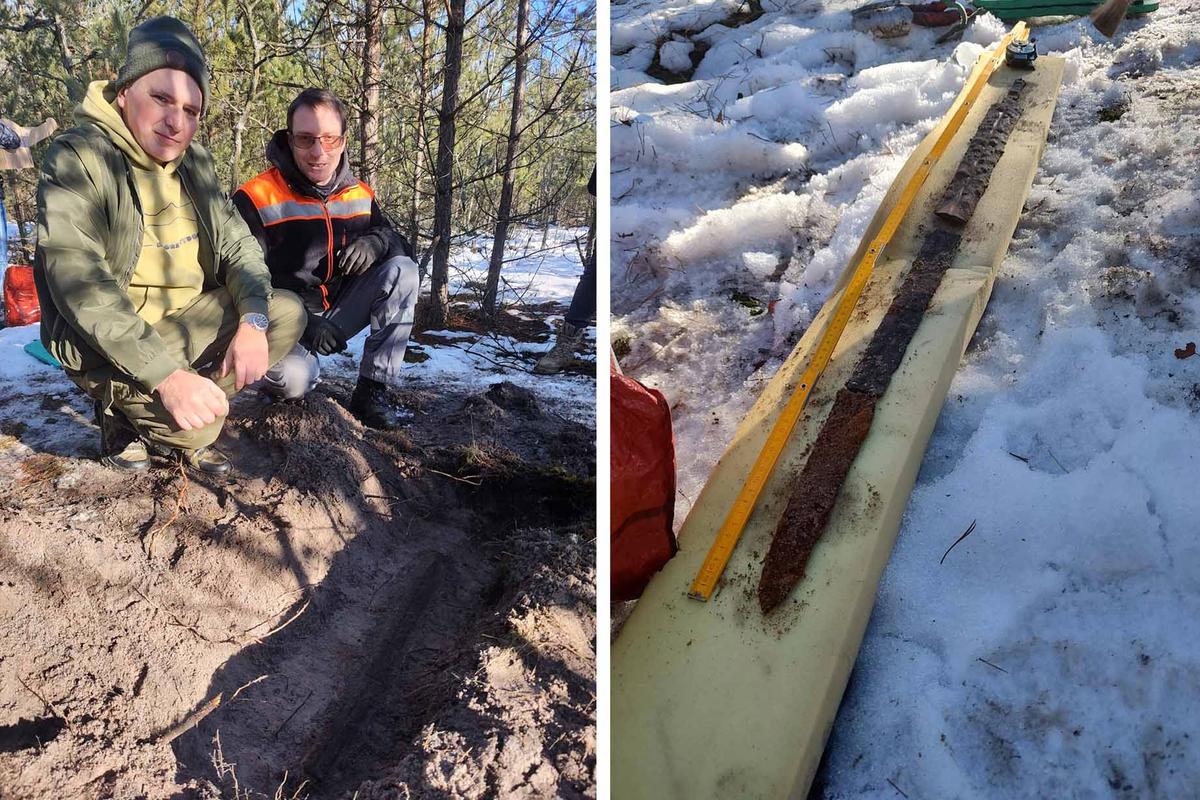
“There’s something mysterious about that place,” Proszows, 52, told The Epoch Times, speaking of the spot where they discovered the sword last January. “It’s surrounded by tales of bandits, buried treasure, and ancient settlements.”
The day was sunny and dry, perfect weather for metal detecting. Both men belong to the local Stowarzyszenie Inventum, a Polish association of metal detectorists who collaborate with museums to discover and conserve archeological objects.
“That day was supposed to be just a reconnaissance trip—none of us expected anything extraordinary,” said Lampa, 43. “When my metal detector gave off that strong, steady signal, my heart immediately started racing.”
Proszows heard Lampa holler about his discovery and instantly the tone of their scouting mission changed. Proszows says a rush of adrenaline washed over him as they dug into the earth and found the object half buried.
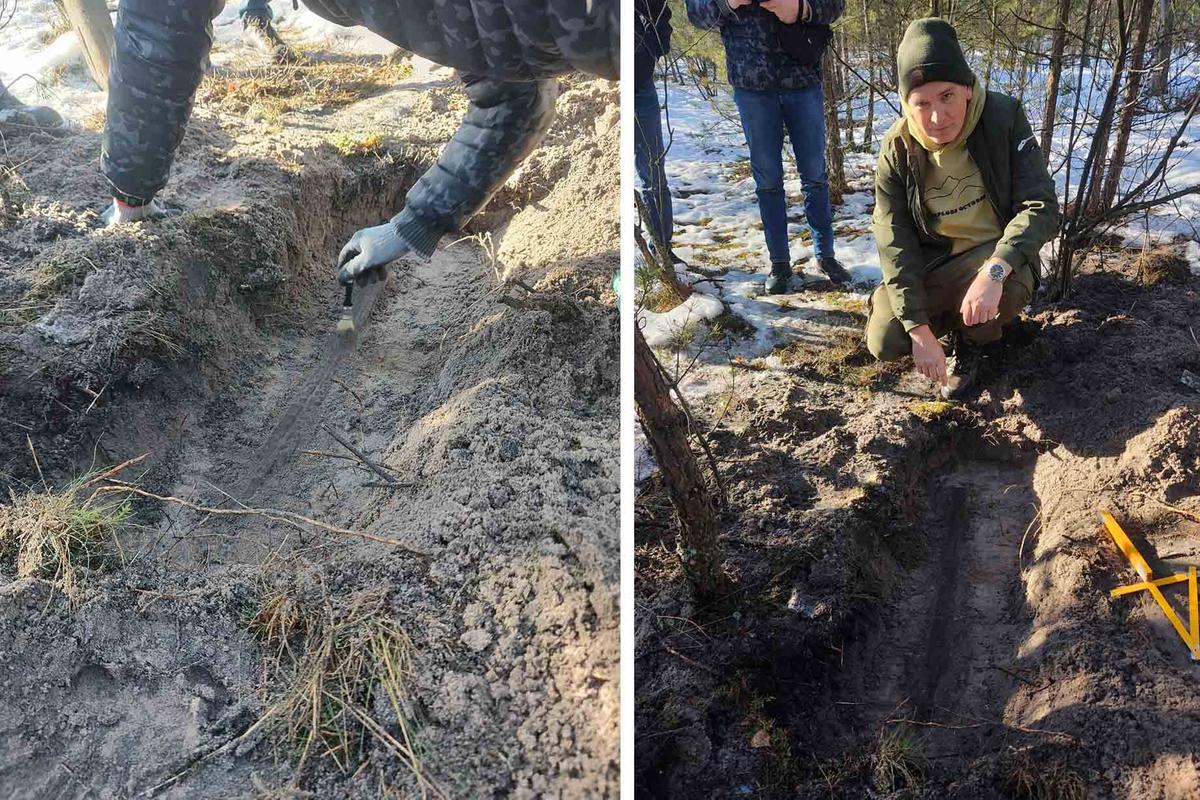
“When I saw the fragment of the blade a wave of humility and responsibility followed,” Proszows said. “It felt as if we had made contact with someone from the distant past, a person who might have lived 2,000 years ago.”
From the ground, they produced two broken pieces of what is now said to be a Roman spatha, a short, straight blade that was used by Roman cavalry. It’s believed this one likely belonged to a Vandal. The Vandals were Germanic barbarians who occupied Poland in Roman times.
As members of Inventum, both detectorists understood that finds this significant have to be handled in an orderly fashion. They stopped digging after finding the two pieces and then secured the site before contacting the Provincial Heritage Conservator, as the law requires, as well as the local district and Częstochowa Museum.
Experts from the museum joined the two friends at the scene and helped extract a third piece of the sword.
“Once we cleaned the surface at the site and measured the pieces, the total length came to 98 centimeters,” Lampa said. “The estimated weight is around 1.1 to 1.6 kilograms (2.4 to 3.5 pounds)—consistent with the relatively light design of spathae, which were meant for cavalry use.”
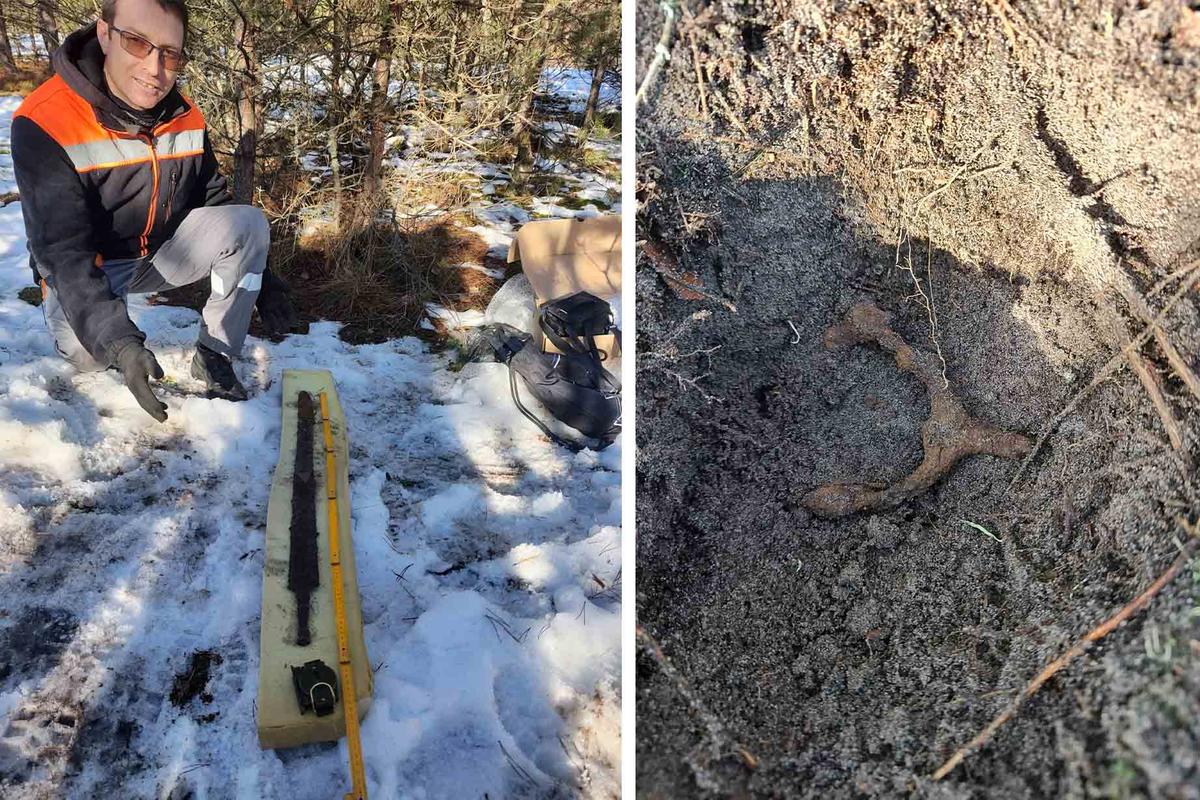
They noted corrosion even on the broken interior surfaces of the blade, leading researches to think the sword had been intentionally snapped into pieces centuries ago. They noted hardened patches and a heat-induced glaze, indicating it had been bathed in fire, possibly as part of a cremation or ritual.
“The sword was found in three fragments with traces of fire and in an area consistent with a burial or encampment site,” Lampa said.
Expert archeological readings tell them this might have been a warrior’s burial offering.
“The sword may have been used by warriors of the Vandal tribe and was broken as part of a burial ceremony,” Proszows said, though he adds that final conclusions will come only after X-ray and CT scanning. The blade is believed to be roughly 2,000 years old.
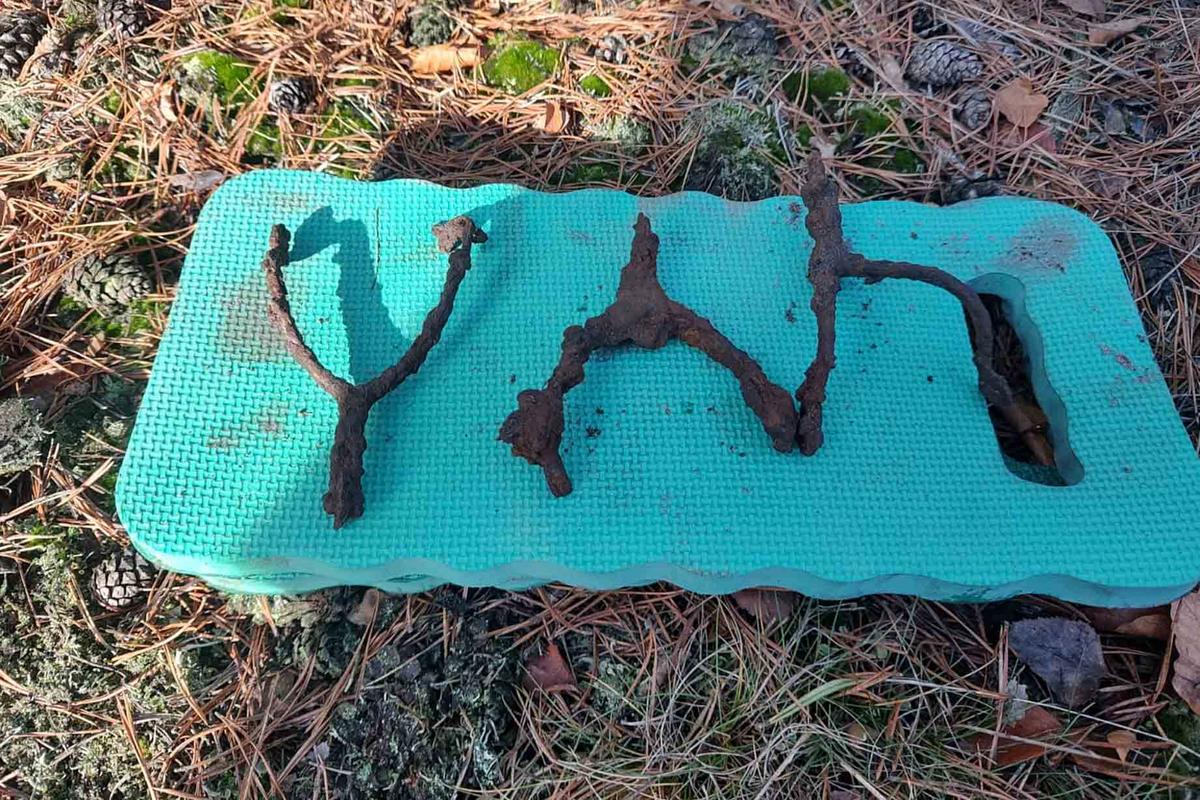
The sword wasn’t the only artifact they found that day, though it was the most outstanding. Proszows and Lampa also unearthed several medieval spurs and an axe from the same period.
While many metal detectorists scour for World War II relics in Poland and beyond, and then get to keep their battlefield finds, such as helmets and bullet casings, Proszows and Lampa say they won’t be keeping the Roman sword and associated artifacts. They wouldn’t have it any other way.
Proszowski says he’s “definitely satisfied” the sword ended up in a museum. Their find will be thoroughly appreciated and enjoyed by many.
“This guarantees that it will be properly preserved, professionally conserved, and that its history will be documented and shared with the public,” he said. “Of course, every enthusiast would love to have such an artifact close to them, but knowing that the sword is in the hands of specialists and that it can ’speak' to people and researchers gives me enormous satisfaction.”
The world will share in what has been an “incredible personal experience” for the two detectorists.
“Holding fragments of the sword, I felt a connection with an ancient warrior,” said Lampa, “with history that seemed thousands of years distant but suddenly became tangible.”