“In the presence of this sort of success, we perceive its immense value. It is capable of a rare transparency—it can illustrate human affairs in cases so delicate and complicated that any other vehicle would be clumsy.”
Flight for Freedom
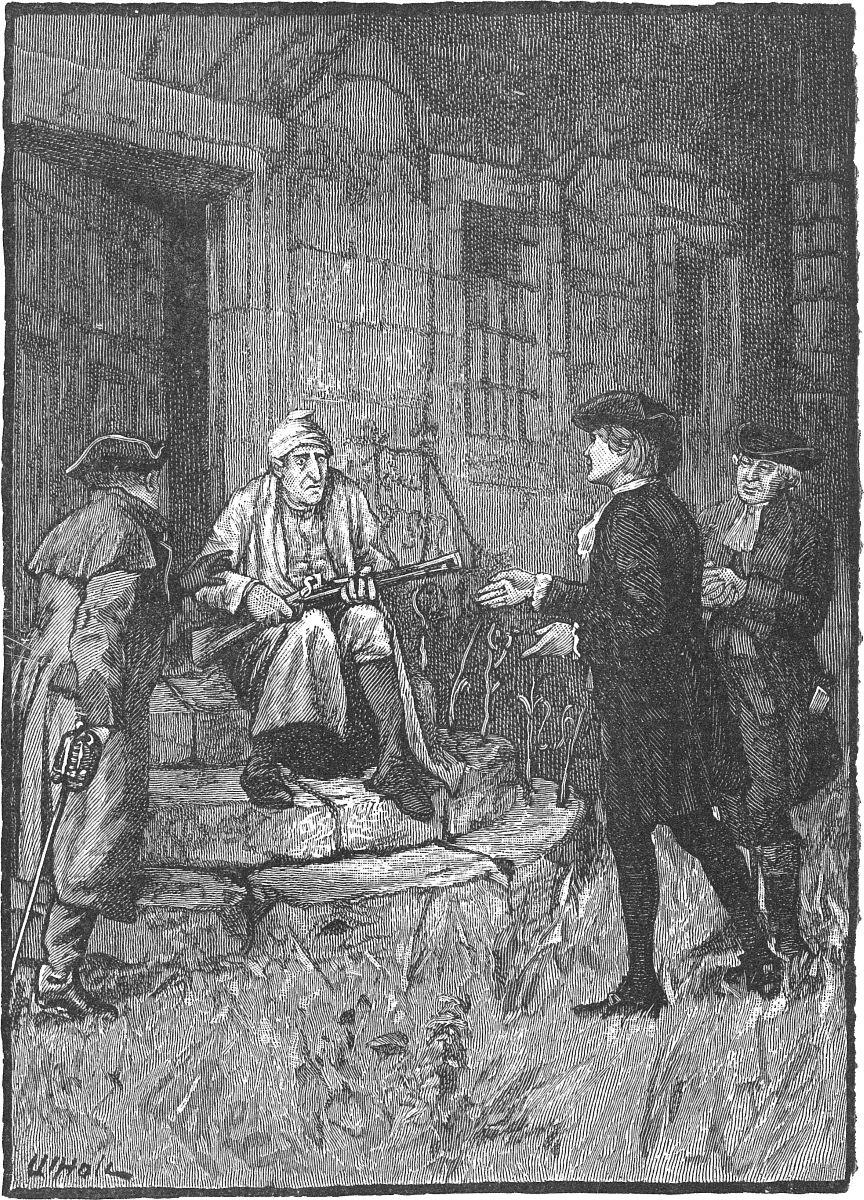
While I think James is correct that “Kidnapped” possesses substantial literary value, best appreciated by adults, it also contains lots of excitement that appeals to younger readers. Set in 1751, the novel tells the story of 17-year-old David Balfour, an orphan who sets off to claim his inheritance at a distant estate. The occupant of the estate—his miserly uncle, Ebenezer—betrays the boy into the hands of kidnappers who take him aboard their ship, the Covenant, planning to sell him as a slave in the New World.
A Manly Crew
The theme of male bonding appears early in the novel. In a somewhat corrupt form, it emerges through Stevenson’s description of the ship’s crew on board the Covenant (a name that bears significance given the novel’s emphasis on loyalty and friendship). These are hard, rough men, living in an entirely enclosed, highly masculine world. Stevenson paints a nuanced portrait of them:“They were a rough lot indeed, as sailors mostly are: being men rooted out of all the kindly parts of life, and condemned to toss together on the rough seas, with masters no less cruel ... as the saying goes, were ‘at a word and a blow’ with their best friends. Yet ... no class of man is altogether bad, but each has its own faults and virtues; and these shipmates of mine were no exception to the rule. Rough they were, sure enough; and bad, I suppose; but they had many virtues. They were kind when it occurred to them, simple even beyond the simplicity of a country lad like me, and had some glimmerings of honesty.”

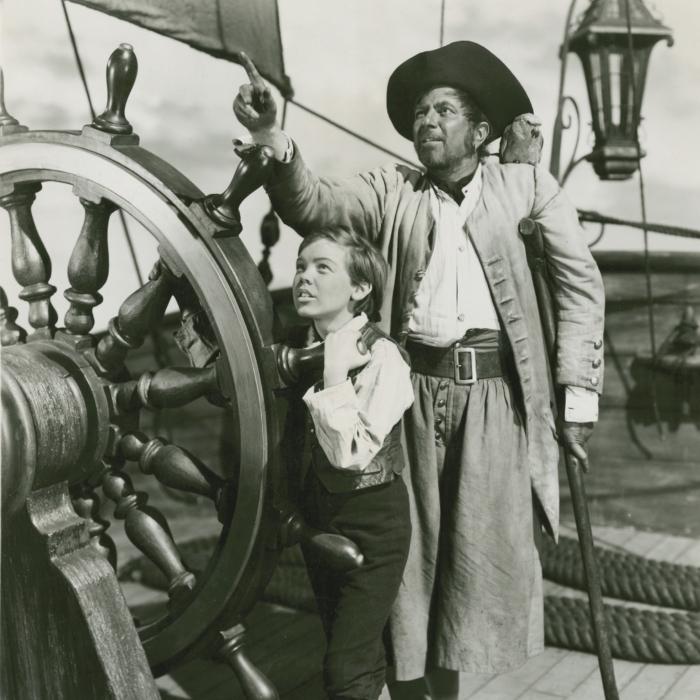
Stevenson goes on to describe, in a heartbreaking passage, how one of the sailors would “never again make the fire for [his wife] in the morning, nor yet keep the bairn when she was sick” due to the coming shipwreck in which he would die. Stevenson’s sketch is nuanced, sensitive—compassionate, even.
Yet he doesn’t hide the men’s evil, either. The captain and his officers are all drunkards, whose bond to one another exists on the plane of money, cards, and profit—not on the level of a higher, truer friendship. Yet even when describing their worst moments, Stevenson keeps their humanity before our eyes. When the first mate kills the cabin boy in a drunken fury, his shock in the aftermath has a strangely childlike quality:
“[The captain] walked up to his chief officer, took him by the shoulder, led him across to his bunk, and bade him lie down and go to sleep, as you might speak to a bad child. The murderer cried a little, but he took off his sea boot and obeyed.”
These men are stunted men, and their relationships to one anther are similarly stunted. They’re, in a sense, half-grown, neither children nor adults, malformed, lost souls, like boys walking about with men’s bodies and men’s sins.
Comrades in Arms
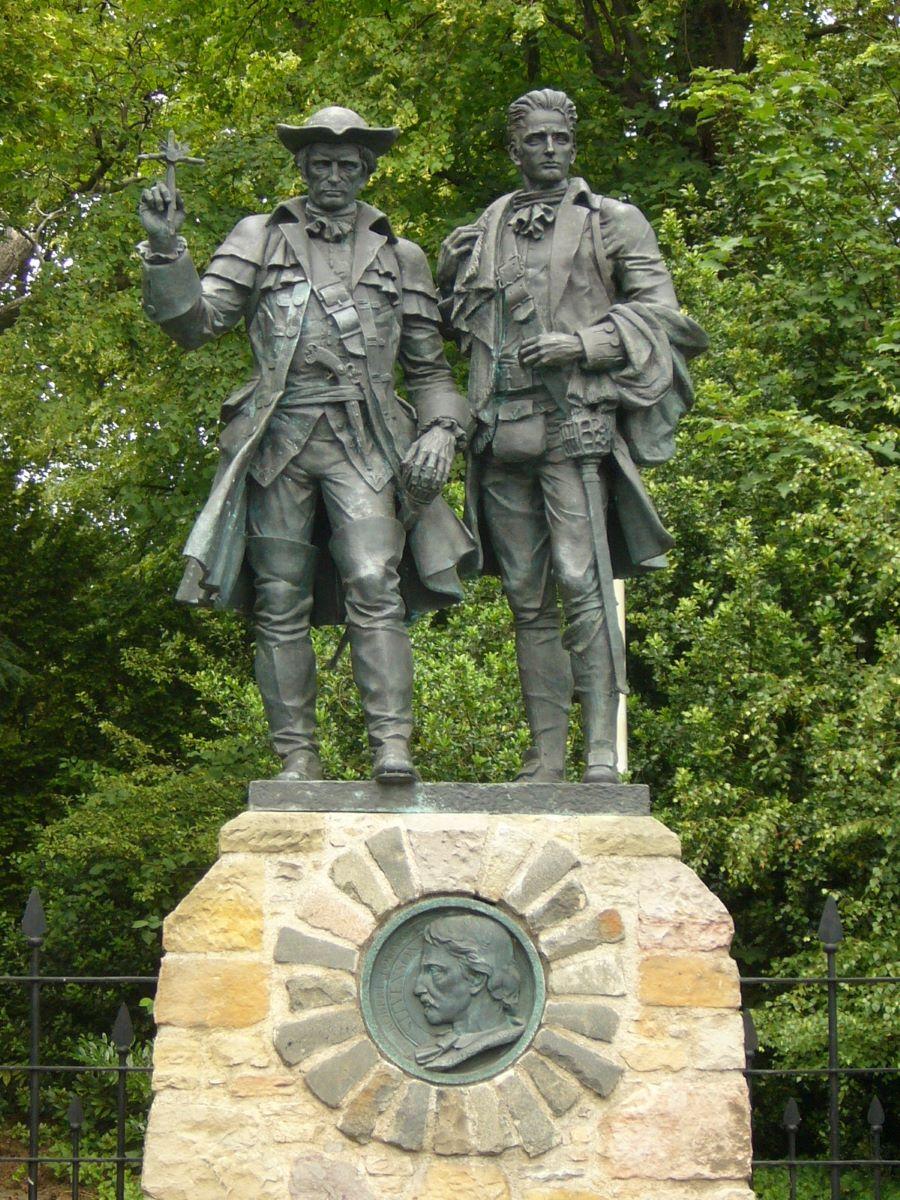
This bond is hardened and cemented when they help save each other’s lives in a desperate battle against the kidnappers. Here, Stevenson explores a key aspect of male relationships: They’re often formed through shared hardship. We might say they’re at their healthiest when two men have stood—literally or figuratively—back-to-back in the face of evil, danger, and darkness, without abandoning one another. That is the “covenant” of male bonds.
James described the character of Alan Breck as “a masterpiece.” He is, definitely, an unforgettable character—with his strange combination of swagger and sensitivity, egoism and altruism. He often bristles at the slightest provocations from David, but at the same time he’s willing to die for him if need be. He’s marked by intolerable vanity, yet, at the same time, he isn’t stingy in praising others. He thinks very highly of himself, though he thinks even more highly of his Jacobite cause to which he’s passionately devoted.
Balfour, on the other hand, is more pragmatic, common sensical. He’s far less fantastical, less likely to be carried away by the flights of fancy that dominate Breck. He has little taste for the forlorn romanticism of the doomed Jacobite cause, although, in spite of himself, he can’t help but admire Breck’s strange sense of chivalric commitment to it.
The men endure together many hardships: hunger, cold, heat, sickness, exhaustion. They differ profoundly in political allegiance, though something stronger than mere politics holds them together. Yet as Balfour and Breck flee together through the rocks and heather of the barren moors, trying to stay one step ahead of the British redcoats, Balfour’s practical side begins to complain more and more. He knows that the British are looking primarily for Breck, who is suspected of the murder, and that Balfour incriminates himself further by keeping company with the fugitive. His loyalty to Breck falters—even though Balfour is himself ashamed by these thoughts of abandoning his friend.
But when Breck violates their mutual trust by using Balfour’s money while at cards, Balfour has had enough. Breck apologizes, but Balfour refuses to forgive him. Like a sullen child, he will hardly speak to his companion, and he grows more and more insulting of Breck’s Jacobite allegiances. At last, dazed with fatigue and anger, he challenges Breck to a duel. The perplexed Alan draws, pauses, then throws away his sword. “I cannae draw upon ye, David,” he says.
For Breck, the covenant of their friendship—their shared hardships and reprieves, dangers and triumphs—is too strong. He will not fight against the man who fought at his side. Balfour recognizes that Breck has made the better choice then he himself has, the more loyal, more mature choice. Balfour neither fights nor abandons his friend.
Stevenson narrates,
“At this the last of my anger oozed all out of me; and I found myself only sick, and sorry, and blank, and wondering at myself. I would have given the world to take back what I had said; but a word once spoken, who can recapture it? I minded me of all Alan’s kindness and courage in the past, how he had helped and cheered and borne with me in our evil days.”
Balfour realizes his mistake and asks forgiveness of Breck, who, in turn, is full of compassion for his young friend. Though pushed to the breaking point, the unspoken covenant proves stronger than weariness, anger, and differing political views.
James described the quarrel scene as “genius,” with “the very logic and rhythm of life” to it. Stevenson captures in the scene the tragic reality of how we sometimes—almost against our own will—say the worst things to the people we love most. But he also shows that the strongest bonds, based on granite-hard loyalty and mutual respect, can endure even such catastrophic moments as these.