This copy is for your personal, non-commercial use only. Distribution and use of this material are governed by our Subscriber Agreement and by copyright law. For non-personal use or to order multiple copies, please contact The Epoch Times Reprints.
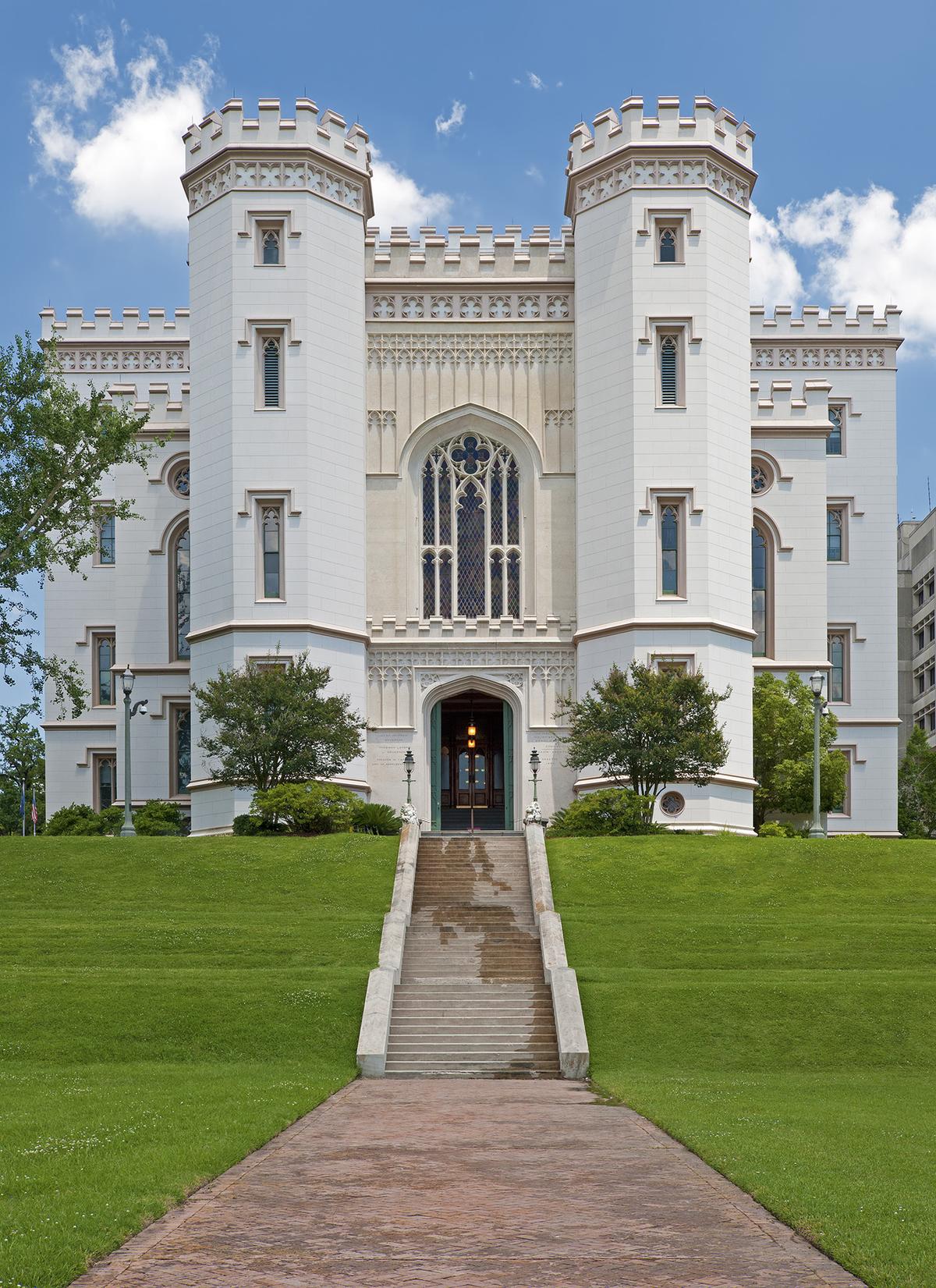
Originally three stories, with a fourth story later added over the central stairwell, Louisiana’s Old State Capitol building appears to be made of marble. However, the architect planned for the exterior to have an off-white stucco over brick so that the appearance is of an old stone-block constructed castle. Recognizable medieval architectural elements are in the crenellated, or battlement, roofline. Steve Heap/Shutterstock
Louisiana’s Old State Capitol is situated majestically on a bluff overlooking the wide Mississippi River in Baton Rouge. Instead of a capitol building presenting classical architectural elements, as was the popular style for most 19th-century state and federal buildings, this structure became a castellated (presenting battlements) Gothic-style fortress—unlike anything the South or Louisiana had ever seen.
Designed in 1847 by American architect James Harrison Dakin (1806–1852) and completed in 1852, the building includes many elements that characterize Europe’s ancient castles, including towers with crenels and merlons (openings) in the pinnacle battlements as well as slit-style windows. The structure’s design is also decidedly Gothic in style, especially evident in the quatrefoil and pointed arch windows.
“In making this design, I have endeavored ... to adopt such a taste and style of architecture as would at once give the edifice a decided distinctive, classic, and commanding character,” Dakin wrote in his journal notes when designing the capitol building.
Now housing the Museum of Political History, the Old State Capitol building is a hop, skip, and a jump from the current, in-use capitol. Built in 1932, the current Louisiana State Capitol is the antithesis of its feudal-looking predecessor in that its architecture is more akin to a modern skyscraper. It resembles New York City’s Empire State Building.
A pointed arch entryway, windows topped with hooded moldings, and a massive stained-glass, arched window with central quatrefoil design greet visitors to Louisiana’s Old State Capitol. Quatrefoil designs are framed just below the roofline battlements as well. Jim Vallee/Shutterstock
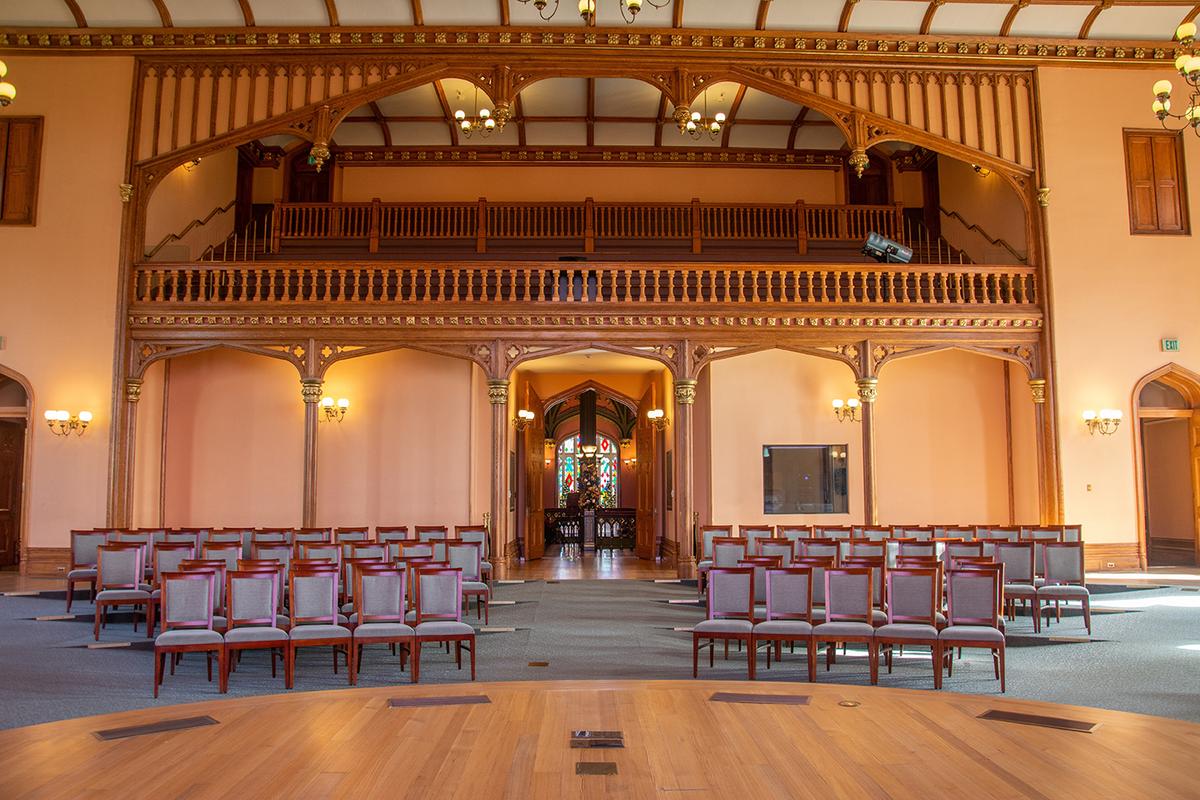
Cypress wood—Louisiana's state wood—was used throughout the interior of Louisiana's Old State Capitol and painted with a feather painting technique to resemble oak. In the House Chamber, the finishing technique was used throughout the room’s extravagant viewing balcony, from which the public could observe legislative proceedings. Nina Alizada/Shutterstock
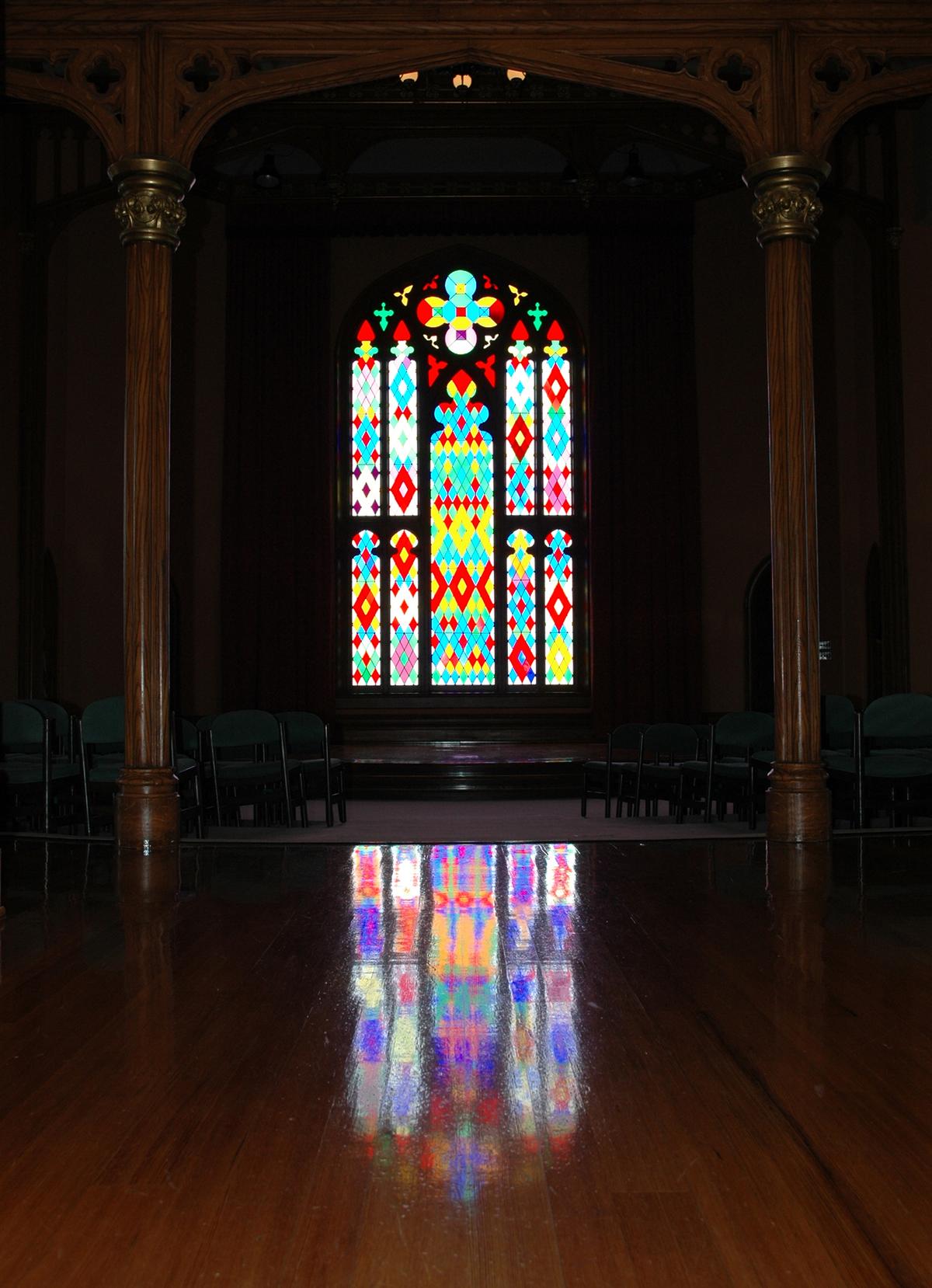
A kaleidoscope of color fills Louisiana’s Old State Capitol when light floods through the many stained-glass windows. Roberto Michel/Shutterstock
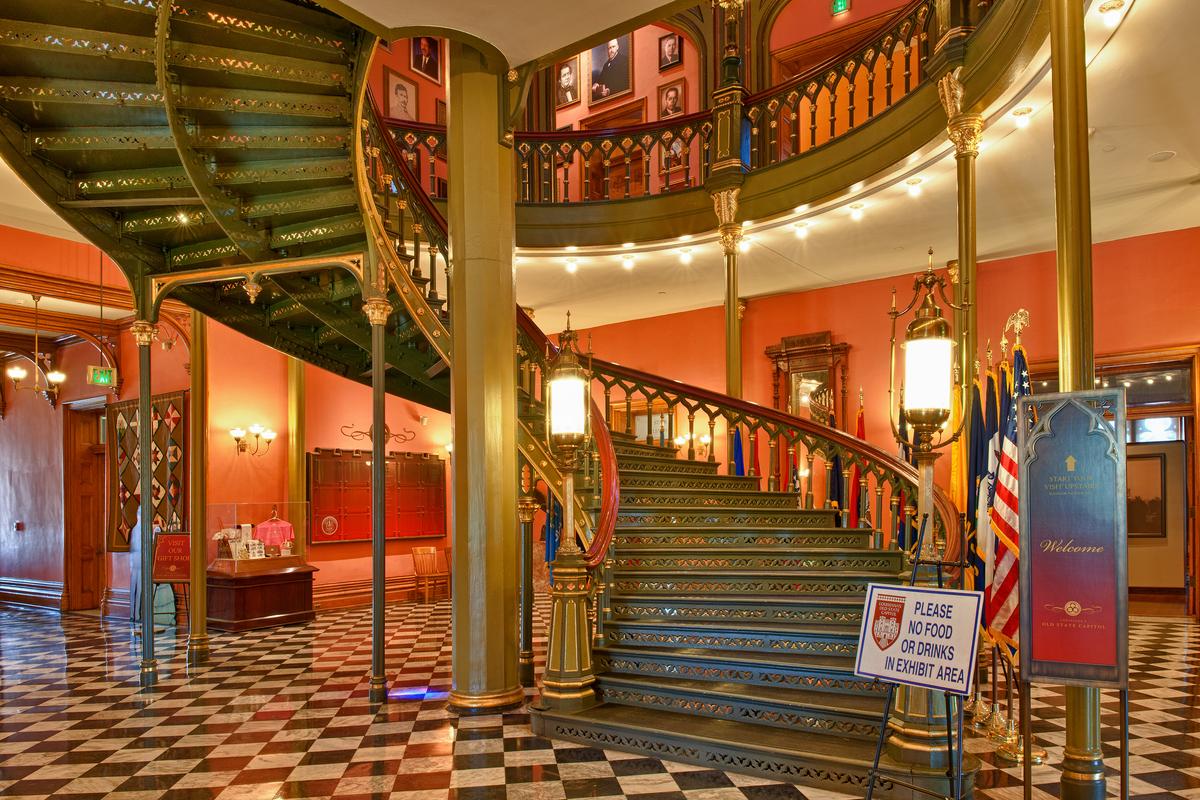
Constructed from cast iron, the elaborate floating spiral staircase greets anyone entering Louisiana’s Old State Capitol. Decorative repeating cutout designs define the stair treads, while the balusters are shaped like Gothic window frames. Rosettes adorn the tread, and brass lanterns top the tower-like newel posts. Cast-iron columns painted with gold leaf surround the staircase. Coordinating with the cast iron is the black-and-white tessellated, or repeating pattern, marble floor. Jim Vallee/Shutterstock
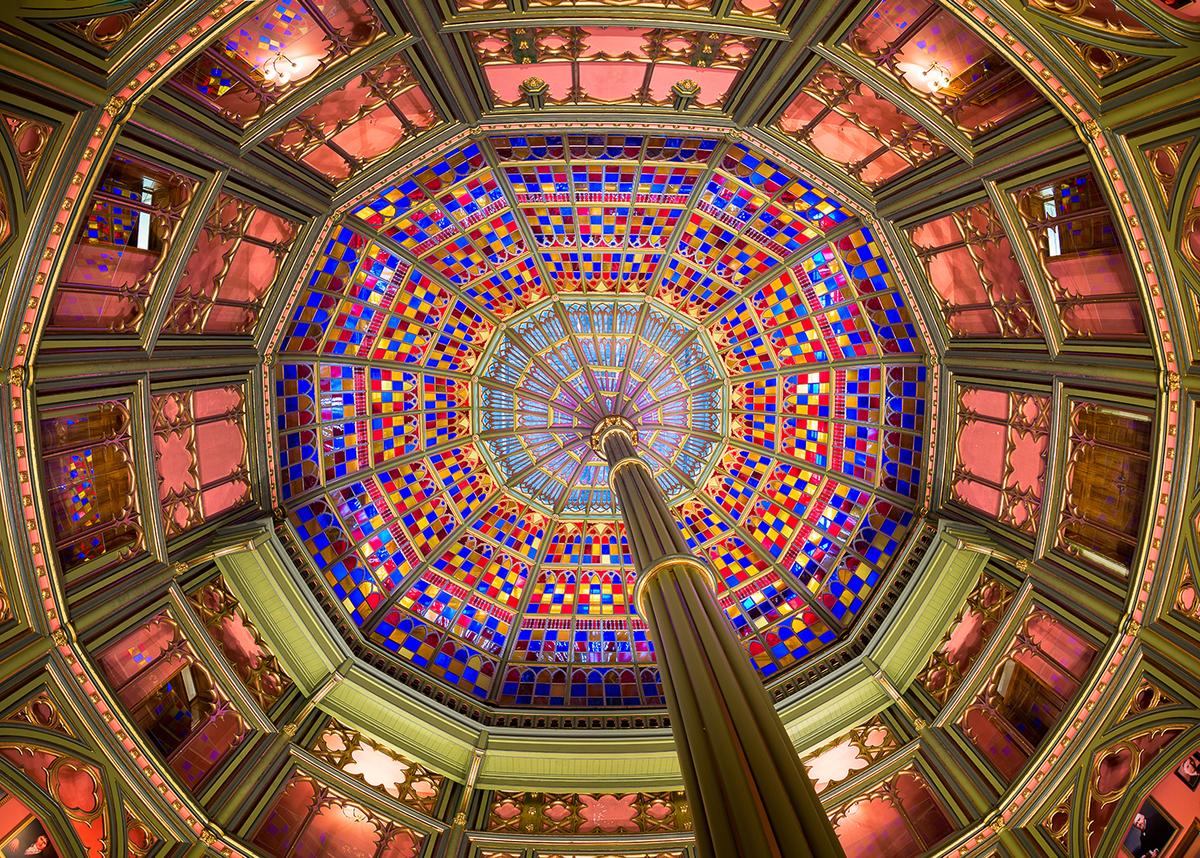
In the late 1800s, architect and engineer William A. Freret (1833–1911) added the Old State Capitol's fourth floor, spiral staircase, and rotunda, which had a dramatic fan vault dome featuring harlequin-patterned colored glass. The dodecagonal, or 12-sided, construction includes both cypress wood and cast iron. Nagel Photography/Shutterstock
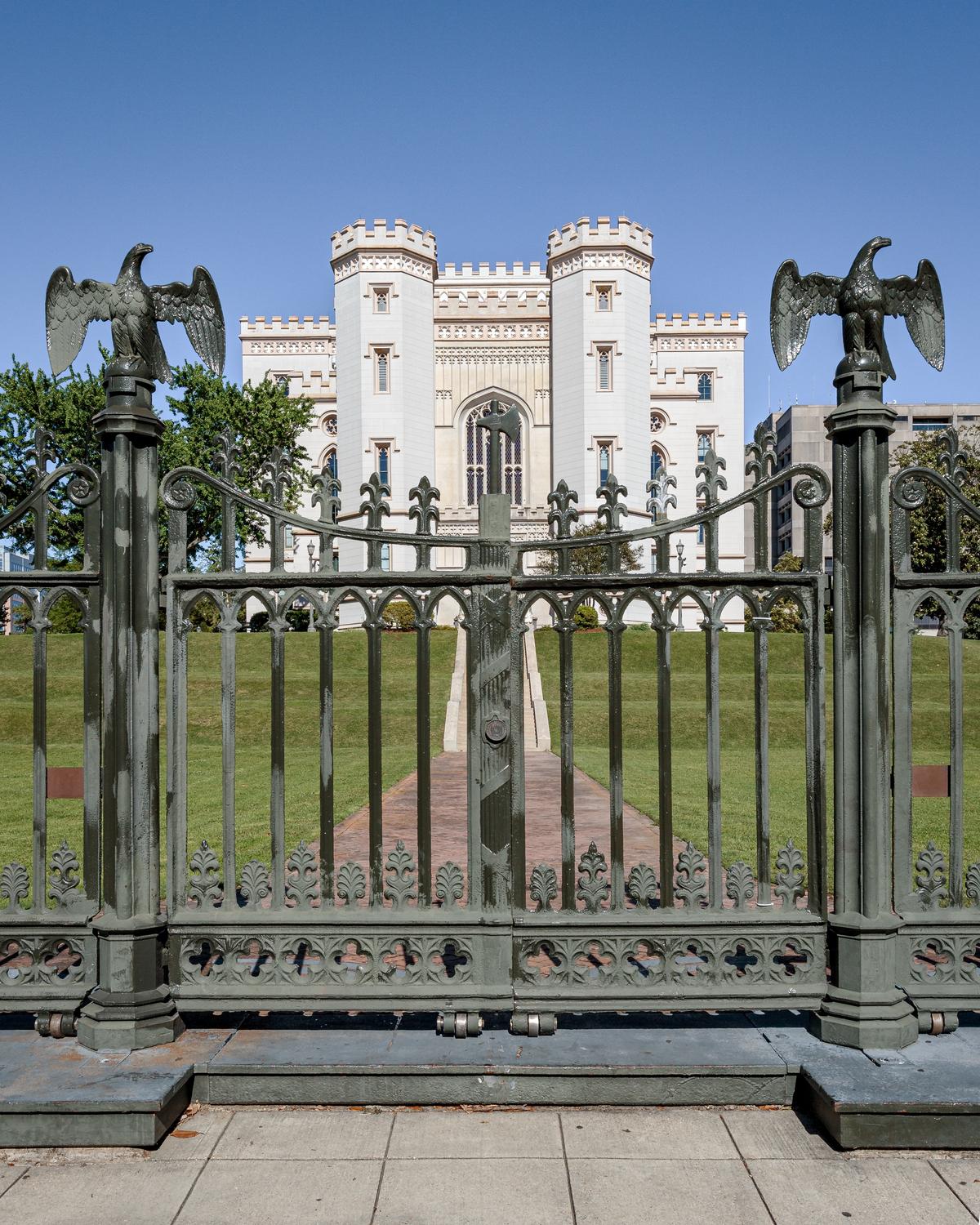
Surrounding the capitol is a 6-foot-tall iron fence with three gates at the west, north, and east entrances. The gates are adorned with post finials in the form of eagles. The fence also sports quatrefoil designs along with the recognizable fleur-de-lis, which originated in France as a stylized lily. Because of the state’s French heritage, the fleur-de-lis became the official symbol of Louisiana. George Howard Jr/Shutterstock
What arts and culture topics would you like us to cover? Please email ideas or feedback to [email protected]
A 30-plus-year writer-journalist, Deena C. Bouknight works from her Western North Carolina mountain cottage and has contributed articles on food culture, travel, people, and more to local, regional, national, and international publications. She has written three novels, including the only historical fiction about the East Coast’s worst earthquake. Her website is DeenaBouknightWriting.com