At first glance, the barren landscape of much of southeastern Nevada appears, well, barren. But spending some time discovering the area’s fascinating sites and obscure historical details provides travelers with a richer experience.
Lincoln County, Nevada covers an area of almost 11,000 square miles, yet inhabitants number only around 4,500 due to the desert environment and limited revenue sources. Once, however, pioneers and miners flocked to parts of this county. They left behind some interesting relics.
According to the Lincoln County Authority of Tourism, groups of industrious pioneering families and optimistic prospectors first flowed into the area in the mid-1800s. Settlers who worked hard to raise crops and livestock ended up not only feeding themselves but also the miners who established silver, gold, lead, zinc, and copper ore claims in the region.
Evidence of 19th-Century Life
Dawn Andone, M.Ed., is the Eastern Region Park Interpreter for the Nevada Division of State Parks. She’s been based at Cathedral Gorge State Park in Lincoln County for 16 years. In an interview with The Epoch Times, she explained one reason that many settlers only lasted a few decades in the area was partly because of a severe blizzard in the 1870s that killed livestock and depleted provisions. “It was a fight to survive,” she said.
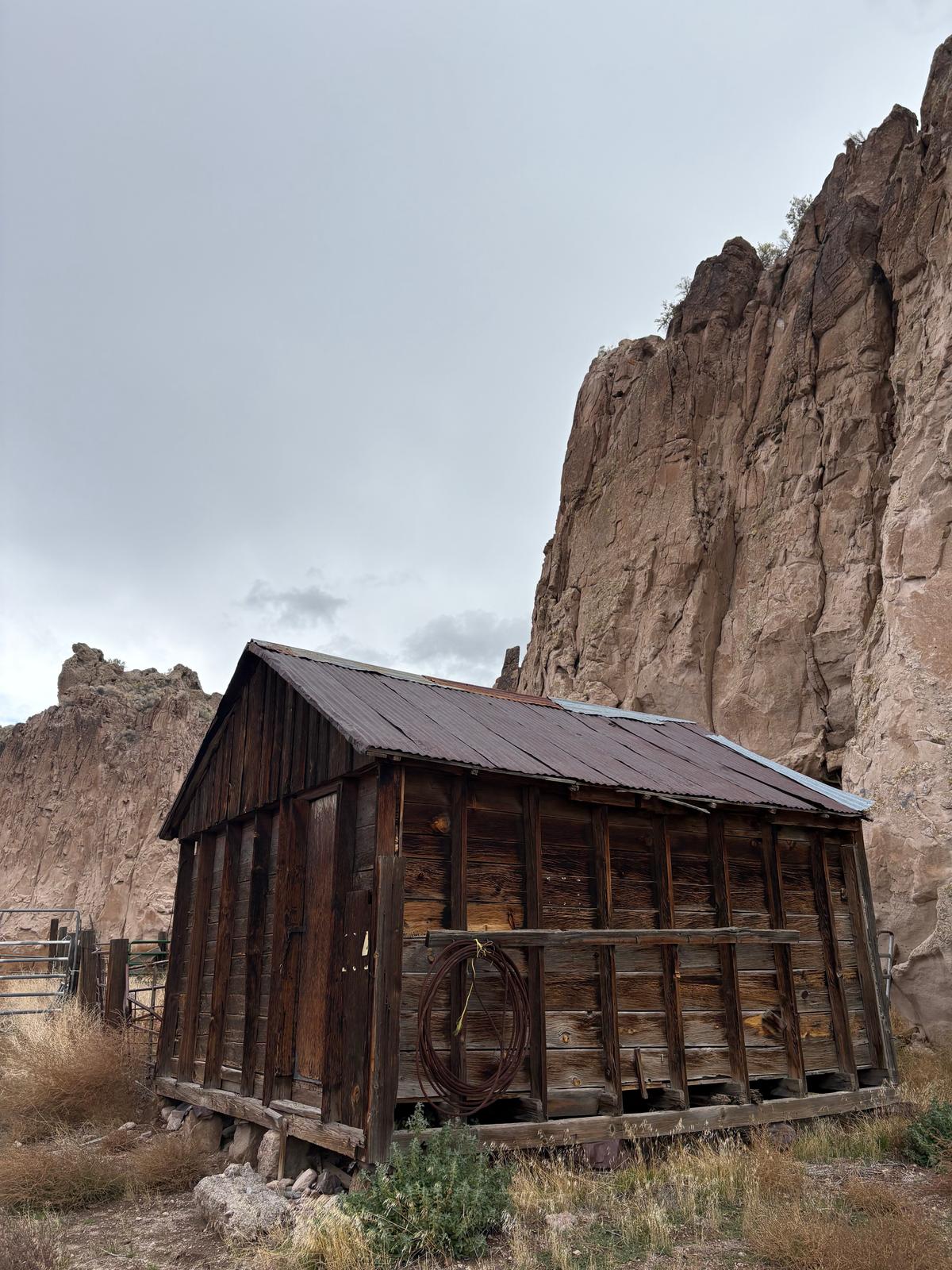
“Only one cold crop would produce cold hard cash to sustain their income – ICE,” Andone said. The families would cut ice accumulated in previously flooded fields, pack it in sawdust, and store it in ice houses also built from the volcanic tuff.
“In the summer, the blocks were hauled to booming mining camps, such as Pioche, and sold to saloon proprietors to keep their drinks cool. The settlers did save some of the ice for their own use,” Andone wrote.
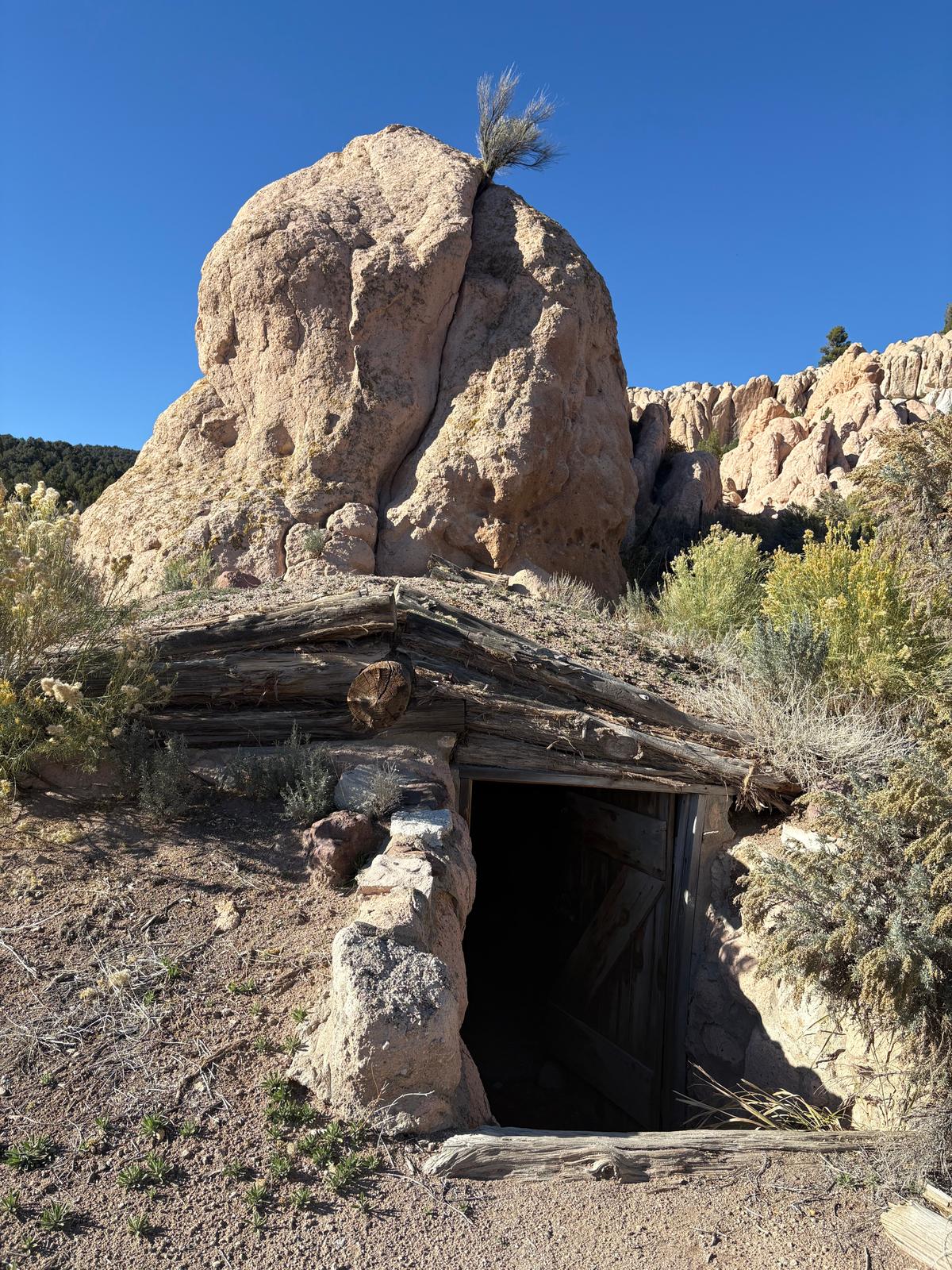
Andone added that in her research of 19th-century Lincoln County, she came across a comment from a girl said that each year, she looked forward to a batch of ice cream made with any unsold ice.
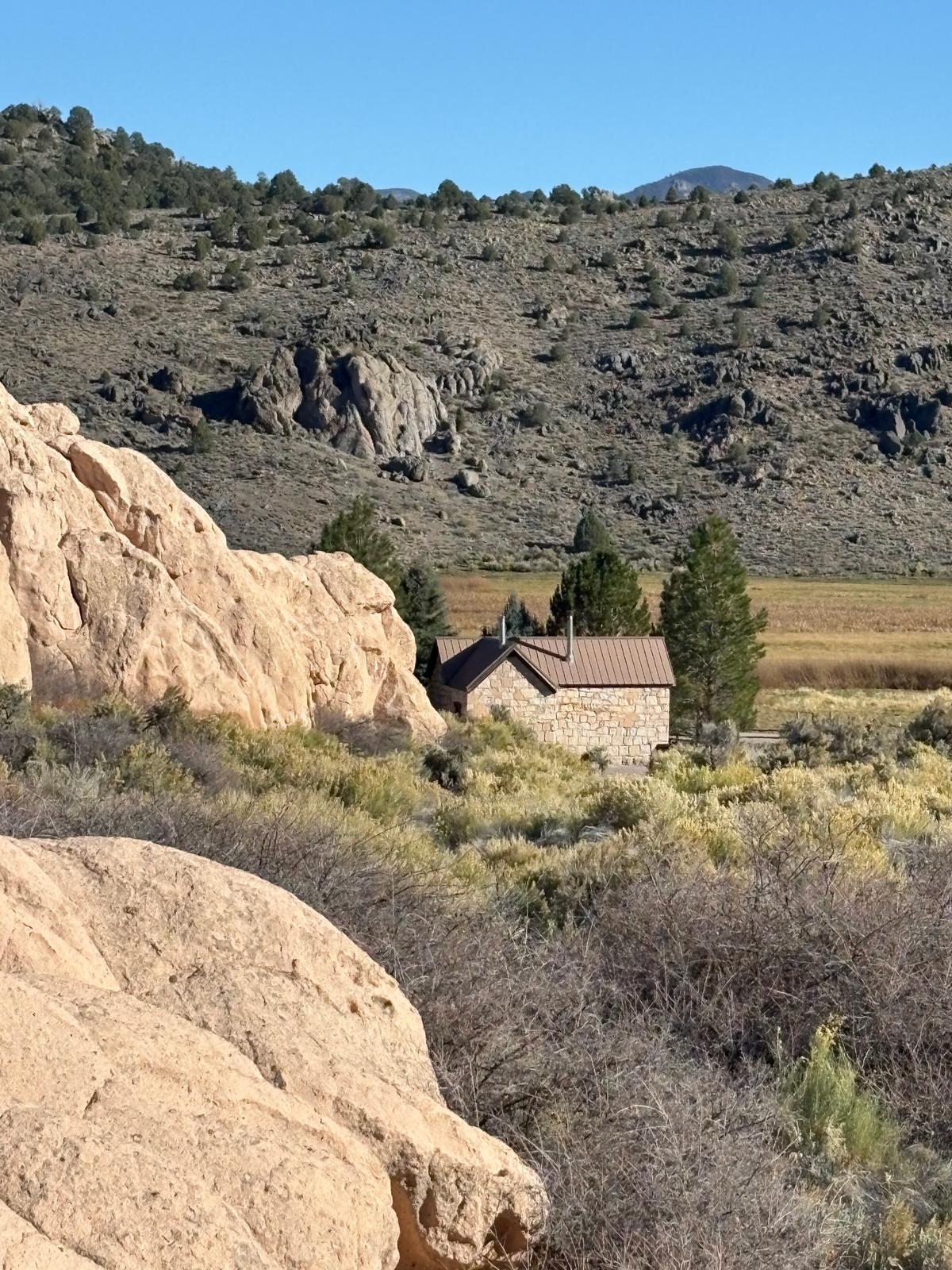
Visitors to the Moody cabin can view the ice house, built into the side of one of the volcanic tuff embankments at the back of the cabin; they can also look around at the pristine landscape and truly imagine what life may have been like for these early pioneers.
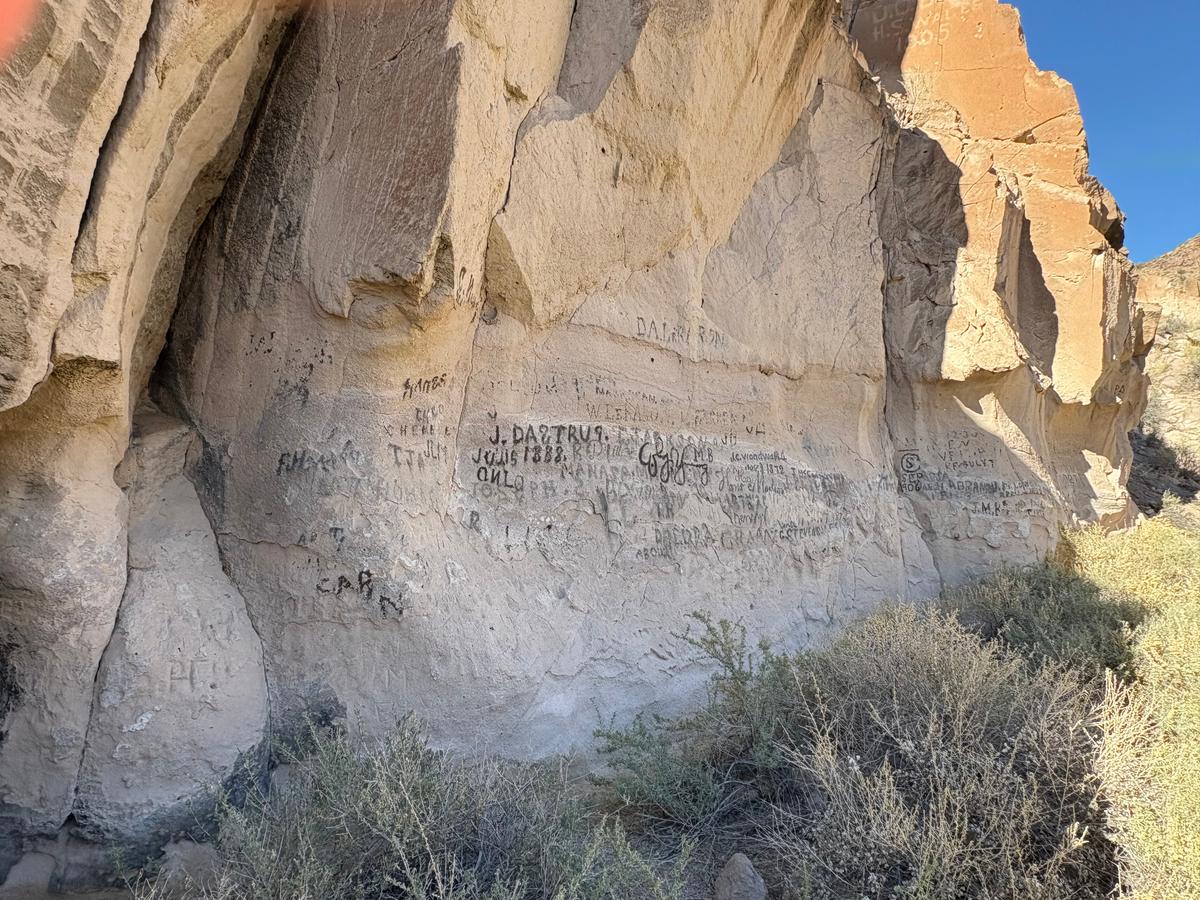
Speaking of pioneers, Andone also pointed out what is known locally as “pioneer rock”—a tall, smooth cliff between Spring Valley and the town of Pioche. It features etched names and dates of early settlers. The curve in the road became a stagecoach stop, according to Andone. Still standing at the site are the remains of a rough-hewn clapboard and log house, barn, and chicken coop.
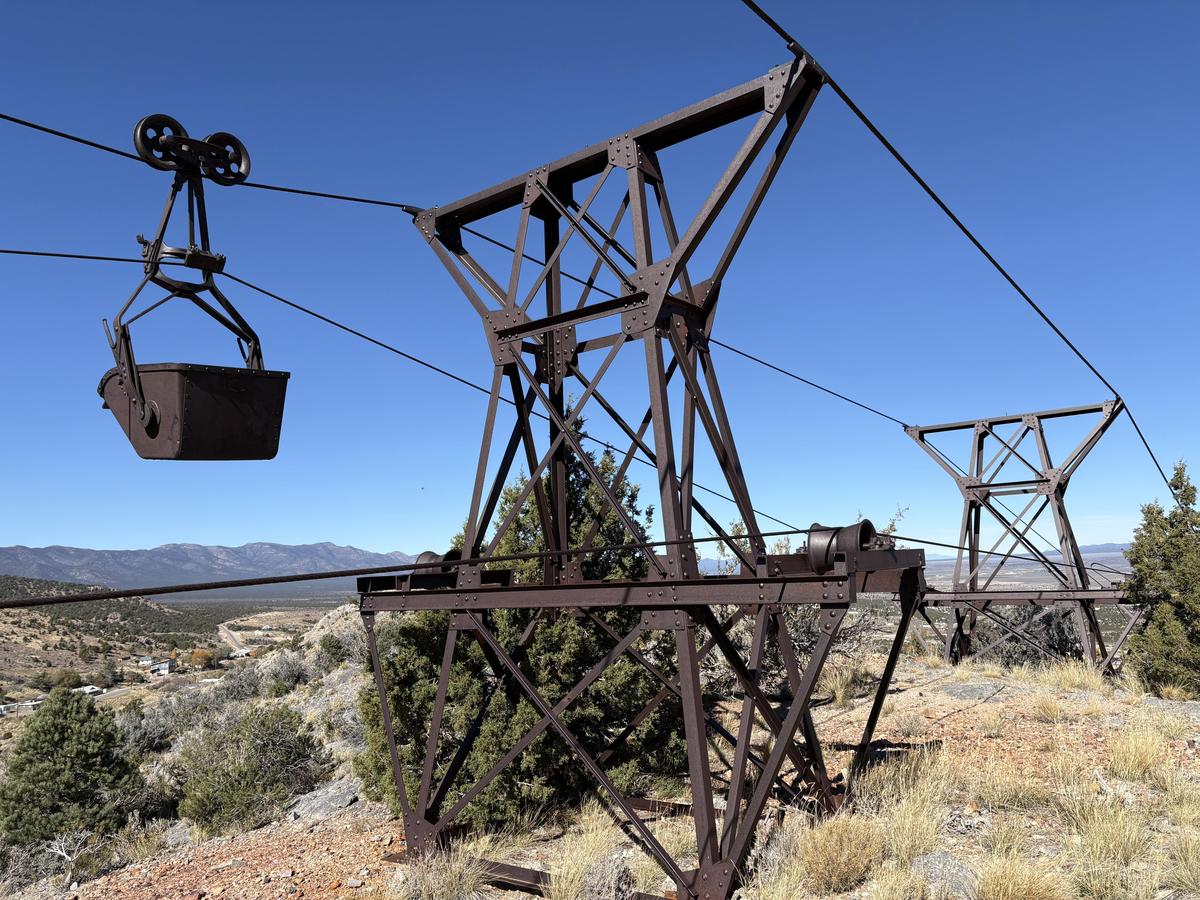
Finally, anyone interested in early western history will want to stop in Pioche, Nevada. Signs throughout the small town explain how the town sprang up because of the mining industry. The town seems as if time stopped; the miners simply walked away in the 1950s when most of the ore was depleted. Some equipment they used—such as an aerial tramway—stands as a rusted reminder of a bygone era.
Currently, on the town’s main street are three open saloons, a circa 1873 opera house, an old miner’s cabin, and the neglected Mountain View Hotel, built in 1895 primarily to house miners’ guests.
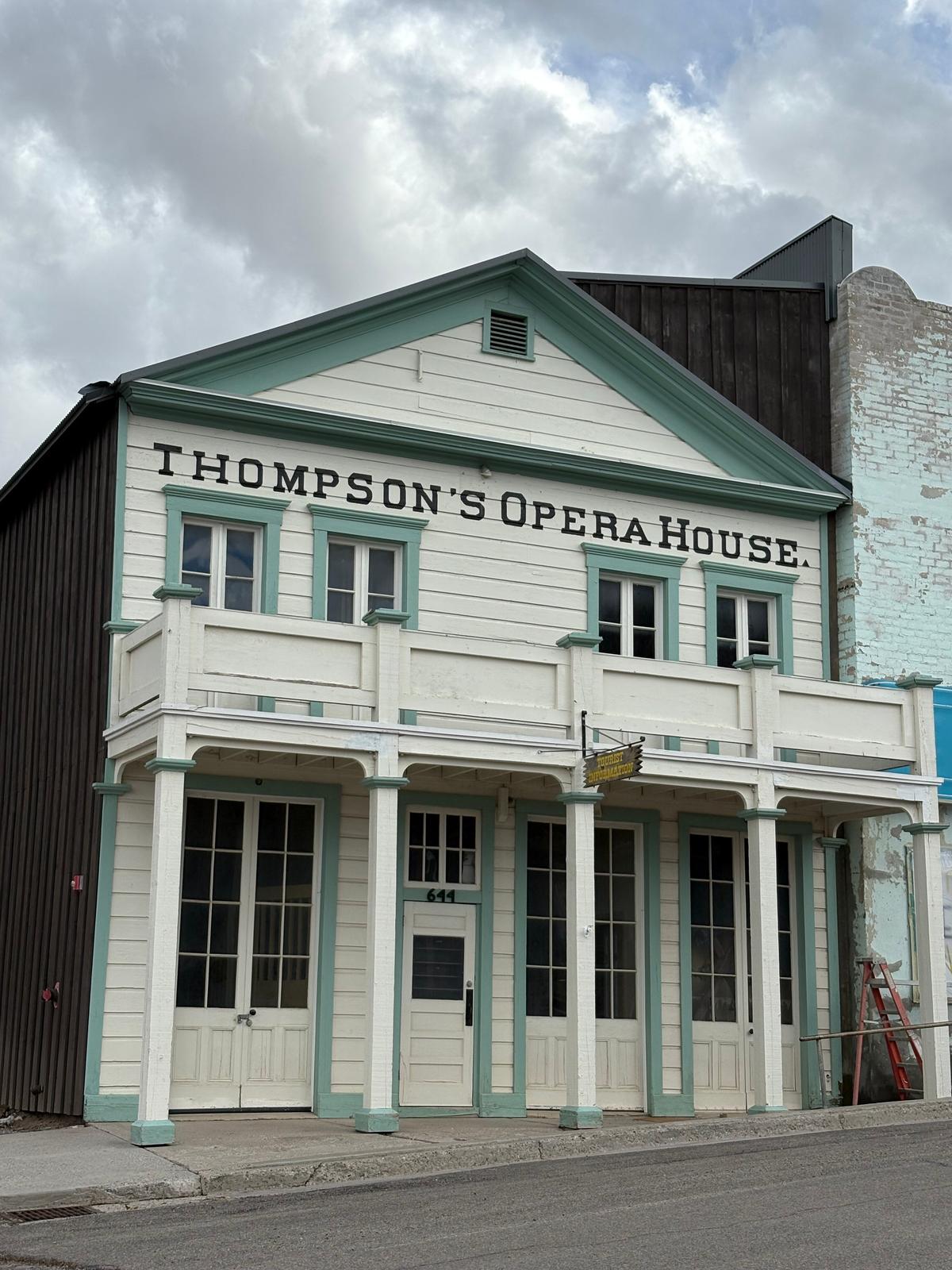
Visitors can take a stroll through Pioche and see remnants left over from the mining boom. It’s a glimpse into a distinct segment of American history. Taking time to seek out noteworthy historical nuggets in Lincoln County, Nevada, is a bonus in this vast, seemingly monotonous expanse of territory.