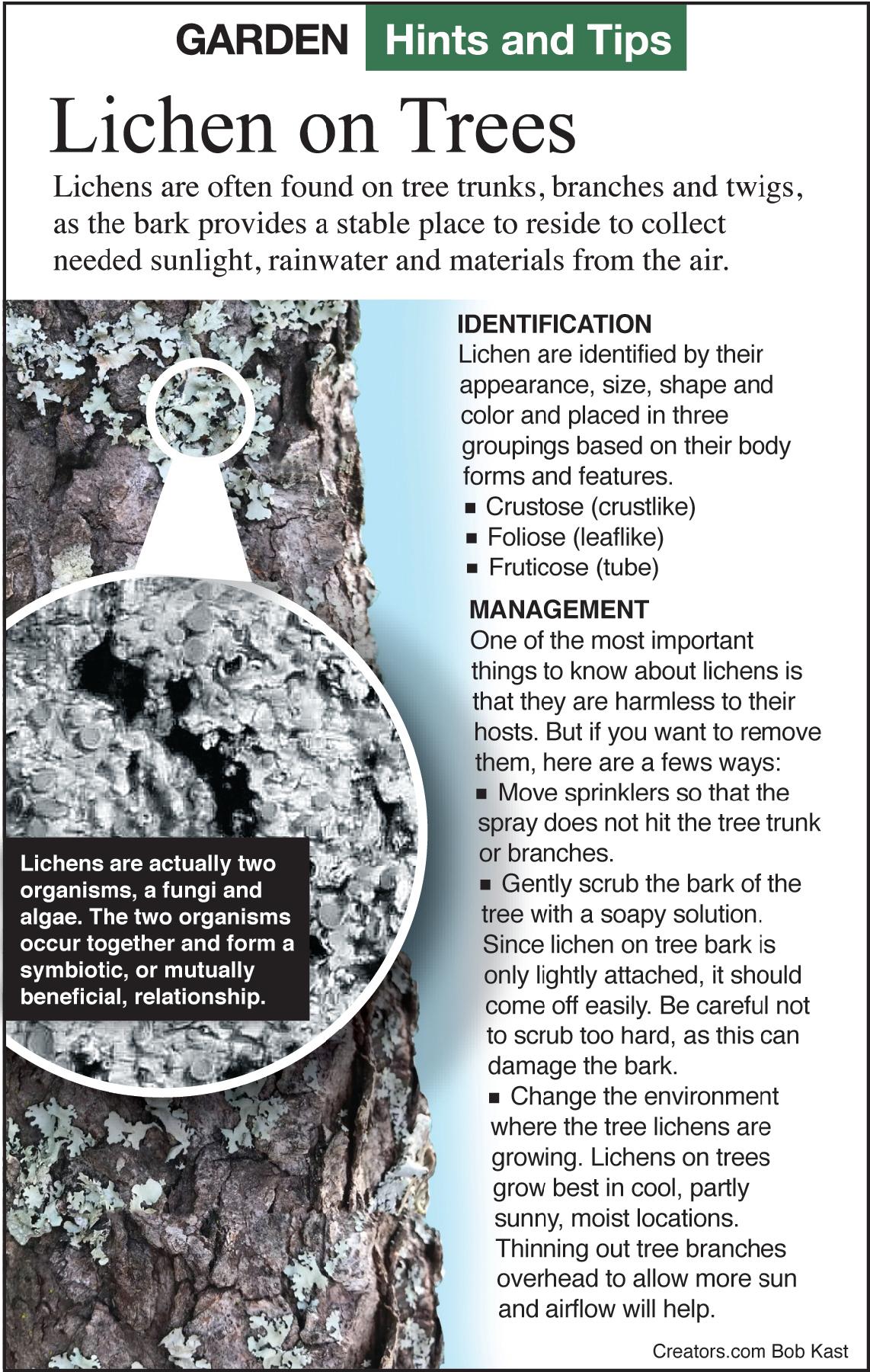
They do not harm the tree trunk that they are growing on. Even though they can grow on rocks and brick walls, lichens are fairly fragile and tend to grow in places and on things that do not get much wear and tear.
Lichens are usually paper-thin and come in many different colors. They can be pinhead-sized to several inches across, and along the edges, some types look like they have leaves.
Lichens, mosses, and algae can all grow on the sides of tree and shrub stems. They do not harm the plant, but they can look unsightly. Many times, people see them and think that they are the cause of a plant’s decline in health, but they do not harm the plant.
All of these plants prefer the moist and shady side to grow on, but not always. So, if you are hiking in the woods, it is a general rule that the mossy side of the tree is the north side. Trees transplanted into a new neighborhood may not all be facing the same way they were in the nursery, and so the lichens can be facing any direction. The lichens that are now forced to survive facing into the sun usually slowly die away. I go into a lot more detail about lichens in a recent video on the Greener View YouTube channel. On YouTube, search for @agreenerview.
They usually grow best with lots of moisture and shade. This often means that the plants are being overwatered. Do not let water sit in the tray under the pot for more than a few hours before draining it. If you need to, you can prune some of the lower stems off the plant so that there is more air circulation and sunlight to the pot.
Another problem that can develop along with the growth on the soil is the fungus gnat. Fungus gnats are 1/8-inch-long triangular black insects. They fly up if the pot is disturbed. Indoors, if there are pots near the window, they fly along the glass trying to get out. The larval stage of the insect is a thin white worm with a black head. It usually eats the fungus mat that is growing on the soil surface in the flowerpot, but sometimes it feeds on plant roots. They can become a serious problem for small seedlings in flats or pots early in the spring.
There are a variety of products for sale to help control fungus gnats. You can also try watering your plants from the bottom to let the top of the soil dry out a bit. Yellow sticky traps that are also for sale will help you monitor the severity of the infestation and help kill some of the gnats.