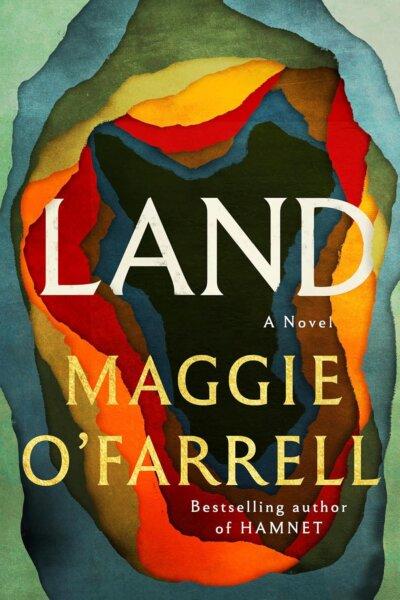
Maggie O’Farrell is a British novelist known for psychologically rich fiction that blends family history, memory, and survival. Over more than two decades, she has built a reputation for elegant prose, inventive structure, and emotionally precise storytelling, earning major literary awards and a wide international readership.
If the name seems familiar, it’s likely because of her 2020 book “Hamnet,” which was adapted into the 2025 film that just won the Golden Globe for Best Motion Picture—Drama. Her soon-to-be-released novel, “Land,” continues the theme of family and survival in an Irish setting.
“Land” is aptly titled, as the land itself is arguably the most important character in the story. Its presence dominates almost every page, shaping the lives of an Irish family in ways they can’t fathom.
In 1865, on a remote peninsula along Ireland’s coast, 10-year-old Liam and his father, Tomás, are working as surveyors for a British military mapping project. Tomás is a quiet, disciplined man. He meticulously documents the landscape, including the devastating effects of the famine; he has seen what happens in abandoned villages and depopulated townlands.
Tomás is very valuable to the Red Coats. He can speak to the locals and the English alike. He knows how to transform the unwieldy local names like “the-crossroads-under- the-bluff-where-once-a-hailstorm-killed-a-cockerel” to the more mundane but manageable “Bluff’s Cross.”
Wellspring Transformation
One day, while measuring land, Liam is sent alone into an eerie, unmapped copse of trees. He’s unnerved by the unnatural silence and grave-like, moss-covered mounds. He imagines that he hears his sister Edna’s laughter and flees. Tomás enters the copse to retrieve one of Liam’s lost boots but disappears for hours.

As a storm gathers, a local widow takes Liam in. She dries and clothes him in garments she saved from her own deceased children and organizes a search party. The men find no trace of Tomás except his surveying instruments.
The next morning, however, Tomás reappears at the cottage in a transformed state. He’s disheveled, wearing a crown of leaves, with ferns in his pockets and rushes tied around his wrists and ankles.
He speaks ecstatically in Irish, claiming to have drunk from a sacred well (tobar) in the copse. The tobar revealed to him that all prior knowledge of the land is false. He insists they must redraw all the English maps to reflect the land’s true spiritual essence.
The widow who is housing Tomás and Liam sees the map they’re creating. It’s the first time she’s ever seen a map in her life, so it’s a revelation for her.
“The scribbles and markings resolved before her very eyes, into coves and hills and roads and paths and fields, all of which she knew. … It made her cry out in something like pleasure, to see the peninsula there … as if she were up in the air, a bird, or a heavenly angel … to be presented with this version of the place, as if the Great Hunger had never happened, or if it had been a terrible nightmare.”
Carved From the Land
Did the well that Tomás drank from contain some naturally formed hallucinogen? It’s likely, but a spiritual cause shouldn’t be counted out. Having unwittingly tapped into those hidden depths of the earth, Tomás’s life and his family are propelled in new directions.Each person in this family longs to unleash the seeds buried within himself or herself. Liam longs for his father’s approval but is steadfastly opposed to following in his footsteps, since he wants to become something more than a cartographer. When a local priest sees that Liam has a talent for reading Latin, he encourages him to join the Jesuits, an idea that the boy likes very much.
Edna wants to venture out into the world and is inspired by the gift of a violin to become a musician rather than a housewife. Rose is the exact opposite, only wanting to stabilize her home and keep everyone safe. However, Tomás’s epiphany, brought about by his deepened connection to the land, could upend all their dreams.
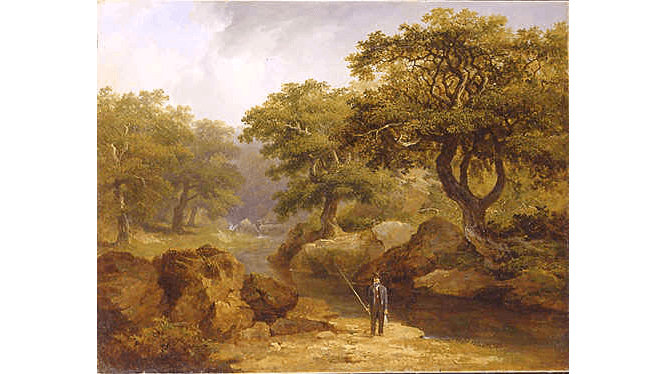
Through the author’s incredible talent, every scene of “Land” becomes as vivid and lush as an oil painting suddenly appearing before you, allowing you to be unseen an observer at the characters’ sides for every moment, whether large and small.
“Land” beautifully captures the magic, tragedy, and possibility of a family’s life in 19th-century rural Ireland. Brilliantly written, it’s a delight to be savored.