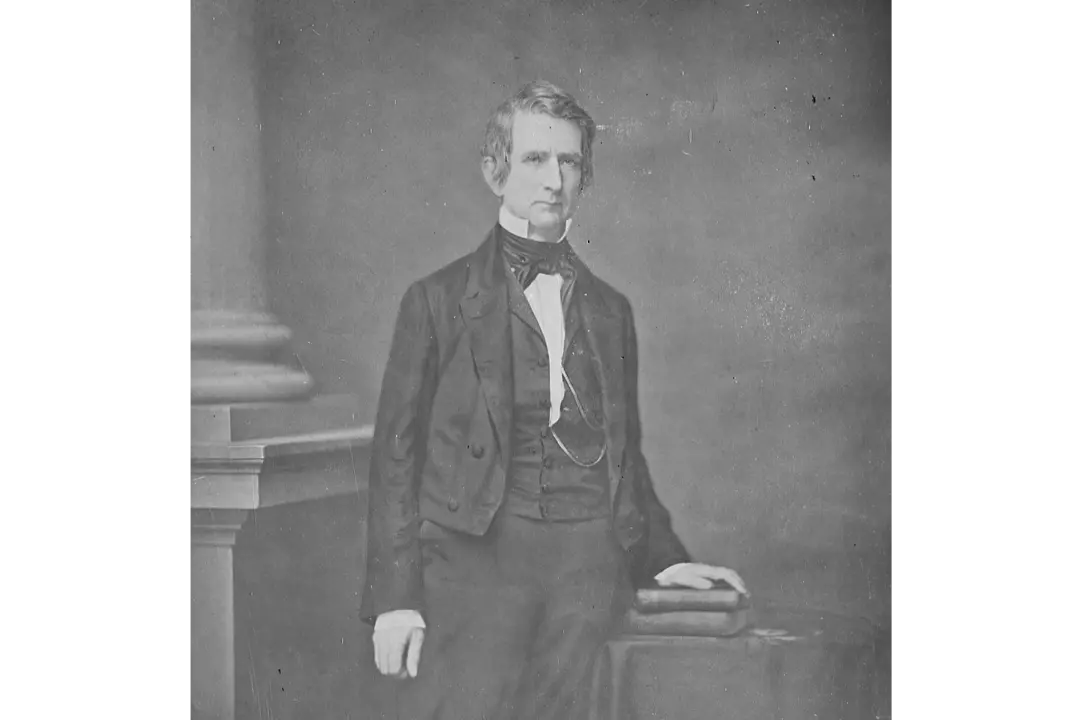
During the winter of 1872–1873, a mystery had descended upon the Glidden household. Lucinda Glidden had noticed that many of her hairpins, which she kept in a milk-glass dish, continued to go missing. The possible culprits were few: her daughter, who was the most obvious suspect; and her husband, whose need for hairpins was laughable. Lucinda confronted her 20-year-old daughter, Elva, with straightforward questioning. But Elva denied taking the hairpins. Lucinda’s investigation seemed to come to a halt, until one evening her husband, Joseph, inadvertently presented her with the evidence.
Joseph Glidden (1813–1906) pulled a hairpin out of his breastpocket and began to bend it. “Joseph, what are you doing with my hairpins?” she asked. His answer would soon transform the American landscape.