The Jewish Theological Seminary (JTS) in New York City, founded in 1886, has the greatest Judaica collection in the Western Hemisphere. Their library is famed for its rare printed book and manuscript holdings that span more than 10 centuries, dating as far back as the 800s. Encompassing religious texts, literature, philosophy, science, letters, and legal documents, these treasured objects represent global Jewish culture and history. Over 100 works are currently on display at Manhattan’s Grolier Club. Established in 1884, it is the country’s oldest society of bibliophiles.
“Jewish Worlds Illuminated: A Treasury of Hebrew Manuscripts from The JTS Library,” on view through Dec. 27, 2025, is the Grolier Club’s first exhibition dedicated solely to Jewish books. This luminous show is presented in 10 geographical sections: Iberia (Spain & Portugal), Italy, France, the Hapsburg Empire, German Lands, Yemen, Iran & Iraq, North Africa, the Ottoman Empire, and Egypt. These diasporic areas have had longstanding Jewish populations, with some communities originating in antiquity after the early 6th-century B.C. Babylonian Exile—the forcible removal of Jews from the Kingdom of Judah.
Golden Age Artifacts
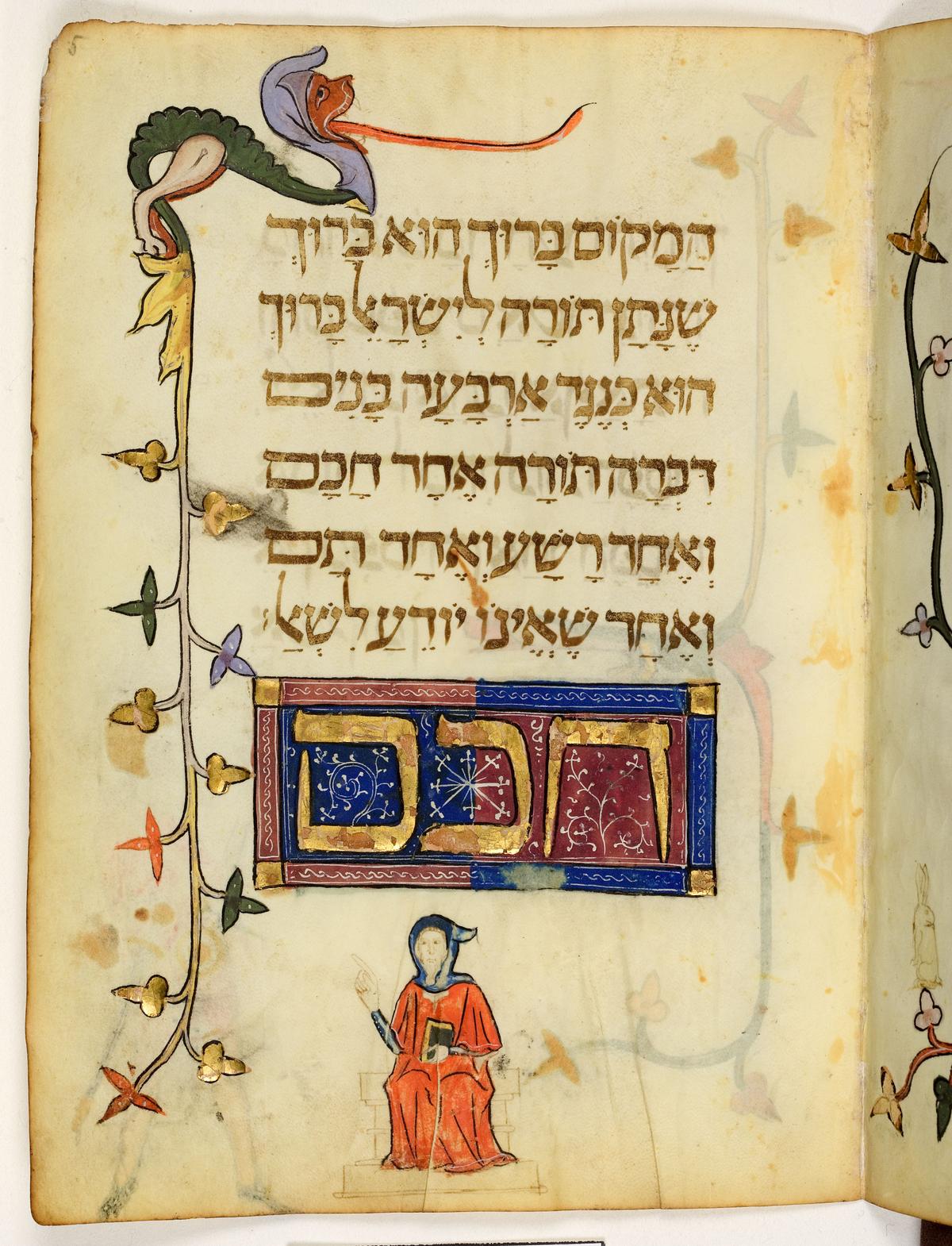
The beautifully curated exhibition begins with a display of sophisticated medieval works created during the Jewish people’s golden age on the Iberian Peninsula, while it was under Muslim rule. Jewish poets, philosophers, doctors, and scholars contributed to a vibrant intellectualism. Their way of life came to an end with the Christian reconquering of the peninsula. Jews were expelled from Spain in 1492 and from Portugal five years later, which created another diaspora. Sephardi Jews (“Sepharad” is Hebrew for Iberian Peninsula) went on to settle throughout the Mediterranean, North Africa, and the lands ruled by the Ottoman empire.
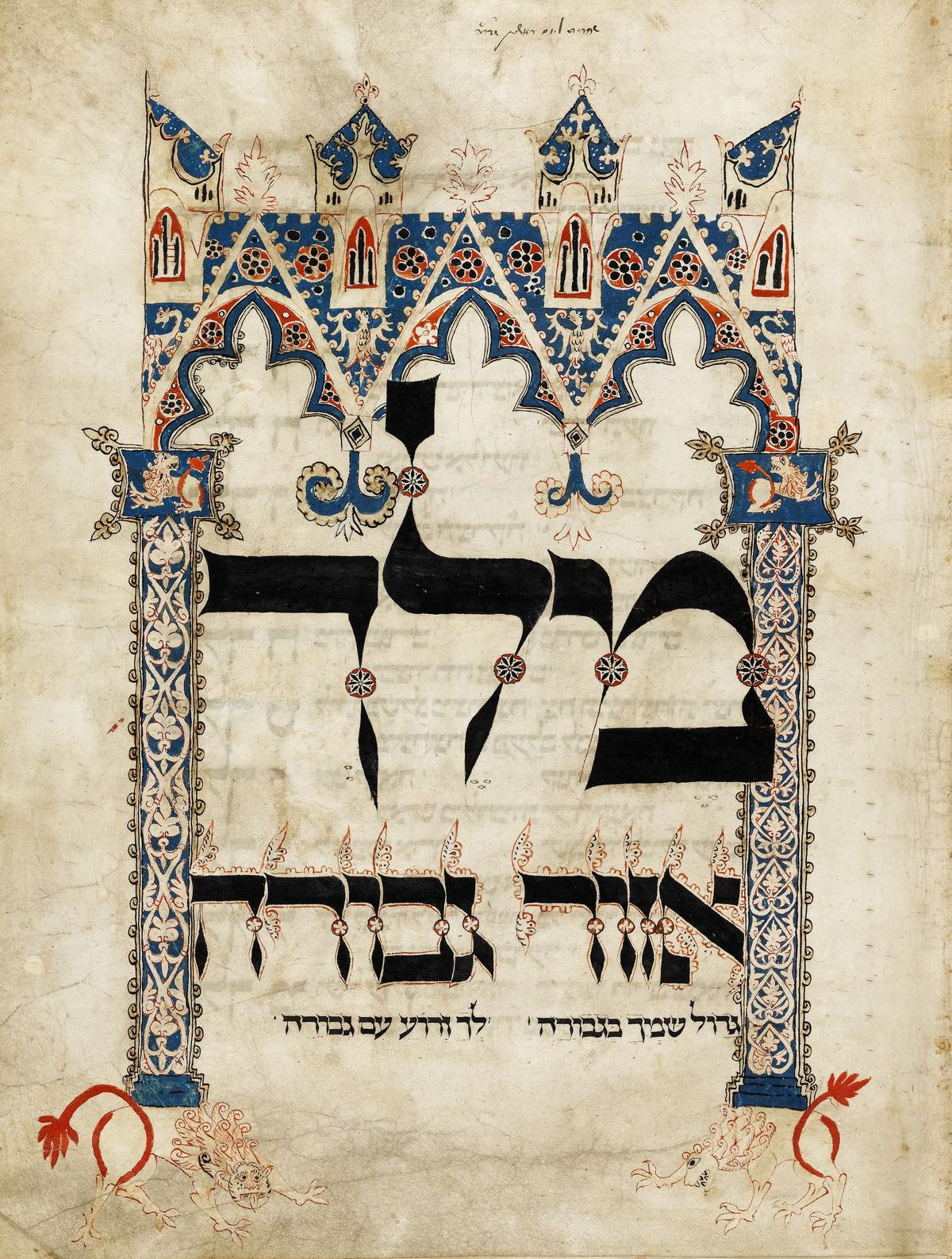
A fascinating work in this section is an incomplete Haggadah, a text recited during the first two nights of Passover at the Seder. The text allows one to follow the illustration process step-by-step. This “Prato Haggadah” dates to around 1300. The figure depicted on the open page is the Wise Son, part of the Haggadah’s parable of the Four Sons. He holds a closed book with one hand and points to the initial word panel that describes him with the other.
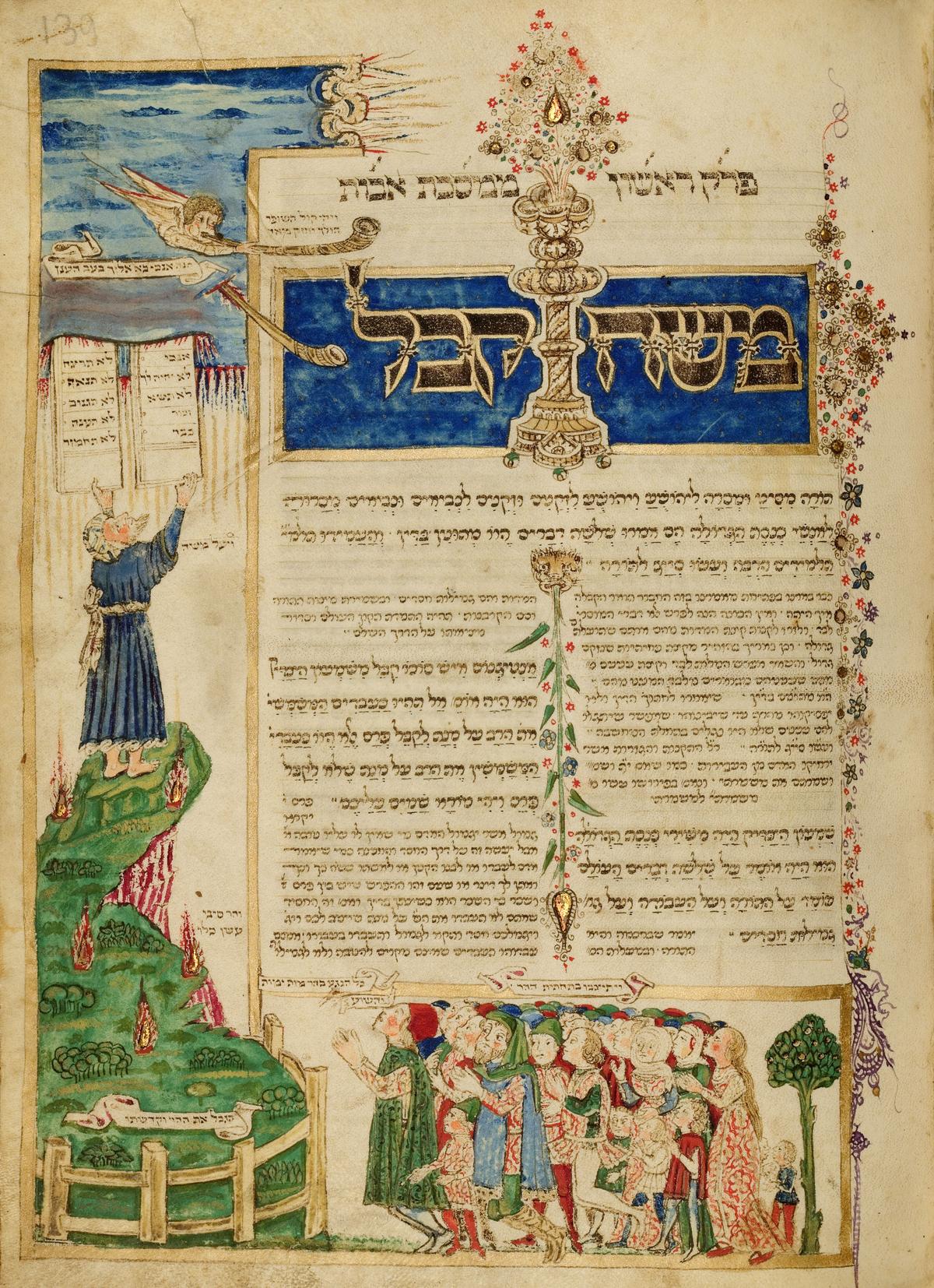
Illustrated Prayerbooks
The tradition of handwritten Hebrew manuscripts gave way to the proliferation of printed texts thanks to the 15th-century invention of the printing press. In the early 18th century, there was a revival of copying texts by hand amongst Jews living in the Hapsburg Empire. One of the items in this display case is a miniature manuscript of daily prayers depicting a seated woman in her bedroom with an open book for the Shema prayer, traditionally recited prior to going to bed.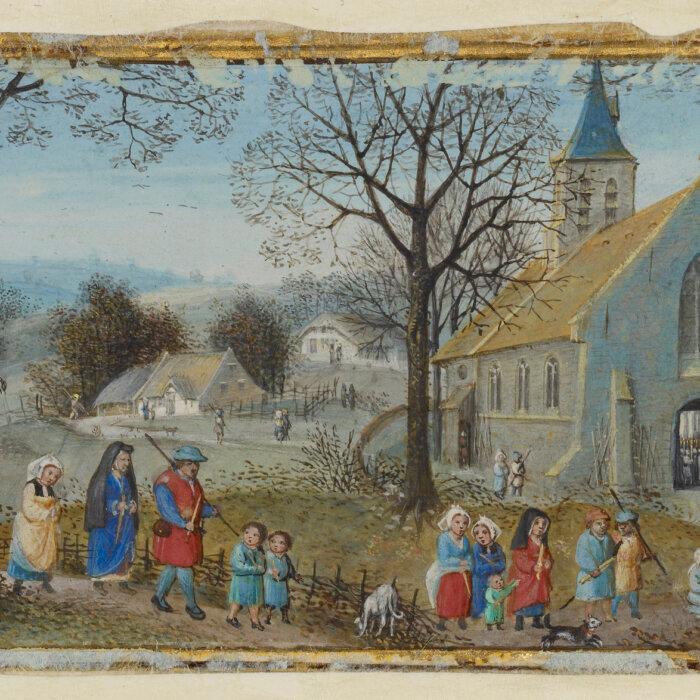
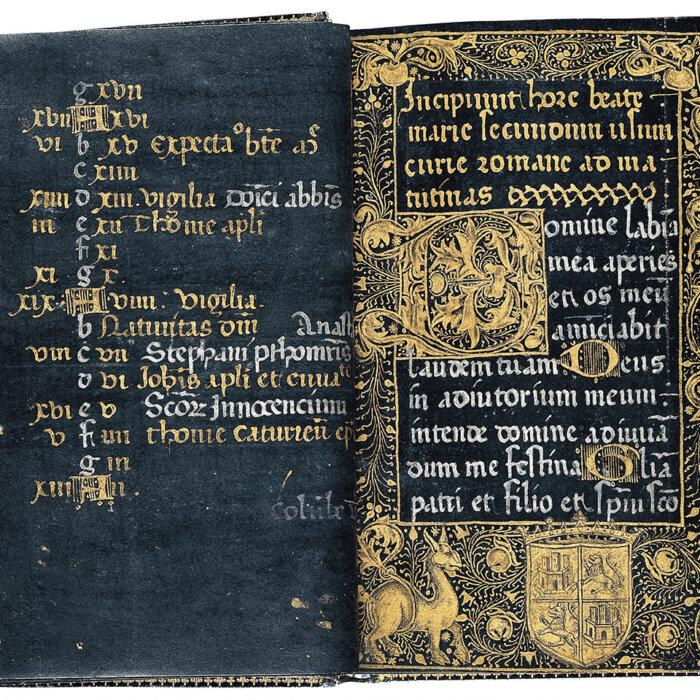
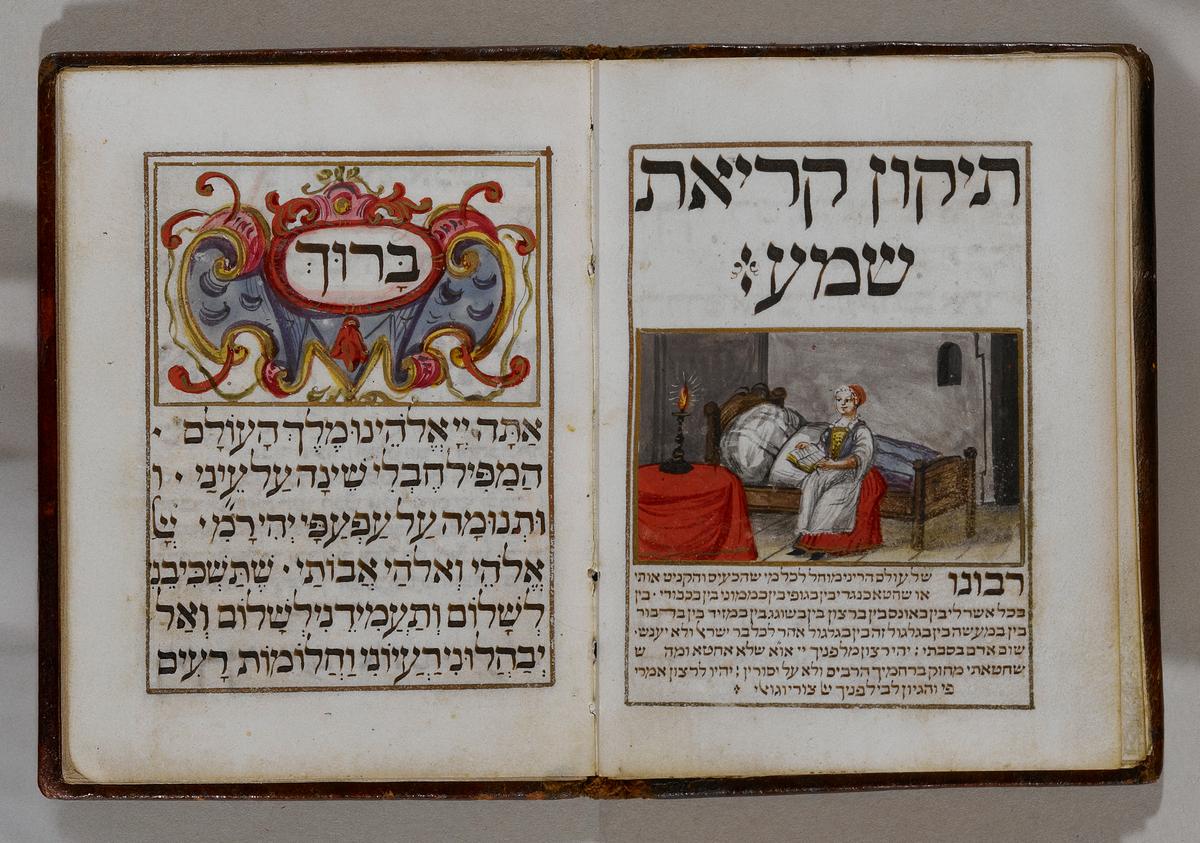
Made in Vienna in 1724, its artist and scribe was Aaron Wolff Herlingen, considered one of the greatest Jewish 18th-century calligraphers. The original owner of this manuscript is also known: a woman named Hannah, the daughter of the Court Jew Isaac Oppenheim.
The Maghreb Manuscripts
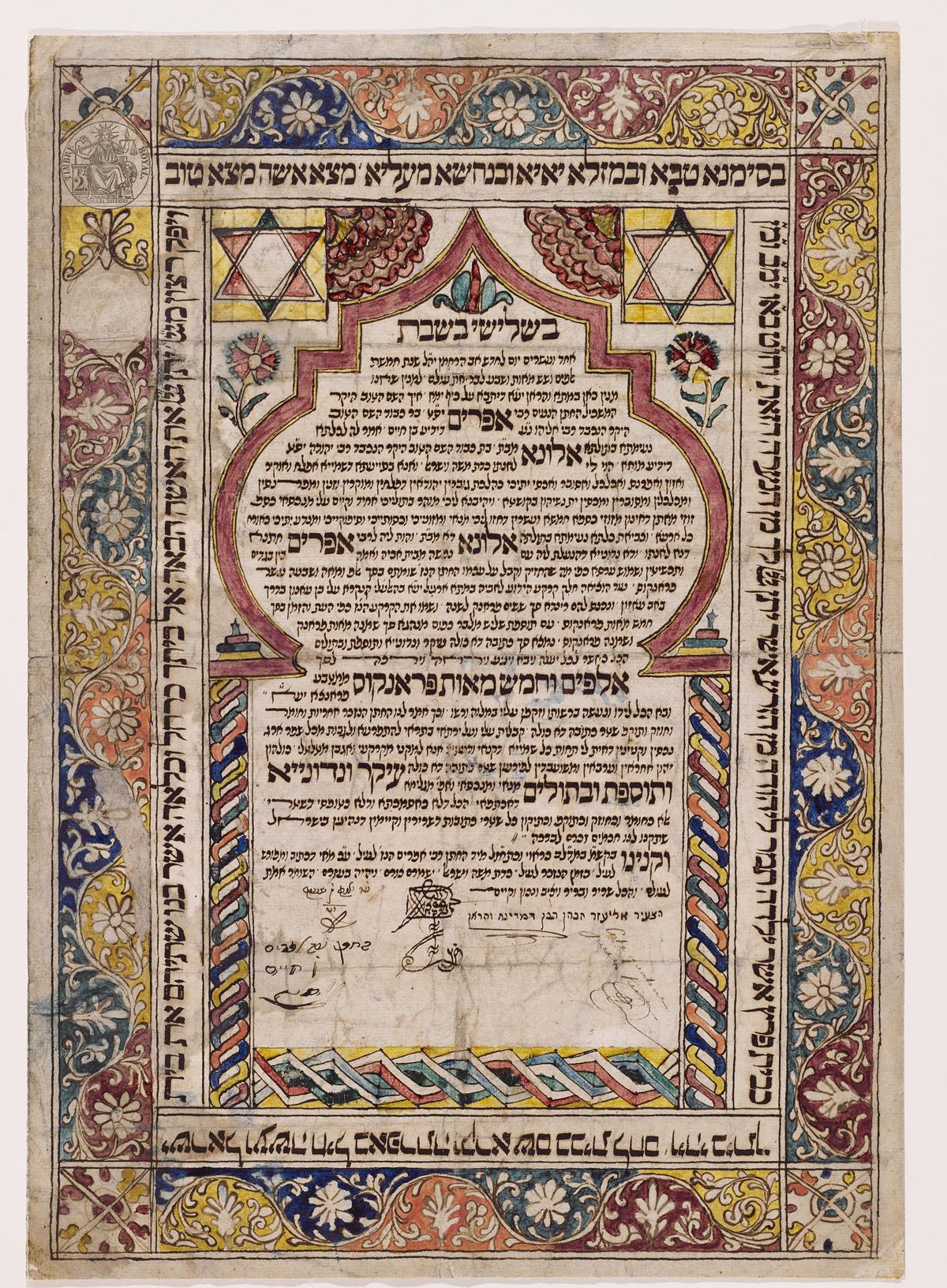
A Moorish arch frames the text in the vivid 1847 “Ketubbah (Marriage Contract)” from the Sephardic community of Oran, Algeria, which was then under French rule. The exhibit text explains that “gateways were a popular motif in the decoration of Hebrew books and manuscripts and their forms were strongly influenced by the architectural milieu in which they were created.”
There were vibrant Jewish groups in the Maghreb (North African countries of Algeria, Libya, Morocco, and Tunisia) for over 1,000 years. In addition to being beautifully decorated, Jewish marriage contracts are a valuable source of information about local communities, as they include names, dates, financial information, and geographic specifics.
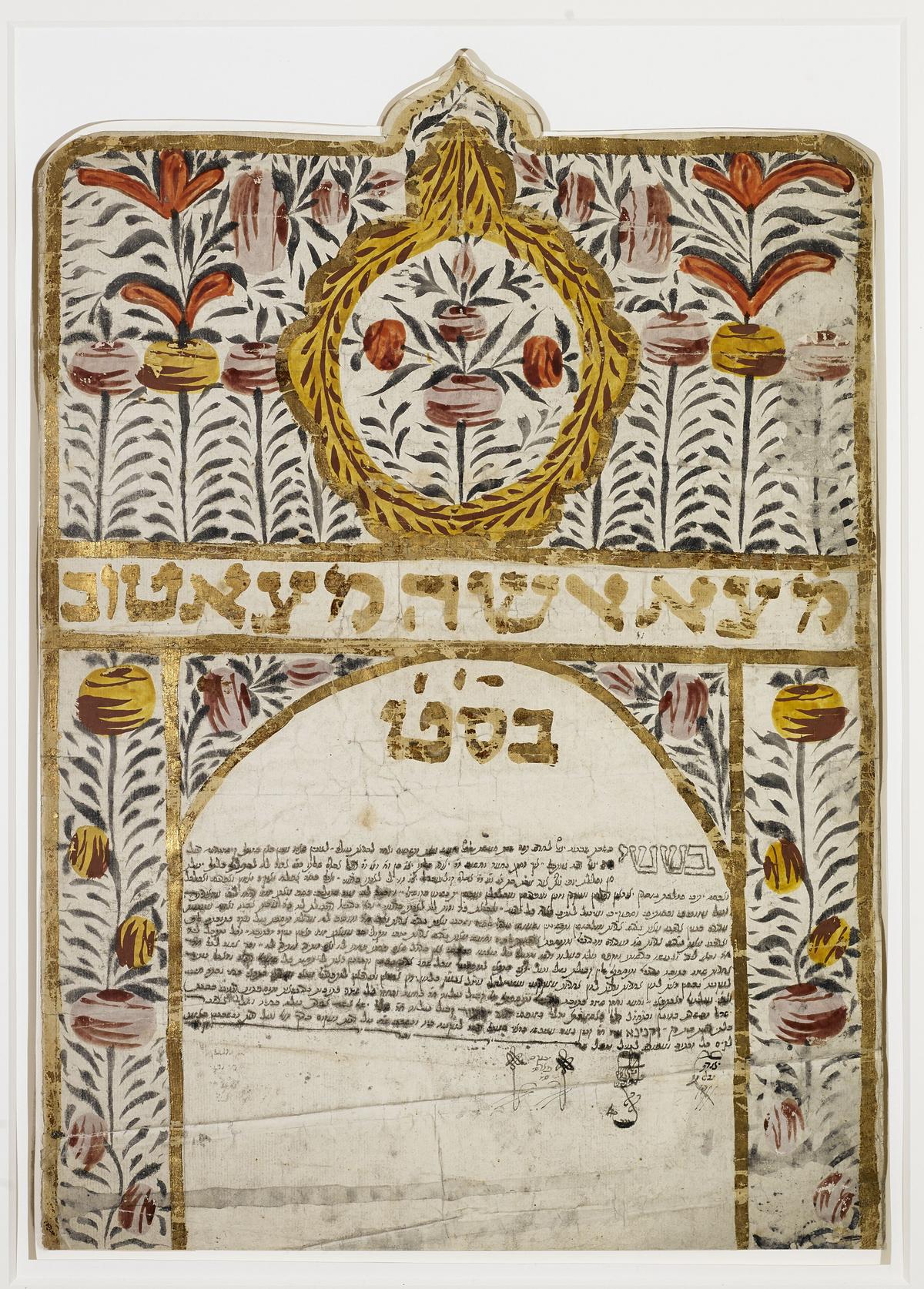
The Algerian “Ketubbah” can be contrasted with a colorful one in an adjacent case concerning the Ottoman Empire. Made in Constantinople (current Istanbul) in 1830, this “Ketubbah (Marriage Contract)” showcases “crowded vegetation, flowers painted in bright colors without outlines, and gilt borders and inscriptions.” The exhibit describes it as as a popular decorative scheme in the city during much of the 19th century.
The exhibit concludes with an examination of the earliest Jewish diaspora, which was to Egypt. Israelites have lived there since biblical times. Fragments on display come from a legendary source. In the mid-19th century, a repository of texts spanning over 400,000 folios and more than a millennium of Jewish daily life was discovered.
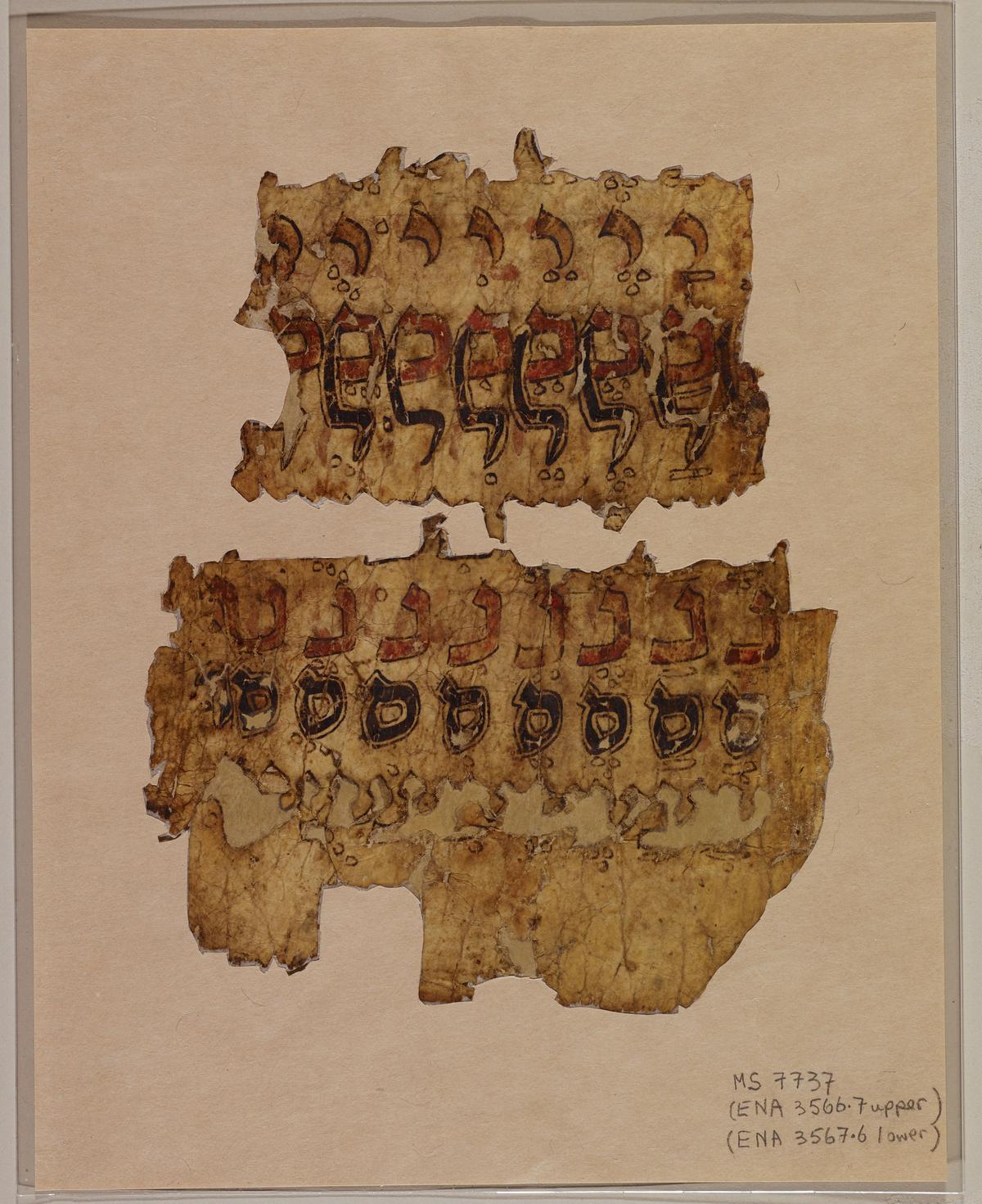
The Cairo Genizah in the Ben Ezra Synagogue is unique in that it contains not only sacred but also secular writings. The 11th-century “Primer” shows how children were taught the Hebrew alphabet’s letters over 1,000 years ago. The teacher would outline their form, and the student would fill them in. This teaching technique is still in use today.
The preserved voices of long-ago people in “Jewish Worlds Illuminated: A Treasury of Hebrew Manuscripts from The JTS Library” give scholars and viewers intimate insight into the lives of individuals and historic Jewish societies as a whole.