In the Footsteps of Don Quixote: Following a Literary Hero in Modern-Day Spain

Cervantes’s legacy lives on in Toledo’s markets, cathedrals, and cobblestone charm.
In the Footsteps of Don Quixote: Following a Literary Hero in Modern-Day Spain
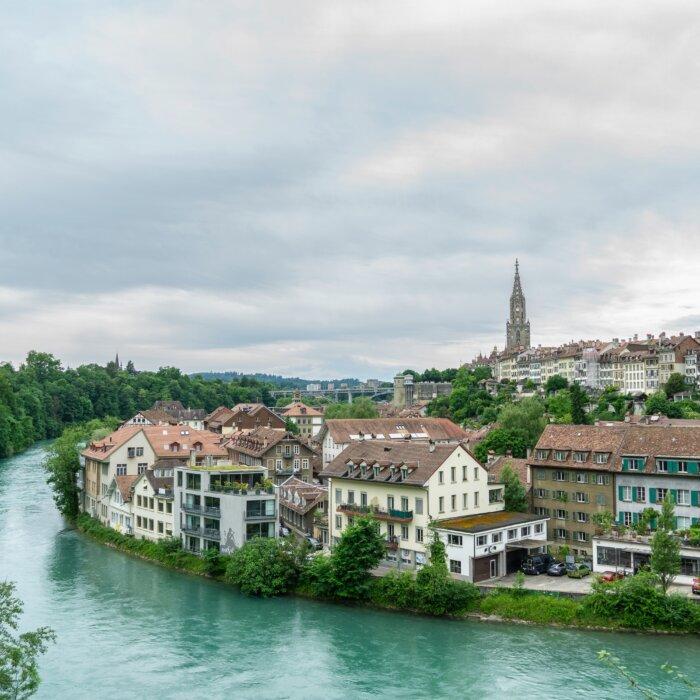
A city shot of Toledo, Spain, that includes the Tagus River. Autumn Spredermann
|Updated:
0:00

Just 45 minutes outside Madrid is the popular village of Toledo, Spain, a medieval town where history and literature merge within a labyrinth of cobblestone streets. Toledo has been known throughout history for its high-quality sword-making and striking architecture.

However, it’s also the capital of Castile-La Mancha, the region in central Spain where the famous 17th-century fictional character Don Quixote and his faithful companion, Sancho Panza, roamed the countryside looking for adventure.
“Don Quixote” is a two-part novel written in the early 1600s that’s widely considered to be the front-runner of modern Western literature. Celebrated Spanish author Miguel de Cervantes’s tale of a knight out of place in a rapidly changing world can be seen all over Toledo.

Shop windows hold impressive displays of swords alongside life-sized replica suits of armor fashioned to look like those Quixote would have worn. Statues of Quixote and Panza hold signs outside businesses frequented by tourists.

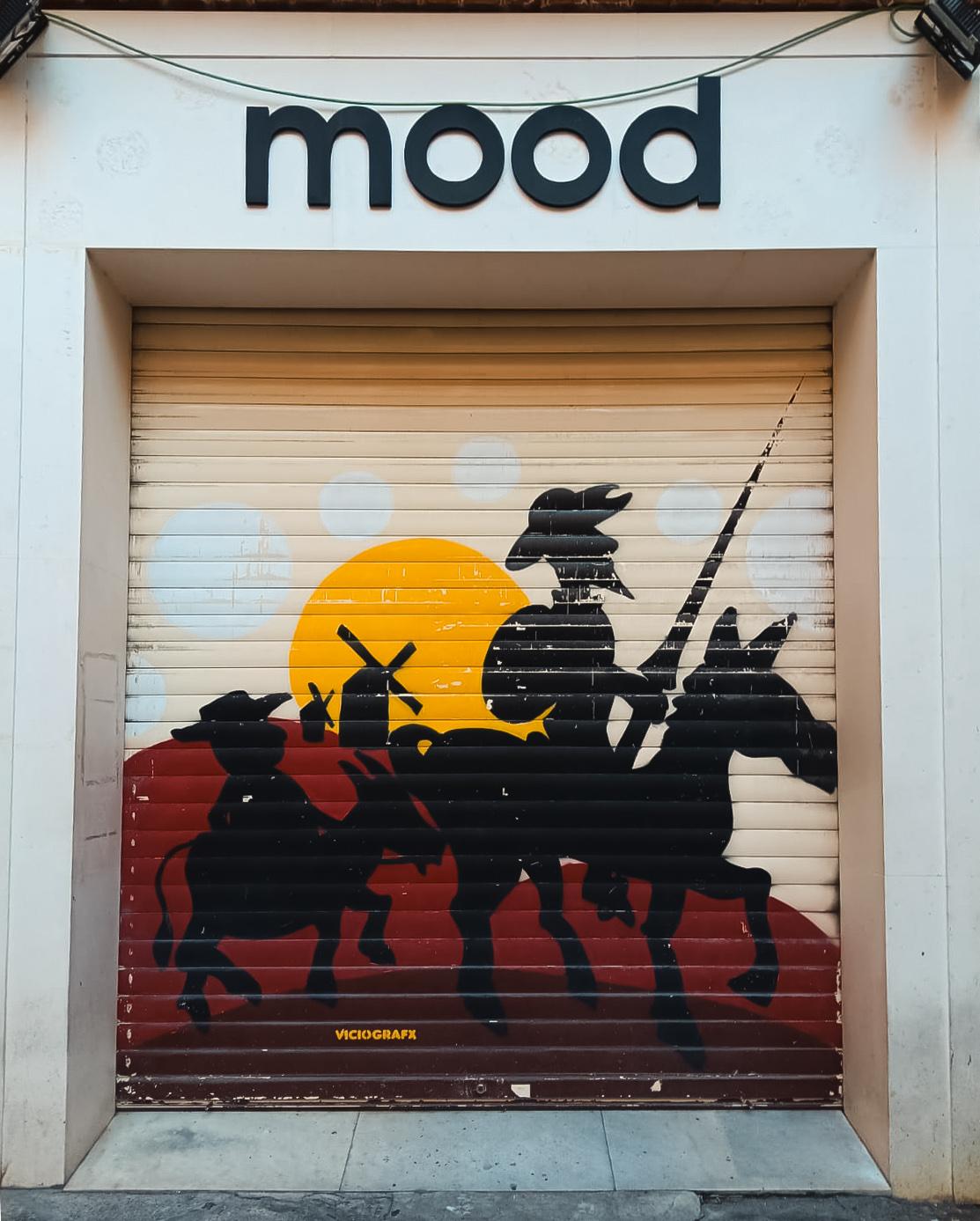
Visitors can even spot the famous pair in street art.
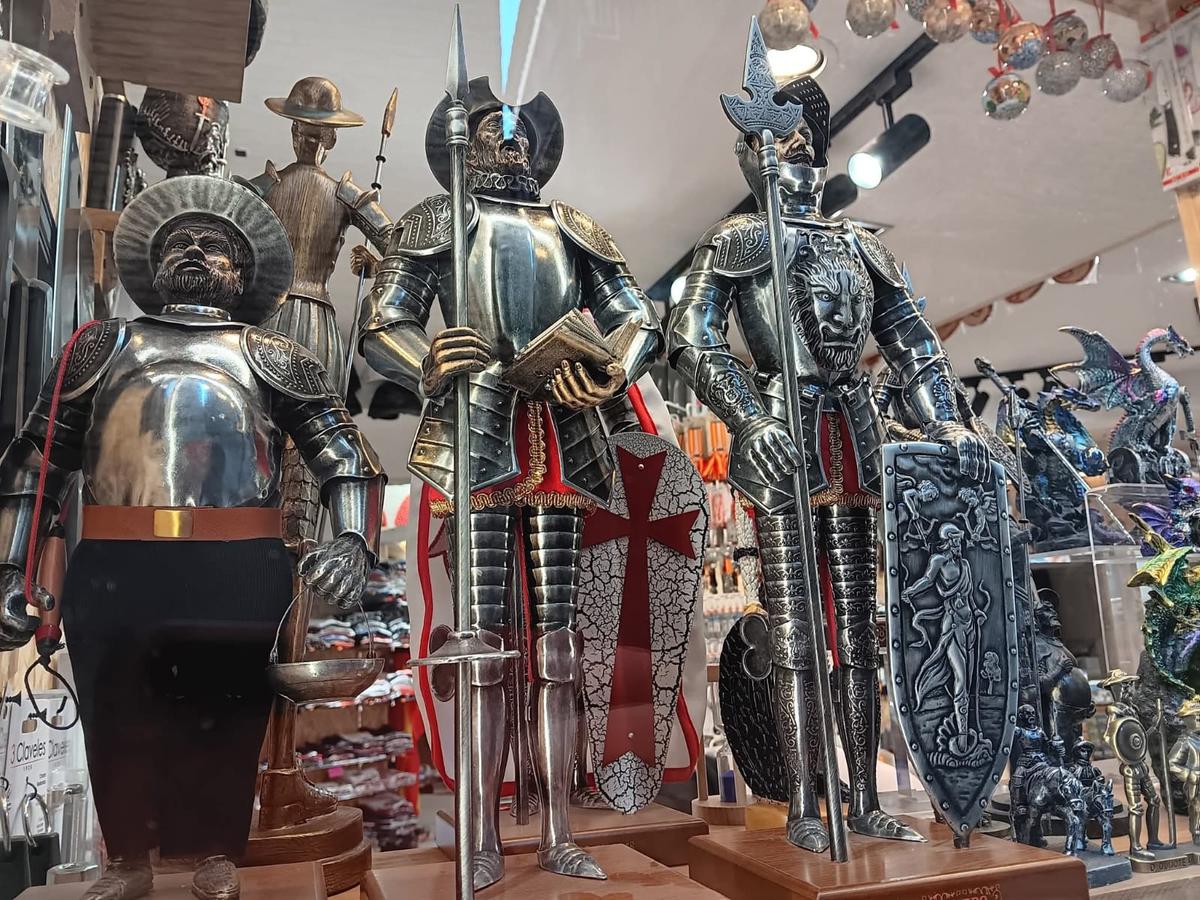
A street shop features statues of Don Quixote and Sancho Panza wearing armor. (Autumn Spredermann)
A street shop features statues of Don Quixote and Sancho Panza wearing armor. Autumn Spredermann
Street art depicting Quixote and Panza was painted on this store's security door. (Autumn Spredermann)
Street art depicting Quixote and Panza was painted on this store's security door. Autumn Spredermann
Boasting a lengthy, multicultural history that spans 2,000 years, Toledo has stunning architecture, squares, and bridges over the Tagus River that showcase the city’s Moorish, Christian, and Jewish heritage.

The city also plays a role in the legend of Quixote’s travels across the Castile-La Mancha region.

“Don Quixote is everywhere here,“ walking tour guide Alejandro Lopez told The Epoch Times. ”He’s as much a part of this city as its real history.”

Outside the iconic Gothic Catedral Primada in the historic center, Lopez explained how the city’s history as a peaceful melting pot of Christianity, Islam, and Judaism helped shape the cultural legacy of Toledo.
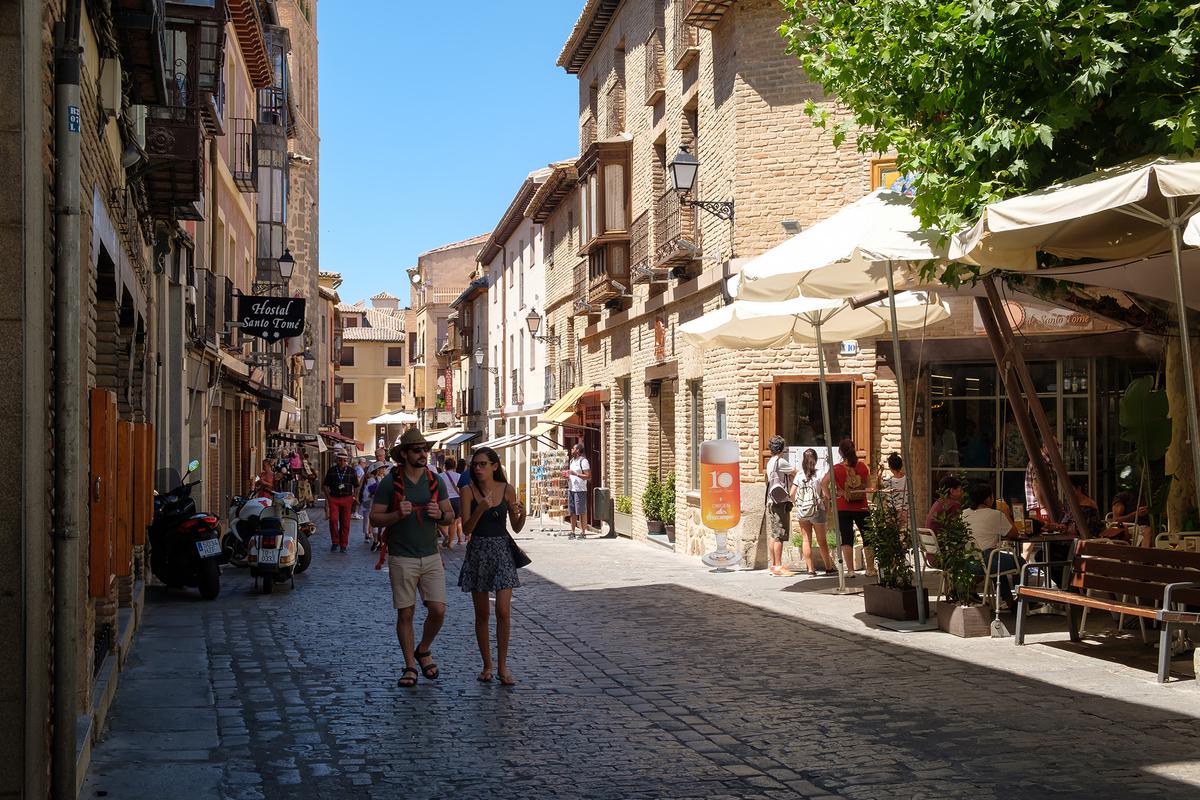
Toledo is known for its walled medieval old town, with its well-preserved architecture and narrow cobblestone streets. (Kamira/Shutterstock)
Toledo is known for its walled medieval old town, with its well-preserved architecture and narrow cobblestone streets. Kamira/Shutterstock
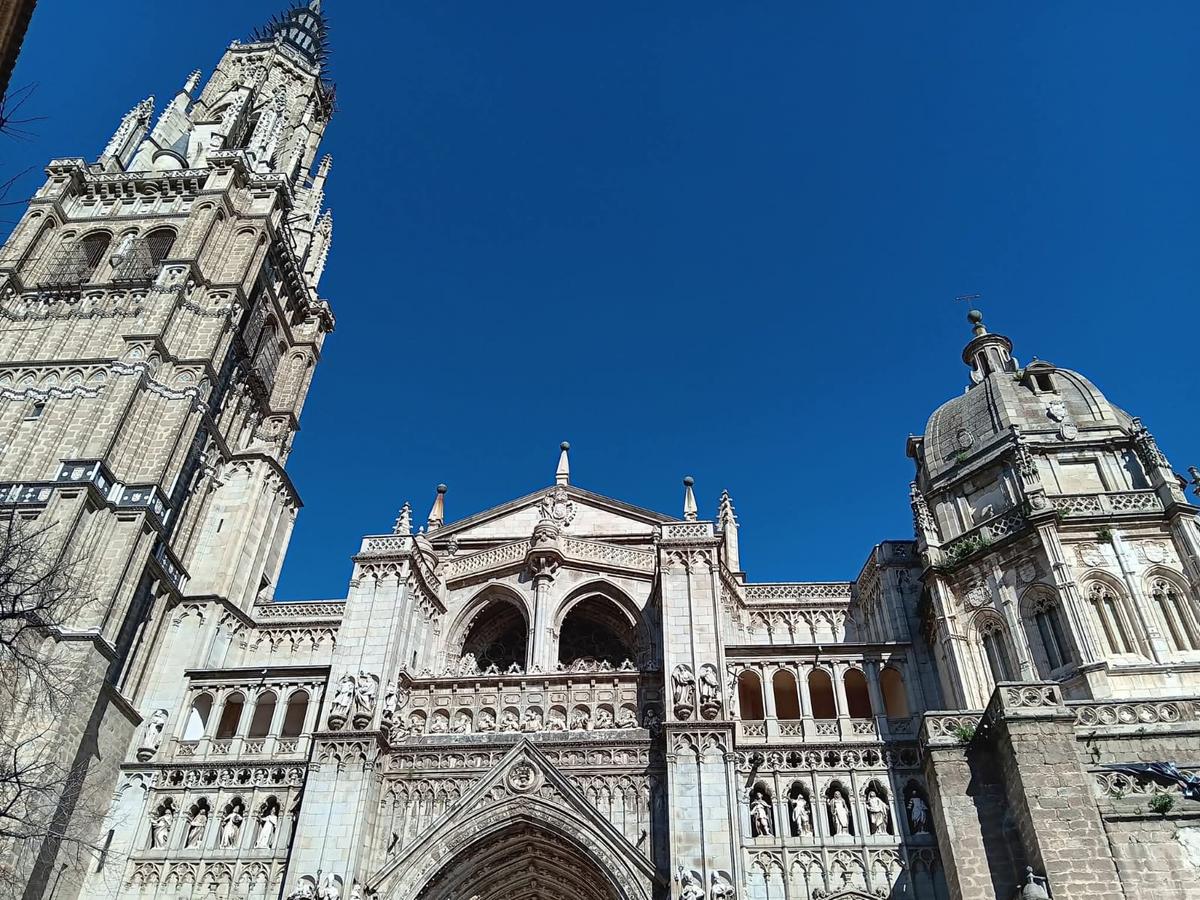
The Catedral Primada is a masterpiece of Gothic architecture, with elements of Mudéjar, Renaissance, and Baroque styles. (Autumn Spredermann)
The Catedral Primada is a masterpiece of Gothic architecture, with elements of Mudéjar, Renaissance, and Baroque styles. Autumn Spredermann

Historic Influences

During the Moorish occupation of the Iberian Peninsula, the three Abrahamic religions coexisted in harmony between the 11th and 15th centuries. It was a period known as La Convivencia, which means “coexistence” in Spanish. This unique cultural period gave rise to Toledo’s popular modern-day moniker: the City of Three Cultures. The remains of this blend are visible throughout the historic center in buildings that reflect architectural designs such as arabesque, 13th-century Gothic, and a popular hybrid style used by all three religions known as Mudéjar.

Within this rich cultural tapestry, visitors can walk in Quixote’s shadow and get a feel for how the city would have looked during the time of Cervantes.

For example, the Alcaná market referenced by the story’s narrator comes from the Arabic word “al-janat,” which roughly translates to “market stands.”

By the time Cervantes arrived in Toledo in the late 1500s, the centuries-long multicultural period of peace had ended. Nevertheless, he would have been surrounded by the remains of all three heritages.
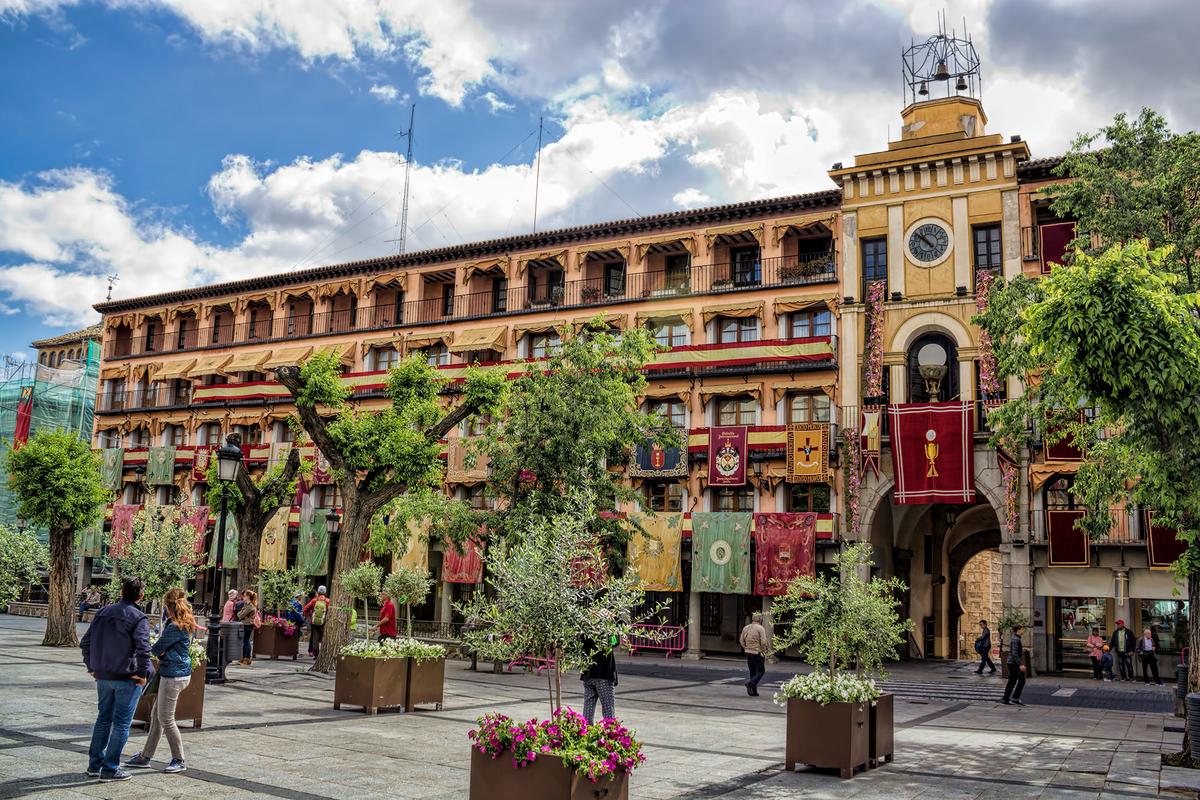
The historic Plaza de Zocodover is Toledo's main square. Over the years, it's been used for markets, bullfights, parades, and public executions. (ArTono/Shutterstock)
The historic Plaza de Zocodover is Toledo's main square. Over the years, it's been used for markets, bullfights, parades, and public executions. ArTono/Shutterstock

Lopez believes that the author’s own experiences, especially in Toledo, may have influenced the creation of Quixote.
During his 68 years, Cervantes lived a life of adventure that Quixote himself would have envied. As a young man, Cervantes wandered across Spain and went to Rome. He fought with Christian troops against the Ottoman Turks and suffered two wounds to the chest from an early gun model called a harquebus. He was also taken hostage by Berber corsairs in Algiers, Algeria, on his way back to Spain.
After his long journey home, Cervantes married Catalina de Salazar y Palacios in 1584. His wife was from the village of Esquivias in Toledo Province and was the niece of the nobleman Alonso Quijada Salazar. Historians think that Salazar may have inspired, or at least influenced, the creation of Quixote.
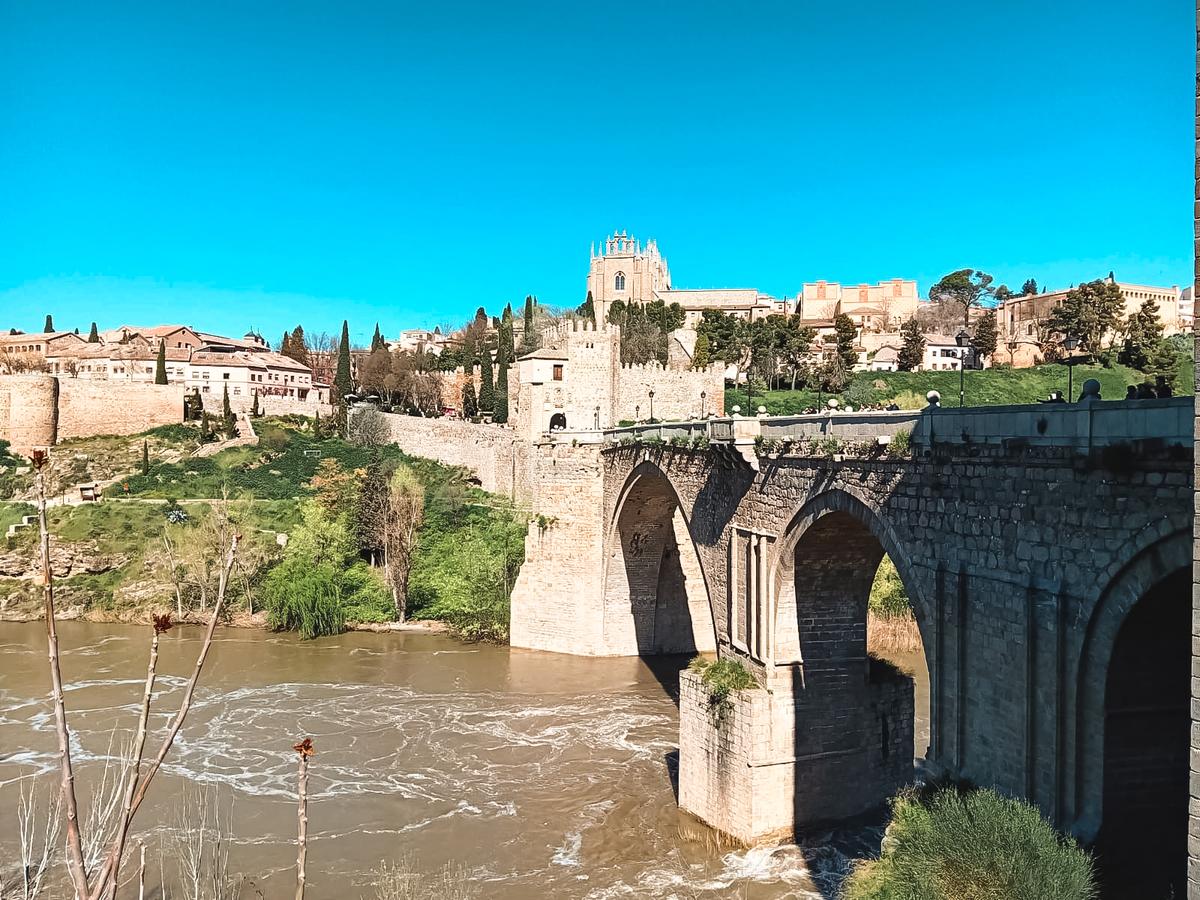
The 14th-century San Martín Bridge crosses the Tagus River. Fortified gates and defensive towers protect both ends of the bridge. (Autumn Spredermann)
The 14th-century San Martín Bridge crosses the Tagus River. Fortified gates and defensive towers protect both ends of the bridge. Autumn Spredermann
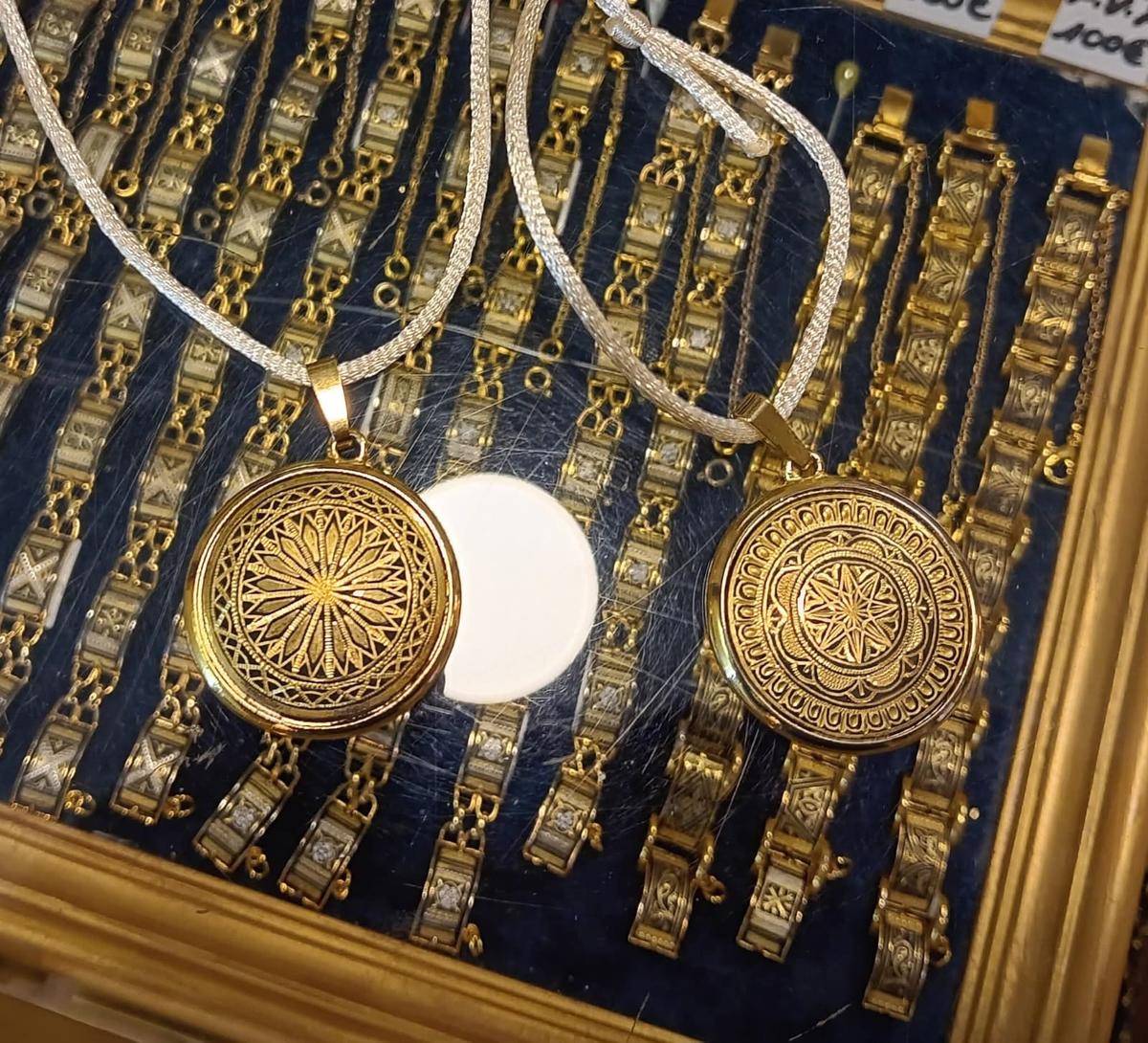
Damascene jewelry is blackened steel inlaid with intricate gold or silver patterns. It's a traditional Toledo craft that was first introduced to Spain by the Moors. (Autumn Spredermann)
Damascene jewelry is blackened steel inlaid with intricate gold or silver patterns. It's a traditional Toledo craft that was first introduced to Spain by the Moors. Autumn Spredermann

Modern-Day Musts

Today, visitors can enjoy a walk through the winding streets of Toledo and check out locations that showcase the city’s distinctive style.
Among these is the Alcázar military fortress, strategically located at the highest point in the city, with sweeping views of the Tagus River and countryside below. It was built atop a third-century Roman palace and was restored at about the time of Cervantes.
There’s the medieval bridge of San Martín, with its five towering arches, connecting 13th- and 16th-century walls. The bridge was declared a national monument in 1921.

Quixote lovers can also grab coffee and check out the shops near Plaza de Zocodover. Lopez believes that this area, formerly an Arabian market from the Middle Ages, inspired the Alcaná market mentioned in Cervantes’s novel.
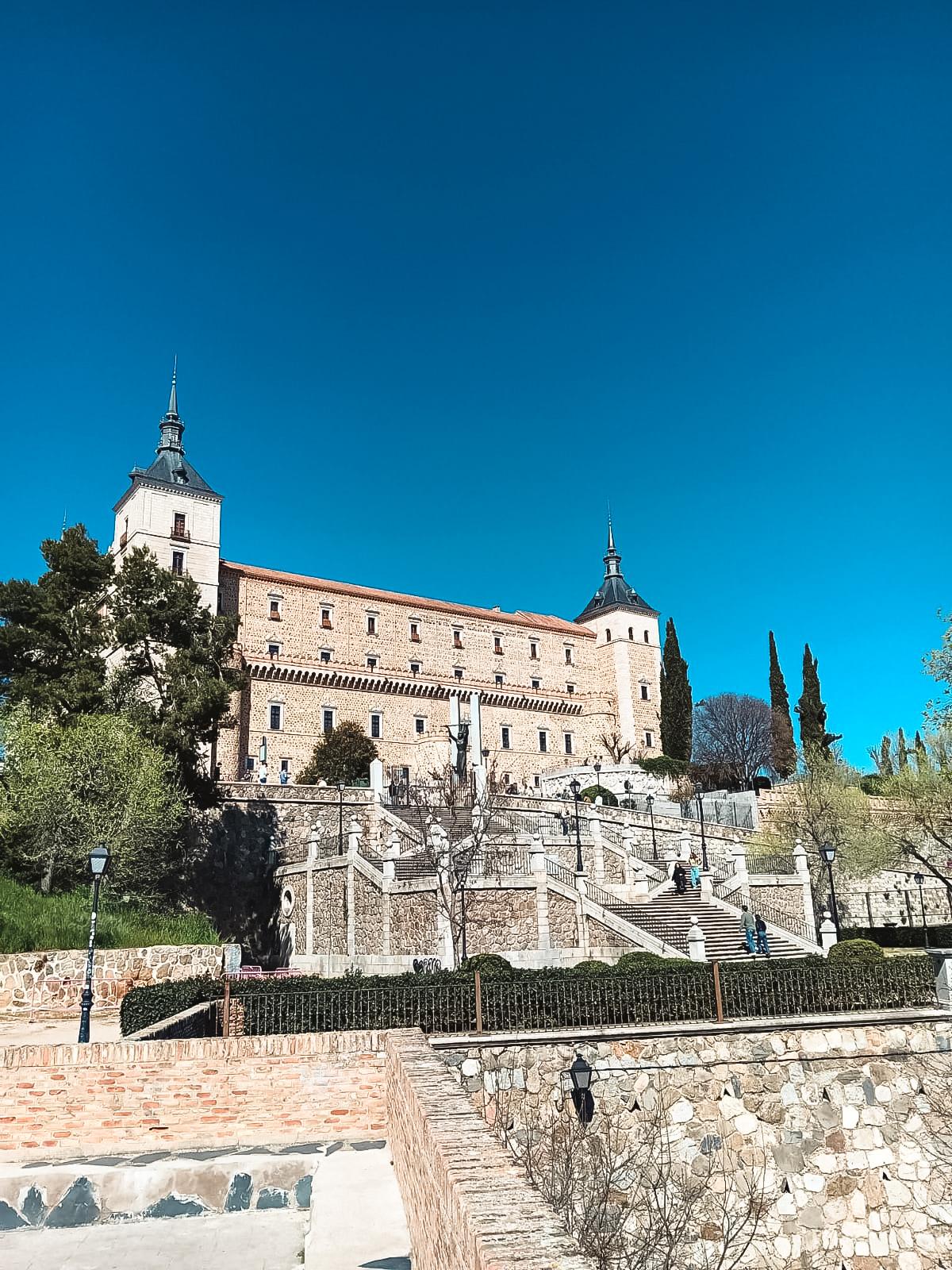
Once a military fortress, the Alcázar of Toledo now houses the Army Museum. (Autumn Spredermann)
Once a military fortress, the Alcázar of Toledo now houses the Army Museum. Autumn Spredermann

For those who want to continue following the origins of Quixote, it’s possible to stop in the nearby village of Esquivias to see the home in which Cervantes lived with his wife.

Tourists looking to take home a piece of Toledo aren’t limited to swords.

Artisanal products such as locally made olive oils, the famous Manchego cheese, and marzipan sweets are available on nearly every street corner. Jewelry lovers may be enchanted by the city’s famous Damascene jewelry, which involves intricate patterns of gold and silver inlaid into other metals.

“You can make endless connections with Quixote here,” Lopez said.

But he noted that Toledo is just the starting point.

“Castile-La Mancha has so many historic places that cross paths with Cervantes and his characters,” he said.


Google LogoMark Us Preferred on Google
Autumn Spredemann
Autumn Spredemann
Author
Autumn is a South America-based reporter covering primarily Latin American issues for The Epoch Times.
twitter