During the summer of 1941, baseball witnessed an unimaginable feat. Joe DiMaggio, the New York Yankee outfielder, had hit safely in 56 consecutive games—a record deemed unbreakable. It was a memorable season, though played under the shadow of war in Europe and Asia. That shadow would soon hover over America. Before the year ended, America would become militarily involved in World War II.
Should Baseball Continue?
On Jan. 14, 1942, MLB Commissioner Judge Kenesaw Mountain Landis sent a letter to President Franklin D. Roosevelt asking “whether professional baseball should continue to operate.”The president put baseball in numerical terms, writing that “if 300 teams (referencing both the major and minor league teams) use 5,000 to 6,000 players, these players are a definite recreational asset to at least 20,000,000 of their fellow citizens—and that in my judgment is thoroughly worthwhile.”
Looking for Players
Baseball would continue. Players, however, were not immune to the draft. Over the course of the war years, more than 500 major league and 2,000 minor league players entered the service. Some of these players were the biggest names in the game, including Bob Feller, Hank Greenberg, Ted Williams, Warren Spahn, Yogi Berra, and DiMaggio. Roosevelt indicated in his letter that having some of the players fighting in the war may lower the “quality of the teams” by playing more “older players,” but it would not “dampen the popularity of the sport.”Roosevelt was correct, and the team owners decided to tie patriotism to the game of baseball by helping sell war bonds, raising funds for materiel, sending soldiers free copies of The Sporting News, and playing the national anthem before games. The patriotic elements helped eliminate any reticence that citizens may have had about baseball continuing while the war was going on, as a 1942 Gallup Poll showed 66 percent supported continuing the game—a number that increased to 95 percent the following year.

Finding Nuxhall
Nuxhall was a 36-year-old father of five who worked at a General Motors plant in Ohio. While they were looking for the pitcher at the multi-field complex, the scouts noticed a much younger pitcher on one of the mounds. It was Nuxhall; but this Nuxhall was the son of Ox. The 14-year-old was, however, built like an ox. He stood at 6 feet, 3 inches with a 195-pound frame and threw an 85 mph fastball. The scouts were impressed with the young, large, athletic lefthander.It appeared Nuxhall had a baseball career lined up. School, however, was starting again. As the fall semester of his sophomore year of high school ended, and more players joined the service, space opened for Nuxhall. On Feb. 18, 1944, the Reds went in the opposite direction of Roosevelt’s statement by signing the now-15-year-old pitcher to a contract that included a $500 signing bonus (nearly $9,000 today). The Reds organization claimed that the depletion of players wasn’t the root cause of signing Nuxhall. Rather, it was the young pitcher’s ability and potential, as well as the fact two other teams were interested in the lefthander.
A Shaky, But Historic Start
Nuxhall went back to school, but on April 18, his high school principal permitted the young, and now professional, baseball player to join the Cincinnati Reds for Opening Day against the Chicago Cubs. Nuxhall intermittently joined the team on weekends and the rare night game. Playing on a consistent basis would have to wait until June. As summer neared, Nuxhall prepared to begin his professional career in earnest.Across the Atlantic Ocean, however, the war’s biggest operation was being prepared. Operation Overlord, which would begin on June 6—commonly referred to as D-Day—was looming. Among the thousands of American troops planning to storm the beaches of Normandy, parachute into France, or bombard the beaches through the Navy’s artillery fire, were hundreds of professional baseball players.
In the 8th inning with the Reds already down 13–0 to the St. Louis Cardinals—the team that would go on to win the 1944 World Series—Nuxhall got the call, though he barely heard it.
“Mr. McKechnie told me to go warm up. Really he yelled twice. The first time he said ‘Joe,’ I didn’t pay any attention, figuring he was talking to someone else. The second time it was a little louder, and I went down and warmed up,” Nuxhall later recalled.
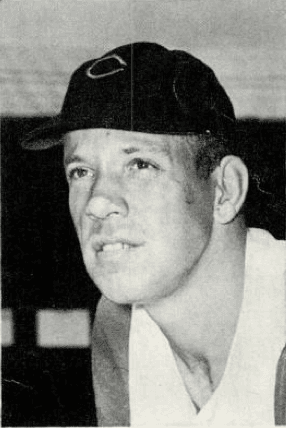
In the top of the ninth inning, Nuxhall took the mound. He retired two of the first three batters he faced. With two outs and a man on base, Nuxhall walked the next batter, Debs Garms. Up to the plate walked the 1943 National League MVP, Stan Musial (who would also serve in World War II). Musial slashed a single to load the bases, and from there the wheels came off. Nuxhall walked the next three batters, then gave up a two-run single.
A Memorable Baseball Career
McKechnie pulled the pitcher, but it was far from the end of Nuxhall’s baseball career. After his debut, he continued in the minor leagues until the end of the 1945 season. Then he went home to finish high school but returned to the minor leagues in the summer of 1947 after graduating. He continued playing in the minors for the next five seasons until rejoining the Reds in 1952. He retired from baseball in 1967 having earned two All Star selections, a Comeback Player of the Year award, and accumulating a record of 135–117 with a 3.90 ERA and 1,372 strikeouts.Although he is historically remembered as the youngest player to ever take the field in an MLB game—a record even more secure than DiMaggio’s 56 safe hits—he is most fondly remembered, especially among Ohioans, as a radio broadcaster for the Reds and a community hero in Cincinnati. He joined Marty Brennaman, who was awarded the Ford C. Frick Award for broadcasting by the Baseball Hall of Fame in 2000. Together, they covered Reds’ games for 31 seasons. The two years after Nuxhall joined the broadcast booth in 1974, the Reds won the following two World Series (1975 and 1976)—leading to the team’s moniker of “The Big Red Machine.”
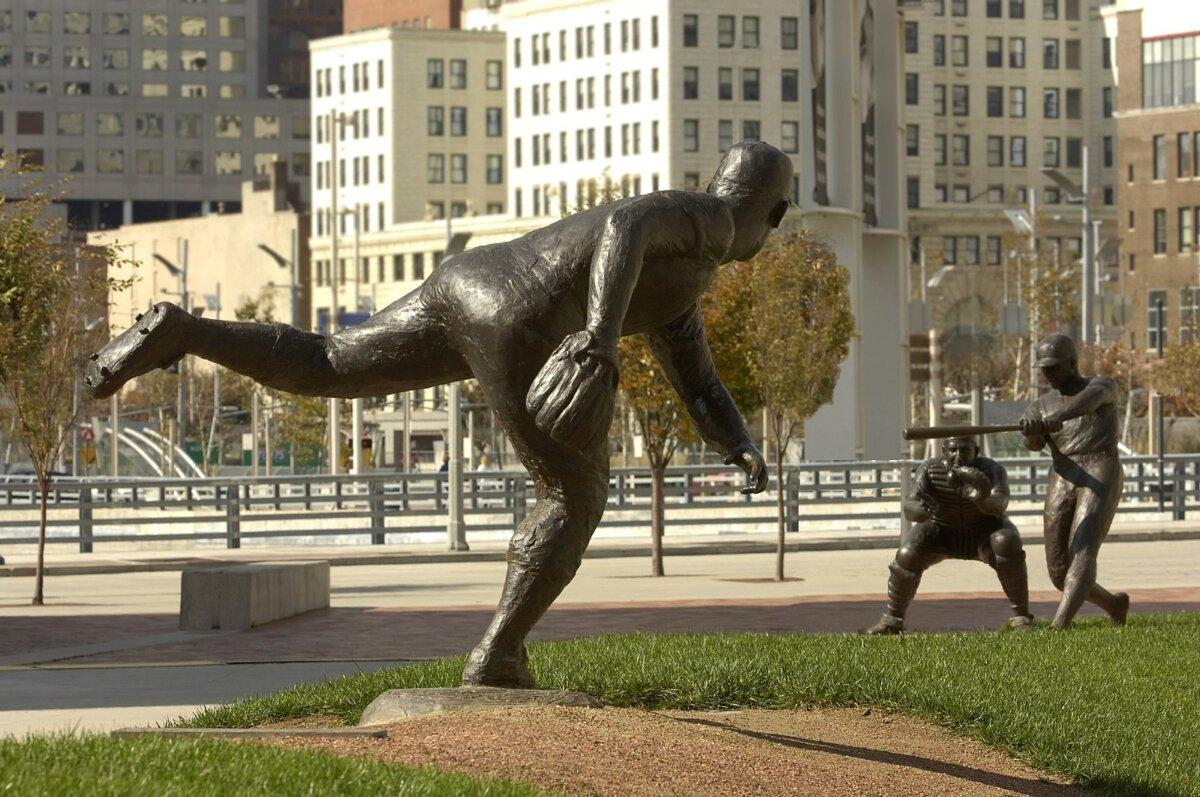
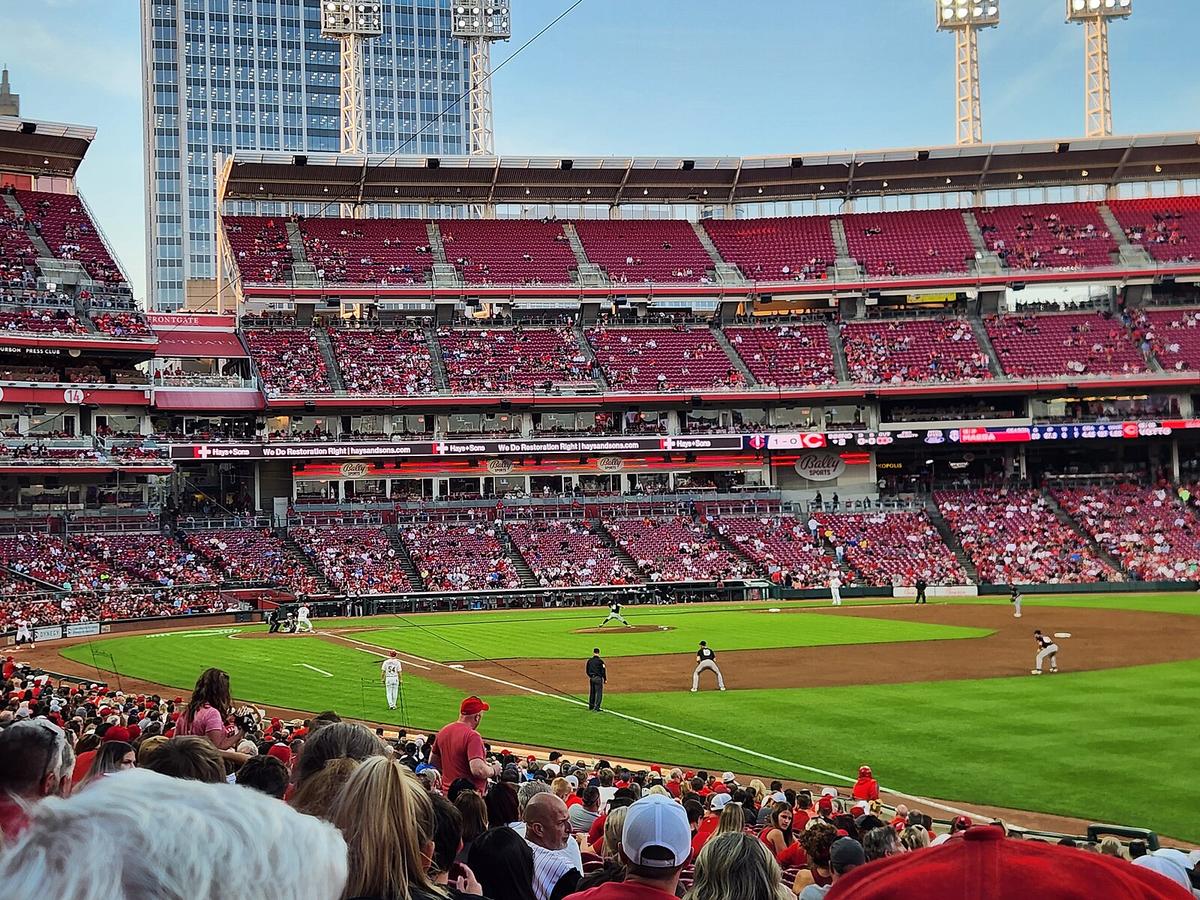
Streets in Ohio have even been named after him. In 2003, a bronze statue of Nuxhall was erected outside of Cincinnati’s Great American Ball Park. When he died from cancer in 2007, baseball fans were hit hard. On Opening Day of the 2008 season, the players all wore jerseys with Nuxhall’s 41 during the pregame ceremonies. Opening Day pitcher, Aaron Harang, received permission to wear Nuxhall’s number for the entire game. The team wore “NUXY” patches throughout the 2008 season. After Nuxhall’s death, the Reds organization changed the address of Great American Ball Park to 100 Joe Nuxhall Way.
Nuxhall’s son, Kim, fulfilled his father’s dream of creating a place where children with disabilities could play the game he loved. The Joe Nuxhall Miracle League Fields opened in 2012 with the stated mission of being “A place where every individual with every challenge gets every chance to play baseball.”