“For consolation to them that are planted by God in any place, that find rooting and establishing from God, this is a cause of much encouragement unto you, that what he hath planted he will maintain, every plantation his right hand hath not planted shall be rooted up, but his own plantation shall prosper and flourish. When he promiseth peace and safety, what enemies shall be able to make the promise of God of none effect? Neglect not walls, and bulwarks, and fortifications for your own defence; but ever let the Name of the Lord be your strong Tower; and the word of his Promise the Rock of your Refuge. His word that made heaven and earth will not fail, till heaven and earth be no more. Amen.”
John Cotton, the Calvinist reformer and English vicar, spoke to hundreds of Puritans in March 1630 as they prepared to leave England for America. His parting sermon was entitled “God’s Promise to His Plantation,” and those who were listening would soon be joining the recently chartered plantation of Massachusetts Bay.
These Puritans had long been frustrated by the Church of England, which they believed was corrupt. Additionally, the Puritans were persecuted for the way they practiced their Christian faith. They now assembled in Southampton in southern England to board 11 ships for the trek across the Atlantic Ocean. Between 1629 and 1640, approximately 20,000 Puritans fled England for America in hopes that it would be the land of religious freedom.
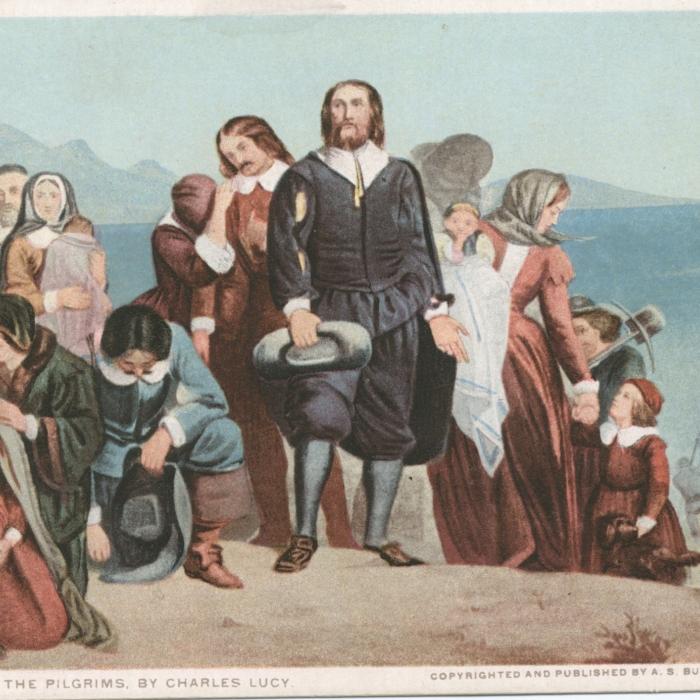
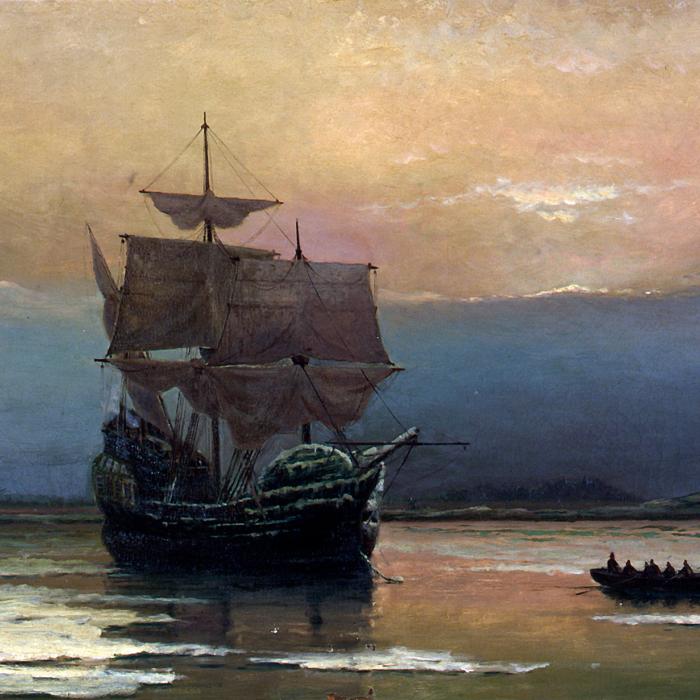
The first Puritans, now referred to as Pilgrims, sailing aboard the Mayflower, arrived off the shores of Massachusetts a decade before these 11 ships set sail. Having sailed from Plymouth, England, it was called Plymouth Colony, but also became known as Plymouth Plantation, primarily from Governor William Bradford’s book “Of Plimoth Plantation.” These new Puritans arriving aboard the 11 ships were led by a Puritan lawyer by the name of John Winthrop.
Founding a ‘City Upon a Hill’
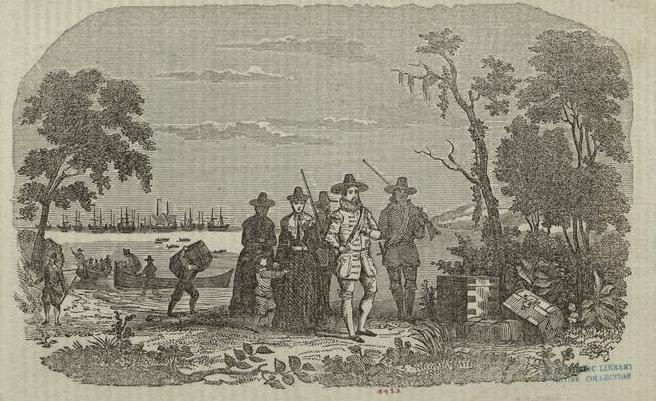
Shortly after King Charles I granted the New England Company its charter on March 4, 1629, in which the company changed its name to the Massachusetts Bay Company, it chose Winthrop to be its governor over the American colony. Winthrop proved a prudent selection, as he assembled ships, supplies, and coordinated more than 1,000 people to join the long and risky excursion. The ships arrived safely off the coast of Massachusetts a few months later in June.Having first arrived in Salem, Winthrop and his Puritans decided to sail further down the coast. They disembarked to the north of the Plymouth Colony.
This city, though, needed a name.
Many of these Puritans had been influenced by the teachings of John Cotton, the vicar who had sent them off with “God’s promise.” They had attended Cotton’s church, St. Botolph’s, located in the county of Lincolnshire. In this county was the town of Boston, founded during the medieval period, and once a powerful trading port. It was also the site of numerous political and religious revolts. It seemed fitting to name this new American port city in its honor.
A Thriving City
Despite this, Boston began to thrive. In 1634, Winthrop praised the new colony in a letter to Nathaniel Rich, a member of parliament. He noted that the city had a population of about 4,000, and that “the yearly access of newcomers” had provided both cattle and workers. The area also proved to be a land of plenty with “Cod, bass and herring, for which no place in the world exceeds us. … [O]ur grounds likewise are apt for hemp and flax and rape seeds, and all sorts of roots, pumpkins and other fruits, which for taste and wholesomeness far exceed those in England: our grapes also ... afford a good hard wine. Our ploughs go on with good success…”Winthrop continued, noting that “Our civil Government is mixt: the freemen choose the magistrates every year. … Our Churches are governed by Pastors, Teachers ruling Elders and Deacons, yet the power lies in the whole Congregation.” Lastly, he viewed the deadly effect of the smallpox on the indigenous population in positive terms, stating, “They are near all dead of the smallpox, so the Lord hath cleared our title to what we possess.”
Certainly, from Winthrop’s perspective, it appeared Cotton’s message of “God’s Promise to His Plantation” had come to fruition. In fact, the year before Winthrop wrote his letter, Cotton arrived in Boston, having fled England for religious reasons. The Bostonian congregation elected him as teacher, one of the church’s two positions.
The citizens also clearly approved of Winthrop’s leadership, as he was elected to the colony’s governorship 12 times over the course of 19 years. Despite his influential leadership, he found it somewhat difficult to convince the citizens to maintain his “city upon a hill” vision.
Locals decided to branch out from Winthrop’s single city plan, and, by the end of the first year, there were six towns founded in the vicinity. Massachusetts Bay Company paid high wages due to the limited supply of skilled workers. As residents made more money, they found it easier to become more independent of the community, ultimately shuttering Winthrop’s suggestion that the Bostonians follow the path of the early church where they “had all things in common, neither did any man say that which he possessed was his own.” There was also dissent within the strict religious community.
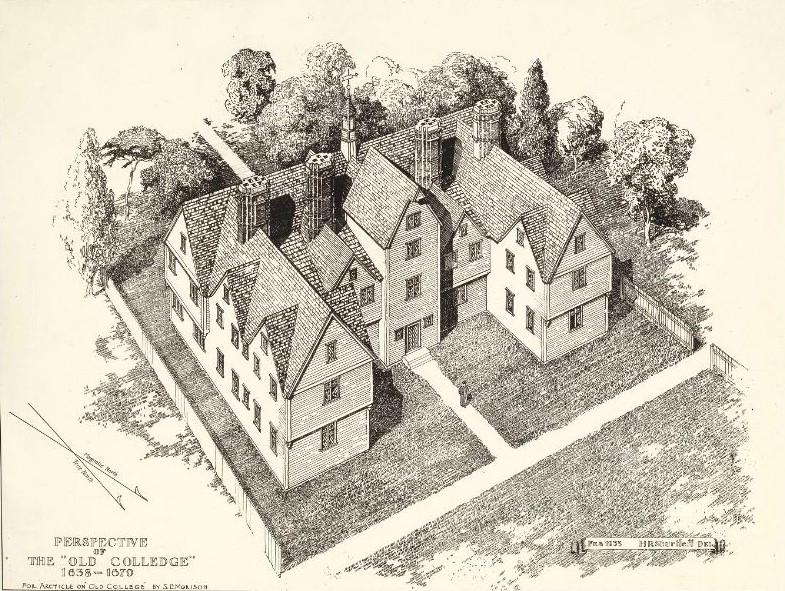
Boston had certainly not fallen apart, but it hadn’t gone completely according to Winthrop’s plan. The year he wrote his letter to Rich, the town opened its first tavern. The following year, it established America’s first public school. In 1636, the Great and General Court of the Massachusetts Bay Colony established New College—America’s first college. Three years later, it was renamed Harvard College (and later Harvard University). In 1713, the Old State House was built for the government office of the Massachusetts Bay Colony. In the 100th year of the New England Company receiving its charter from King Charles I, the Old South Meeting House was built.
Living Up to Its Name
In the coming decades, Boston would unmistakably become the “city upon a hill,” and, just as Winthrop predicted, “the eyes of all people” would be upon them.“The city upon a hill” was beginning to burn with a revolutionary fire. That fire only burned brighter as more taxes were passed by London over the coming years, such as the Stamp Act of 1765. This led to the Stamp Act riots, which first began in Boston in August of 1765. Some Bostonians began forming a group called the Sons of Liberty, which included businessmen, merchants, and politicians. These led the resistance against what they considered a tyrannical British government. Two of the primary Boston locations where the Sons of Liberty and others who resented British overreach met were the churches and the taverns—two of the city’s earliest community buildings.
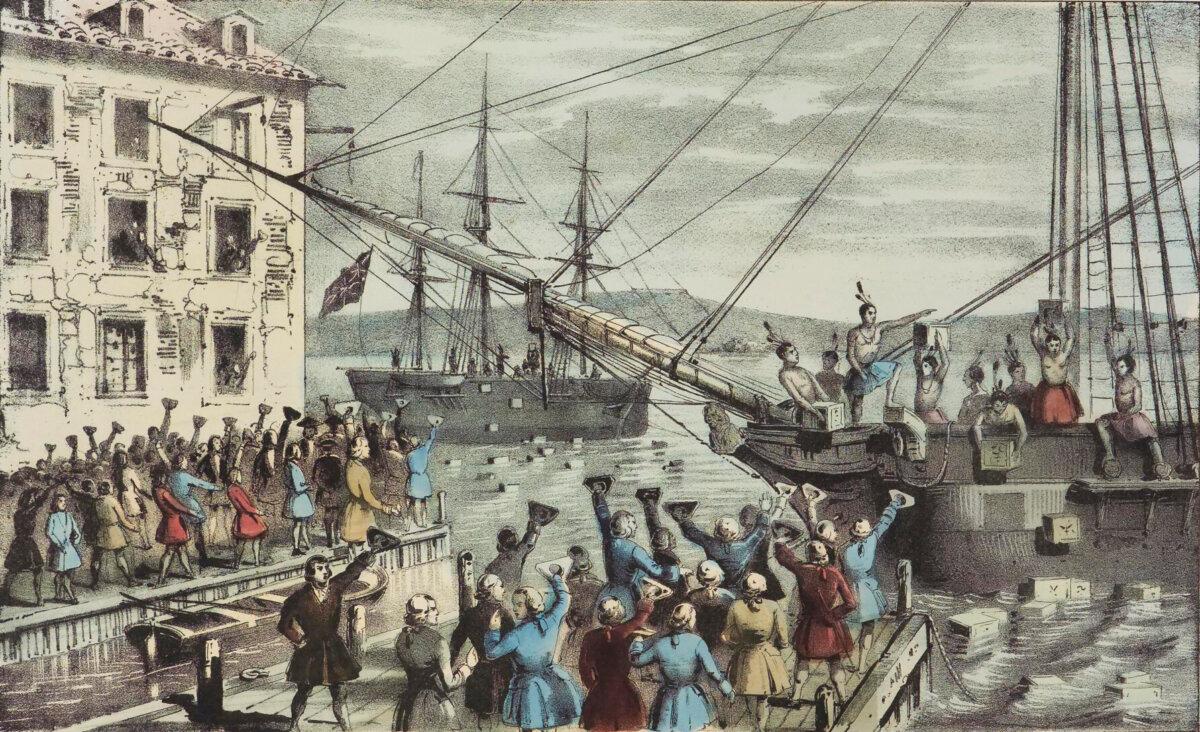
Immediately, locals poured out of the meeting house, into the streets, and toward the Boston Harbor. Bostonians, dressed like Mohawks, climbed aboard ships, which carried crates of tea, and tossed the tea into the harbor, launching a series of what became known as Tea Parties. Great Britain responded by blockading the Boston harbor and removing the city’s privilege of self-government—a privilege it had enjoyed since its founding.
Seemingly just as true were the words issued by John Cotton in March 1630, when he assured the Puritans that “to them that are planted by God in any place, that find rooting and establishing from God, this is a cause of much encouragement unto you, that what he hath planted he will maintain, every plantation his right hand hath not planted shall be rooted up, but his own plantation shall prosper and flourish.”
As Americans celebrate the 250th anniversaries of all the events of the American Revolution, there is one place where citizens in all 50 states can trace back its liberty-minded heritage: Boston.